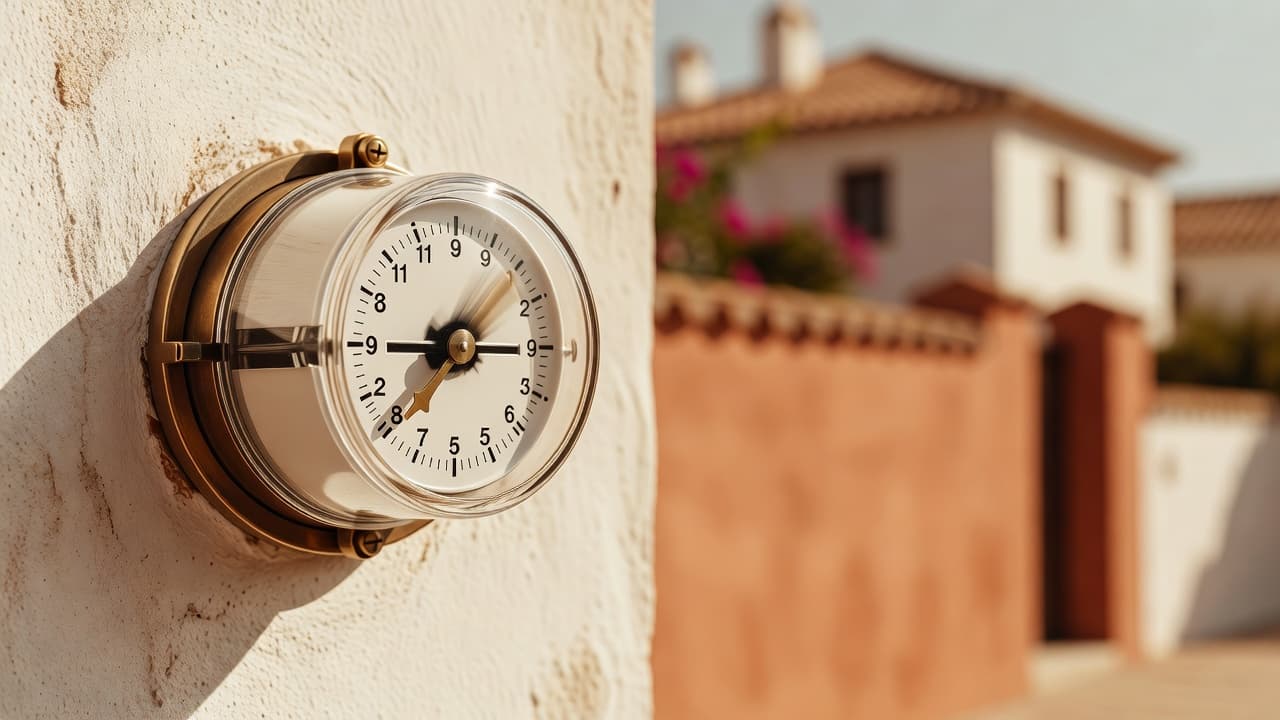
Your water meter measures every drop of water entering your system. If it's moving when you're using nothing, that water is going somewhere you can't see.
Common causes of a constantly spinning meter:
Leak in the main supply pipe — The pipe running from the meter into your home (or between the meter and your property boundary) has a crack or a joint that's come loose. You might see damp patches in the street, pavement, garden, or the wall outside your home. This is usually a slow leak that develops over months.
Leaking toilet cistern — The ballcock inside the cistern is worn out and water is trickling into the bowl constantly. You won't hear it because it's too slow, but the meter will see it. This is one of the easiest leaks to spot: lift the lid of the toilet cistern and look inside.
Shower mixing valve leaking internally — The valve that balances hot and cold water is worn. Water flows from the hot supply to the cold supply (or vice versa) inside the valve, and the meter counts it all. You might not see water pooling anywhere because it's tiny amounts.
Leak in pipes inside walls or under the floor — This is harder to detect because you can't see the pipes. Spanish homes often have pipes running inside walls or under screed flooring. A tiny crack means water seeping out into the wall or concrete, which you may not notice until there's damp or damage.
Outside tap left on slowly — Less common, but worth checking. Walk round your property and look for any outdoor taps dripping or trickling.
Check the toilet cistern first — this is the fastest diagnosis.
Open the cistern lid on all your toilets. Look at the water level. It should be about 2 cm below the overflow pipe (the hollow tube in the middle). If water is trickling past the overflow pipe into it constantly, the cistern is leaking.
To stop it temporarily, turn off the small valve (float valve) under the sink in the toilet cistern's supply line. This stops water entering the cistern. But this is only a temporary fix — the cistern will need replacing or repairing.
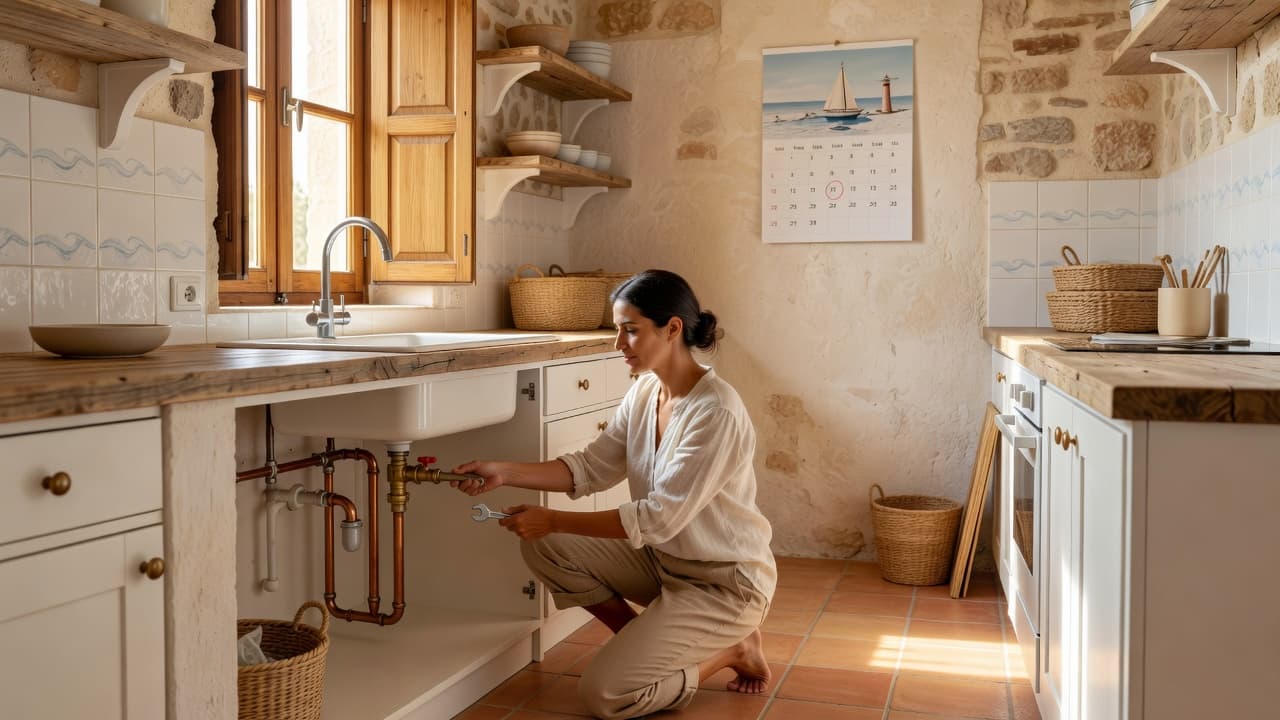
Check all visible pipes under sinks and in cupboards — Look for moisture, drips, or water pooling. Dry the area with a cloth and watch for 10 minutes. If moisture returns, you've found the leak location. Photograph it and show it to the plumber.
Close the main stopcock — This is not a "fix", but it stops the leak from running while you wait for help. Turn the stopcock clockwise until it's fully closed. You will have no water in the home, but you've stopped the problem getting worse. You can turn it back on in sections (turn it anti-clockwise gradually) to use water for essential tasks like flushing the toilet or washing hands, but keep it mostly closed.
Do not try to dig up underground pipes, open walls, or take apart the water supply system yourself. These require specialist tools and knowledge, and you risk making the leak worse or causing damage that costs more to repair.
Stop and call a plumber immediately if:
- The leak is in a pipe inside a wall or under the floor (you can see damp spreading, or the meter is spinning but you can't find any visible leak).
- Water is pooling under the house, in the garden, or in the street.
- The main stopcock won't close or is stuck.
- You smell soil gas or see discoloured water — this suggests a break in a buried pipe that may be contaminated.
- The leak is outside your property boundary (between the meter and the street). You still need to call a plumber, but your local water authority may share responsibility.
Do not attempt to re-pressurize or flush the system yourself if you've closed the stopcock. Only a qualified plumber should turn the supply back on and check the system is safe.
The plumber's first step is to confirm the leak. They'll close your main stopcock and watch the meter for five minutes. If it stops moving, the leak is in your home. If it keeps moving, the leak is between your meter and the property boundary (the supplier's responsibility, but you still pay for the water until it's fixed).
If the leak is inside your home, the plumber will:
- Listen to pipes with a stethoscope or use a leak detection device to pinpoint where the water is escaping.
- Check the toilet cisterns, under-sink pipes, and any visible supply lines.
- If the leak is in a hidden pipe, they may need to use thermal imaging or moisture meters to locate it without breaking walls.
- Once located, they'll isolate that section of pipe and plan the repair. Some leaks are simple (a new washer on a joint, a new cistern ballcock). Others require cutting out a section of pipe and replacing it.
- They'll turn the water back on, check the repair holds, and show you how to monitor it.
- They'll give you a receipt and a description of what was repaired (important for your insurer).
A straightforward leak like a dripping toilet might take 30 minutes and cost €80–150. A hidden pipe leak can take 2–3 hours and cost €200–400 depending on where it is and how badly it's damaged. Emergency call-out charges (evenings, weekends, bank holidays) are typically 20–30% higher on the Mediterranean coast.
Check your water meter once a month — Read it on the same day each month at the same time (e.g. first Saturday morning). If the consumption jump between readings is unusually large (more than 20% higher than normal), investigate early. A small leak caught in the first month costs far less than one that runs for six months.
Listen to your toilet cistern refilling — After a flush, the cistern should refill and then stop. If you hear the fill valve running on and off throughout the day, or a constant trickling sound, the cistern is leaking. Replace the ballcock (usually €15–30) before it becomes a hidden leak.
Inspect visible pipes under sinks twice a year — Look for soft joints, moisture, or discolouration. If a joint is weeping slightly, tighten it gently with a wrench or call a plumber before it worsens. Salt-air corrosion is common on the Mediterranean coast, so pipes near windows or outside-facing walls are at higher risk.
Check outdoor taps and hose connections — Even a slow drip from a garden tap or hose fitting wastes 20 litres per day. Replace worn washers and ensure connections are hand-tight.
Have your system checked before the summer season — If you own a holiday home or close up your villa for part of the year, ask a plumber to inspect the main supply and all cisterns before you leave. A small leak running through July and August undetected can waste thousands of litres and damage walls.
A spinning water meter is your early warning system. You've caught the problem while it's still manageable. Close the main stopcock to stop the water wasting, and contact a plumber today to locate and repair the leak. The longer you wait, the higher your bill and the greater the risk of hidden water damage inside your home.