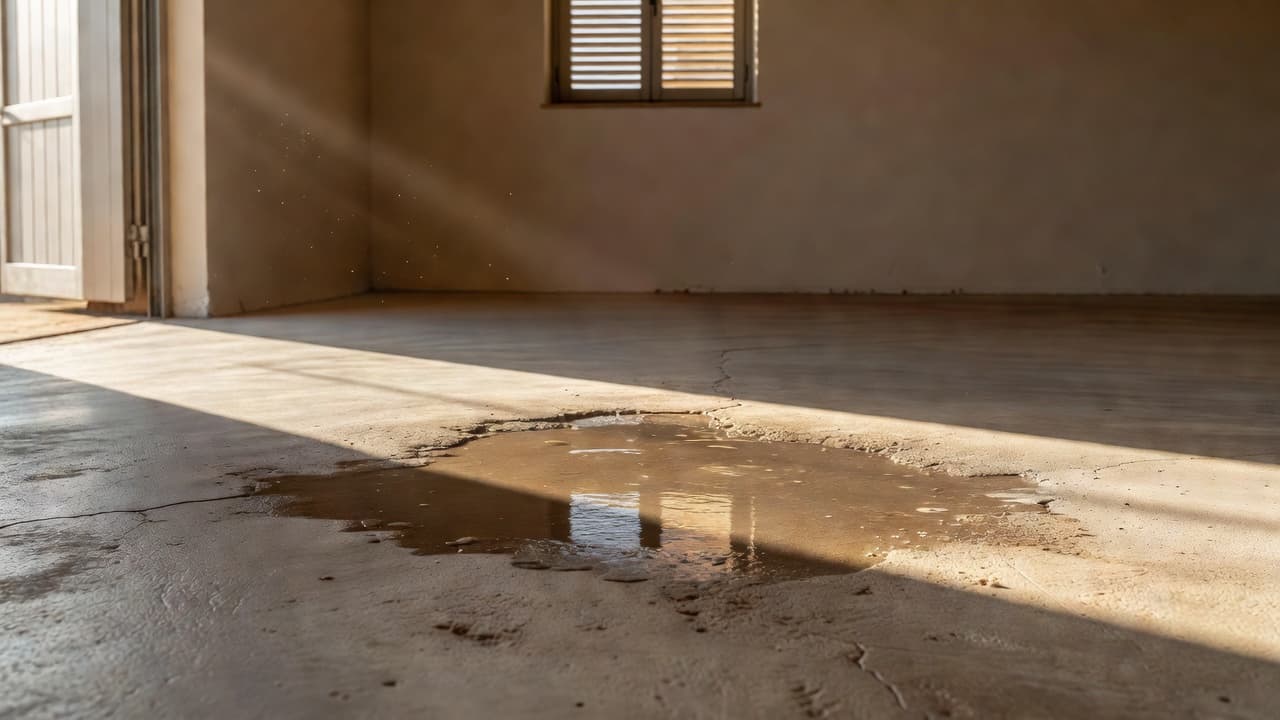
Garages and storage rooms on Spain's Mediterranean coast are particularly vulnerable to corroded pipes. Salt spray from the sea, high humidity, and thermal stress accelerate corrosion in copper and older galvanised steel pipes. Over time, microscopic cracks develop and water seeps out. This is especially common in properties within 2–3 kilometres of the coast or in areas with poor ventilation.
Pipes older than 20–30 years become brittle. A sudden pressure spike (common when the mains pressure is high, especially in urbanisaciones with large shared tanks) can crack a weak section. A small crack widens over weeks, and water collects where gravity carries it — often into the garage or storage room below.
Vibration from appliances, temperature swings, or poor original workmanship can loosen the threaded connections (empalmes) where pipes join. Water drips slowly at first, then pools.
Washing machine inlet hoses, dishwasher hoses, and boiler inlet pipes fail regularly after 5–10 years of use. The failure is usually sudden and visible.
If the water only appears after heavy rain, the cause is not a pipe leak. Water is entering from outside through cracks in the foundation, failed damp-proof course (aislamiento de humedad), or poor drainage around the building. This requires a different solution — structural, not plumbing.
While you wait for a plumber, here's how to contain the problem:
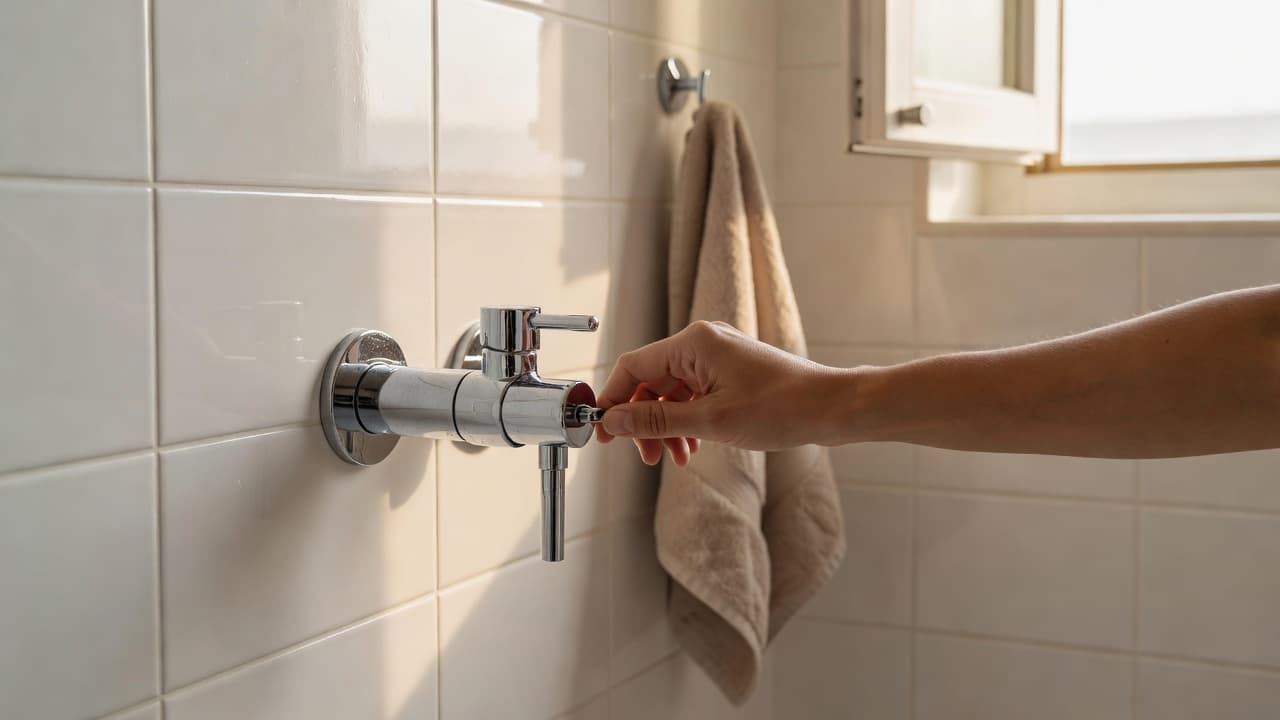
- Keep the main stopcock closed except when you need to use water elsewhere in the house. Open it, use a tap, then close it again. This is inconvenient for a few hours but prevents further water damage.
- Place a bucket under any visible drips to catch water and prevent pooling.
- Remove any items stored in the garage or storage room that could be damaged by water: tools, electrical equipment, boxes, documents, textiles.
- Open windows and doors if the weather is dry. Air movement helps prevent mould.
- Do not attempt to patch, seal, or tape a leaking pipe yourself unless the leak is a slow weep and you've confirmed it's from a plastic hose you can replace (see below).
If the leak is clearly from a washing machine, dishwasher, or boiler inlet hose (these are usually reinforced rubber with metal end connectors), and the hose is cracked or the connector is loose:
- Close the stopcock.
- Unscrew the hose (turn anti-clockwise) from the tap connection and the appliance connection.
- Take it to a local ferretería (hardware shop) and buy an identical replacement (hoses are cheap, usually 10–30 euros).
- Screw it back on hand-tight plus one-quarter turn with a wrench. Do not overtighten.
- Open the stopcock and check for leaks at the connection.
This is safe and saves a call-out fee if you're confident with basic hand tools.
Stop immediately and call a plumber if:
- The leak is from a copper, steel, or plastic pipe buried under the floor or running inside the walls. You cannot access it safely, and any attempt to dig or break concrete risks hitting other services (electricity, gas, drainage).
- Water is mixed with earth, mud, or sand, suggesting a burst underground pipe or rising damp. This requires specialist investigation.
- The leak is from a joint that's actively weeping or spraying when the stopcock is open. Water pressure is still acting on the damaged section, and it can burst completely.
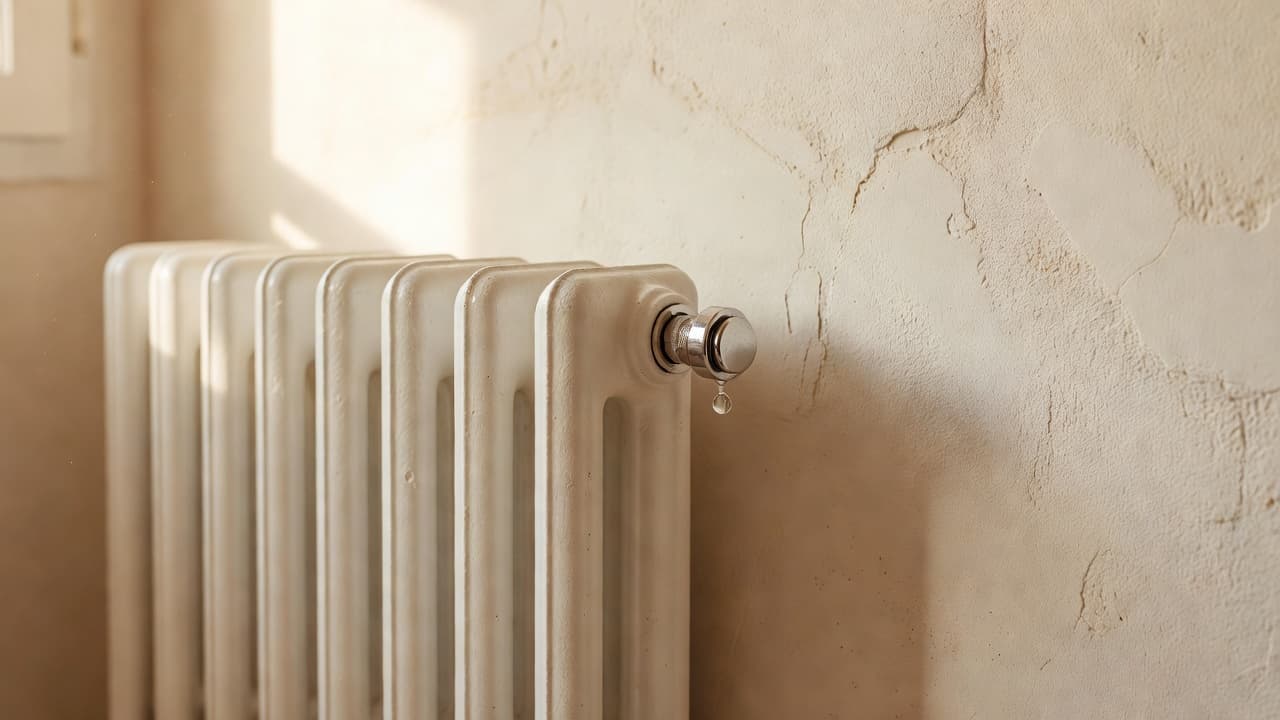
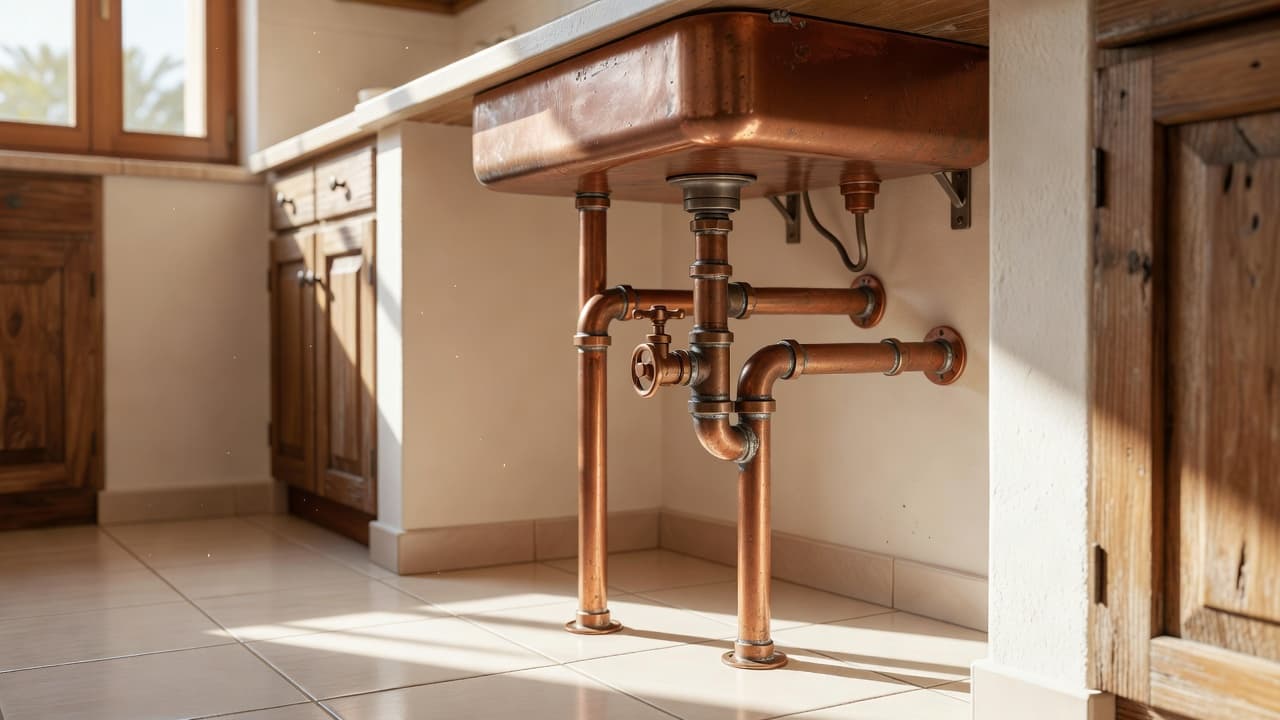
- You see corrosion, cracks, or white mineral deposits (lime scale) on copper pipework. These indicate advanced corrosion and risk of sudden failure.
- The garage is flooding faster than you can bail it out. This suggests a main feed pipe has burst. Turn off the stopcock and call immediately.
- The leak is near the gas boiler, gas cylinder, or electrical consumer unit (cuadro de distribución). Do not investigate. Leave it to the professional.
A qualified plumber will first confirm the stopcock is closed and locate the exact source of the leak using visual inspection, listening for running water, and sometimes using moisture detectors or thermal imaging if the leak is hidden.
If the leak is in a visible pipe, they'll assess whether it's a small repair (tightening a joint, replacing a cracked section of exposed pipe) or a larger job (excavating under the slab, rerouting pipework). For simple repairs, they'll drain the affected section, cut out the damaged part, and reconnect using appropriate fittings (push-fit connectors for plastic pipes, compression fittings or soldering for copper). For buried pipes, they may recommend rerouting above ground if the home's layout allows it, which is cheaper than breaking concrete.
Once repaired, they'll refill the system, test for leaks under pressure, and hand you documentation (a receipt and, if required, a compliance certificate showing the work meets Spanish building standards). Many plumbers offer a six-month to one-year guarantee on their work.
If the leak is due to advanced corrosion affecting several areas of the same pipe, they may recommend replacing the whole run of pipework — a larger job, but it prevents repeated leaks.
- Maintain good ventilation in the garage and storage room. Open windows regularly, especially in humid weather, to reduce condensation and salt spray settling on pipes.
- Check hoses on appliances every two years. If they look brittle, discoloured, or cracked, replace them before they burst. Hoses fail faster in garages due to temperature extremes.
- Insulate exposed pipes in very damp or salty environments. Foam pipe lagging (about 5 euros per metre) slows corrosion and keeps water temperature stable, reducing pressure spikes.
- Monitor water pressure. If taps suddenly spray harder, pressure may be high — a common cause of burst pipes. Ask your plumber to check the regulator.
- Have old copper or galvanised pipework inspected every five years if your property is within 2 km of the sea. Corrosion is silent until it fails.
If you've identified a leak and need help quickly, book a plumber through our service hub. We connect you with qualified professionals who speak English, German, and Dutch across Spain's Mediterranean coast. Most emergencies can be seen within 24 hours.