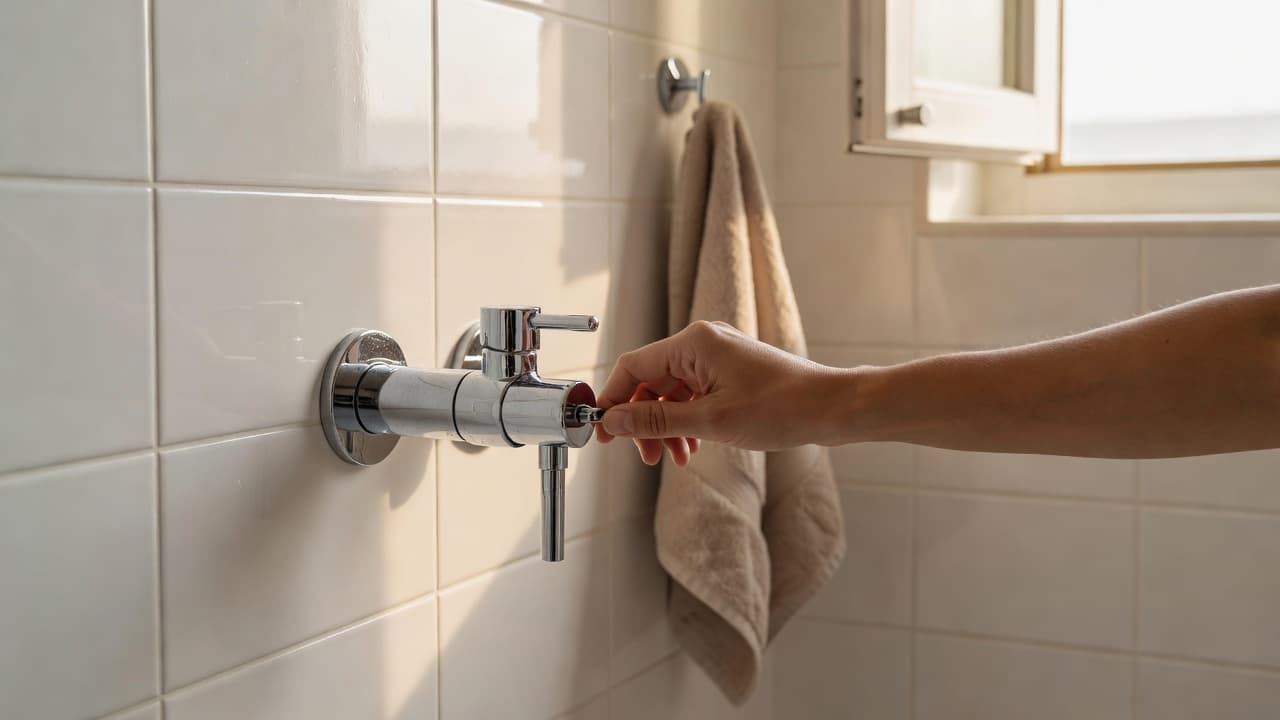
A shower valve that won't move has usually succumbed to one of three things:
Mineral deposits (limescale). Spain's Mediterranean coast and inland areas often have hard water—water with high levels of calcium and magnesium. Over time, these minerals accumulate inside the valve cartridge (the mechanism that controls water flow and temperature). The deposits act like sand in the gears, freezing the handle. This is especially common if your home has an electric water tank (termo eléctrico) that heats water in a closed loop, concentrating minerals further.
Corrosion. In coastal properties—particularly on the Costa Blanca, Costa del Sol, or in island homes—salt-laden air and humidity accelerate corrosion of metal parts inside the valve. The valve cartridge or the mixing chamber can corrode, causing friction and jamming. This is less common in modern stainless steel valves but very common in older brass or steel cartridges.
A dried-out rubber seal. Every shower valve has an internal rubber gasket or O-ring that keeps water from leaking where it shouldn't. If the shower hasn't been used for a while (common with holiday homes), or if the water supply has been intermittent, these seals can dry out and harden. When they harden, they swell slightly, and the valve handle becomes stiff or completely immobile.
If you cannot reach a plumber immediately, here's what you can safely try to contain the problem:
Try gentle heat. Wrap a hot (not boiling) damp towel around the valve body—the part where the handle connects to the pipe—for 10–15 minutes. This can sometimes soften mineral deposits or expand the metal slightly, loosening the jam. Repeat twice if necessary, with a 5-minute break between attempts. This is harmless and costs nothing.
Do not use chemical drain cleaners, WD-40, or oil-based lubricants. These will seep into the valve cartridge and damage the rubber seals, making the problem permanent. It's a common mistake and will guarantee a cartridge replacement rather than a simple free-up.
If you have a spare shower elsewhere in the home, use it. There's no benefit to experimenting further with the jammed one. Keep it isolated (water supply off) until the plumber arrives.
If the valve is also leaking, place a bucket underneath and leave it there. Don't attempt to tighten anything; water loss from a jammed valve is usually from a compromised seal, and tightening will only damage it further. The plumber will deal with it.
Stop immediately and call a plumber in these situations:
- The handle is cracked, chipped, or visibly broken. The damage is already done; attempting to move it will make it worse.
- The valve is leaking water continuously, especially if it's a significant flow. This indicates internal seal failure; professional replacement is needed.
- You have a thermostatic mixing valve (a safety valve that prevents scalding, common in new builds and required by Spanish building code LOE in some cases) and it's jammed. These are precision devices; mishandling can compromise safety. Leave it to the professional.
- The valve is mounted on a gas boiler (caldera de gas) or part of a complex heating system. The plumbing and heating systems are linked; a mistake here could affect your heating. Call a professional.
- You've already tried to force it, and you heard a crack or pop inside the wall. The valve cartridge may be broken internally. Water supply off, plumber needed.
- The jammed control is in a flat (piso) in an urbanisation (urbanización) and you're not sure if the isolation valve is yours alone or shared. Check your building's plumbing diagram first, or ask the community manager (gestor) before turning anything off.
A plumber attending to a jammed shower control will follow a logical sequence.
First, they'll confirm the isolation point and turn off the water supply. If there's no isolation valve, they'll turn off the main stopcock. Next, they'll disassemble the valve—removing the handle and any trim ring to access the cartridge or mixing chamber. This usually takes 5–10 minutes and requires only basic tools.
Once open, they'll assess the cause: is it mineral buildup, corrosion, or a damaged seal? If it's mineral deposits, they'll soak the cartridge in a descaling solution (citric acid or white vinegar, never harsh chemicals) for 20–30 minutes, then test it. Many jammed valves free up at this stage. If the seal is damaged, they'll replace the cartridge—a straightforward swap that takes another 10 minutes.
Before reassembling, the plumber will flush the valve and check water pressure and temperature. They'll turn the water back on and test the control several times to confirm smooth operation. They'll then reassemble and run the shower for 2–3 minutes to check for leaks.
A professional will hand you a receipt and, if they've replaced a cartridge or seal, they'll tell you the exact part number. Keep this for future reference. They may also advise you on water softening if mineral buildup is a recurring problem in your area.
If mineral buildup was the cause, consider a water softener if you're in a hard-water area (common inland and on much of the coast). They're not always necessary, but if every tap shows white deposits, it's worth discussing with a plumber. Alternatively, use a descaling spray on your shower head monthly—a simple habit that prevents serious buildup.
If corrosion was the issue, there's less you can do, but ensuring proper ventilation in your bathroom helps. A simple extractor fan running during and 20 minutes after a shower reduces humidity and slows corrosion.
For holiday homes, run the water for a few minutes every couple of weeks, even if you're not using the shower. Moving water through the valve prevents seals from drying out.
Avoid forcing the handle when you feel resistance. If a control feels stiff, stop and call a plumber rather than pushing through. Early intervention is cheaper and safer.
A jammed shower control is frustrating but rarely an emergency. Keep the water off, take a photo, and contact a plumber. Most cases are resolved in under an hour for a modest fee. Don't force the handle, don't use oils, and don't panic—this is a standard plumbing problem with a straightforward solution.
If you need a plumber in your area of Spain's Mediterranean coast, contact a qualified plumber who can visit within 24–48 hours and diagnose the issue properly. A brief description of the problem and a photo will help them give you an accurate quote before arrival.