Water leaks in flats come from a few predictable sources:
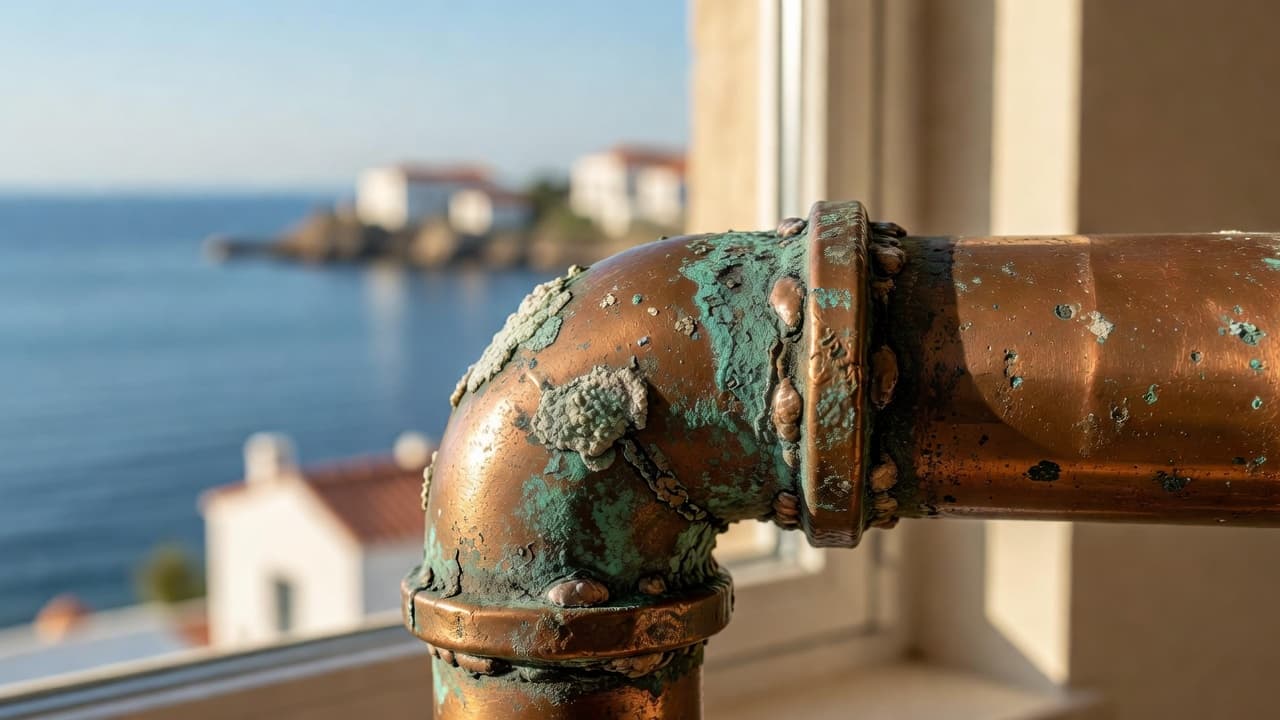
Burst or corroded pipe. The most common cause. If your flat is over 20 years old, copper or galvanised steel pipes can corrode from the inside, especially in hard-water areas or near the coast where salt air accelerates corrosion. A small hairline fracture can leak for weeks unnoticed — until it suddenly worsens.
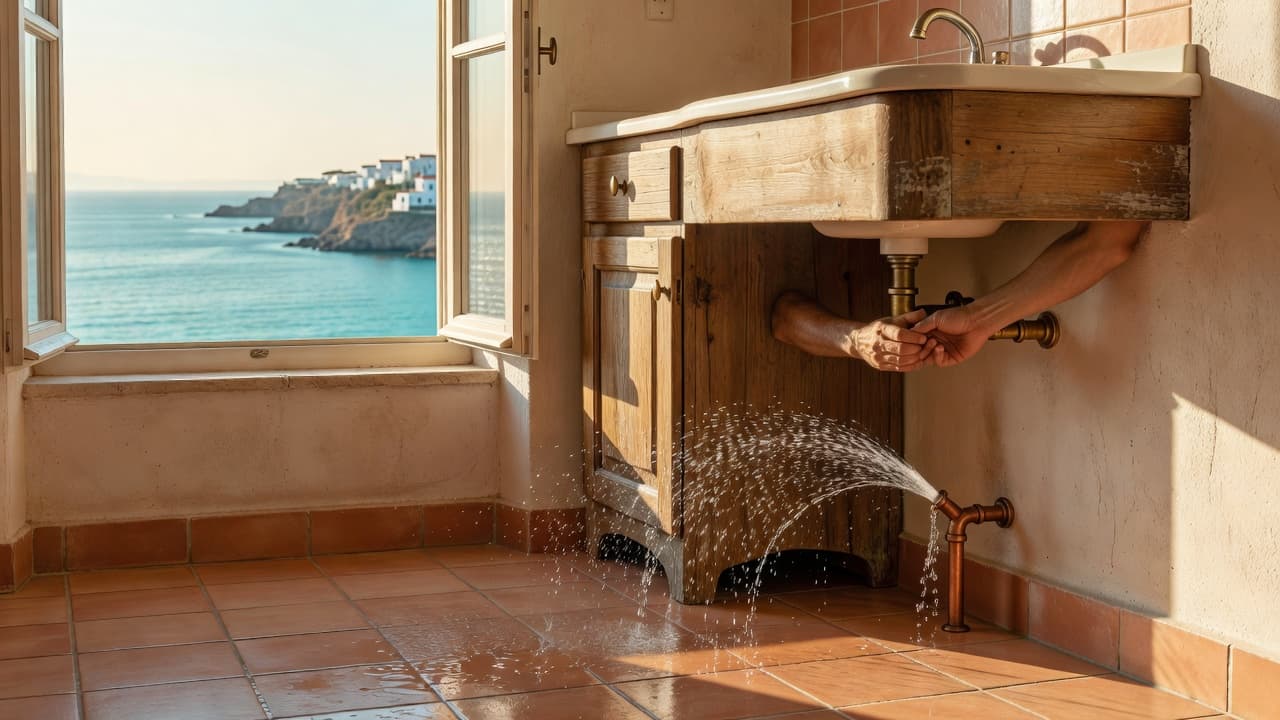
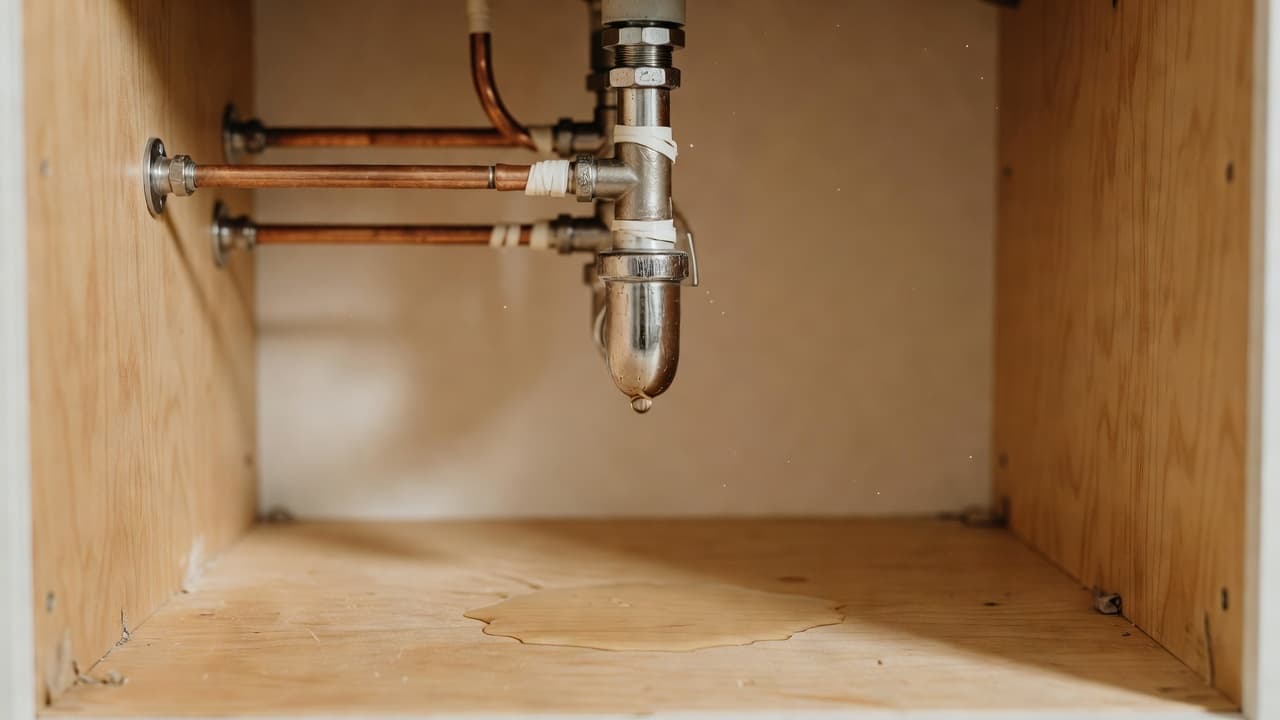
Loose joint. A compression fitting or a threaded connection comes loose from vibration, pressure changes, or simply age. You might notice a small drip under the sink for months, assume it's nothing, and then wake up to a flood.
Leaking toilet. The inlet valve or the flush valve inside a cistern wears out. Water runs constantly into the bowl (sometimes silently), overfills, and leaks down through the cistern connection into the flat below. This is deceptively common in holiday homes that have been empty.
Water tank failure. If your flat has an electric water tank (termo eléctrico) rather than a gas boiler, the internal lining can corrode and fail. The tank starts leaking from the bottom. This usually happens slowly, but sometimes suddenly.
Washing machine or dishwasher inlet hose. The rubber hose that supplies water degrades over time. A small leak becomes a big one when the machine is running. If you've never checked yours, assume it's due.
Radiator or heating pipe. A small leak at a radiator valve or from the central heating circuit. Less common in Mediterranean flats, but it happens, especially in older properties or in winter when the heating is on.
Do these only if the water supply is already turned off, and only if you're confident:
Tighten a visible loose connection under the sink or behind a radiator. Use two wrenches: one to hold the fitting still, one to tighten the nut clockwise. If it doesn't tighten after half a turn, stop — you risk cracking the fitting.
Mop up standing water. Use towels or a mop bucket to clear pooling water from your flat and, if your neighbour allows, from theirs. This prevents water from soaking into plasterboard and causing mould later.
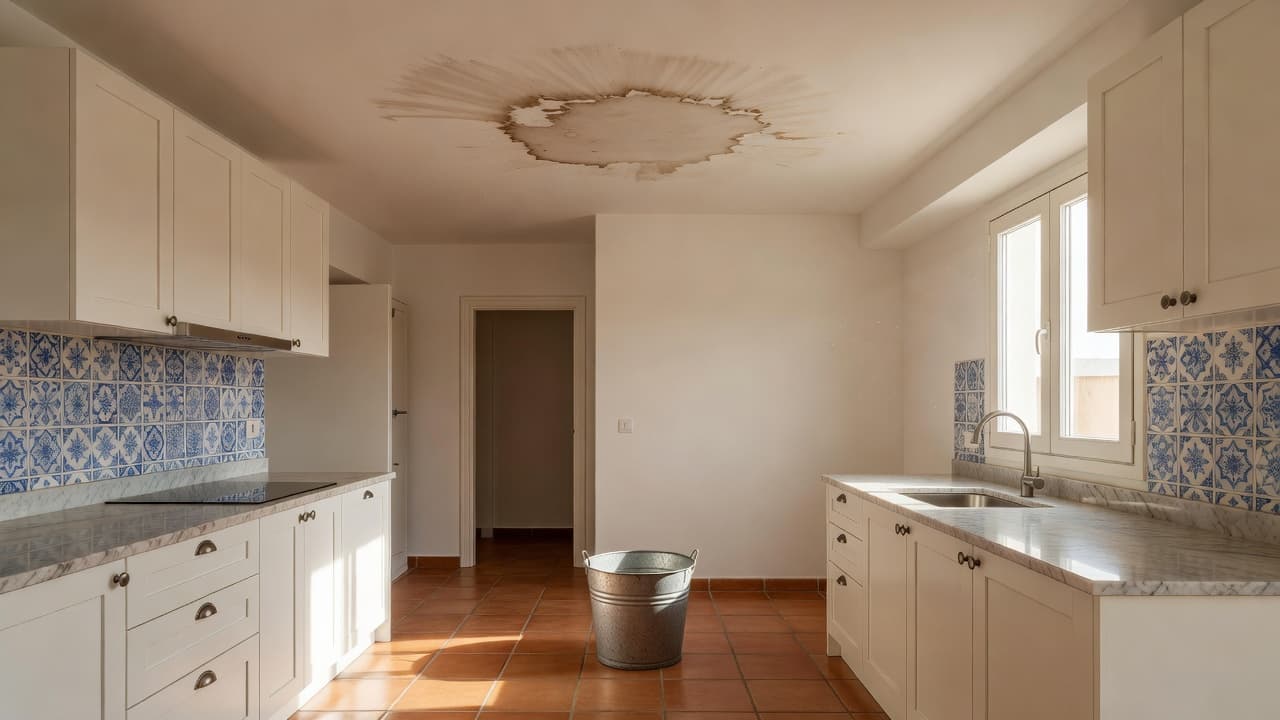
Place a bucket under the leak to catch any remaining drips. This helps the plumber see where exactly the water is coming from and how fast it's flowing.
Turn off the boiler if you have a gas boiler (caldera de gas) that is connected to heating pipes. Water and electricity together are a safety risk if the leak reaches electrical fittings.
Open windows. Increase air circulation to dry out damp areas. If it's summer and you have air conditioning, use it — it will help.
Do not:
- Try to seal a burst pipe yourself with tape or putty. It won't hold and will make the plumber's job harder.
- Use a mop to push water towards a drain. It may spread the leak into areas you can't see (inside walls, into flooring).
- Apply heat (hair dryer, heater) to try to dry things faster. You risk damaging plasterboard or creating electrical hazards.
Stop and wait for the professional if:
You cannot locate the main stopcock and the water is still running. Call the emergency services (bomberos) if water is affecting electrics or is a safety risk.
The leak is coming from inside a wall. You cannot see or access the source. A plumber needs to investigate using the right tools.
You hear hissing or smell gas. If the leak is near a gas boiler or gas pipe, turn off the gas supply at the meter (a handle near the boiler or on the exterior wall) and call a gas engineer (técnico de gas certificado). Don't touch anything else.
The leak is coming from a radiator and your hands are being burned. The heating system is still pressurised. Leave it alone.
Water has reached electrical sockets, a consumer unit (cuadro eléctrico), or any live wiring. Turn off the electricity at the main switch and call the emergency services or a qualified electrician.
You don't know where the water is coming from after 5 minutes of looking. Stop searching. You'll waste time and risk missing the actual source. A plumber has diagnostic experience.
The leak is coming from a communal pipe. If the pipe is shared with other flats or is part of the building's main supply, contact your community of owners (comunidad de vecinos) or the building manager immediately. They may be liable, not you.
A qualified plumber will start by turning off the water supply (if you haven't already) and locating the exact source of the leak. They'll check under sinks, around toilets, radiators, and washing machines first — these account for 80% of leaks. If the source is obvious (a burst pipe or loose joint), the fix is straightforward.
If the source is hidden — for example, a leak inside a wall or under a floor — the plumber may need to use a moisture meter or thermal imaging to locate it. This takes longer and costs more, but it's necessary. They'll explain what they've found and give you a quote for the repair before they start work. Don't accept work without a clear quote and an explanation of what's wrong.
Once the repair is done, the plumber will test the system by turning the water back on and checking for leaks. They should provide a receipt and, if relevant, a certificate of work. Keep this documentation — your insurance may ask for it, and it protects you if a problem reoccurs soon after the repair.
The plumber cannot fix damage to your neighbour's flat; that's a separate matter for their insurance. But the fact that you acted quickly, turned off the water, and had the leak repaired professionally will help your position if there's a dispute.
Check under sinks and behind toilets every 3 months. Even a small drip is a warning sign. Tighten any loose connections or call a plumber early.
Know where your main stopcock is. Test it now (turn it off and back on) so you're not searching in a panic later.
If your flat is over 15 years old and you've never replaced water inlet hoses, replace them now. Washing machine and dishwasher hoses cost €20–50 and take 10 minutes to swap. It's cheap insurance.
Run your heating system in winter, even if you don't live there full-time. A flat that's never heated is more prone to freeze damage (in northern Spain) and to corrosion in pipes. If you use your flat only seasonally, ask a trusted neighbour to check on it or hire a property management company.
If you spot rust stains or discolouration around pipes, call a plumber for an inspection. Corrosion is progressing, and a burst is coming. Better to replace the pipe now than to have a flood later.
A water leak into your neighbour's flat is stressful, but it's manageable if you act in the first 10 minutes. Turn off the water, photograph the damage, contact your insurance, and call a plumber. These steps protect your neighbour, your pocket, and your legal position. If you need a qualified plumber urgently, find one in your area — our network covers the Mediterranean coast with multilingual professionals available for emergency repairs.