Your split unit cools the air by passing it over a cold evaporator coil. Moisture condenses on that coil, just like condensation on a cold window. Normally, this water drains through a thin plastic pipe (the condensation drain) that runs from the indoor unit down to the ground or to an external drain point.
The drain can fail in three main ways:
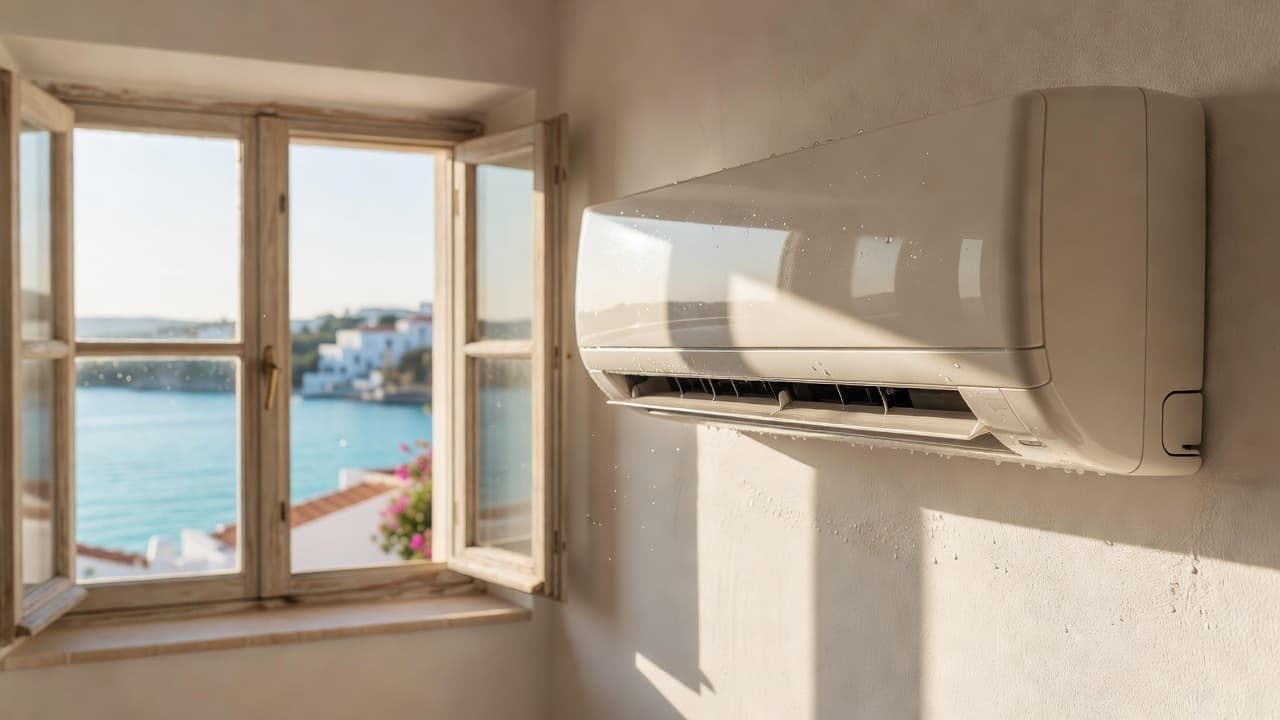
The drain pipe is blocked. Dust, algae, or debris accumulates inside the pipe over months, especially in hot, humid climates like the Mediterranean coast. Water backs up and leaks from the unit casing.
The drain pipe is frozen or kinked. If the refrigerant line has a fault or the unit is running at an extreme temperature, ice can form inside the drain. Alternatively, the pipe may have been accidentally bent or trapped during installation, restricting flow.
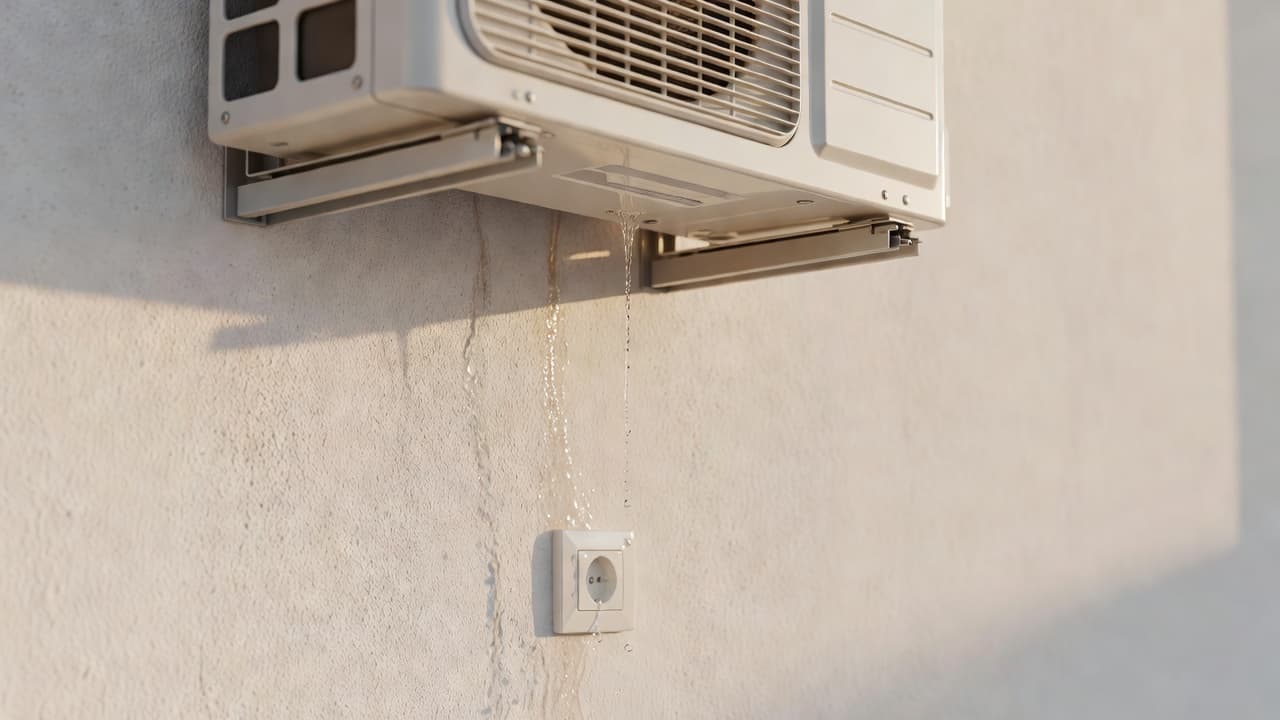
The drain pipe has come loose or disconnected. This happens occasionally when the unit vibrates over time or if installation was poorly done. Water pours straight down instead of being guided away.
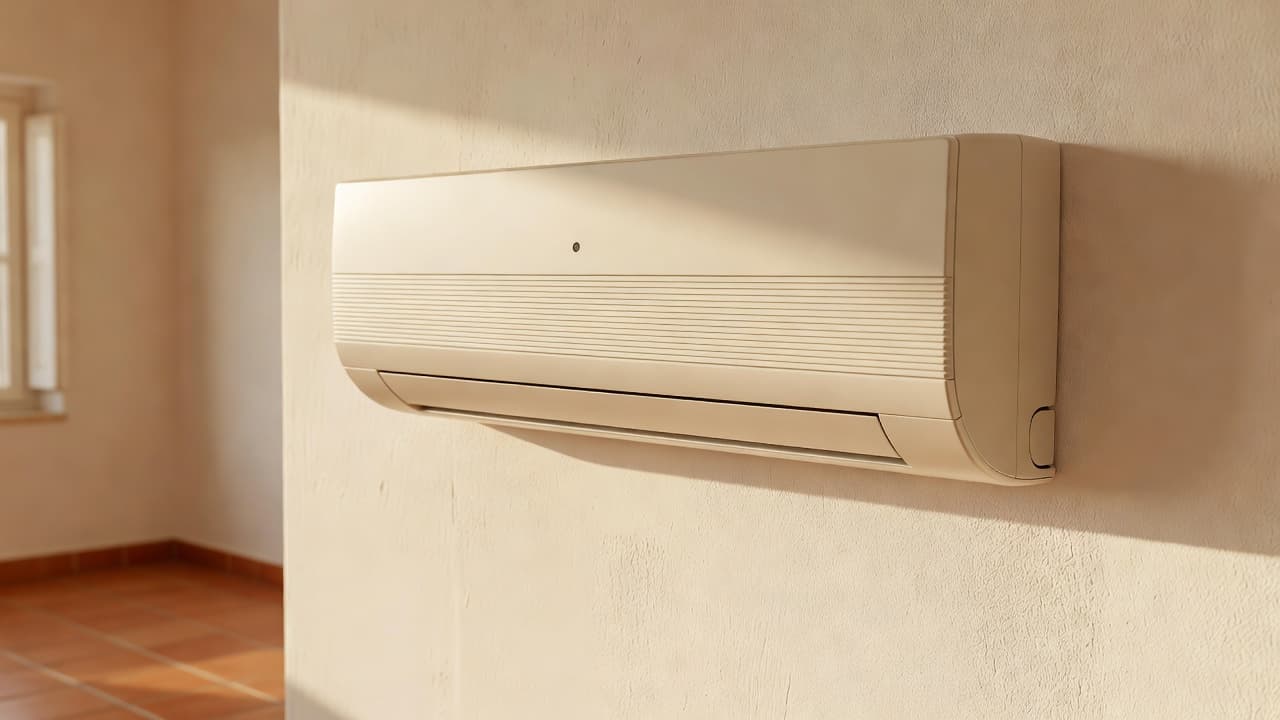
In rare cases, the unit itself is not level. Split units must sit slightly tilted backwards so condensation naturally flows towards the drain outlet. If a mounting bracket has shifted or loosened, water pools and leaks from the unit casing.
Your goal is to prevent water from reaching the socket. Do this:
Redirect the water. If the drip is falling straight down onto the socket, angle a piece of cardboard, plastic, or wood to deflect it sideways into a bucket. Secure it carefully so it doesn't fall or create a trip hazard.
Place absorbent material under the unit. Position towels, a large plastic tray, or a mop bucket directly under the dripping point. Check and empty it frequently. Do not leave water standing.
Keep the socket completely dry. If any moisture has touched the outlet, dry it immediately with a clean, dry cloth. Do not use heat (hair dryer or heater) near an electrical outlet, as this can damage the internal contacts.
Do not attempt to clear the drain yourself. You cannot safely access or clean the internal drain without specialist tools and risk damaging the refrigerant system or creating a different leak.
Do not seal or tape the drain outlet. This will only make the backup worse.
Do not open the split unit. It contains refrigerant gas at high pressure. Opening it without proper equipment and certification is illegal in most of Europe and dangerous. You can rupture the system, release harmful gas, or cause a coolant leak.
Do not use the socket while water is dripping or has recently been wet. The risk of electrocution or fire is real.
Do not use the air-conditioning unit while it's leaking water. This is a sign of a system fault. Continuing to run it may worsen the leak or cause damage to other components.
Do not pour water down the drain outlet yourself or use a compressed-air line to clear it. You could force debris deeper into the system or disconnect internal pipes.
If you notice water pooling inside the wall or ceiling around the indoor unit, or if the dripping is heavy and continuous, stop using the unit entirely and call the technician urgently. This suggests internal damage or a major blockage.
An air-conditioning technician will start by examining the indoor unit, the condensation drain pipe, and the external drain point (usually on the outside wall or at ground level).
If the drain is simply blocked, they will clear it using a specialist vacuum, a soft brush, or a thin rod — methods that don't risk damaging the system. They may also flush the drain with water or a mild cleaning solution. This usually takes 20–40 minutes and is inexpensive.
If the drain pipe is kinked or disconnected, they will straighten or re-seat it and secure it properly.
If there is internal damage to the unit or the condensation pan, they will advise you on repair costs or, in rare cases, replacement.
Once the leak is fixed, they will run the unit for 10–15 minutes and check that condensation drains normally. They should give you a brief explanation of what caused the fault and any maintenance advice for the future (usually: keep the area around the outdoor unit clear of debris, and ensure the indoor unit is level).
If you also called an electrician, they will arrive separately to test the socket with a moisture meter. If water has penetrated the outlet, they may replace it (a straightforward job, cost around €30–60 for parts and labour).
Have the unit serviced annually, ideally before summer. During a service, the technician cleans the evaporator coil and the condensation drain, both of which accumulate dust in Mediterranean heat and humidity.
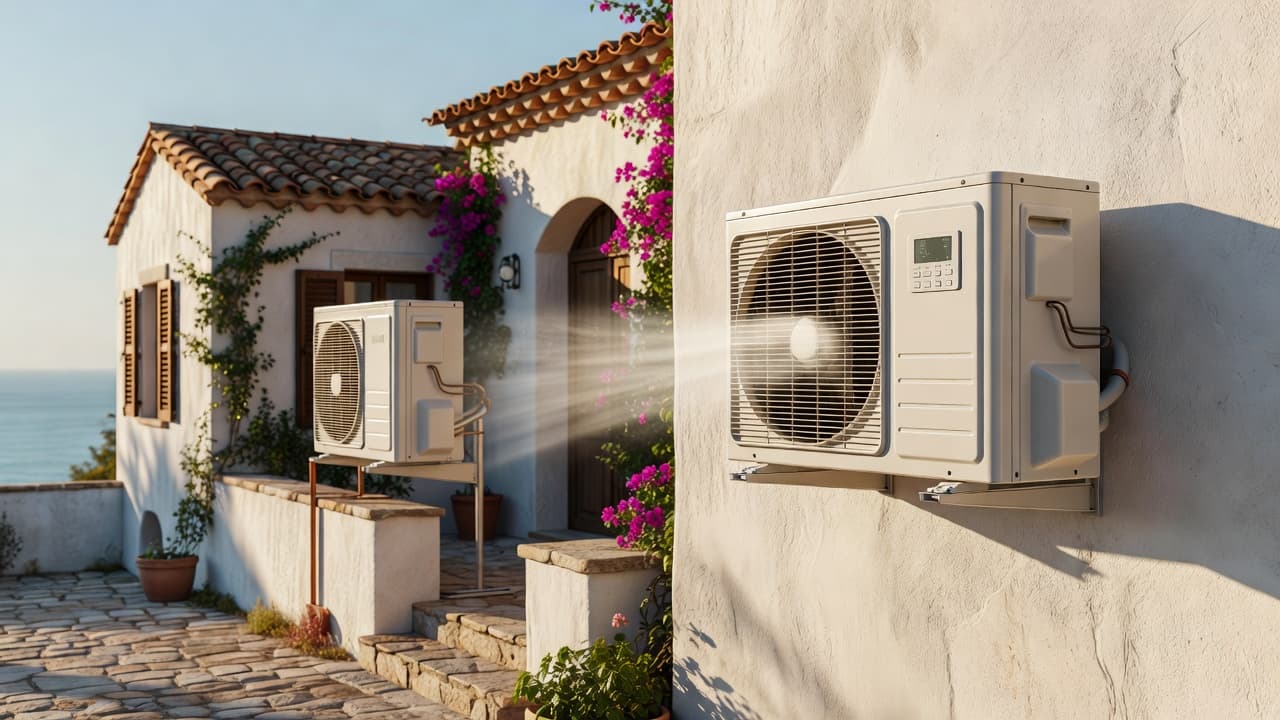
Keep the outdoor unit free of obstruction. The condensation drain often runs down the exterior wall and exits near the outdoor compressor unit. If leaves, plant pots, or other debris block it, water backs up.
Check that the indoor unit is level. It should tilt very slightly backwards. If you notice it's sagging or tilted forwards, call the technician to re-secure the mounting bracket.
Don't block vents or filters. A clogged air filter forces the unit to work harder, which can cause the evaporator coil to freeze — leading to excessive condensation when it thaws.
Monitor for small leaks. If you notice a drip from the unit during hot weather, don't ignore it. It's usually early warning of a blocked drain. Call the technician before the leak becomes heavy.
Right now: switch off the socket, turn off the air-conditioning unit, and place a bucket under the drip.
Within the hour: contact an air-conditioning technician and explain the situation. Mention that water is dripping onto an electrical socket so they treat it as urgent.
If water has touched the socket: also contact an electrician today.
The good news is that a blocked or disconnected condensation drain is one of the most common and easily fixable air-conditioning problems. Most repairs are straightforward and reasonably priced. The key is to act quickly to prevent electrical damage.
MyCasa Spain connects you with qualified air-conditioning technicians across the Mediterranean coast. All speak English, German, Dutch or Spanish, and understand the specific challenges of coastal properties. Get a professional to your home today.
Last updated: January 2025