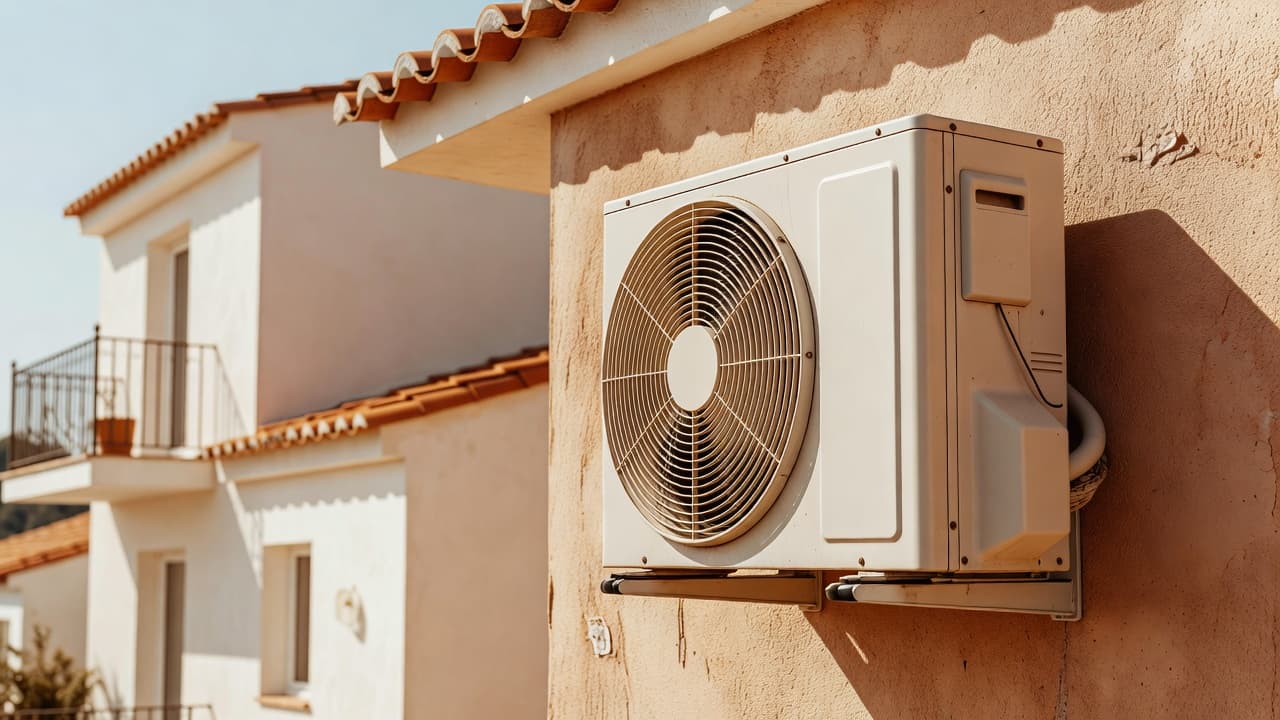
When the outdoor unit won't respond but the indoor unit is running, the fault is almost always in the communication or power supply between them—not the indoor mechanics themselves.
Tripped circuit breaker or safety switch. Your air-con system is designed to shut down automatically if it detects an electrical fault, a sudden power surge, or even compressor damage. Summer thunderstorms along the Mediterranean coast trigger this more than you'd expect. The breaker trips to protect the unit, not to annoy you.
Loose or damaged cable. The thick cable linking indoor and outdoor units carries power and control signals. Salt air, summer heat, wind, or accidental tugging by a cleaner can loosen a connector or damage the cable jacket. The indoor unit still responds because it's running off local power, but it can't communicate with the compressor outside.
Refrigerant leak. If your system has lost refrigerant (the liquid that circulates between indoor and outdoor units), there's usually a safety switch that prevents the compressor from starting. This protects the compressor from running dry and overheating. A small leak develops over time; a large one is sudden.
Compressor thermal overload. On very hot days—especially if the outdoor unit is in direct sun or surrounded by poor airflow—the compressor shuts down to cool itself. This is intentional. It will restart once it cools, usually within 15–30 minutes. If it never restarts, the compressor itself may be failing.
Age and wear. If your unit is over 10 years old and has never been serviced, internal components corrode or fail. The outdoor unit may still receive a "start" signal from indoors but lack the electrical strength or mechanical health to respond.
Do not try to run the system with just the indoor unit working for more than a few minutes. The indoor coil relies on refrigerant circulation. Without the compressor pumping, the coil can freeze or suffer damage. Running the fan alone won't harm anything immediately, but full cooling mode will cause problems fast.
If it's a weekend or outside business hours and you're desperate for comfort, use a portable fan or open windows during cooler hours (early morning, late evening). If the outdoor unit has failed in mid-summer and repair will take days, a window-mounted portable AC unit (available from most large shops for €150–€300) can keep one room habitable while you wait.
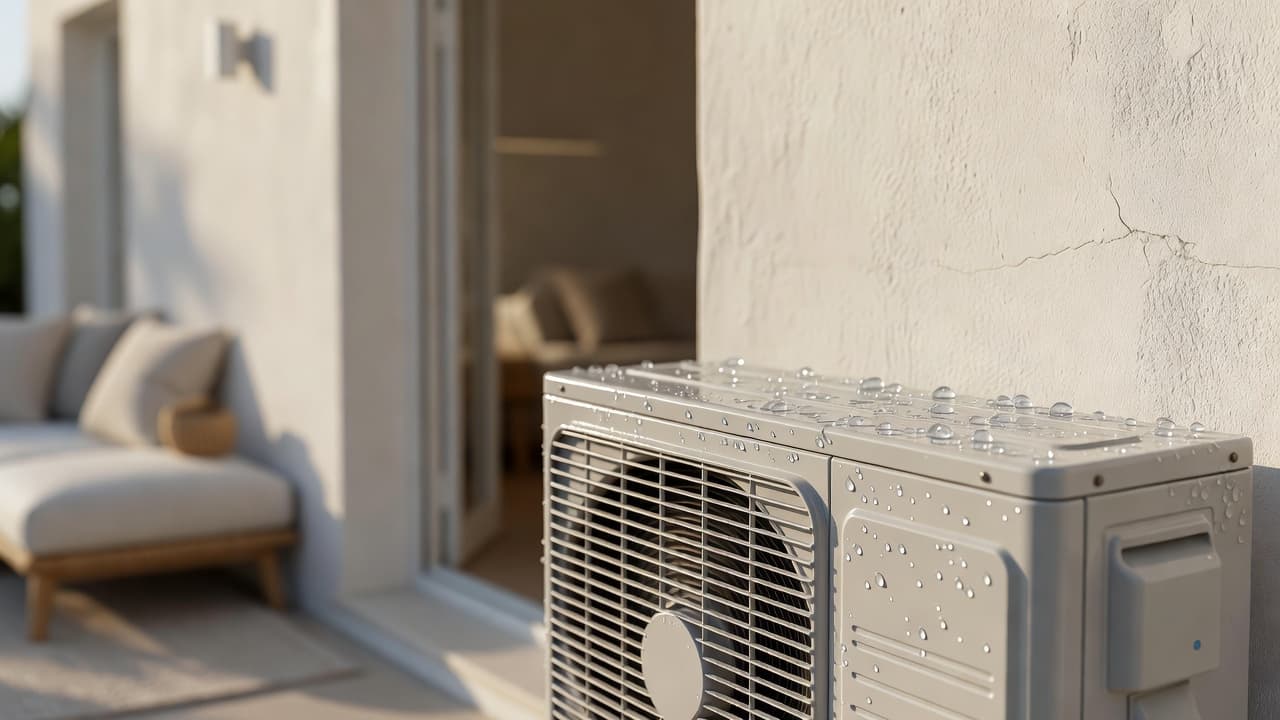
Do not pour water on the outdoor unit to cool it. It won't help and can damage electrical components or create a short. The unit is designed to shed heat naturally.
Do not attempt to open the outdoor unit case. Inside are live electrical components and sealed refrigerant. This is dangerous and voids any warranty. Leave it closed.
Stop and call a technician immediately if:
- The outdoor unit is mounted high on a wall, on a roof, or anywhere you'd need a ladder or climbing. Do not climb. Fall injuries are far more serious than waiting for a repair.
- The circuit breaker trips again immediately after you flip it back on. This indicates an electrical short. Stop touching it.
- You see liquid pooling under the outdoor unit or dripping from the cable. This is likely refrigerant. It's toxic to inhale and illegal to vent. Call a professional.
- You smell a burning or chemical odour coming from the outdoor unit. Switch the system off at the breaker and call immediately.
- The cable is visibly damaged (cut, melted, or heavily corroded). Do not touch it. Call a technician.
- You're uncertain about any electrical work. If in doubt, don't touch the breaker or the disconnect box. A wrong move costs money or causes injury.
A technician will start by checking the same things you did (breaker, disconnect switch, cable connections), then move to diagnostics.
They'll use a multimeter to test voltage at the disconnect box and throughout the control circuit. This tells them if power is reaching the outdoor unit at all. If it is, they'll move to the compressor itself—testing the capacitor (a small cylinder that gives the compressor the "kick" to start) and checking for signs of electrical damage.
If the issue is a refrigerant leak, they'll use a special detector to find where it's escaping. Small leaks in the cable connectors are straightforward to fix (tighten or reseal). Leaks inside the coils or compressor are more expensive and sometimes make repair uneconomical.
They'll take readings of system pressure and temperature. If the compressor is running correctly, pressures should be within a narrow range. Out-of-range readings confirm mechanical failure.
You'll receive a full diagnosis and a quote before any work begins. Spanish law and professional standards require this. Ask them to explain the problem in simple terms and compare the cost of repair against replacement if the unit is very old.
- Have the system serviced annually, ideally before the summer rush (May or June). A technician will clean the outdoor coil, check refrigerant levels, test electrical components, and spot corrosion before it becomes a problem.
- Ensure the outdoor unit has clear airflow. Keep vegetation, bins, and clutter at least one metre away. In coastal areas with salt spray, rinse the coil gently with fresh water every few months.
- Check the cable route after storms or strong wind. Make sure nothing is pressing on it or loose.
- Don't ignore warning signs. If the system is slower to cool, noisier than usual, or the breaker trips occasionally, call someone soon. Small faults become big ones.
- Protect against power surges with a surge protector fitted to the outdoor unit's circuit. Summer storms on the coast can spike voltage without warning.
If you've checked everything here and the outdoor unit still won't start, the fault is beyond simple troubleshooting. Contact a qualified air-conditioning technician to diagnose and repair it. Most local specialists along the Mediterranean coast offer same-day or next-day visits during summer. The sooner you call, the sooner you'll have cooling back—and the less risk of further damage to the system.
Find air-conditioning specialists in your area