When an air conditioning unit breaks down, the technician's first question is usually: "What's the model number?" This isn't laziness. The model number tells them what refrigerant your system uses, its capacity, its age, whether it's still under warranty, and which spare parts are compatible.
Without this, the technician must make an on-site visit just to identify the unit. That costs you time and money. With the information ready, they can often diagnose the problem over the phone, order parts in advance if needed, and arrive prepared with exactly what's required.
The serial number is equally important. It reveals the manufacturing year and helps confirm whether the unit is still covered by the manufacturer's warranty. On the Mediterranean coast, where salt air and heat create harsher conditions than inland, warranty status can mean the difference between an expensive repair and a free replacement if there's a manufacturing fault.
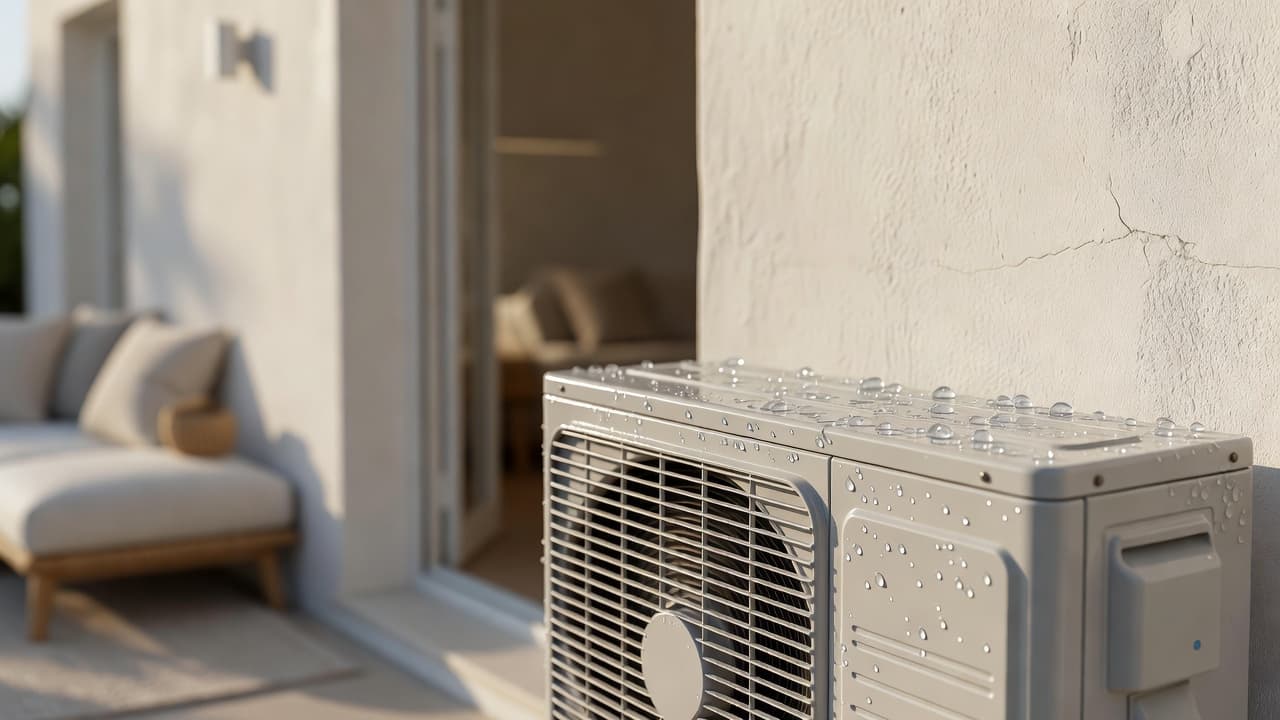
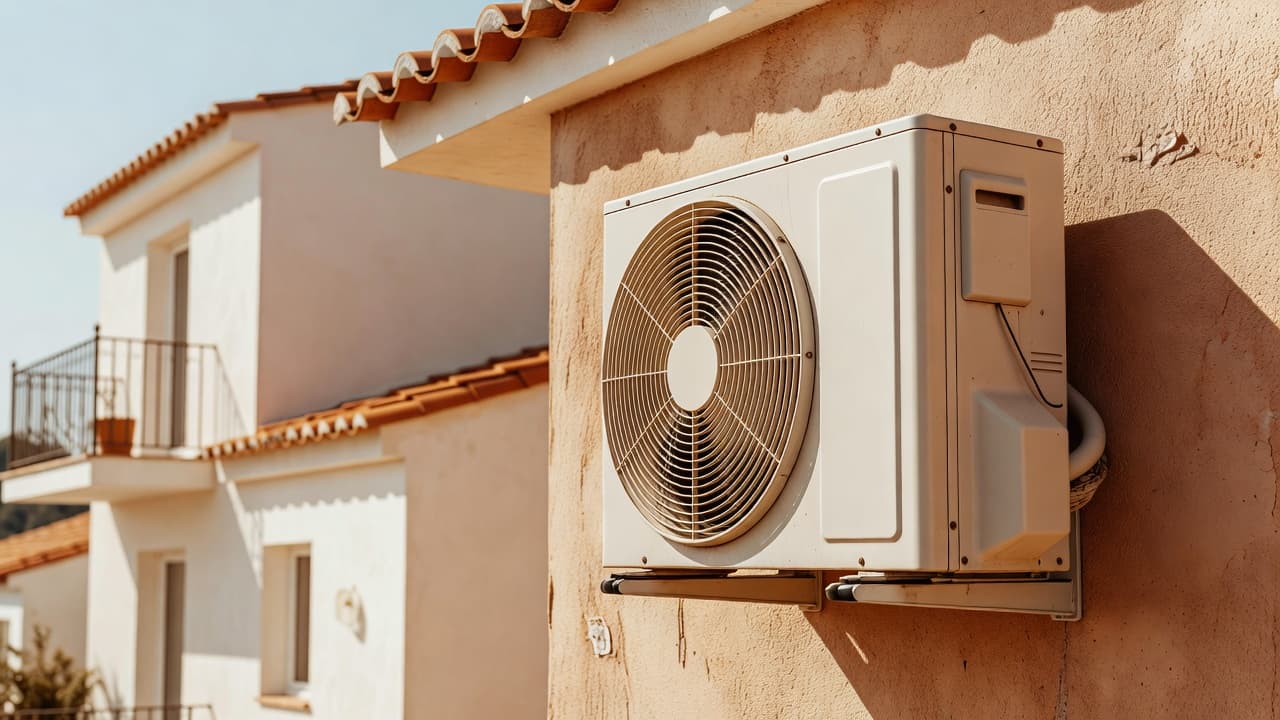
Outdoor compressor unit (the most common location): Walk to the metal box mounted on the exterior wall or ground. The label is usually on the side panel, sometimes protected by a small plastic cover. In holiday homes or urbanisations where units are grouped, make sure you're looking at your own unit—serial numbers are unique.
Indoor wall unit (sometimes a second label): Some systems, especially inverter models, have a second label inside the indoor wall-mounted unit. This is less essential but useful for cross-checking information.
Behind removable panels: On some compact or roof-mounted units, the plate may be behind a removable metal or plastic panel. If you can see a small panel that slides or unclips, it's worth checking.
If the label is illegible or missing: This happens, especially near the coast where salty air corrodes labels over time. Take clear photographs of the outdoor unit from multiple angles. Include any branding visible on the casing. Have these photographs ready when you call. A technician may still be able to identify your system from the unit's colour, shape, and size.
Model number: This is the quickest way to identify the exact system. It tells the technician the capacity, the refrigerant type, whether it's a heating/cooling unit or cooling-only, and the year it was manufactured. Models are updated regularly, so a 2015 model will have different specifications than a 2022 one.
Serial number: This is your system's unique ID. It confirms the manufacturing date, which determines warranty status. It also helps the technician trace any known issues with that production batch (manufacturers sometimes issue recalls or advisories for units made in specific years).
Refrigerant type: This is critical. Different refrigerants require different handling, different oils, and different tools. Mixing refrigerants or using the wrong type is dangerous and illegal. Modern systems use R410A or R32, but older units (pre-2010) may use R22, which is now banned in the EU. This affects repair costs and your options if the system needs major work.
Power rating (kW): This tells the technician the cooling capacity of your unit. It's essential if parts need replacing, because a 2.5 kW compressor is not interchangeable with a 3.5 kW compressor. The power rating also helps diagnose whether the unit is oversized or undersized for your space.
Taking a photograph of the entire data plate is a sensible backup, especially if:
- The label is faded and hard to read by eye.
- You live in a remote location and may not have instant phone reception.
- You're calling from abroad and want to send the information to a technician via email or WhatsApp.
- The numbers include characters that could be confused (the letter O vs. the number 0, the letter I vs. the number 1).
A clear close-up photo taken in daylight, without glare, is worth keeping. But don't rely on the photo alone. Write the numbers down. You might not find the photo quickly when you're on the phone with the technician, and the photo might be blurry.
If the outdoor unit is difficult to access (mounted high on a wall, in a locked common area, or blocked by vegetation), inform the technician of this when you call. They may ask you to describe the unit instead: its colour, brand name (if visible), size, and the year you remember it being installed.
If the label is completely corroded or missing, this is not uncommon in older coastal properties. The technician will still be able to identify your unit by visiting and examining it in person, but this will add to the call-out time. Having photographs of the unit itself—showing the overall shape, colour, and any visible branding—helps speed up remote identification.
Print or screenshot this checklist and keep it near your phone or on your kitchen noticeboard.
When you call a qualified air conditioning technician, you'll be able to rattle off these details in seconds. The technician will know immediately what system they're working with, and the repair will be faster and more efficient.
Once you've noted down the data plate details, store them in at least two places:
In your phone: Create a contact named "AC Unit" with the model, serial, and other details in the notes field. Or take a screenshot of your handwritten note.
In your home file: If you keep household documentation (boiler manual, electrical certificate, property survey), add a copy of the AC information there.
With your community of owners (if applicable): If you live in an urbanisation or a flat with shared facilities, the community management office may also hold records of the AC installation. Ask if they have a copy of the original installation certificate, which will include all data plate information.
This information rarely changes, so once you've recorded it, you won't need to repeat the task. But if your AC unit is replaced, update your records with the new model and serial number.
Take five minutes now to find your AC unit's data plate and write down the four key details. It's the simplest thing you can do to make a future repair faster, cheaper, and less stressful. When you do need air conditioning help, you'll be glad you did.