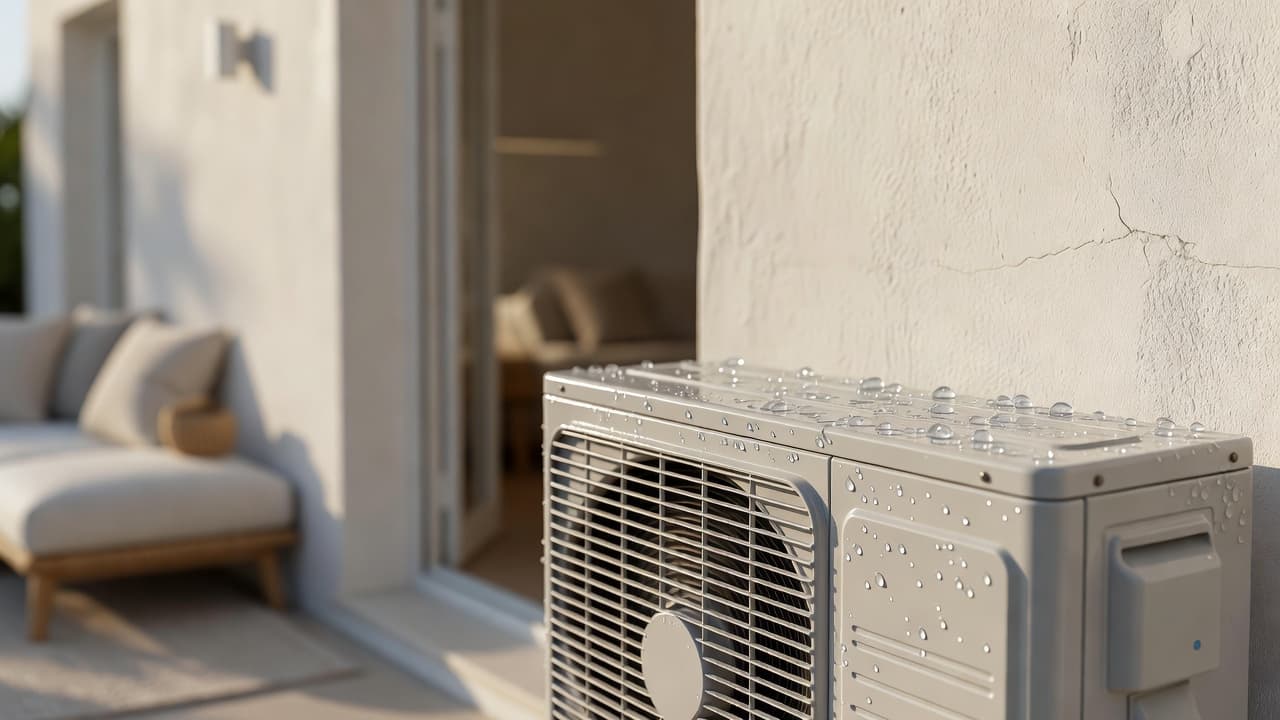
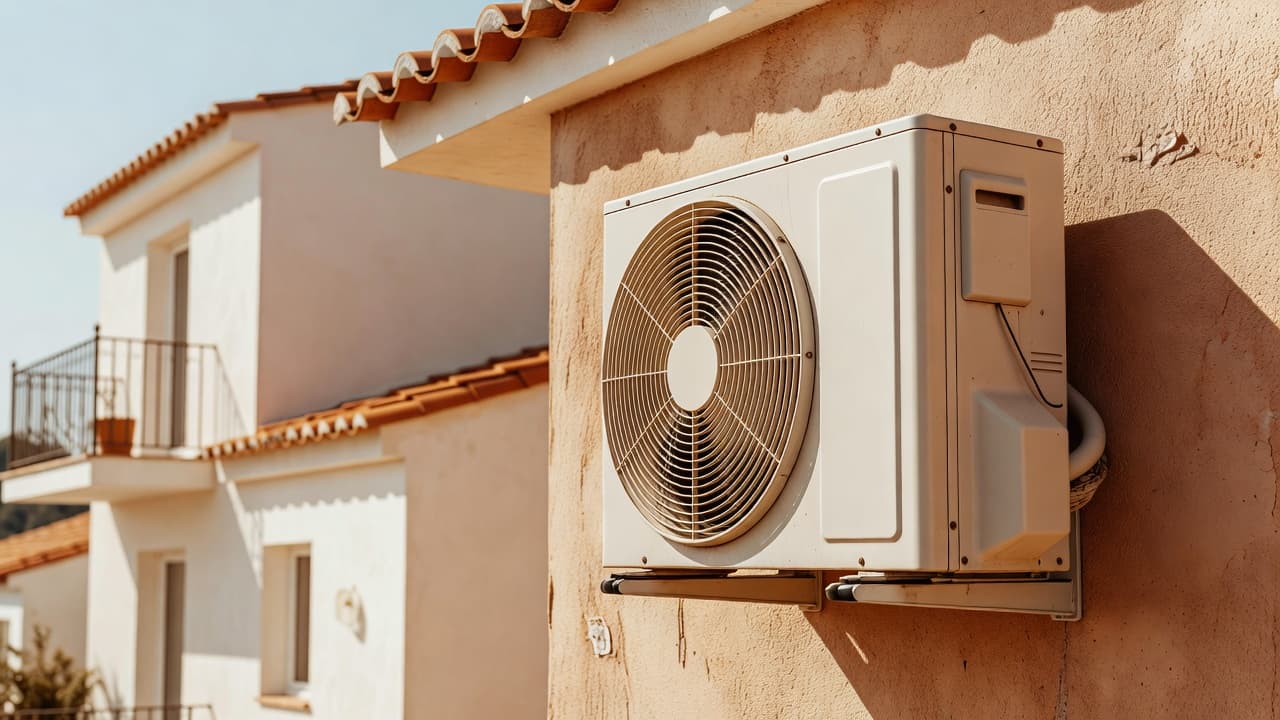
A split air conditioning system (the wall-mounted indoor unit connected to the outdoor compressor) continuously removes moisture from the air in your room. This moisture condenses on the cold internal coils inside the unit. That water must exit through a small drainage pipe that runs from the indoor unit to the outside wall or to a floor drain.
When the drainage pipe becomes blocked, water cannot escape and pools inside the unit. When you use the air con, this pooled water eventually overflows from the vents or from gaps around the unit and drips onto whatever is below.
Common causes of blockage:
- Dust and lint accumulation. Fibres, pet hair, or dust from the room settle in the drain pipe over months of use.
- Algae or mould growth. In humid Mediterranean climates, particularly over summer, algae can grow inside the damp pipe and seal it off.
- Insect or debris blockage. A spider web, dead insect, or leaves (if the outdoor end of the pipe is not capped) can obstruct flow.
- Pipe disconnection. The small plastic tube connecting the indoor unit to the drain exit may have come loose at a joint, especially after a building vibration or if the unit was recently serviced.
- Frozen or kinked pipe. Less common, but if the pipe has been crushed or kinked by furniture or during installation, water cannot flow.
If the drain outlet is visible and accessible (usually at the back or side of the indoor unit, or on the outside wall), you may try this:
To clear a visible external blockage:
Locate the small drain pipe outlet on the outside of the wall. It is typically a thin plastic tube (about the width of your finger), and water may be visible trickling or not flowing from it.
Turn off the air con if you haven't already.
Use a mop bucket to collect water.
Gently pour warm (not boiling) water down the pipe opening, or use a thin, flexible wire (like a straightened wire coat hanger) to probe very gently inside the opening to dislodge debris. Do not force the wire hard.
If water starts flowing again, you may have cleared it. Turn the unit back on and monitor for drips.
If the blockage is inside the unit or at the back where you cannot reach safely, stop here and call a technician. Opening the unit or trying to remove internal pipes risks damaging the refrigerant lines or electrical components.
Stop and call a professional immediately if:
- The drain pipe is located high up or at an awkward angle where you'd need a ladder or scaffolding to reach it safely.
- Water is dripping from multiple points on the unit, suggesting the blockage is deep inside.
- You can see water pooling visibly inside the indoor unit (behind the front grille). This means the blockage is within the unit itself.
- The pipe is cracked, discoloured, or obviously damaged.
- You have attempted to clear it and water is still dripping after 20 minutes.
- The unit is still under warranty. Opening it or attempting internal repairs may void the guarantee.
- There is any smell of burning, electrical odour, or unusual noise from the unit. These suggest a separate fault and you should not operate it at all.
In any of these cases, turn off the air con and contact an air conditioning technician. Do not use the unit again until it has been inspected.
When you call, the technician will attend to diagnose the problem and clear the blockage or repair the drainage system. Here is what to expect:
The technician will first inspect the indoor and outdoor drainage pipes to locate the blockage. They have access to specialist tools — a compressed air pump or a flexible cleaning rod — that safely dislodge debris without damaging the pipes. If the blockage is algae or mould, they may flush the pipe with a chemical cleaner (harmless, but they'll do it, not you).
If the pipe is disconnected, they'll reconnect it at the joint. If the pipe is cracked or kinked, they'll replace that section (this usually takes 30–60 minutes and costs more than a simple unclogging).
Once the blockage is cleared, the technician will run the unit briefly to confirm water is draining properly. They may ask you to monitor the unit for a few hours to ensure the problem doesn't recur.
If they've had to open any part of the refrigerant circuit, they'll check that the system is still pressurised and that there are no leaks. This is important — a refrigerant leak will mean the unit stops cooling efficiently.
You'll receive an invoice. If they've only cleared a blockage, it's usually €80–150. If they've replaced pipe sections or carried out other repairs, expect €150–300 depending on the scope.
Once the pipe is cleared or repaired, simple maintenance will prevent blockages recurring:
Keep the indoor unit's intake filter clean. The filter (usually a plastic mesh behind the front grille) should be vacuumed or rinsed every 2–4 weeks during heavy use. A clean filter means less dust travels into the system and into the drain pipe.
Ensure the outdoor drain outlet is clear. Inspect the small pipe outlet on the outside wall once a month. Remove any visible leaves, cobwebs, or debris. If it's in a low spot where leaves accumulate, install a small wire mesh cap to keep debris out (ask your technician to do this).
Run the unit regularly in winter. Even in winter, run the air con for 15 minutes once a week on a low setting. This keeps the drain pipe clear of mould and algae.
Check humidity levels. If your home is very humid, algae will grow faster in the drain. In summer, aim for 40–60% relative humidity using a dehumidifier if necessary.
Have an annual service. A professional clean and inspection (usually €80–120) before summer starts catches blockages early and extends the unit's lifespan.
If your air conditioning system is dripping water, don't leave it running. The fix is usually straightforward — a cleared drain pipe — but it requires professional attention. Contact an air conditioning technician today to arrange a visit. In the meantime, catch the drips with towels and keep furniture clear.