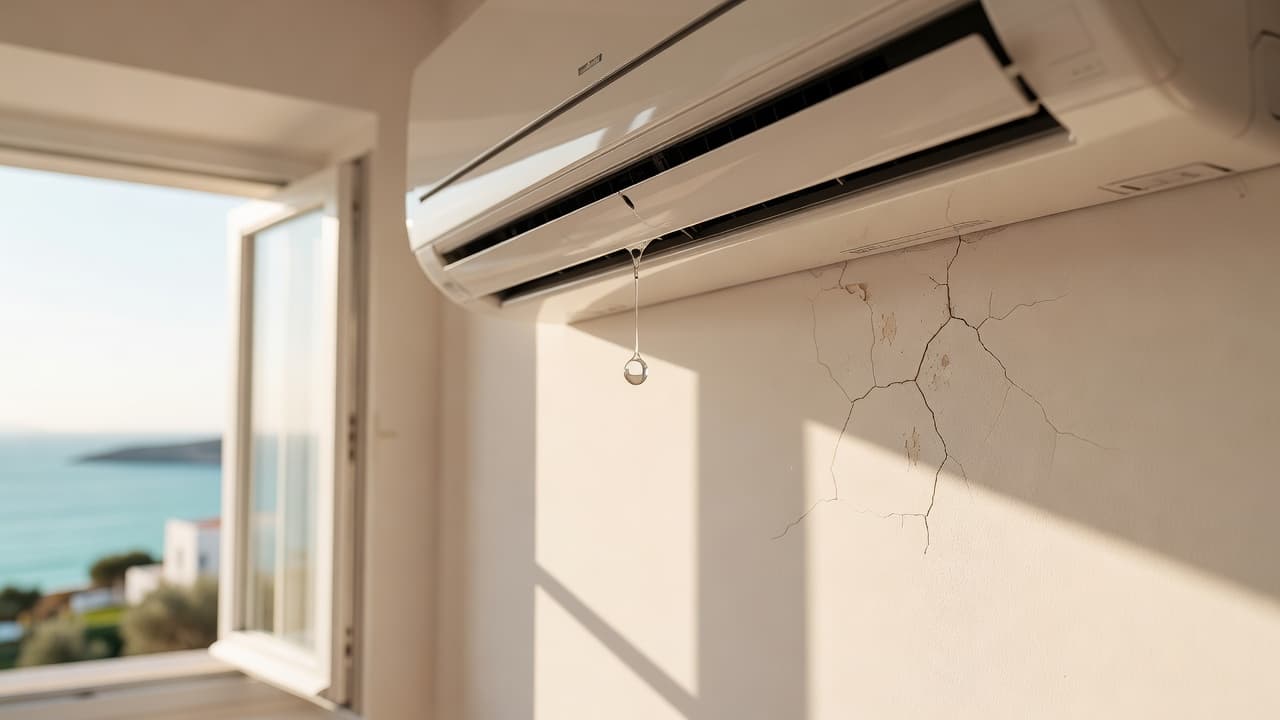
Air conditioning units produce condensation as they cool the air—it's a normal byproduct of the cooling process. This water should drain away automatically through a thin plastic pipe. If the pipe is blocked, the water pools inside the indoor unit and overflows, dripping onto your wall or floor.
Common causes of blockage:
- Dust and debris accumulation inside the pipe. Over months or years, dust settles in the drain and forms a blockage.
- Algae or mould growth inside the pipe, especially in humid coastal climates like the Mediterranean. This is common in summer.
- A kinked or misaligned pipe from installation, age, or vibration from the unit. Water can't flow downhill properly.
- External blockage at the outlet where the pipe exits the building. A leaf, spider web, or dirt can seal the opening.
- Clogged condensation pan inside the unit itself (the small reservoir where water collects before draining). This is less common but happens if the unit isn't serviced regularly.
Less commonly, the problem is:
- A cracked or split drain pipe. This usually happens in older units or if the plastic has degraded in direct sunlight.
- A faulty condensation pump (in units designed with an internal pump to push water upwards or away). Pumps fail and need replacement.
- A refrigerant leak. This is rare, but if the water contains refrigerant oil, it will have a chemical smell and may be slightly discoloured.
Clearing the external drain outlet:
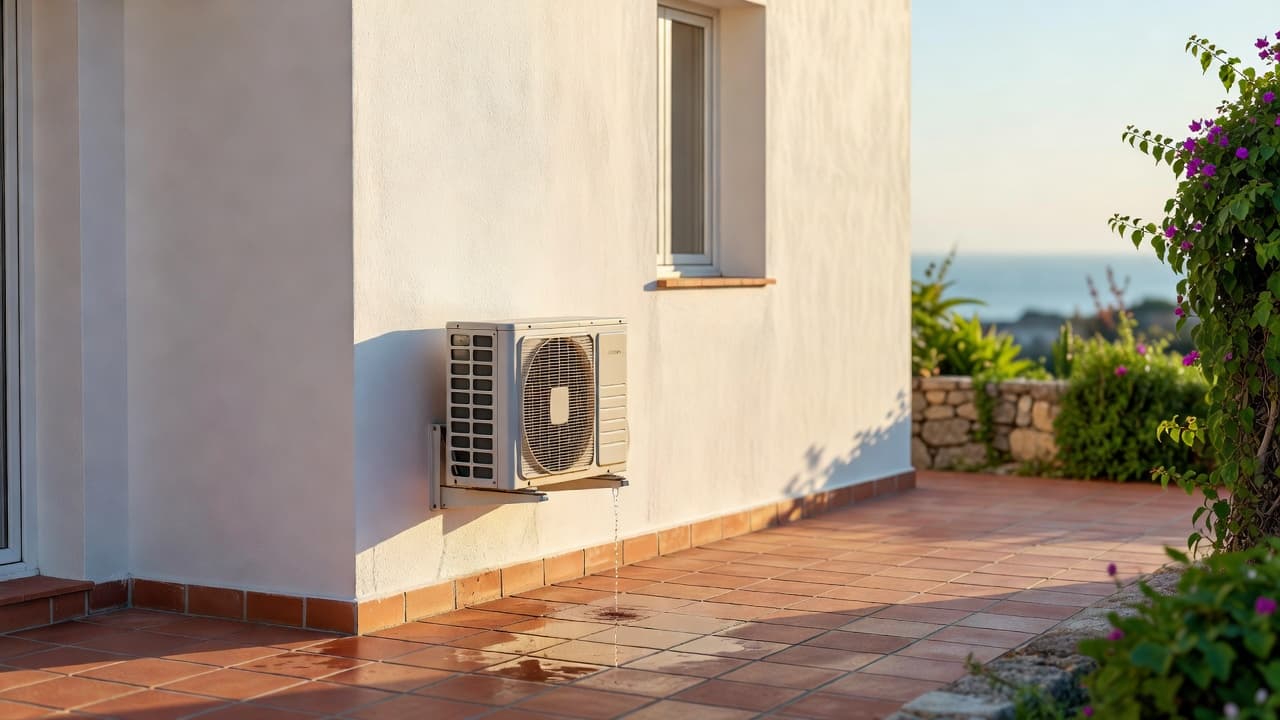
If you can see the external outlet of the drain pipe on your outside wall (usually a small plastic opening about the size of a pencil), try this:
- Find a hosepipe or a jug of clean water.
- Pour water gently into the outlet, or spray it lightly with the hose on a gentle setting.
- Watch for water flowing out freely. If it does, the blockage may be cleared.
- Return inside and check if the drip has stopped or reduced.
This works only if the blockage is at the very outlet. If water doesn't flow out or the drip doesn't improve, the blockage is deeper in the pipe and needs professional cleaning.
Improving drainage temporarily:
If the pipe seems kinked or the unit is tilted:
- Look at the angle of the indoor unit. It should be very slightly tilted downwards towards the drain outlet.
- If you can see it's tilted backwards or sideways, loosen the brackets gently (a few millimetres) to correct the tilt. This is a temporary measure only; a professional will re-align it properly.
Preventing damage while waiting:
- Keep the bucket or towel under the drip and empty it as needed.
- If water is running down the wall, place a cloth or towel against the wall to absorb it before it soaks in.
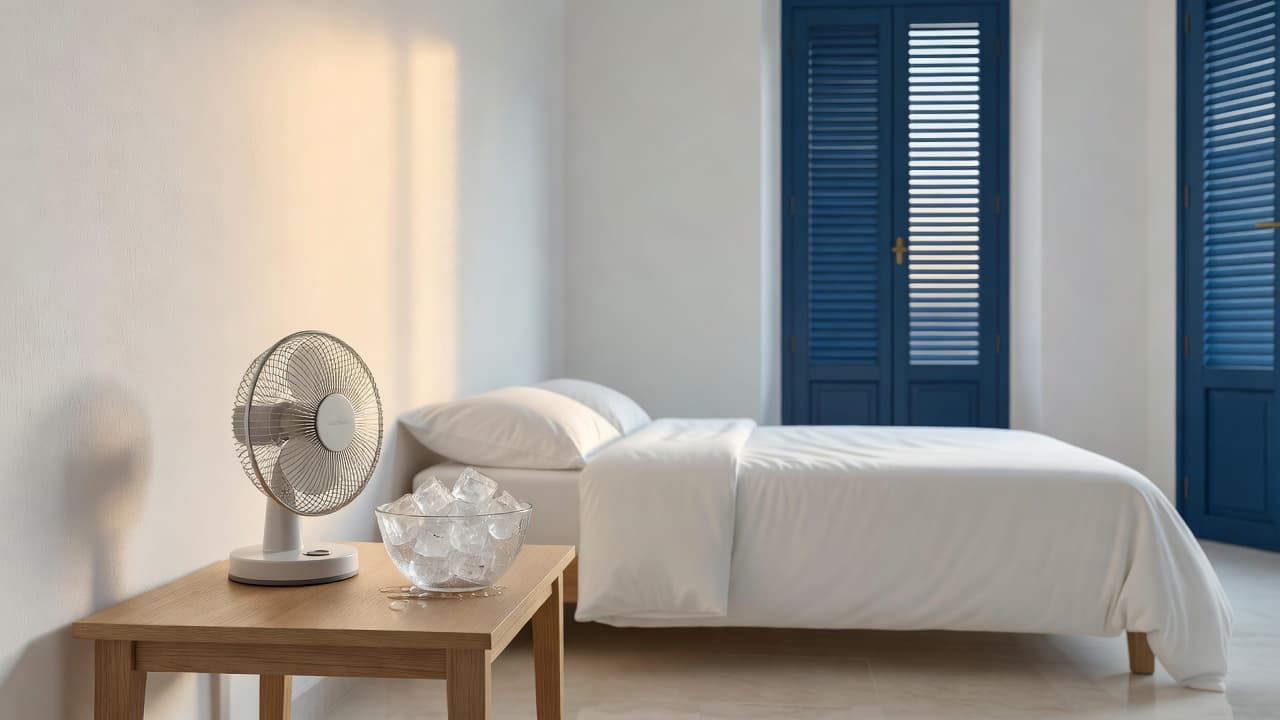
- Open windows and use a dehumidifier or portable fan to improve air circulation and reduce the damp.
- Do not use the AC unit, even on a lower setting.
Stop and call a professional immediately if any of the following applies:
- The water has colour, cloudiness, or a chemical smell. This suggests a refrigerant leak or contamination inside the unit. Refrigerant is hazardous and requires specialist handling.
- Water is leaking from the refrigerant pipes (the thick metal tubes connecting the indoor and outdoor units). Do not touch these.
- The drain pipe is visibly cracked, split, or missing. You cannot tape or glue a drain pipe safely; it will fail again within days.
- The drip is very heavy or water is pooling inside the unit. This suggests a major fault in the internal drainage system or pump.
- The unit is making unusual noises (grinding, hissing, or rattling) in addition to dripping. This may indicate a mechanical failure.
- You are unsure which pipe is the drain and which is a refrigerant line. Refrigerant pipes are thicker, metal, and insulated with foam. Do not touch them.
In all these cases, turn off the unit, place a bucket underneath, and call an air conditioning professional the same day. Do not attempt repairs.
The technician will inspect the unit and trace the drain pipe from inside the unit to the external outlet. They'll check for blockages, leaks, damage, and improper installation.
If the blockage is in the pipe, they'll use a compressed air tool or a professional drain cleaner to flush it out. This takes 20–40 minutes and usually solves the problem. They may also treat the pipe with an anti-algae solution to prevent regrowth in humid conditions.
If the pipe is cracked or damaged, they'll replace it. This is a straightforward job and typically costs less than a service call. You'll have a new plastic pipe fitted, and the unit will be re-tested.
If the condensation pan inside the unit is blocked, they'll clean it and check the internal drain path.
If a pump is faulty, they'll replace it (less common in basic split units).
After the work is complete, they'll run the unit for 10–15 minutes and confirm that water drains normally. They'll show you where the external drain outlet is and explain how to keep it clear. Some professionals provide a brief maintenance guide or sticker with their contact details.
Always ask the technician to confirm in writing what the problem was and what they've fixed. This helps if the problem recurs and is useful for insurance purposes if water damage has occurred.
- Keep the external drain outlet clear. Every month or two, especially in summer, check that the outlet on your outside wall is not blocked by leaves, dirt, or spider webs. A gentle spray with water should flow freely.
- Have the unit serviced annually, ideally before the cooling season begins. A service includes cleaning the filter, checking the drain system, and cleaning the condensation pan.
- Ensure the unit is tilted very slightly downwards towards the drain outlet. This is usually set during installation, but vibration can shift it over time.
- In humid coastal climates, consider asking the technician to apply an anti-algae treatment to the drain pipe. This is a simple preventive measure.
- Don't block the drain outlet with new decorations, plants, or fittings. It needs clear access to air.
- If the unit sits idle for months (e.g., a holiday home in winter), run it briefly on cooling mode once a month for a few minutes to keep the condensation system active.
Water dripping from your AC unit is not an emergency, but it is urgent. Contact an air conditioning professional within the next day or two to prevent water damage to your home. In the meantime, catch the drips and keep the affected area dry. The fix is usually simple and affordable—the longer you wait, the more damage accumulates.