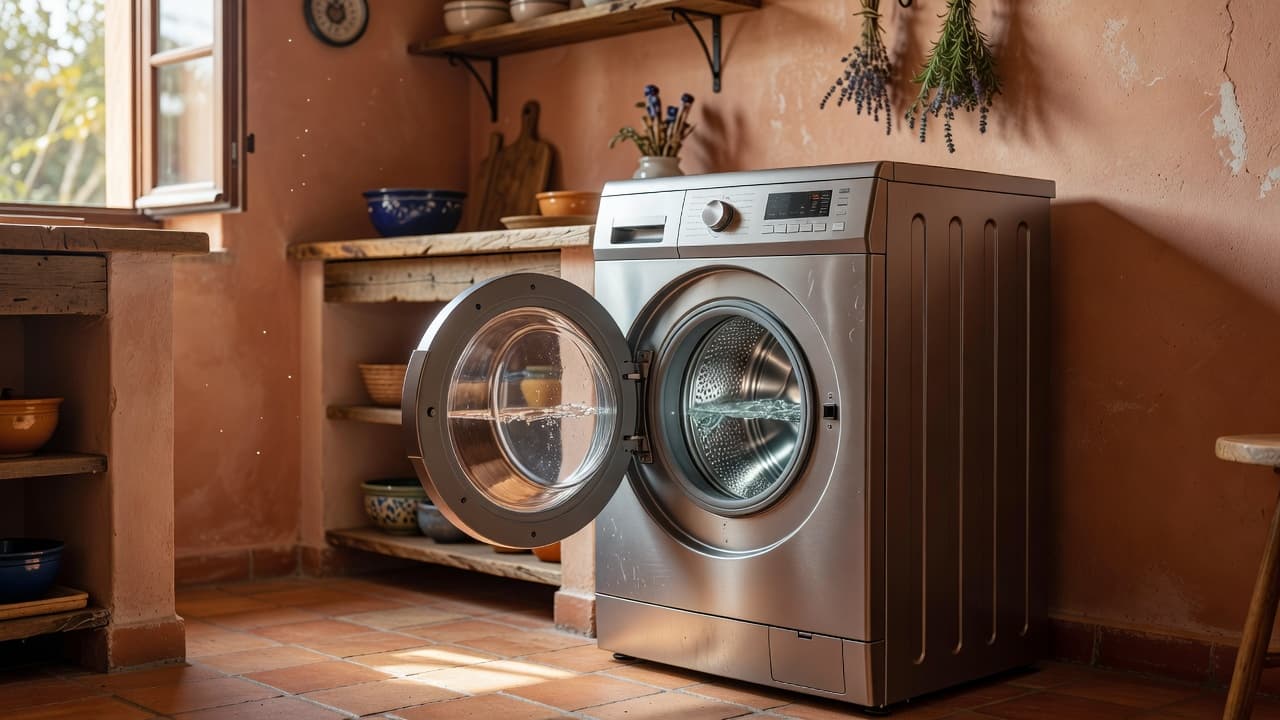
A washing machine gets stuck with water inside when the drainage system fails. The most common causes are:
Blocked drain hose. The hose that carries used water out of the machine has become kinked, twisted, or clogged with lint, detergent residue, or a foreign object (a coin, a button, a piece of fabric). The pump tries to push water out, but it can't, so the machine stops. This is the most frequent cause and often fixable.
Failed pump motor. The electric pump that forces water out of the drum has broken or burned out. You may have heard a grinding noise or a sudden silence before the water got trapped. The pump won't restart, so water has nowhere to go.
Jammed filter. Many machines have a filter trap near the drain pump (again, usually accessible from the front panel). If this becomes severely blocked with lint or debris, it can prevent drainage. Some of these are designed for user cleaning; others require a technician.
Tripped safety switch. Modern machines have a door-lock switch. If this detects a fault (moisture, electrical glitch, or a genuine safety issue), it locks the door and halts drainage as a precaution. This is actually a safety feature, but it leaves you with water inside.
Electrical fault in the control board. Less common, but if the circuit that controls the pump has failed, the pump won't activate even if it's still mechanically sound.
In Mediterranean homes, salt-air humidity and summer electrical overload can accelerate pump failures. Older machines (over 10 years) are more vulnerable.
Once you've drained the machine, here's what you can safely try while waiting for a repair engineer:
Check the drain hose. Switch off the machine. If you can access the waste outlet pipe behind or beside the machine (usually a grey or black plastic hose), feel along it for kinks or twists. Straighten any you find. This won't fix an internal blockage, but it might release pressure if the hose has just folded on itself.
Clean the visible filter trap. If your machine has an access panel at the front with a removable filter cylinder, open it and pull the filter out gently. Rinse it under the kitchen tap to clear lint and debris. Reinstall it firmly and ensure the panel is closed. Do not force it.
Leave the door open. After draining, prop the door open slightly (use a cloth wedge) and leave it open for several hours. This allows air to circulate and prevents mould formation and odour while the machine is out of action.
Do not add water or detergent. Do not try to run the machine again. Even if you've drained it once, you don't know why it failed, and running it could make the fault worse or damage the pump further.
Do not attempt to disassemble the pump, the motor, or the internal pipework. These are not user-serviceable and you risk electric shock or a worse mechanical failure.
Stop immediately and call a professional if:
- The drain valve is stuck or leaking. Forcing it can damage the plastic fitting and make the leak worse. A technician has the right tools.
- You see visible electrical damage. Scorch marks, melted plastic, or a burnt smell near the motor or control panel. Switch off at the circuit breaker and do not touch it again.
- Water is leaking out from under the machine onto the floor. This suggests an internal burst pipe or seal. Shut off the water inlet valve (usually a small knob or lever behind the machine where the hose connects) and call for help. Do not run the machine.
- The door is locked and won't budge. Forcing it risks breaking the hinge or the lock mechanism. The lock is there for a reason — usually because the machine has detected a fault. Wait for a technician.
- The water smells strongly of burning plastic or chemicals. This suggests an electrical or thermal fault. Do not proceed.
- You are uncertain at any step. Better to call a professional now than to accidentally damage the machine further or create a safety hazard.
A washing machine repair engineer will start by checking what you've already found: whether the machine has drained, what the fault code or symptom is (if your machine displays error codes), and whether there's any visible damage.
They will then perform a systematic diagnostic: testing the pump motor with a multimeter (an electrical testing device), checking the drain hose for blockages (sometimes using a plumbing snake or by backflushing water through it), inspecting the filter and the door-lock switch, and testing the control board if necessary. On the Mediterranean coast, they'll also check for corrosion caused by salt-air moisture, which can degrade electrical connectors over time.
If the fault is a blocked hose or filter, the repair is usually a quick clean and a test run — often done within 30 minutes and costing relatively little. If the pump motor has failed or the control board is faulty, the engineer will explain whether repair or replacement is more cost-effective. A new pump motor or a replacement of the faulty circuit board typically takes a morning and costs more, but it's often cheaper than buying a new machine.
Once the repair is done, the engineer will run a full cycle with water to test that drainage works correctly, and will show you the work done. Always ask for a written receipt or work certificate, especially if the machine is still under warranty or if you're claiming on home insurance.
Once your machine is repaired, a few habits will extend its life:
Clean the filter trap every two to three months. Check your machine's manual for the location and method. This is a user task on most modern machines and takes five minutes.
Use the correct amount of detergent. Too much detergent leaves residue that clogs filters and drain lines. Liquid detergent is gentler on drainage than powder.
Don't overload the drum. Overloading forces the pump to work harder and can cause blockages if fabric pieces jam the filter.
Check the drain hose annually. Unplug the machine and visually inspect the hose for cracks, kinks, or compression. If the hose has been kinked by furniture or the wall for years, it may be partially restricted.
Leave the door and detergent drawer open between washes. This prevents mould and odour, and allows the drum and seals to dry fully.
In Mediterranean homes with high humidity and salt air, these precautions are especially important. Moisture and salt can corrode the pump's electrical connections and accelerate wear.
Your washing machine is now drained and safe from immediate water damage. The next step is to contact a professional repair engineer or, if the machine is very old and repairs are expensive, to consider replacement. In the meantime, do not attempt to run the machine again, keep the door open to prevent mould, and ensure the floor around it is completely dry.
If you're on Spain's Mediterranean coast and need an experienced electrician or engineer to diagnose and repair the fault, contact our network of verified professionals. We work with technicians who speak English, German, and Dutch, and understand the specific needs of homes on the Costa Blanca, Costa del Sol, and beyond.