You'll need a boletín in three main situations:
- Moving into a new build or newly renovated property — the developer or builder must provide one before you can get power connected.
- Buying a property and requesting power for the first time — even if the wiring is already in place and the previous owner had power, if you don't have the boletín documentation, the distributor will ask for it before switching on.
- Carrying out major electrical work — if you replace your consumer unit, rewire a room, install a new circuit, or add a swimming pool, the contractor must issue a boletín for that specific work.
If you're moving into a property that's been lived in continuously and the previous owner can give you the boletín (or the reference number), you may not need a new one — but you'll still need to prove it exists.
This is the situation many foreign buyers face, especially with older properties, rural homes, or properties in the Balearics and Canary Islands where records are less reliable.
If the boletín is missing or can't be traced:
- Hire a qualified electrician to inspect the installation.
- If it's safe, the electrician will issue a new boletín certifying the existing installation. This is a conditional certificate acknowledging that the wiring, earthing, and consumer unit meet regulations. It may take 2–5 working days.
- If it's not safe, the electrician will tell you what needs to be fixed. Common issues: worn wiring, undersized circuit breakers, missing or faulty earthing, or an obsolete consumer unit. Remedial work can range from €500 to several thousand euros, depending on what's needed.
- Don't ignore it. If you try to use the property without a boletín and the distributor finds out, they can disconnect you. Also, without a boletín, you have no legal protection if someone is injured by an electrical fault — your buildings insurance may also refuse a claim.
- Electrician inspection and certification: 2–5 working days (the electrician visits, checks everything, completes the paperwork, and submits it).
- Regional authority registration: 1–3 weeks, depending on the region and how busy their office is. In summer (July–August) along the Mediterranean coast, it can be slower.
- Total time before power is connected: typically 2–4 weeks from the moment you contact the electrician.
If you're in a hurry (for example, you need power to close on the property), contact the electrician first and explain your timeline. Some can prioritise.
Only a qualified, licensed electrician — someone who's registered with the regional professional college (colegio profesional) and holds the appropriate technical qualification. In Spain, this is called a Técnico en Instalaciones Eléctricas or equivalent.
You cannot issue one yourself, even if you've done the electrical work. Self-certification is not allowed in Spain. If an electrician offers to issue a boletín for work they didn't do, or for a property they haven't inspected, they're breaking the law and you could be left with a false document.
When you hire a qualified electrician to inspect or certify your installation, here's what typically happens:
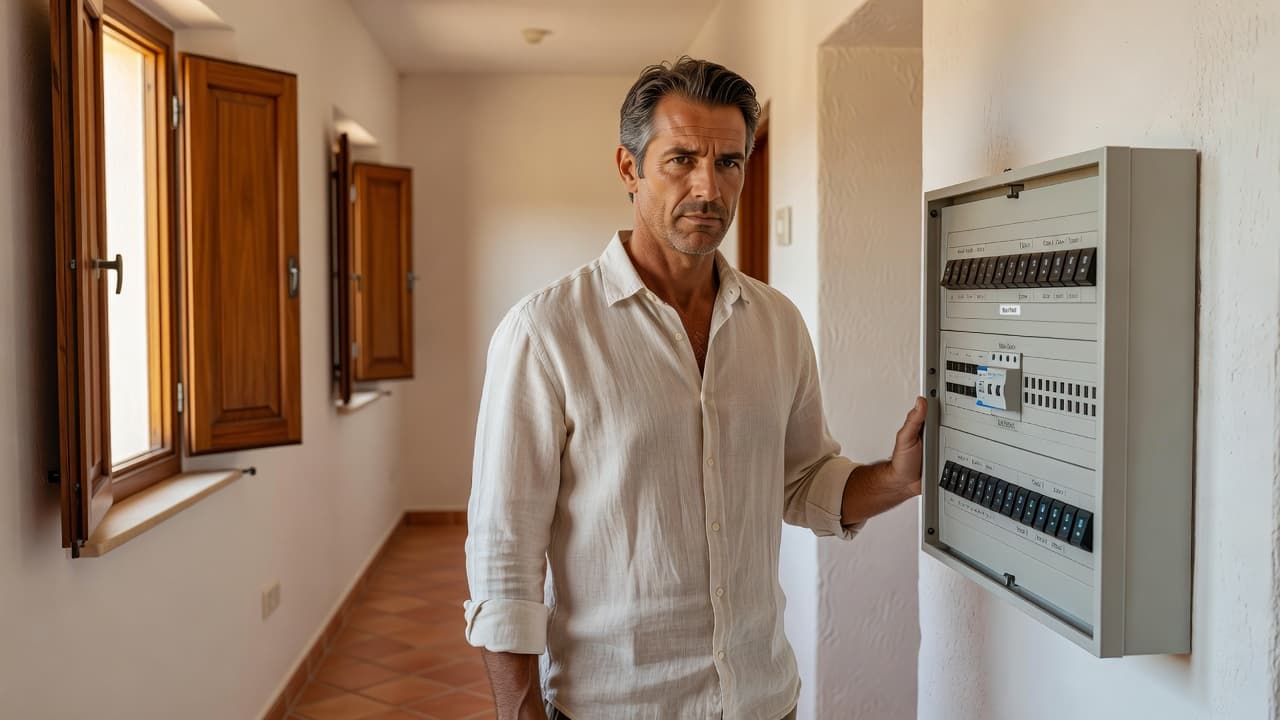
The inspection. They'll visit the property and check the consumer unit (the main electrical panel with circuit breakers and safety switches — usually a grey box in a cupboard or on a landing), all visible wiring, earthing points, and a sample of sockets and switches. They'll test the earth resistance and check that the RCD (residual current device, or differential — the safety switch that cuts power if there's a fault) is working.
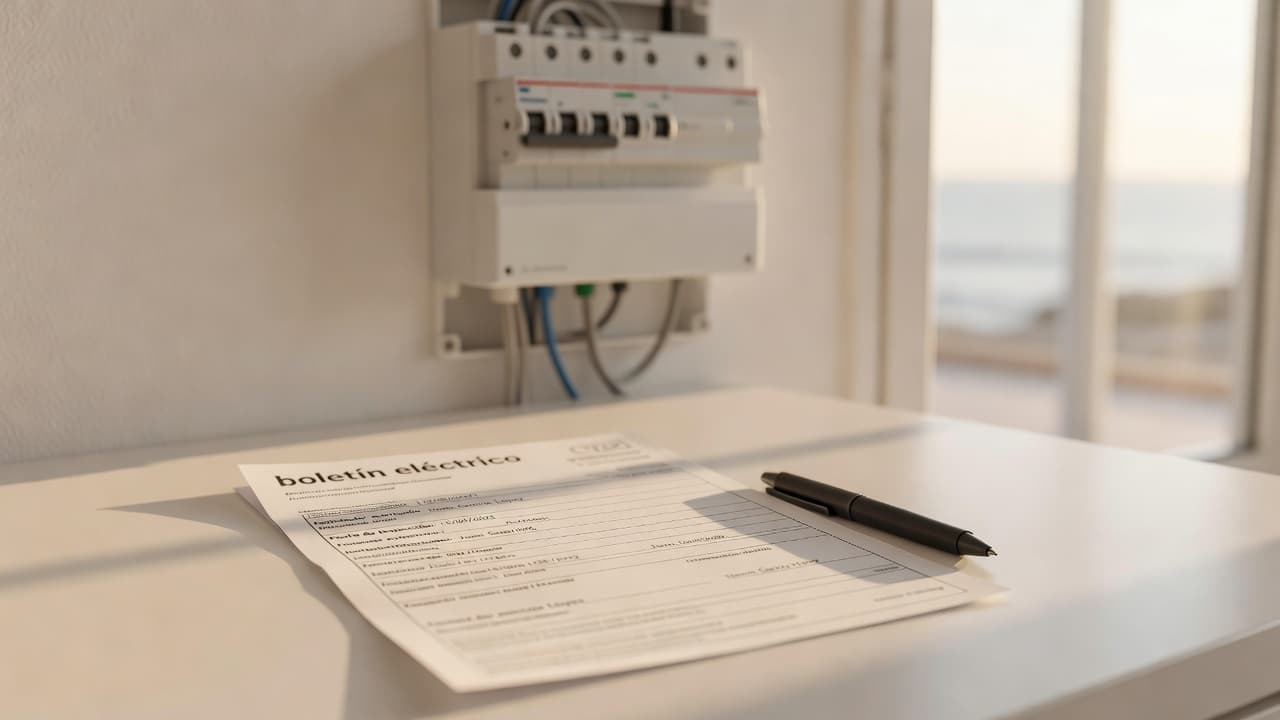
The paperwork. They'll complete the official boletín form, which includes details of the installation, any defects found, and a declaration that it meets regulations. This form is specific to Spain and is legally binding.
Submission. They'll submit the boletín to the regional authority (usually online, sometimes by post, depending on the region). They'll give you a copy and a reference number. Keep this safe — you'll need it to get the electricity distributor to connect power.
Your role. You don't need to do anything except be present (or arrange access) and pay the invoice. The electrician handles all communication with the authorities.
- Obsolete consumer unit: if the unit is more than 20–30 years old and doesn't meet current safety standards, it may need replacement (€1,500–€3,500 installed).
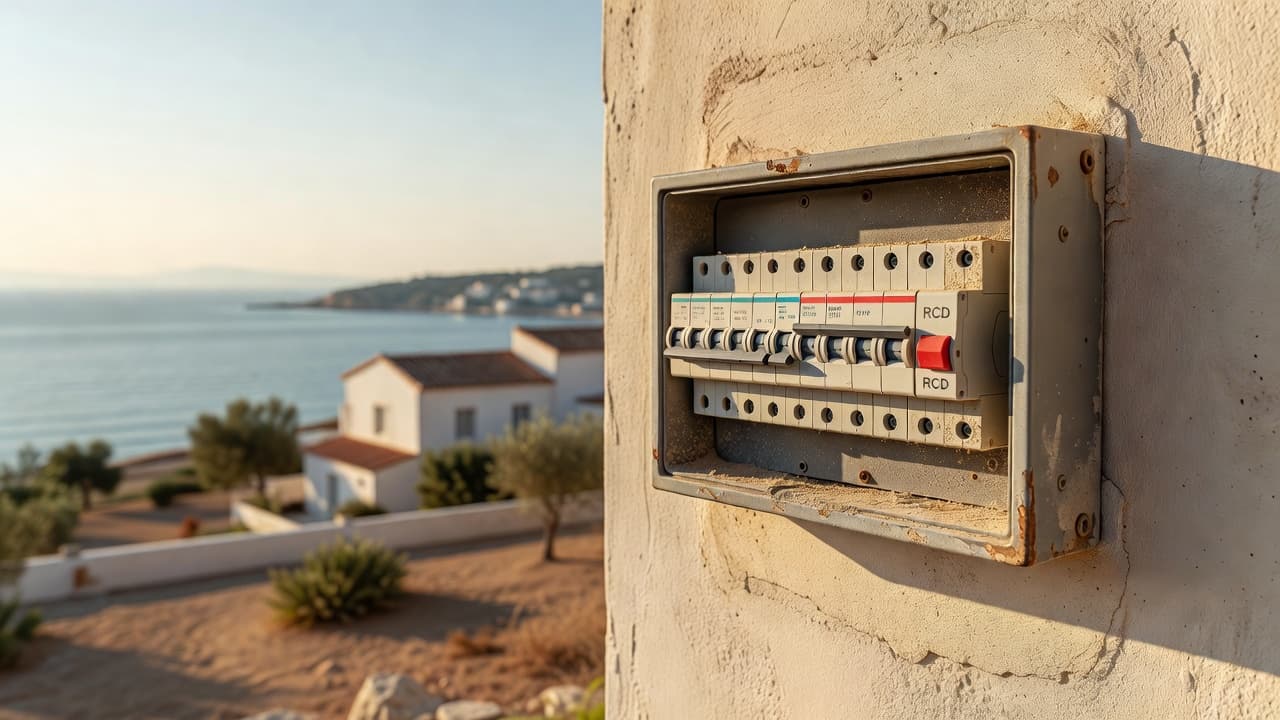
- Missing or faulty earthing: particularly common in older rural properties or those near the sea where corrosion has damaged the earth rod. Repair: €200–€1,000.
- Undersized wiring: if the cables don't match the circuit breaker rating, they must be replaced. This is time-consuming and costly (€1,000–€5,000+ depending on the size of the property).
- Overloaded circuits: if too many appliances are on one circuit and the breaker isn't the right size, the circuit must be redesigned.
- Damp or water damage in the electrical system: common in coastal properties or flats below communal water pipes. The electrician will report it, but fixing it may require a plumber or structural work too.
You cannot use the property on mains power without a boletín — the distributor won't switch it on. However:
- If the property has a diesel or petrol generator, you can use it for temporary power (lighting, refrigeration, heating). Keep it outside and well ventilated.
- You can use portable battery power banks for phones and small devices.
- If it's summer and hot, and you're in a rental, negotiate with the landlord to arrange the boletín before you move in. This is reasonable — it's not your job to fix their infrastructure.
If you're buying a property, the purchase contract should specify who pays for any remedial electrical work needed before handover. Always clarify this with your notary (notario) or lawyer before signing.
Do not attempt to:
- Rewire any circuit or replace wiring yourself.
- Open the consumer unit or touch any live components inside it.
- Install a new circuit breaker or safety switch unless you're a qualified electrician.
- Work with the main earthing cable or earth rod.
- Ignore warnings from an electrician that the installation is unsafe. If they say "don't use it", don't use it.
If any of these are needed, hire a qualified electrician immediately. A false boletín is worse than no boletín — it's fraud, your insurance won't cover you, and if there's an accident, you're liable.
- Ask for the boletín before you sign the purchase contract. Request either the original or the registration reference number from the regional authority.
- If it doesn't exist, make the purchase conditional on the seller providing one, or negotiate a price reduction to cover the cost of a new inspection and any remedial work.
- Get your own inspection by a qualified electrician before you complete the purchase. This costs €150–€250 and is money well spent.
- Keep the boletín safe. Store a copy in a fireproof box or digitally. You'll need it if you sell the property, if you make any future electrical changes, or if you make an insurance claim.
If you've just moved into a Spanish property and there's no boletín, or if you're unsure whether you have one, contact a qualified electrician now. The cost of certification (€150–€400 for an inspection and new boletín) is far less than the cost of remedial work, insurance claims, or being cut off from the mains supply when you need it most.