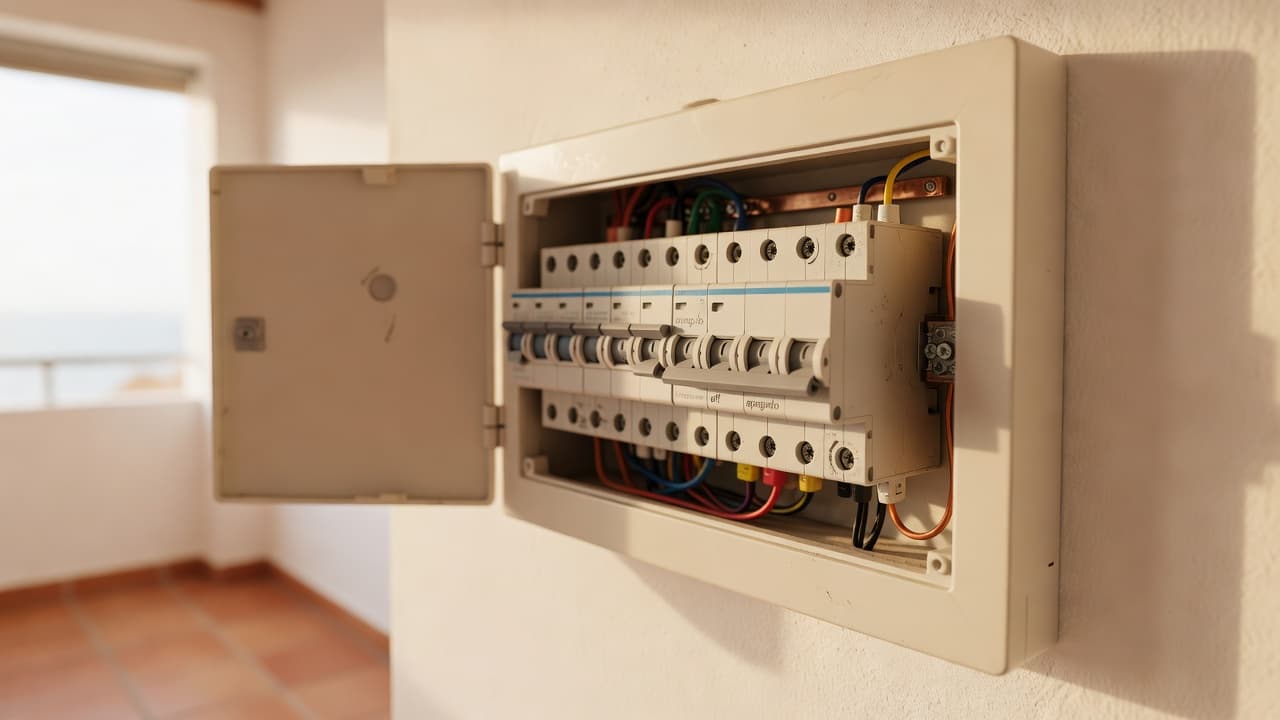
Every Spanish home has a main circuit breaker rated to a maximum electrical load. Most Mediterranean coastal properties built before 2010—especially flats in older urbanisations and smaller villas—have a 10-amp or 15-amp ICP. Some newer properties have 25 amps.
An electric oven draws 30–50 amps when heating. A modern air conditioning unit draws 10–20 amps when the compressor starts up (the starting load is much higher than the running load). If you try to run both at the same time on a 10-amp system, the total demand far exceeds what's available. The ICP cuts power instantly to prevent overheating in the wiring—a genuine fire risk.
This isn't a fault in your system; it's a limitation of your electrical infrastructure. Spanish building codes from that era allowed lower ratings because homes didn't have multiple high-power appliances running simultaneously. Today, with AC, electric ovens, dishwashers and electric water tanks (termos eléctricos) all in use, older homes often need upgrading.
Manage your simultaneous use.
Don't run the oven and AC together, even at low settings. If you want to cook and cool, use a microwave while the AC is on, and cook conventionally in the evening or early morning when you can turn off the AC.
Avoid clustering high-load activities.
Spread out appliance use: don't boil the kettle, run the dishwasher and use the oven within the same 10 minutes. Stagger them.
Check if your water heating is electric.
If you have an electric water tank (termo eléctrico) rather than a gas boiler, it will switch on at set times and add to your load. If you know when it heats (often late evening), avoid using the oven or AC then.
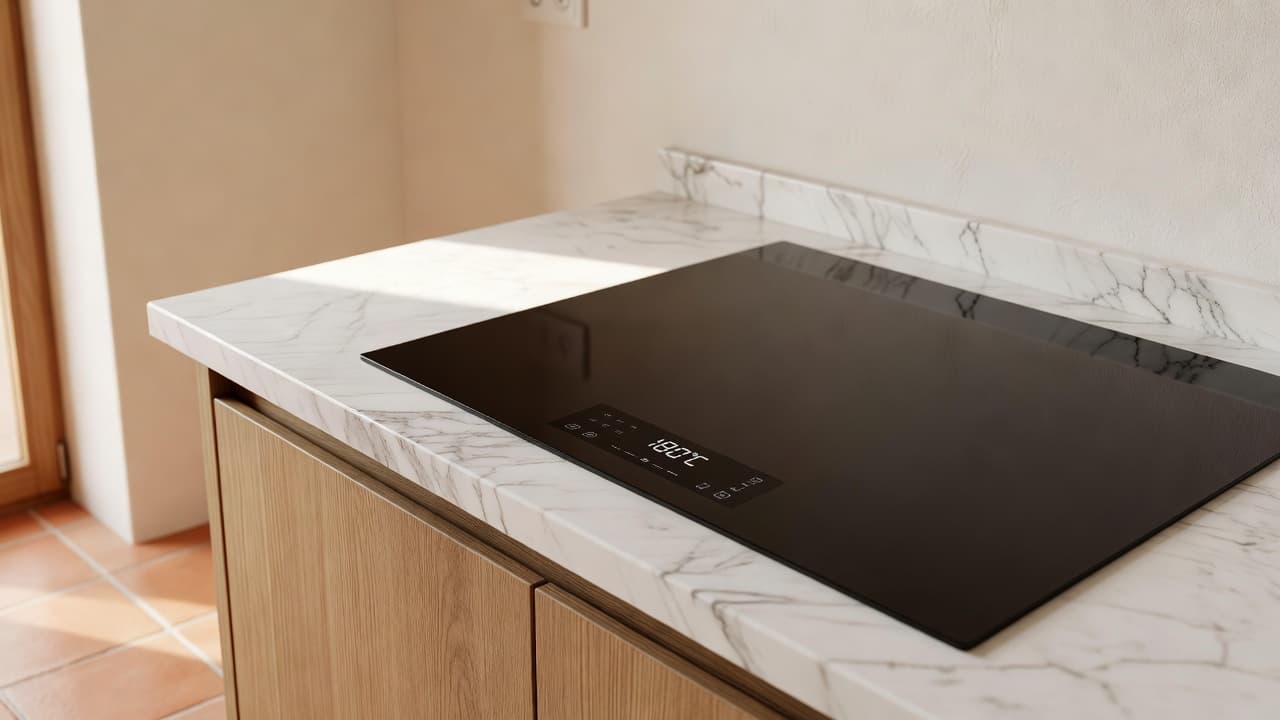
If you have a gas oven but an electric stove hob, use the hob sparingly when the AC is on.
Gas ovens are fine; electric hob rings draw significant power.
These aren't permanent solutions, just ways to keep the system working while you arrange an upgrade.
- Do not open the electrical panel yourself. Even with the ICP off, some components remain live. Only a qualified electrician should touch the internals.
- Do not ignore repeated tripping. If the ICP trips every time you use a single appliance (e.g., the oven alone), there is a fault—a short circuit or fault in the appliance itself. Turn it off and call an electrician or, if you suspect the appliance, have it serviced.
- Do not repeatedly reset the ICP hoping the problem will go away. Electrical overload generates heat in the wiring. Repeatedly forcing the system to work beyond capacity increases fire risk.
- Do not use an extension lead with a multi-plug to add more outlets to try to spread the load differently. This makes no difference; the total load on your main supply is the same.
- Do not assume an upgrade is impossible. Even in older flats in a community of owners (comunidad de vecinos), upgrades are usually permitted and common. Speak to your electrician and the community administrator.
A qualified electrician will first inspect your electrical panel and confirm your current ICP rating and the installation date. They'll likely test your incoming supply and check for any faults or damage to the wiring.
Most upgrades involve replacing your ICP with a higher-rated unit (from 10 to 15 amps, or 15 to 25 amps) and, if necessary, reinforcing the incoming supply cable and updating the wiring in your property if it's very old. In a flat, they may also need to coordinate with the building administrator, as the main supply often runs through the communal areas.
Once upgraded, you'll receive an electrical certificate (boletín eléctrico) confirming the work is compliant with Spanish electrical regulations. This is important for insurance and resale purposes. The electrician will show you how to identify your new ICP and explain the maximum safe simultaneous load.
Once your system is upgraded, the problem is largely solved. However:
- Don't ignore future trips. If the ICP cuts out even with the newer, higher-capacity system, there is a fault. Call an electrician.
- Avoid using ancient, damaged or faulty appliances. A worn electric oven or a poorly maintained AC unit may draw more current than rated. If an appliance is over 15–20 years old or visibly damaged, have it serviced or replaced.
- Be aware of peak times. If you live in an urbanisation with many other homes, the community's total load may occasionally spike during hot summer afternoons when everyone's AC is running. This is rare, but it happens. It's not your personal electrical system's problem—it's a communal infrastructure issue.
The power cuts out when you switch on the air conditioning or the oven because your home's electrical system was built for a lower capacity than modern appliances demand. This is a common problem in Mediterranean coastal properties and is easily solved. A qualified electrician can assess your system, confirm your ICP rating, and advise on upgrade options—usually a straightforward job that takes a few hours and costs between €300 and €1,500 depending on the scale of the work. Don't live with the inconvenience or the safety concern. Get a quote and upgrade.