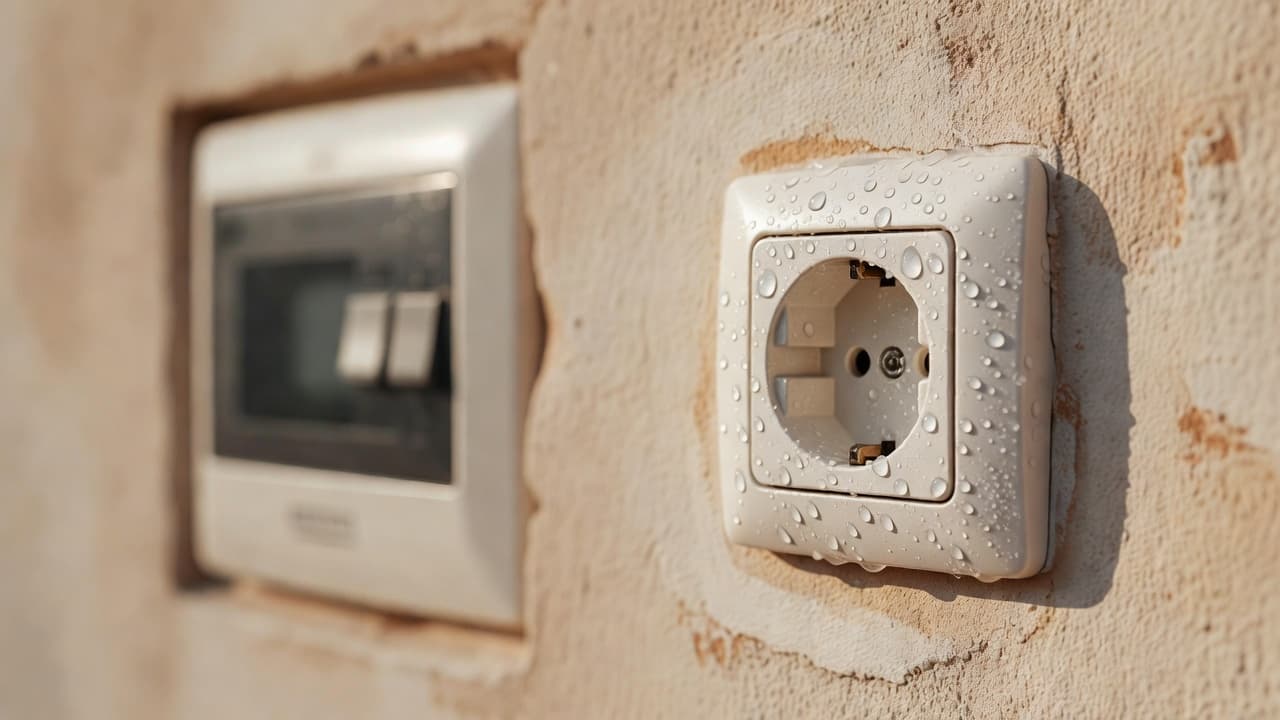
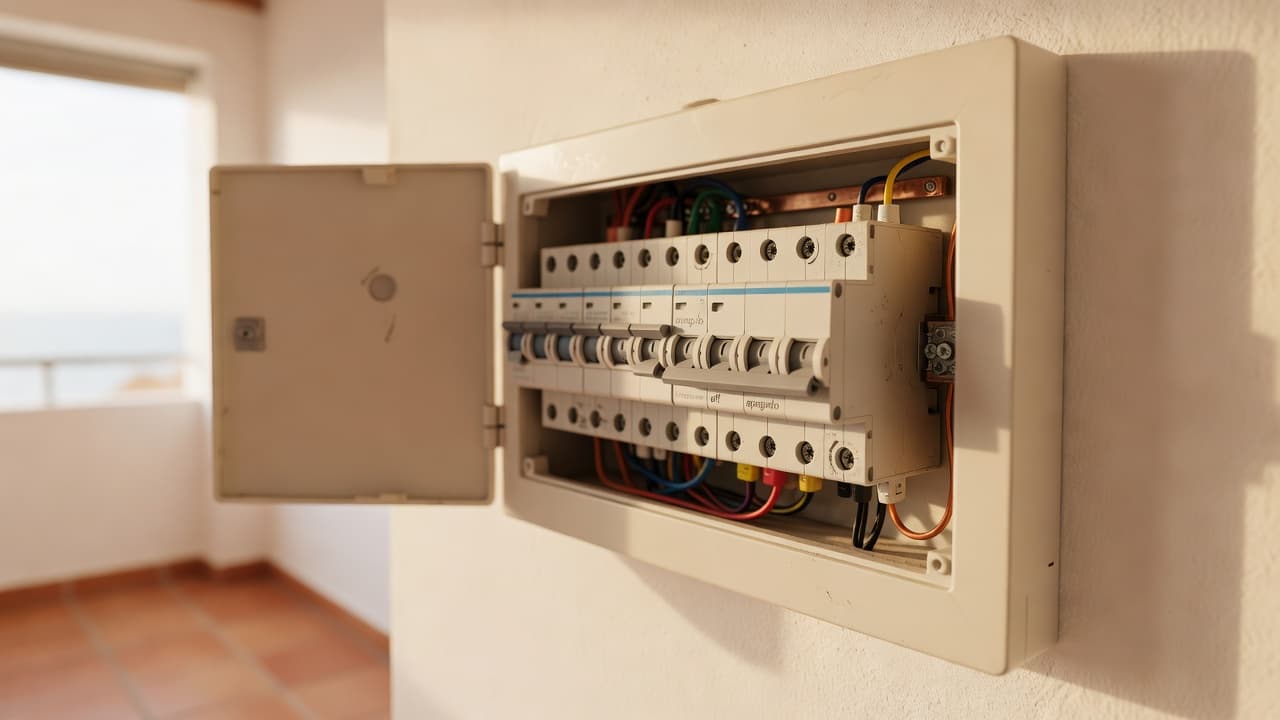
An RCD is a safety device that detects "earth leakage" — electricity escaping from your wiring to the ground. This happens when water bridges a gap in insulation or between a live wire and a metal part of an appliance or fixture.
When it rains, moisture can enter:
- Outdoor electrical sockets that aren't properly sealed or recessed into weatherproof boxes. Water sitting in the socket allows current to leak out.
- Garden lights and outdoor wiring run through trenches or surface-mounted conduit. Corroded connections or cracks in the cable sheath let water inside.
- Heating or air conditioning units mounted on exterior walls. These often have electrical connections exposed to the weather.
- Water tank thermostats or other controllers clipped to the outside of a tank or roof.
- Holiday home equipment that has been dormant all winter. Condensation builds up inside sealed enclosures.
- Damaged appliance cables — a lawnmower, leaf blower or poolside equipment dragged across rough ground, or a kitchen appliance with a weakened seal around where the cable enters the plug.
Even a small amount of moisture in the right place is enough. The RCD is sensitive: it trips if earth leakage exceeds about 30 milliamps (mA), which is a fraction of what would hurt you. This is intentional — it's a lifesaver.
If the RCD resets and the problem doesn't recur immediately, you can usually keep things running while you wait for an electrician.
Identify the faulty circuit by elimination:
- Switch off all circuit breakers in the consumer unit.
- Switch them back on one at a time, with a 30-second gap.
- The circuit that causes the RCD to trip is your problem circuit.
- Leave that circuit switched off.
- Call an electrician and explain what you've found.
Prevent moisture entering sockets:
If you know a particular outdoor socket got wet, unplug anything connected to it and switch the socket circuit off at the consumer unit until it dries out. In humid Mediterranean coastal air, this may take 24–48 hours. Do not use a hairdryer or heater inside the socket — that's a fire risk. Just let time and air circulation do the work.
Move equipment if possible:
If the RCD tripped while outdoor garden lights or a pump were running, unplug them and switch off that circuit. Leave it off until you can dry the connections. If the equipment is under a roof or overhang, it may be safe to reconnect once it's had time to dry (at least a few hours in warm sunshine).
Check for obviously damaged cables:
Look at any outdoor electrical lead connected to the circuit in question. If you see splits, cracks, burns, or exposed copper wire, do not touch it. The equipment is unsafe. Switch it off at the consumer unit and leave it off until repaired.
Stop immediately and call an electrician if:
- The RCD trips again within seconds of you resetting it. There is a live fault and it is not safe to keep resetting.
- Multiple circuits are tripping. This may indicate a fault in the main earthing system or the consumer unit itself.
- You smell burning or see scorch marks around sockets, lights, or the consumer unit.
- A socket feels warm to the touch or looks discoloured.
- You cannot identify which circuit is faulty after testing.
- The RCD will not stay in the "up" position when you reset it, even with all circuits switched off. This suggests a fault inside the RCD itself.
- Any outdoor equipment is visibly charred, melted, or smoking.
Do not:
- Open the consumer unit beyond resetting the RCD. Live wires are inside.
- Attempt to dry the inside of a socket with a cloth or tool.
- Use the circuit continuously while it is wet, hoping it will dry out as you use it.
- Ignore repeated tripping and assume it will stop.
A qualified electrician will use a device called a megohmmeter (or insulation tester) to measure the resistance between the live and earth in each circuit. If the resistance is lower than it should be, water is present. They will test each circuit separately to pinpoint the fault.
Once they've found the faulty circuit, they will either:
- Dry it out: for items like outdoor lights or controllers, they may remove the device, dry it in an airing cupboard, check the insulation, and reinstall it with improved weatherproofing (sealed gaskets, silicon sealant on connections).
- Replace damaged cable: if a lead or fixed wiring is damaged, it will be replaced. Outdoor cabling should always be armoured or run through proper conduit.
- Upgrade the outdoor socket: a wet socket may need to be moved inside, or a proper IP65-rated recessed weatherproof box may be fitted with a hinged cover that closes when not in use.
- Check the earthing system: on some older Spanish properties, especially villas in rural areas, the main earth rod can corrode. The electrician will test the earth resistance and may need to improve it if it's high.
Ask the electrician for a written report. If they've replaced any cable or made changes to the installation, they should provide a boletín eléctrico (electrical safety certificate) confirming the work meets Spanish building standards (REBT). Keep this — it's important for insurance and future sales.
Outdoor sockets:
Use only weatherproof socket boxes with hinged covers that close when the socket is not in use. In heavy rain or storms, switch off outdoor socket circuits. If you use the garden in winter or rainy season, consider a waterproof extension lead from an indoor socket rather than a permanent outdoor one.
Outdoor equipment:
Keep pool pumps, heating controllers, and garden lights in sheltered spots under a roof overhang or an eave. If they must be in the open, ensure all cable entry points are sealed with a corrosion-resistant gland and silicon sealant. Check connections annually for corrosion, especially if you live on the coast — salt air corrodes metal faster.
Cables:
Never route electrical cables across ground where they can be walked on or dragged. Use proper conduit (plastic or metal ducting) pinned to walls. Check regularly for cracks or damage, especially on holiday homes where equipment sits idle for months.
Maintenance:
Before reopening a holiday home after winter, switch on circuits one at a time with the main switch. If the RCD trips, let the property air out with windows open for 24 hours before trying again. Damp accumulates quickly in sealed homes by the sea.
If your RCD is tripping during rain and you can't identify the cause safely, or if it keeps tripping after you've reset it, it's time for a professional. MyCasa electricians across the Mediterranean coast can diagnose earth leakage faults quickly, dry out equipment, and upgrade your installation to withstand coastal weather. Contact us for a quote — we respond the same day.