The ICP is a safety device. It cuts power automatically if:
- A fault has developed in the wiring or an appliance. A short circuit, a damaged cable, or a faulty piece of equipment triggers it. This is what the ICP is designed to catch before it becomes dangerous.
- Too much power is being drawn at once. If you arrive and immediately switch on the air conditioning, the oven, and a couple of heaters at the same time, the total demand might exceed your contracted power allowance. The ICP cuts in to protect the system.
- A power surge occurred while you were away — perhaps from a storm or a fault on the community supply line. The ICP responded by cutting power.
- It was manually switched off before you left, and you've simply forgotten.
If you've reset the ICP and it stays on, one of these things happened but it's now resolved. If it trips again immediately after you switch it back on, there's likely a genuine fault, and you need an electrician.
If the ICP is in the on position but there's still no power, the problem is upstream. The electricity company may have cut your supply if:
- Your contract has expired and wasn't renewed.
- A bill went unpaid (check your emails and post carefully).
- The property was declared abandoned or unoccupied for an extended period.
- There was a fault on the community supply line serving your property (and neighbouring properties may also be affected).
Check your last electricity bill for the supplier's contact details and any warnings. Look through any post left at the property. If you find nothing, call the supplier's customer service — they'll confirm the status of your account in minutes. If the supply was cut for administrative reasons, you'll need to request reconnection, which typically costs between 100 and 300 euros and takes 24 to 48 hours.
Newer Spanish homes have an additional safety device called an RCD (Residual Current Device, or diferencial in Spanish). This is separate from the ICP and detects leakage of electrical current (a sign that electricity is escaping somewhere it shouldn't, usually into water). If the RCD has tripped, power will be off even if the ICP is on.
Look in the meter box for a second switch, usually marked with a button or test symbol. If it's in the down or off position, try switching it on in the same way as the ICP. If it trips again immediately, there's a live fault — stop and call an electrician.
If you've reset the ICP and power is back, but you want to avoid it tripping again:
- Switch on appliances one at a time, not all together. Air conditioning in Spain draws significant power, especially on a hot day. If you've got the air con running, avoid using the oven, immersion heater (the electric water tank or termo), and electric heaters at the same time.
- Check that nothing is obviously damaged or wet. If an appliance smells burnt or a socket looks scorched, don't use it. Unplug it and leave it off until an electrician can inspect it.
- Avoid overloading extension leads or power strips. Plug high-power devices like air conditioning units, kettles, and heaters directly into wall sockets.
These are temporary measures only. They won't prevent the ICP from tripping again if there's a genuine fault. They just manage power demand while you establish what's happening.
Stop and call an electrician if:
- You see signs of burning, scorching, or melting inside the meter box.
- You smell burnt plastic or electrical burning anywhere in the property.
- The ICP trips immediately again after you've reset it, even with no appliances switched on.
- The RCD or diferencial trips and won't stay on.
- The main fuse (a ceramic or plastic cartridge inside the meter box) is visibly cracked or discoloured.
- You're unsure whether the switch you're looking at is the ICP. If in doubt, don't touch it.
- The meter box itself is damaged, corroded, or has water inside it.
- The property has been empty for a very long time and you have no idea what state the electrics are in.
In any of these scenarios, the problem is not a simple reset. There's either a fault in the installation or the meter box itself needs inspection. Attempting a fix could be unsafe. Call an electrician in your area and describe what you've found. Most will give you a quick phone diagnosis and advise whether you need a visit.
When you call, explain what you've already checked: whether the ICP was on or off, whether it's now on and working, and whether you've noticed any signs of damage or burning. This context saves the electrician time and can reduce the call-out fee.
If a fault is confirmed, the electrician will:
- Inspect the meter box and main isolator to check the condition of the ICP, the fuse, and the wiring connections.
- Test the circuits using a specialist meter to identify which part of the installation is faulty.
- Isolate the faulty circuit or appliance. They may need to unplug or disconnect a particular socket, light circuit, or device that's causing the problem.
- Repair or replace the damaged component — this might be a broken circuit breaker, damaged wiring, or a faulty appliance.
- Reset the system and test that power is stable.
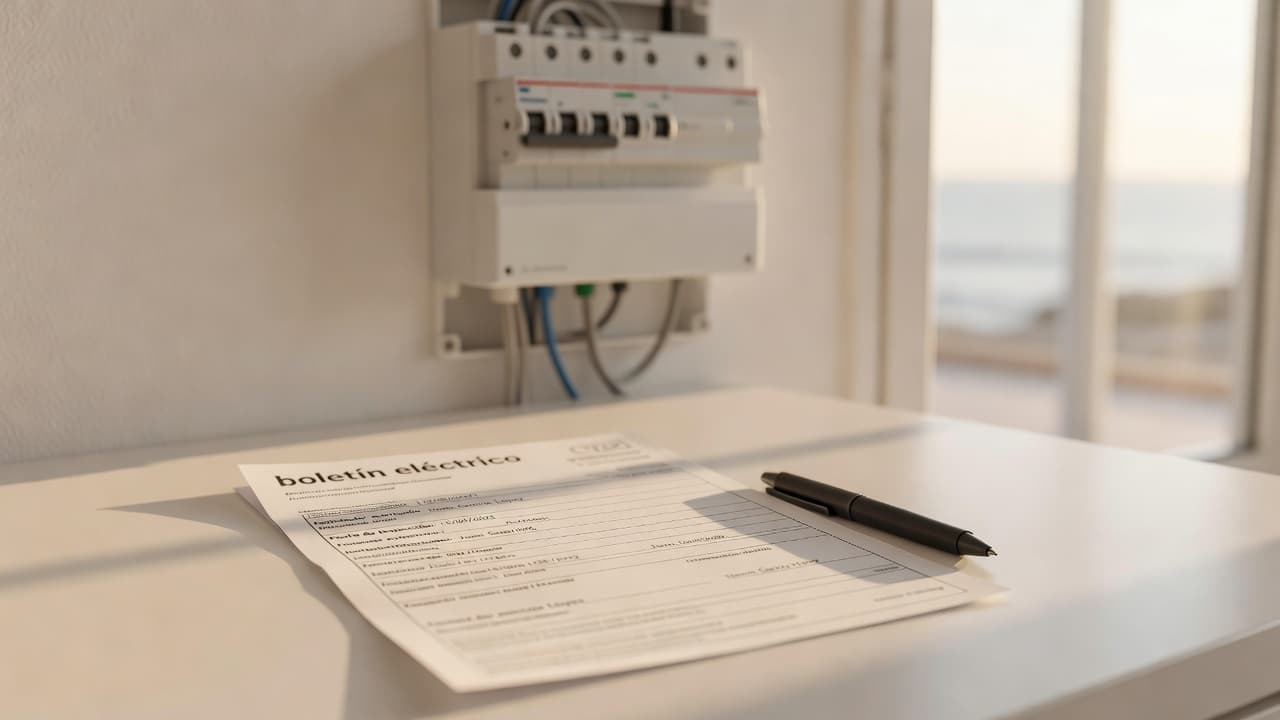
They'll hand you a certificate (a boletín eléctrico, or electrical work certificate) if they've made any repairs, and explain what they found. Keep this document. It's proof of the work done and may be needed if you sell the property or make an insurance claim.
If the electricity company had cut the supply, they won't be able to fix that — you'll need to contact the supplier directly. However, they can confirm whether the internal wiring is sound and ready for reconnection.
- Know your power allowance. Check your latest electricity bill for the contracted power (usually listed in kilowatts, often 3.3 kW or 4.4 kW for a residential property). When you're there, avoid running multiple high-power appliances simultaneously.
- Check on your account regularly, especially if the property sits empty for long periods. One missed bill or an expired contract can result in disconnection. Set a calendar reminder to review your electricity situation every few months.
- Have the installation checked every few years if the property is old. Spanish coastal properties can suffer from salt-air corrosion of wiring and terminals. An electrician can spot deterioration before it becomes a problem.
- Use good-quality extension leads and power strips, not cheap ones prone to overheating. If you're using air conditioning extensively, use a proper power strip with surge protection, not an overloaded domestic lead.
- Leave a note for yourself when you close up the property: write down the ICP position (on or off), any quirks you've noticed about the electrics, and the date of your last visit. Next time you arrive, you'll immediately know if something has changed.
If you've worked through these checks and the power is still off, or if you've discovered signs of damage or burning, it's time to call in a professional. Find a qualified electrician in your area who can inspect the installation and get your home running safely again.