Understanding where the water is coming from is half the battle. Here are the most frequent culprits in Mediterranean homes.
Cracked or failed external render. Render (the textured cement coating on the outside of walls) cracks over time due to thermal movement, settlement, or age. Water seeps through the cracks and runs down inside the cavity or behind the render itself, eventually finding its way into the interior. This is the single most common cause on the Spanish coast.
Failed mortar joints. The mortar between bricks, stone, or rendered blocks deteriorates, especially in coastal areas where salt-laden air accelerates decay. Rain exploits these gaps and enters the wall.
Blocked or overflowing gutters. A gutter clogged with leaves, debris, or sediment cannot carry water away from the wall. Instead, water overflows and runs down the external surface, saturating the render and finding cracks. Check gutters immediately — this is the easiest fix.
Blocked downpipes. Water in the gutter has nowhere to go because the downpipe is blocked or detached. Water pools and overflows.
Failed roof flashing. Where a roof meets a vertical wall, a metal or lead flashing should create a waterproof seal. If this flashing is corroded, loose, or missing, water runs behind it and into the wall. Common on Mediterranean properties where flat roofs adjoin vertical walls.
Flat roof with poor drainage. Many Spanish homes have flat roofs. If the roof is not perfectly level, water pools at low spots instead of draining away. It then finds gaps, penetrates the roof structure, and leaks through ceilings or runs down internal walls.
Ground water or rising damp. Less common after rain specifically, but if the leak is at ground level and the wall is damp along its entire height, the problem may be rising damp — water drawn upward from wet soil. This requires a different solution.
Window or door frame seals. Water leaking around the frame of a window or external door can run down the interior of the wall cavity, appearing as a leak some distance below the actual entry point.
These actions contain the damage and prevent further water entry. None of them is a permanent cure.
Apply external protective sheeting. Heavy-duty plastic or waterproof tarpaulin can be taped or weighted over the external wall, covering the suspected crack or damaged area. Secure it well so wind doesn't tear it. This buys time during wet weather.
Clear gutters and downpipes. If you can safely access a ladder and the gutter is clogged with leaves or debris, clear it by hand (wear gloves) or with a gutter scoop. Check that water flows freely into the downpipe and out through the drain. This alone solves many leaks.
Check downpipe connections. Trace the downpipe from the gutter to where it exits the building or enters the drain. If it's loose or detached, refit it (no tools required, usually just a push-fit or strap). If it's cracked, tape it temporarily with waterproof duct tape.
Improve interior ventilation. Open windows, run extraction fans, and use portable dehumidifiers if available. Removing moisture from the air reduces mould risk while the wall dries.
Apply a temporary sealant to small cracks. Only if the crack is external, accessible, and clearly visible. Use a flexible acrylic exterior sealant (not silicone, which doesn't bond well to render). This is a short-term measure only. Clean the crack lightly, apply the sealant, and smooth with a wet finger. This does not solve the underlying problem but can reduce water entry while you arrange professional repairs.
Do NOT paint over damp or wet render, apply waterproof membrane to the interior, inject damp-proof cream into the wall, or fill large cracks with concrete. All of these trap moisture and make the damage worse.
Stop and call a professional immediately if:
The leak is active and continuous. Water is still pouring or steadily dripping inside the property, meaning the source is severe. Risk of electrical hazard, structural damage, and mould growth. This is urgent.
The wall is soft, spongy, or crumbling. Press gently on the internal plaster. If it feels soft, compresses easily, or crumbles, the structure is compromised. Water has saturated the plaster and possibly damaged the masonry beneath. Professional assessment required.
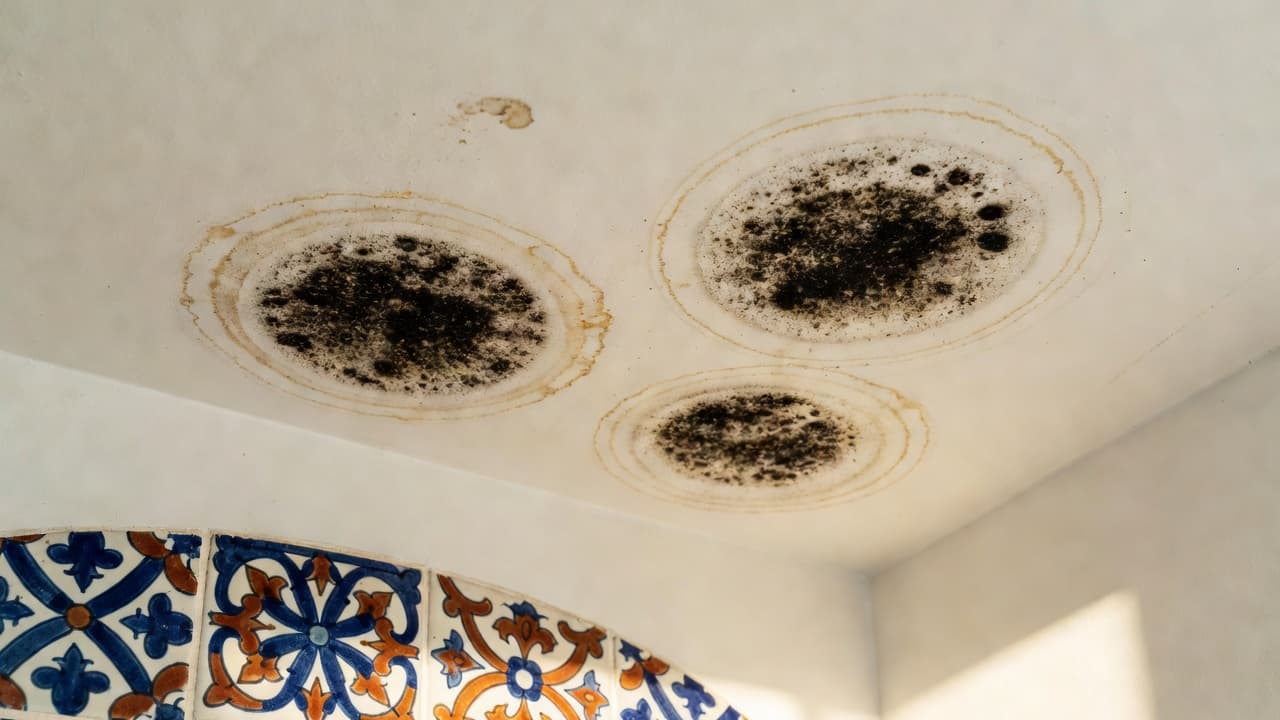
You see black mould or green algae. Active mould growth indicates prolonged moisture and a health risk, especially for respiratory conditions. This requires professional remediation.
The leak is near electrical sockets, switches, or cabling. Water and electrics are a serious hazard. Isolate the circuit (flip the breaker if you know how) and do not touch wet electrical components. Call a qualified electrician and a plumber together.
The leak is at ground level affecting multiple walls. This suggests rising damp or a more complex drainage issue, not simple rain penetration. Professional diagnosis is essential.
Render is large-scale cracked, blistered, or coming away. A small hairline crack you can seal. Large areas of failed render require professional re-rendering, which is structural work.
The leak comes from a flat roof. Flat roof repairs involve waterproofing membranes and often require specialist contractors. Do not attempt repairs yourself.
You cannot find the source. If water is entering but you cannot trace where from, a surveyor or experienced plumber must investigate. The entry point may be hidden behind external cladding, inside a cavity, or at roof level.
A qualified plumber or surveyor will carry out a systematic external inspection to pinpoint the water entry point. They'll look for cracks in render, failed mortar, loose roof flashing, blocked or damaged gutters, and around window and door frames. They may use moisture meters to trace damp inside the wall and confirm the extent of water penetration.
Once the cause is identified, the professional will advise on the appropriate repair. If it's a gutter blockage, they'll clear it and check the downpipe system. If render is cracked, they'll recommend either spot repairs (sealing cracks and applying protective coating) or re-rendering the affected section if the damage is extensive. If roof flashing is failed, a roofer will be coordinated. If the leak is systemic (widespread render failure, rising damp, or structural movement), the professional may recommend a survey or a damp specialist's assessment.
You'll receive a clear report stating the cause, the recommended repair, and an estimate. The professional may also advise on maintenance to prevent recurrence (gutter clearance schedules, repainting render, etc.) and issue documentation of the work completed, which is useful for insurance or future sale of the property.
Maintain gutters and downpipes. Clear leaves and debris from gutters twice a year, especially in autumn. Check that downpipes are connected, unblocked, and discharge water well away from the wall base.
Inspect render annually. Walk around the external walls, particularly after winter. Look for new cracks, blistering, or areas where render is coming away. Small cracks sealed early prevent water ingress later.
Reapply render protection coating every 5–7 years. A hydrophobic (water-repellent) coating on render slows water absorption and extends the life of the finish. On coastal properties, where salt-air accelerates degradation, do this more frequently.
Ensure ground drains are clear. Check that surface water drains near the building (around patios, paths, or foundation areas) are not blocked. Standing water against a wall encourages damp.
Address settlement cracks early. Cracks wider than 3 mm or that grow over months may indicate structural movement. Have a surveyor assess them.
Maintain roof condition. If you have a flat roof, ensure it's inspected annually by a qualified roofer. Any pooling of water, cracks, or blistering in the membrane should be repaired quickly.
A leaking wall after rain is a nuisance and a sign that something external needs attention, but it is not usually a crisis if you act within a day or two. Your role is to stop water getting in further, identify where it's coming from, and get a qualified professional to fix the cause. Do not attempt to seal the problem from the inside — this traps moisture and causes worse damage.
Find a plumber or surveyor on MyCasa to diagnose the leak and arrange repairs. They'll handle the external work and leave you with confidence that the problem is solved.