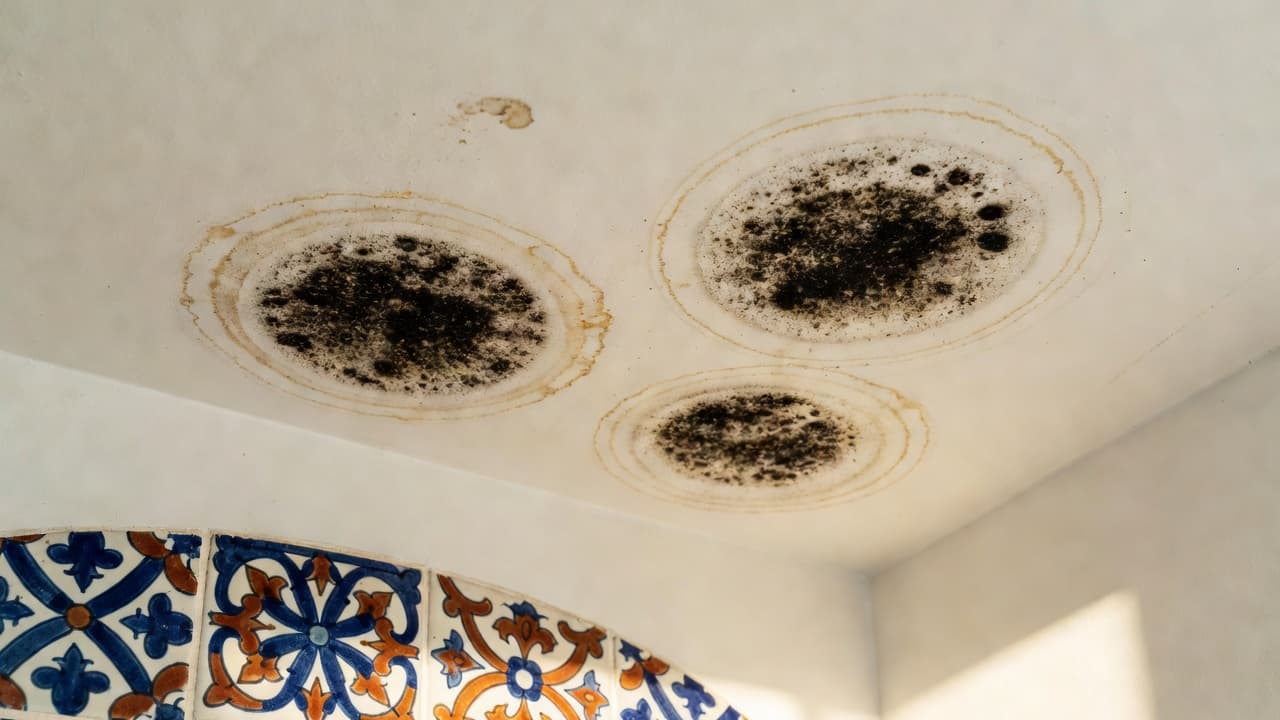
Mould needs three things to grow: moisture, warmth, and a surface. Your bathroom ceiling provides all three. The question is: where is the moisture coming from?
Scenario 1: A leak from above. Water is coming through the roof, from a pipe in the flat above (if you're in a block), or from pipes running through the ceiling itself. In Spain's Mediterranean climate, flat roofs and aging terracotta tiles are common sources. Leaks often appear as dark rings or isolated patches, sometimes with visible water staining around them. They may worsen after heavy rain or appear seasonally.
Scenario 2: Poor ventilation. After a hot shower, the bathroom air becomes saturated with moisture. If there's no extractor fan, or if the fan isn't powerful enough, or if windows are kept closed, that moisture settles on the coldest surfaces—usually the ceiling and upper walls. Over time, mould colonises these damp patches. This type of mould often spreads across a wider area rather than staying in one spot.
Scenario 3: A combination of both. You might have a minor roof leak that drips slowly, combined with inadequate ventilation. The leak wets the ceiling, and poor air circulation prevents it from drying.
If you suspect a leak (localised patch, water rings, or mould in the same spot):
- Place a bucket or basin underneath the patch to catch any drips. Keep it there and monitor it. Any water caught is evidence of active leakage.
- Improve ventilation by opening windows during and after showers, even if it means losing a bit of warmth.
- Don't try to dry the area with heat (hairdryer, heater). This can spread spores and won't address the leak.
If you suspect poor ventilation (widespread mould, especially after showers):
- Wipe down the ceiling and walls with a dry cloth immediately after showers while the steam is visible.
- Install a simple extractor fan if you don't have one. This is inexpensive (€50–150 for the fan itself) and often rents quickly. A handyman can install it in an hour or two.
- Leave the bathroom window open for 15–20 minutes after showers, even in winter.
- Avoid drying wet clothes in the bathroom. Moisture from drying fabrics accelerates mould growth.
For cleaning small patches:
Use a spray bottle with one part white vinegar, one part water. Spray the mouldy area, let it sit for an hour, then wipe with a cloth. For stubborn mould, a soft brush can help, but don't scrub hard—you don't want to spread spores or damage the plaster. Wear a mask and gloves. Ventilate the room well.
Do not use bleach on porous surfaces like plaster or ceiling plaster. It kills surface mould but doesn't penetrate, so the roots remain and regrowth is quick.
Stop and call a professional if:
- The mouldy patch is larger than a dinner plate and you haven't identified the cause with certainty.
- The mould returns within a few days of cleaning, no matter how well you ventilate.
- You see water actively dripping from the ceiling, or you find wet insulation, rotting timber, or soft plaster when you inspect the space above.
- The mould smells musty and strong, or it's spreading down the walls.
- You have respiratory symptoms (persistent cough, wheezing, or sinus problems) that worsen when you're in the bathroom.
- The ceiling is bowed, cracked, or feels soft when you touch it gently. This suggests structural damage and is unsafe to ignore.
In any of these cases, the problem is beyond "condensation management". You need a plumber or surveyor to locate the water source and fix it. Delaying makes the damage worse and more expensive.
A plumber or surveyor will start by asking questions: When did the mould appear? Does it get worse after rain? Is there a single patch or multiple patches? This helps them narrow down whether it's a roof leak, a plumbing leak, or a ventilation issue.
They'll then inspect the visible ceiling, looking for water stains, soft spots, or active moisture. If the problem is accessible (a loft space above, or pipes visible in a cupboard), they'll check there too. If the leak is coming from a flat above or from the building's structure, they may need to involve the building owner or the community of owners (comunidad de vecinos) in shared properties.
If it's a plumbing leak, they'll trace the pipes running through or above the ceiling, test them under pressure, and identify the burst or joint failure. If it's a roof leak, they'll typically recommend a surveyor or roofer, though some plumbers work with trusted roofers and can co-ordinate.
Once the leak is fixed, the professional will advise on drying out the ceiling. Minor dampness may dry naturally with good ventilation over a week or two. Severe dampness may require a dehumidifier or heat lamps to prevent the mould from returning.
They'll give you a written report of the problem and the work done. Keep this document; it's proof of the fault and the repair, useful if you're renting or if you need to claim on insurance.
Ventilation is your first line of defence. Open the bathroom window during and for 20 minutes after showers. If you don't have a window, an extractor fan is essential—ask a handyman about installation if you don't have one.
Monitor the ceiling regularly. Once a month, glance up while you're in the bathroom. Early spotting of new mould means you can react quickly.
Fix any roof or plumbing issues as soon as they're identified. A small leak today is a costly structural problem in six months, especially in Spain's humid Mediterranean climate where salt air accelerates corrosion.
Don't block extractor fans or vents. If you have ducting that runs outside, make sure the outlet isn't blocked by cobwebs, nests, or paint.
Consider a dehumidifier if the bathroom is very small and poorly ventilated. A €40–80 portable unit can make a real difference in flats without external walls.
If the mould is spreading or the patch is large, don't wait. Contact an experienced plumber to diagnose the source and stop the water getting in. The sooner you identify whether it's a leak or ventilation, the sooner you can fix it and protect your home.