Your council has announced a scheduled water cut in your area — usually for essential maintenance or pipe repairs. It's a nuisance, but it's not an emergency. The difference between a smooth cut and a headache is preparation. If you've been notified, you have time. Spend 10 minutes now doing these five things: find your main stopcock, fill containers with water, turn off your boiler, run your taps, and check your bathroom and kitchen for anything temperature-sensitive. When the cut starts, you'll stay calm because nothing will go wrong.
What to do right now (5 steps)
1. Find your main stopcock and label it.
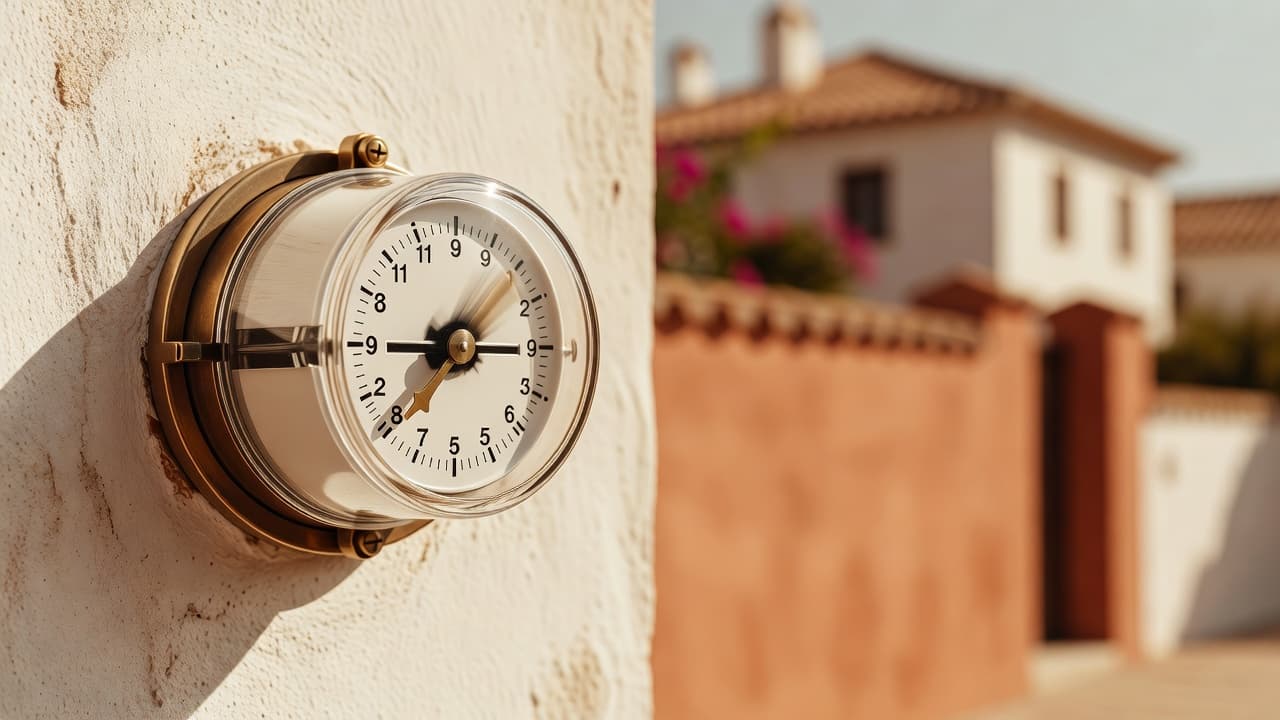
The main stopcock (llave de paso general) controls water flow into your entire home. You need to know where it is before the cut happens. It's usually under the kitchen sink, inside a bathroom cupboard, or on the landing in older Spanish flats. In villas or houses with a garden, it may be by the gate or under a concrete cover at the boundary. Turn it a quarter-turn clockwise to test it — the water should stop. Turn it back fully. If it's stiff, don't force it; call a plumber now rather than risk breaking it during the cut.
2. Fill all available clean containers with water.
Don't just rely on bottled water. Fill:
- Your bath (if you have one)
- Large basins or buckets (at least three 10-litre buckets)
- A few bottles for drinking and cooking
This water is for flushing toilets, washing hands, and basic cleaning. You need far more than most people think. A single toilet flush uses 6–9 litres.
3. Turn off your boiler or water heater.
If you have an electric water tank (termo eléctrico), switch it off at the wall or mains. If you have a gas boiler (caldera de gas), turn off the mains gas valve and then switch off the boiler. Do this 30 minutes before the scheduled cut time. Why? When the water pressure drops, the heating element can overheat and fail, costing you hundreds to replace. Once water pressure is fully restored, turn it back on.
4. Run all your cold taps for 30 seconds each.
Kitchen tap, bathroom taps, shower. This empties the supply pipes and reduces the air that will be trapped when the water is cut off.
5. Check for anything temperature-sensitive.
Washing machines, dishwashers, and thermal underfloor heating systems should not run during a water cut. If your machine is mid-cycle, let it finish before the cut starts. Don't start a new cycle once the announcement is made.