Voltage drops have several causes, and the electrician will need to diagnose which one applies to your home.
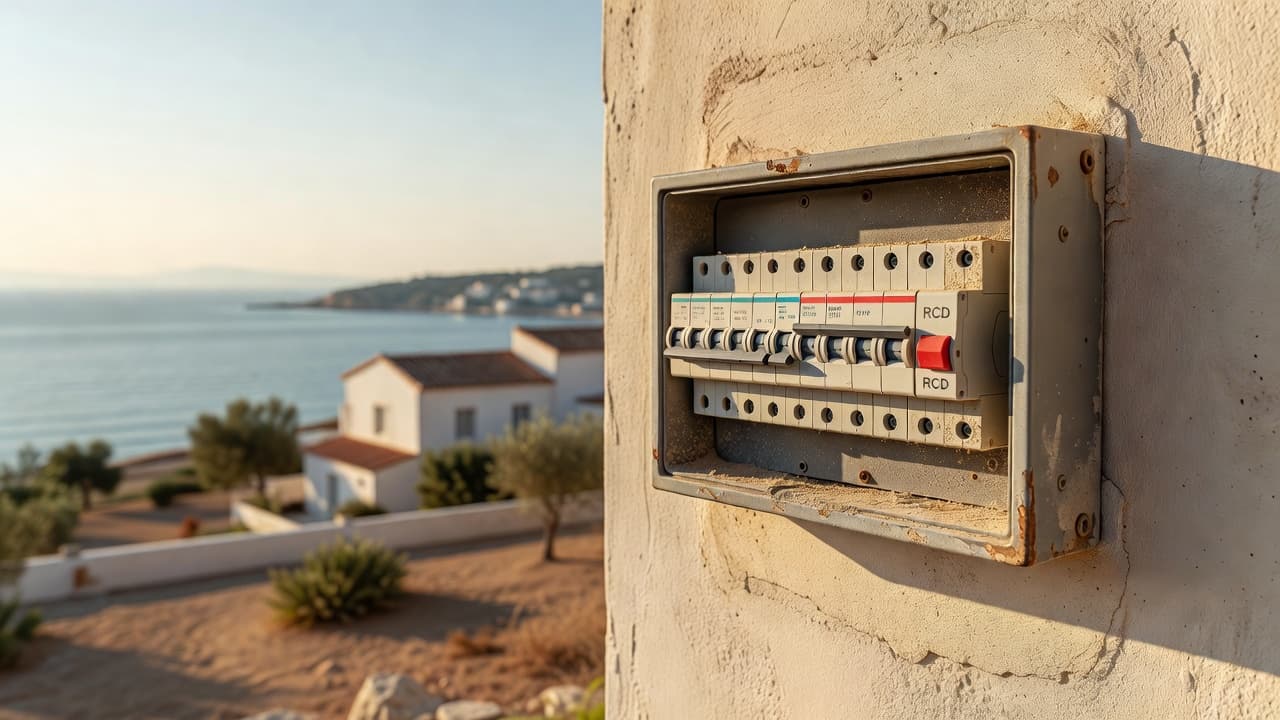
Poor connections in your consumer unit or meter installation. Over time, the metal terminals inside your meter box or consumer unit can corrode, loosen, or accumulate dust. This creates resistance, causing the voltage to fluctuate as current passes through. This is especially common in coastal properties, where salt air accelerates corrosion.
Ageing or damaged internal wiring. If your home is 20+ years old and the electrics have never been fully checked, the wiring insulation may be degraded, or connections between the meter and your consumer unit may be loose. This is often invisible — the wires are inside walls — but the electrician can test it.
A fault in your building's earthing system. In a flat or townhouse (urbanisation), the earthing may be corroded or disconnected at a communal point. The building's communidad de vecinos (residents' association) is responsible for this, but it often goes unnoticed.
Overloaded local supply. If you live in a popular holiday area or a modern urbanisation where many homes use air conditioning simultaneously (especially mid-afternoon in summer), the local street supply may not be adequately sized. This causes voltage to sag across the entire neighbourhood.
Fault in the street supply or distribution transformer. Sometimes the problem isn't inside your property at all. The electricity company's transformer serving your street or building may be failing, causing voltage instability throughout the area.
A temporary voltage stabiliser (estabilizador de voltaje) is a legitimate protective measure. Plug your most critical appliances — fridge, boiler, TV — into the stabiliser. It regulates incoming voltage to a safe, steady 230V. Stabilisers are not expensive (€50–150) and can be found at local electrical suppliers or online. This is not a cure, but it buys you time while the root cause is investigated.
Alternatively, consider unplugging sensitive appliances when you're not in the room or at night. Refrigerators and freezers should stay plugged in (you'll lose food), but televisions, computers, microwave ovens, and washing machines can be safely disconnected when not in use. During voltage drops, unpllugging them reduces the risk of damage.
Avoid using multiple high-power appliances at once. The oven, hob, kettle, and air conditioning all draw heavy current. When voltage is already unstable, adding load can make it worse. Spread out their use.
Keep the area around your consumer unit clear and dry. If there's moisture or condensation inside the box, this worsens corrosion and can contribute to voltage instability. A dehumidifier in a damp hallway or cupboard can help.
Do not open your consumer unit or touch any wires inside. Do not attempt to tighten terminals or clean contacts inside the meter box. If you see any of the following warning signs, stop immediately, unplug everything you can safely reach, and call an electrician:
- Burning smell or smoke coming from the consumer unit, meter, or any appliance.
- Visible sparks or arcing (bright flashes) inside the consumer unit or at connection points.
- Discoloured or melted plastic around terminals, cables, or the meter box.
- Loud buzzing or crackling sounds from the consumer unit.
- Repeated circuit breaker trips (your RCD or differential constantly switches off).
- Appliances shutting down unpredictably and then restarting on their own — especially boilers. This indicates a serious fault.
- Scorch marks or dark stains on walls near the consumer unit or meter.
If you experience any of these, cut off the main breaker on your consumer unit (the large switch at the top), leave everything unplugged, and call an electrician immediately. Do not attempt to restore power yourself.
A qualified electrician will start by testing the voltage at your consumer unit using a multimeter. Normal voltage in Spain is 230V single-phase (or 400V three-phase). They'll take several readings over a few minutes to detect fluctuations.
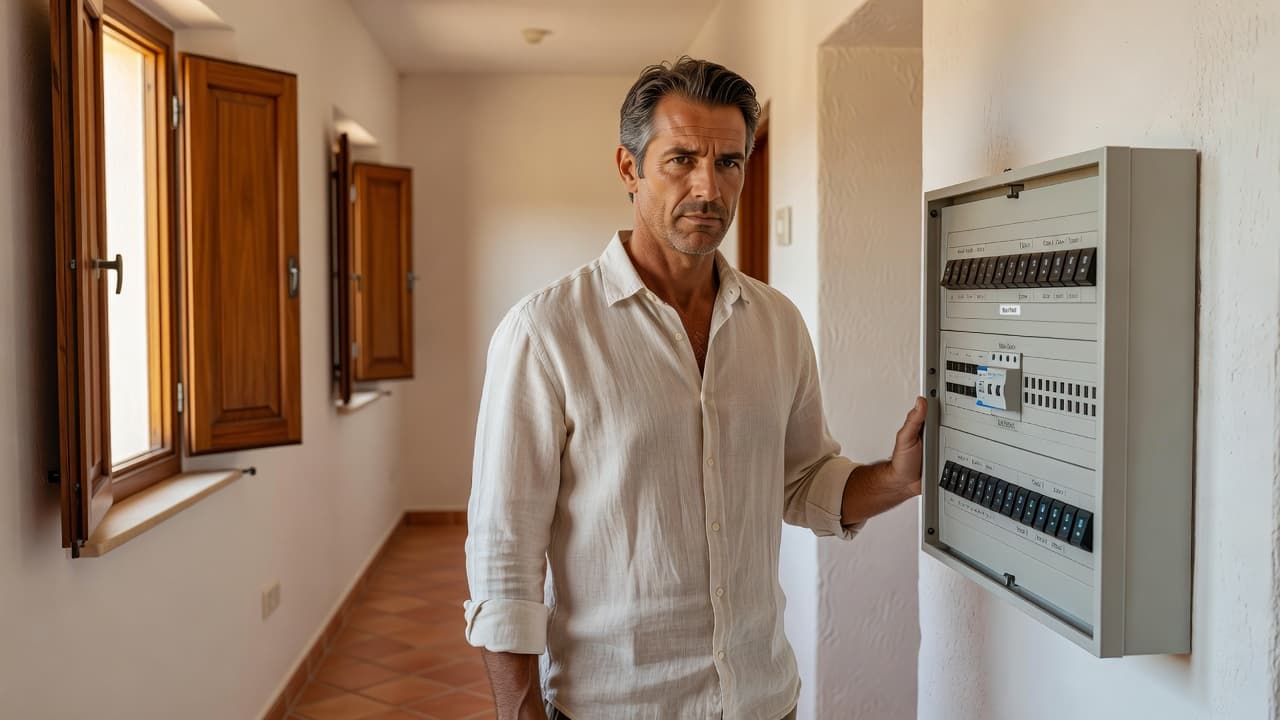
Next, they'll inspect the consumer unit itself: checking for corrosion, loose terminals, damaged circuit breakers (magnetotérmicos), and the RCD (residual current device, or diferencial). They'll open the meter box and check all connections between the street supply and your consumer unit. They'll also test your earthing (toma de tierra) to ensure it's continuous and has low resistance.
If they find loose or corroded connections, they'll clean and retighten them. If the wiring is damaged, they'll advise on replacement. All of this work should be certified with a boletín eléctrico (electrical work certificate), which documents that the work meets Spanish building regulations (Reglamento Electrotécnico para Baja Tensión, REBT).
If the electrician finds no fault inside your property, they'll advise you to contact your local electricity distribution company (Iberdrola, Endesa, Viesgo, etc., depending on your region). You can then request that they investigate the street supply and the transformer serving your area. The company will attend free of charge if the fault is on their side.
Once the fault is repaired, keep a simple log of your appliances' behaviour over the next month. If voltage drops resume, contact the electrician or the electricity company again — the problem may be intermittent or may have recurred.
For properties in coastal areas or humid climates, consider having your electrical installation inspected every 10 years, even if nothing seems wrong. Corrosion is silent and preventive inspection catches it before appliances fail.
If you live in an older urbanisation or a flat, ask the communidad de vecinos whether the building's earthing and main supply connections have been checked recently. If not, suggest a professional inspection. This protects all residents.
Finally, avoid running all heavy appliances at peak times. If your area suffers summer voltage drops due to air conditioning demand, use your air conditioning in the early morning or late evening when demand is lower. This is good practice and reduces strain on the local network.
If your lights are flickering or your appliances are shutting down unexpectedly, don't wait for the damage to worsen. A qualified electrician can diagnose the problem in a single visit and protect your home's electrics.
Contact an electrician today through MyCasa Spain — we connect you with vetted professionals who speak your language and understand the unique challenges of homes on Spain's Mediterranean coast.