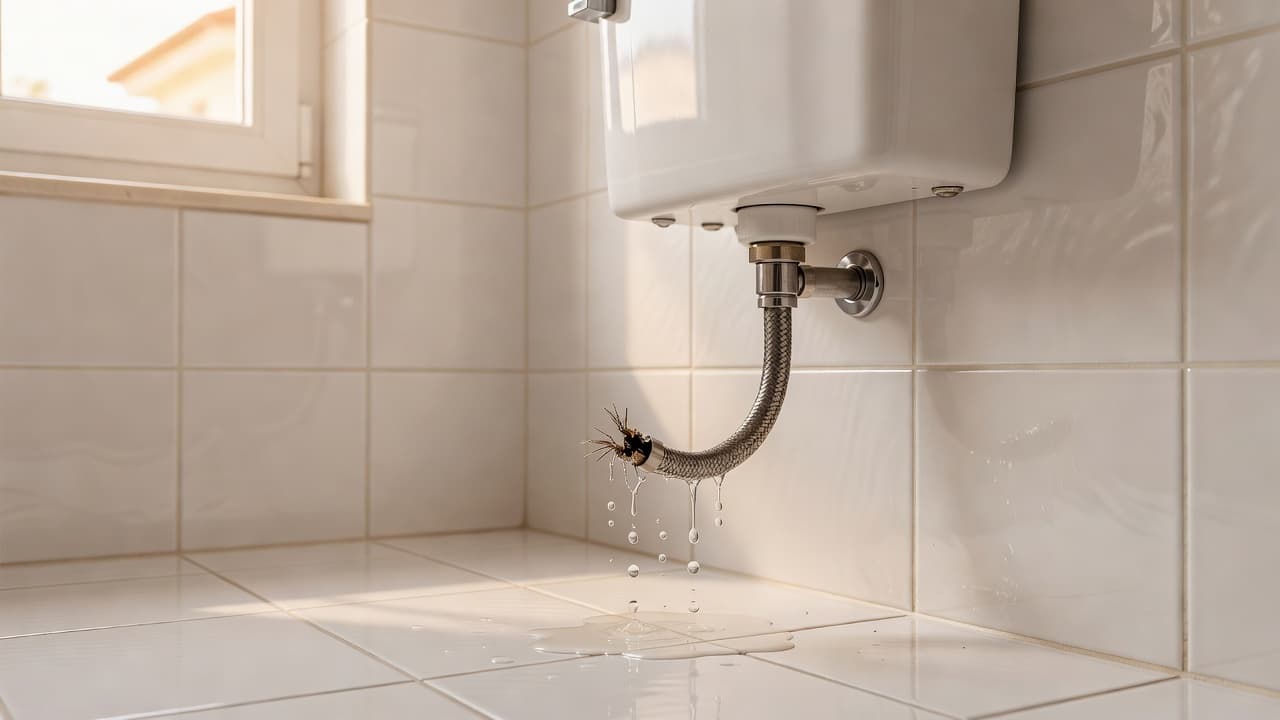
Toilet supply hoses are flexible pipes that carry pressurised water from the main supply to the cistern. They fail for several reasons:
Age and wear. Most flexible hoses last 5–10 years. After that, the rubber or PVC degrades, becomes brittle, and eventually splits. If your home is 10+ years old and the hose has never been replaced, it is overdue.
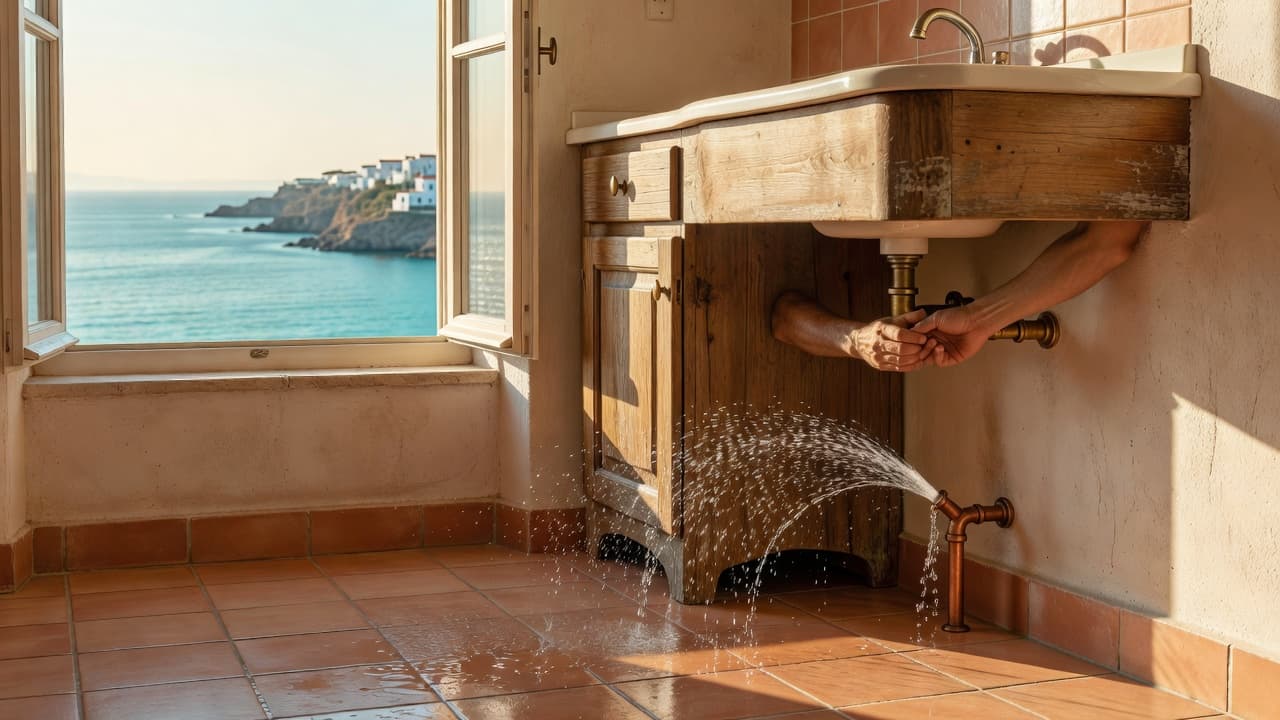
Water pressure spikes. A sudden surge in mains pressure — from nearby pipe work being worked on, or from a faulty pressure regulator — can burst a weak hose. This is common in coastal areas where pressure fluctuates.
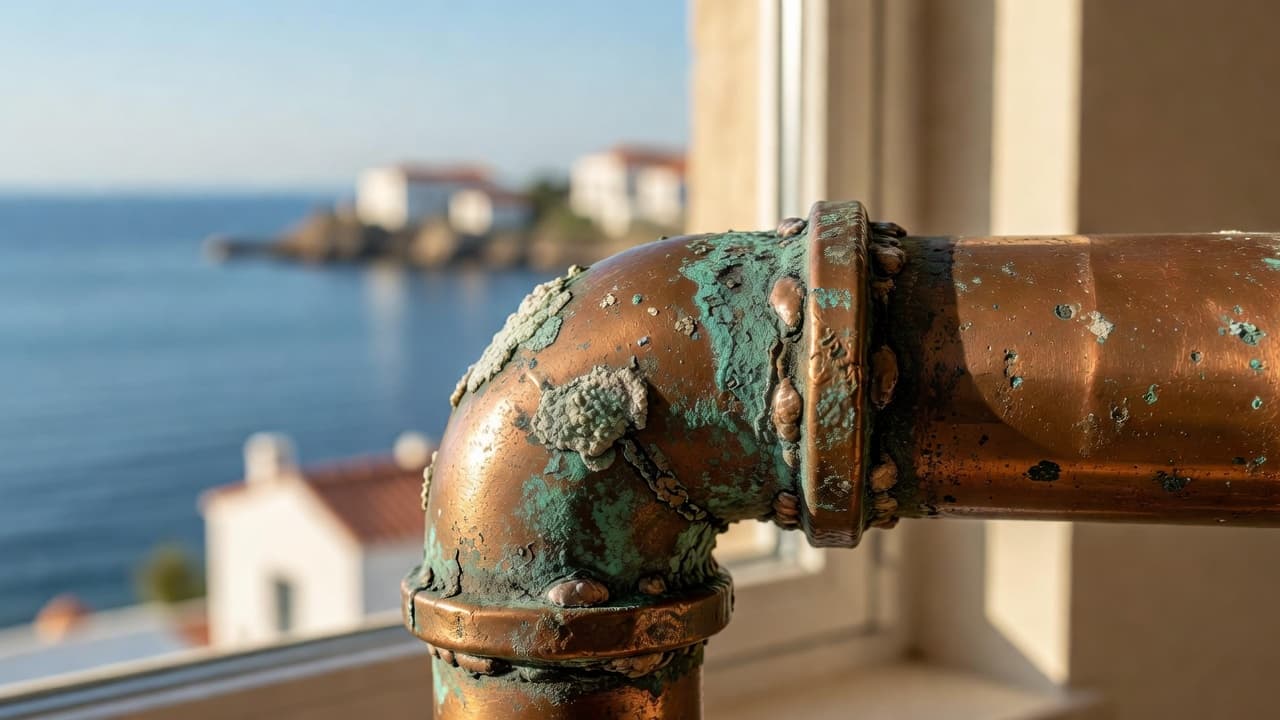
Corrosion and salt air. If you live on the Mediterranean coast (Costa Blanca, Costa del Sol, Balearics, or Canaries), salt-laden air corrodes metal fittings and weakens rubber. Hoses fail faster in these environments.
Poor-quality hose or faulty fitting. Cheap replacement hoses or hoses installed incorrectly can fail prematurely. If this is a recent replacement (within the last year or two), the installer or part may be at fault.
Kinks or physical damage. If the hose is kinked, compressed under a pipe clip, or has been caught during cleaning, it weakens over time.
There are no safe temporary fixes for a burst pressurised hose. Silicone tape, electrical tape, plumber's tape, or any adhesive wrap will not hold. The pressure will blow it off within minutes.
Your only safe option is to keep the water supply turned off. If you turned off the toilet valve only, the rest of your house has water. If you turned off the main stopcock, you have no water anywhere until the plumber arrives or fixes the problem.
If you must have water to the house and the toilet valve will not shut off properly, you need a plumber today, not tomorrow. This is a genuine emergency because you cannot safely leave a burst pressurised hose unattended.
You can leave the toilet unused for 24–48 hours if necessary. Use a neighbour's toilet or another bathroom in your home if you have one.
Do not attempt any of the following:
- Do not try to disassemble the hose or the fitting. The remaining pressure will spray water and you may not be able to reassemble it safely.
- Do not wrap the burst section with tape or cloth. It will fail and you will have a worse flood.
- Do not use sealant, epoxy, or glue. Water pressure will rupture it.
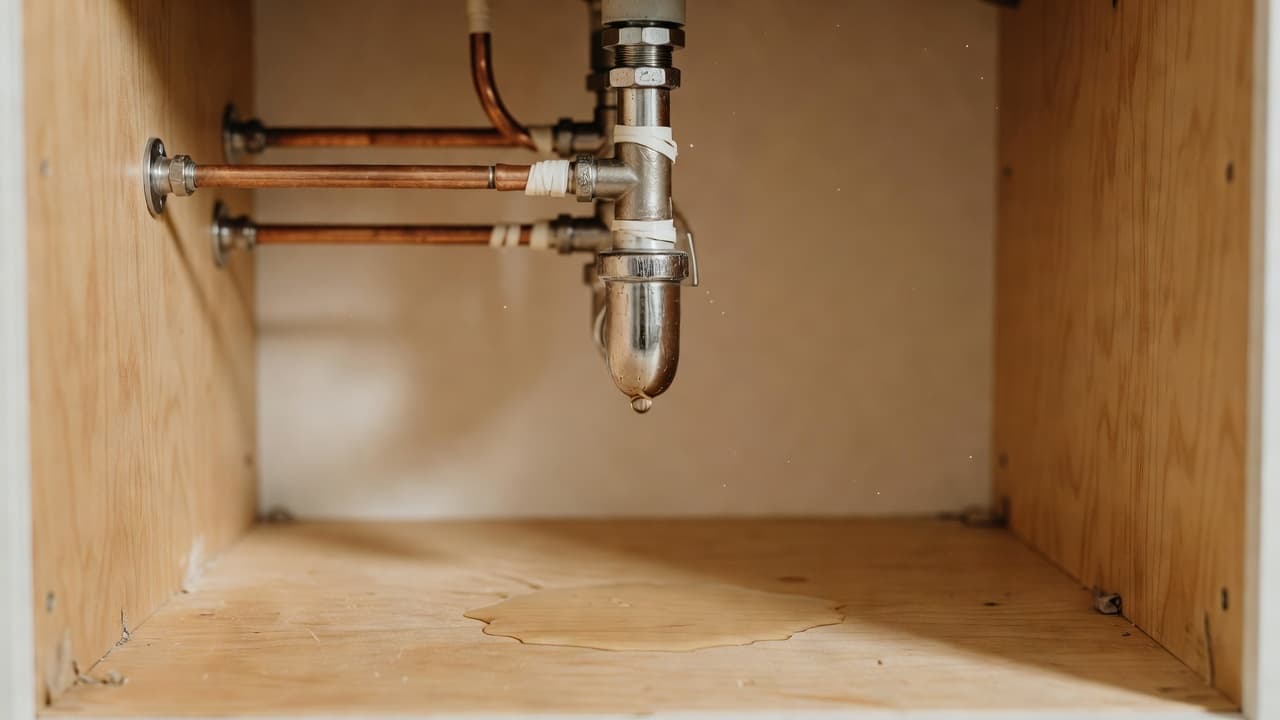
- Do not ignore a burst hose and hope it will dry out. Water damage spreads to walls, subfloors, and adjacent rooms. Mould grows within 24–48 hours in damp conditions. The cost of damage mitigation far exceeds the cost of an emergency plumber call.
- Do not turn the water back on to "test" the hose. You will flood the area again.
If the toilet valve will not budge, is leaking, or the main stopcock is difficult to access, do not force it. Call the plumber and explain the situation. You may need them to visit with tools to isolate the water safely.
A plumber arriving to a burst toilet hose will first confirm the water is off. Then they will:
Inspect the hose and fitting. They will assess whether the hose has simply split, whether the fitting connection has failed, or whether there is damage to the tap or cistern inlet. They will also check if the old hose is a poor-quality type prone to failure, which informs the replacement choice.
Drain the hose and cistern. There is still water in the system even after the valve is closed. They will drain it into a bucket before disconnecting.
Remove the old hose and fit a new one. This takes 10–20 minutes. They will use a quality hose (not the cheapest option) and ensure all connections are tight and not kinked. Some plumbers will fit a reinforced or stainless-steel braided hose, which is more durable, especially in salt-air environments.
Test the connection. They will turn the water back on, watch for leaks, and run the cistern through a flush cycle to confirm everything works.
Clean up and leave. A professional will mop any remaining water and remove any wet towels you have placed.
They will give you a receipt and may provide a small certificate (boletín) if they have worked on the water installation. Keep this for your records. Ask them if the hose is now a quality type and how long it is likely to last.
Replace the hose every 7–8 years as a preventive measure. Do not wait for it to burst. A replacement costs €80–180 and takes 20 minutes. A burst and the resulting water damage costs thousands.
Check the hose visually twice a year. Look behind the toilet for cracks, bulges, discolouration, or soft spots in the rubber. If you see any, replace it immediately.
Ensure the hose is not kinked or trapped. Make sure it runs loosely from the tap to the cistern inlet without sharp bends.
If you live in a coastal area, consider upgrading to a reinforced or stainless-steel braided hose. It costs more (€15–25 instead of €8–12 for the hose alone) but lasts longer in salt-air conditions.
Check the toilet valve itself. If the valve behind the toilet is old, stiff, or leaking slightly, ask the plumber to replace it at the same time. A faulty valve can cause pressure spikes that burst hoses.
When a toilet hose bursts, speed and water shutoff are everything. You have a plumber's number saved already — this is the moment to use it. Find a qualified plumber near you who can attend the same day and get the hose replaced safely. Water damage accelerates quickly in a home, so do not delay once the supply is off.