Three-phase power was installed in many Spanish urbanisations from the 1960s through to the 1980s for practical reasons. Builders used it because it was efficient for distributing electricity across multiple properties and could handle the load from communal systems (lifts, pumps, outdoor lighting). It was standard practice in many developments along the Mediterranean coast and inland regions.
Over the past 25 years, building regulations and consumer habits changed. Most new homes are built with single-phase supply because modern domestic appliances — cookers, water heaters, air-conditioning units, washing machines — are designed and manufactured for single-phase. Three-phase supply, by contrast, distributes electricity across three separate wires carrying voltage in a different way, making it unsuitable for most household equipment.
If your urbanisation was built or last substantially renovated before 1995, three-phase is likely. If it's from 2000 onwards, single-phase is almost certain.
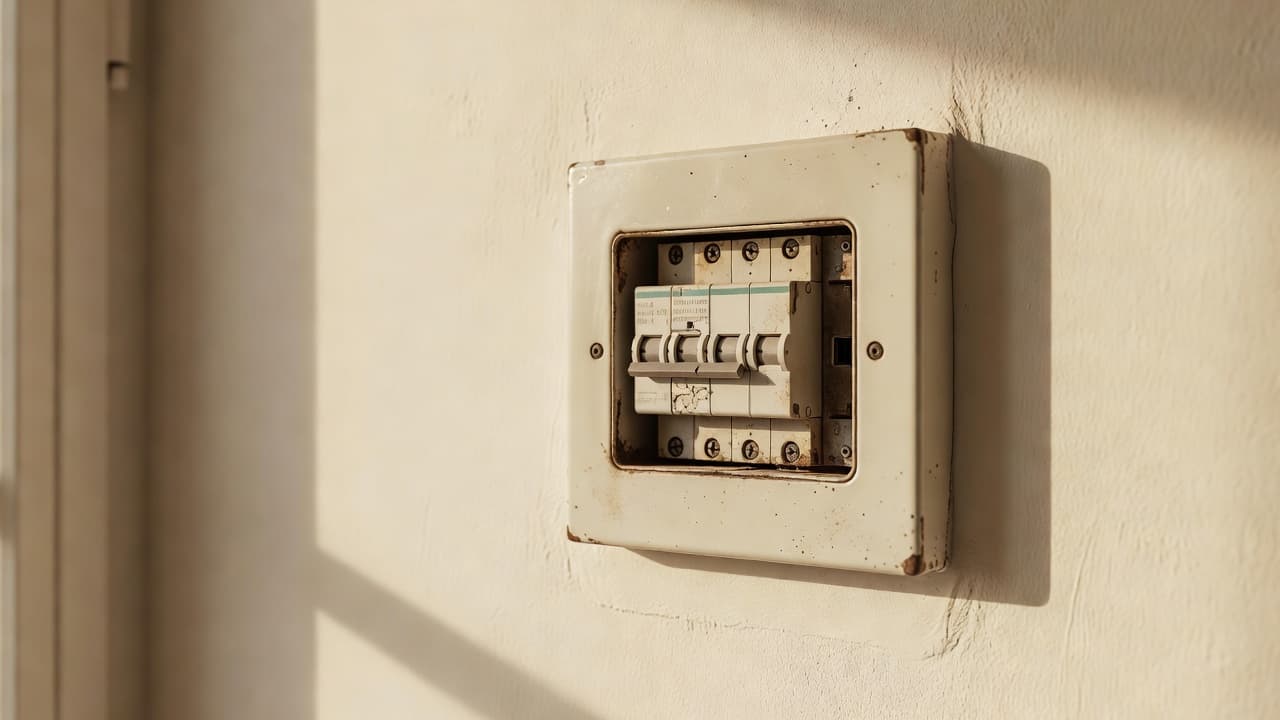
Three-phase consumer unit:
- Three large breakers or three large cylindrical fuses at the top labelled A, B, and C (or L1, L2, L3).
- Usually an ICP (interruptor de control de potencia, the power-limiting switch) positioned above or alongside them.
- Total visible capacity often higher than you'd expect for a domestic property.
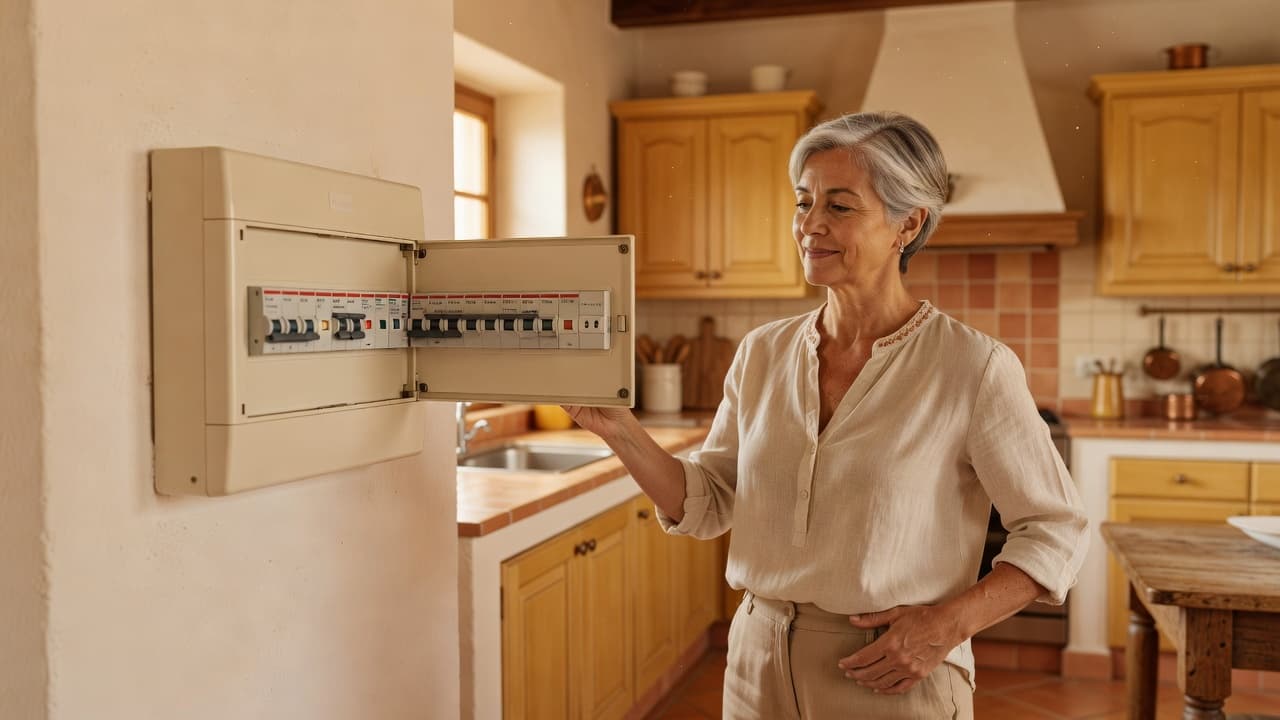
Single-phase consumer unit:
- One or two large breakers at the top.
- Clearly labelled for single-phase.
- Smaller, more familiar appearance to anyone who's seen a British consumer unit.
If you're unsure and your consumer unit is locked or covered by a panel, don't force it open. Contact a qualified electrician or your building's administrator (comunidad de vecinos).
If you have three-phase supply and you want to install a modern cooker, boiler, heat pump, or air-conditioning unit, these are designed for single-phase supply. Connecting them directly could:
- Damage the appliance permanently.
- Create an electrical safety hazard.
- Void the warranty.
- Trigger an unsafe condition that fails inspection.
This is not scaremongering. Single-phase appliances have specific electrical requirements, and three-phase supply simply doesn't match them.
If you need single-phase supply because you're modernising your home, conversion is straightforward and costs between €500 and €1,500 for labour and materials (prices vary by region and your electrician). The process involves:
A qualified electrician removes the three-phase installation and replaces it with single-phase wiring and consumer unit.
Your electricity supplier must be notified. They'll adjust your connection at their end and may issue a new meter. Some suppliers charge a small fee; others don't.
Your installation must be inspected and a new electrical safety certificate (boletín eléctrico) issued. This is mandatory and protects your home legally.
The whole job typically takes a day. You'll be without power for a few hours.
- Do not attempt to modify your consumer unit or electrical installation without a qualified electrician, regardless of how straightforward it seems.
- Do not plug a single-phase appliance into a three-phase circuit using an adaptor or improvised connection.
- Do not ignore it if you're planning any electrical upgrade. Inform your electrician immediately so they scope the work correctly.
- Do not assume your old appliances are compatible with new supply. Always check the appliance manual or ask the supplier before purchase.
If you're in any doubt about your supply type or what's needed, contact a qualified electrician before making any purchase decisions.
When you call an electrician to discuss your supply or plan a conversion, they'll:
- Inspect your consumer unit and confirm your supply type.
- Test your current installation to ensure it's safe.
- Advise whether conversion is necessary or if an alternative solution exists (sometimes a small step-down transformer can work for specific appliances).
- Provide a quote for conversion if needed, including the cost of the new consumer unit, wiring, electrician's labour, and the safety certificate.
- Handle all communication with your electricity supplier and the inspectorate.
- Provide you with a legally valid electrical safety certificate on completion, which you must keep and may need if you sell or rent the property.
The professional will also explain your new consumer unit and how to reset the main breaker if it trips.
- When buying an appliance, always confirm the supply requirement. Check the product specifications or ask the seller. It will state "230V single-phase" or equivalent. If in doubt, ask.
- Plan electrical upgrades early. If you're buying a home and it has three-phase supply, budget for conversion if you plan modern renovations.
- Keep your electrical certificate safe. It's proof of a legal, safe installation and may be required by future buyers or your insurance company.
- If you rent out the property, an electrical certificate is often a legal requirement, particularly in urbanisations with shared facilities.
If you need to convert your supply or have questions about your electrical installation, contact a qualified electrician in your area. Browse available electricians or request a quote today.