A smoking or burning-smelling socket almost always points to one of three problems:
Overloaded circuit or loose connection. The socket is drawing too much current, or the internal contacts have corroded or loosened. Spanish coastal homes suffer from salt-air corrosion, which can degrade metal connections over years. Heat builds up inside the outlet, and the plastic begins to scorch.
Faulty wiring behind the socket. The wire insulation inside the wall or behind the socket has degraded, frayed, or come into contact with metal, creating a short circuit. Age, moisture, or rodent damage can cause this.
Failed socket component. The socket itself has developed an internal defect — a manufacturing fault, water ingress, or thermal failure of one of the internal mechanisms.
Any of these can escalate quickly. The heat and friction inside the socket can ignite the plastic casing or nearby materials, especially if the circuit isn't interrupted.
There is only one safe temporary fix: keep the socket switched off and don't use it.
Do not:
- Try to dry a damp socket with a hairdryer or cloth.
- Use the socket "just once more" to plug in a phone charger or lamp.
- Assume the problem is solved if the smell fades after you turn it off.
- Cover the socket with tape or plaster.
The fault will not self-heal. Using the socket again will restart the heating cycle and increase fire risk. Patience here is essential.
If you need to use an electrical outlet in that room, use a different socket on a different circuit if one is available — but only after you've confirmed with the electrician that circuit is safe.
Call an electrician immediately if:
- You see smoke, sparks, or flames coming from the socket.
- The socket is hot to the touch (feel the wall near it with the back of your hand from 30 cm away; if warmth radiates, don't touch).
- The smell is very strong (rotten, chemical, or acrid).
- The socket is in a damp area (bathroom, kitchen, near a window) or has water stains around it.
- Multiple sockets in your home have the same smell or discolouration.
- The problem happens repeatedly, even after the electrician has looked at it.
- You have an older home (1980s or earlier) with the original wiring and sockets.
Call emergency services (112) immediately if:
- There is a fire or flames visible.
- The smell is accompanied by a hissing or crackling sound.
- Smoke is filling the room and won't stop.
Do not attempt to extinguish an electrical fire with water. If there is a fire, leave the property, close doors behind you to contain it, and call 112 from outside.
The electrician will isolate the circuit (ensure the socket remains off) and inspect the socket and the wiring behind it. They'll use a multimeter or similar tool to check for continuity, insulation, and current leakage — diagnostic steps you cannot safely do yourself.
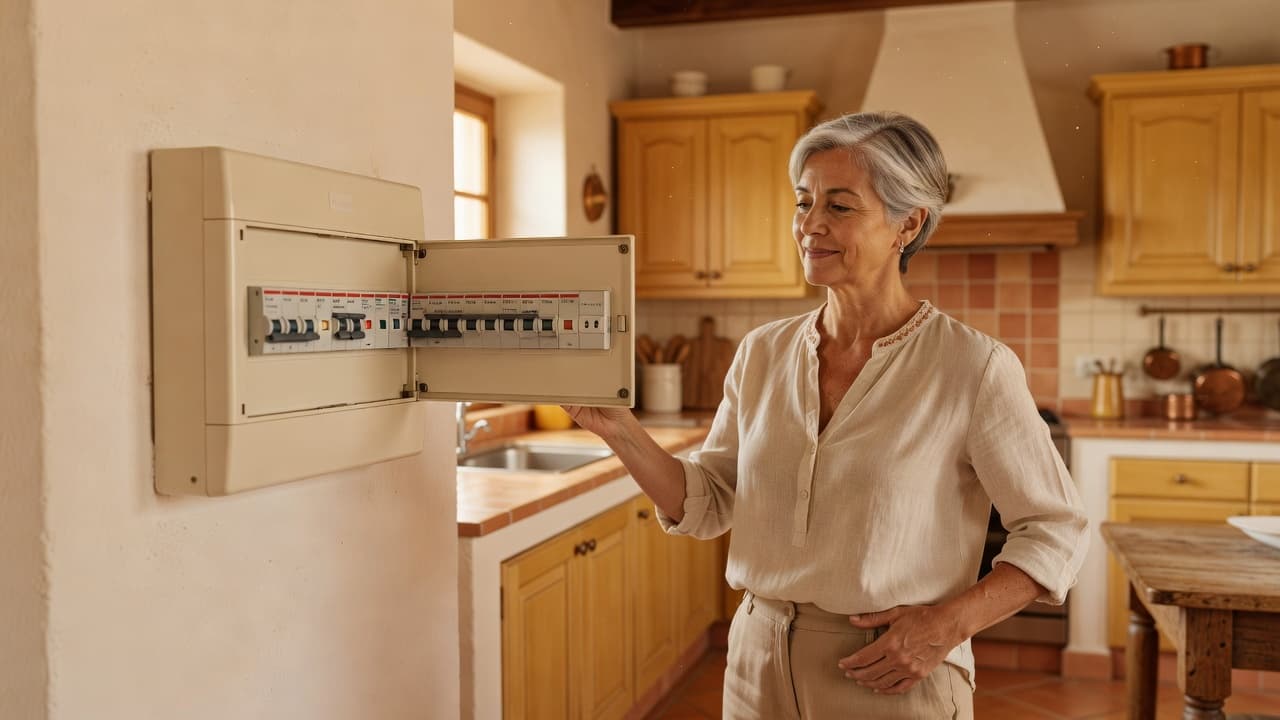
If the socket is faulty, they'll remove it, inspect the wiring in the wall box (caja de derivación) behind it, and replace the socket with a new one that matches the standard (usually a European two-round-pin or two-pin-plus-earth socket on the Spanish coast). They'll also check the circuit breaker (interruptor automático) and the RCD (differential, or diferencial) to ensure they're functioning correctly.
If the wiring is damaged, the electrician may need to run a new cable through the wall or surface-mount new conduit (canaleta), depending on the damage and the age of the installation. This takes longer and may incur a call-out charge if you'd like the work done the same day.
The electrician should provide you with a receipt and, if the installation requires it, a small electrical test certificate (boletín eléctrico) confirming the work is safe. Keep this for your records and for insurance purposes.
Regular visual checks. Every few months, walk around your home and look for discolouration, burn marks, or scorch patterns on sockets and switches. Coastal humidity and salt air speed up corrosion; if you live near the sea, check more often.
Don't overload circuits. Avoid plugging high-power appliances (air conditioning units, heaters, washing machines) into the same socket or extension lead at the same time. Each room's circuit has a limit; the breaker trips when you exceed it, and that's the system working correctly. If breakers trip often, you need additional circuits, not a higher-capacity breaker.
Protect from moisture. In bathrooms and kitchens, use sockets with built-in shutters (they're standard in new Spanish installations) or covers. Water and electricity don't mix. If a socket is near a water source, ask the electrician about installing a waterproof outlet (enchufe estanco).
Check appliance plugs. If a plug is brown, scorched, or has a loose fit, don't use it. A poor connection generates heat and can damage the socket. Replace the plug or the appliance.
Professional inspection for older homes. If you own a property built before 1995, consider asking an electrician to do a full safety inspection of the installation. Older wiring is more likely to develop faults, and insurance companies may require this for holiday lets or rented properties.
A smoking socket is not a minor inconvenience — it's a warning sign your home's electrical system needs attention. The good news is that it's almost always fixable, and catching it early prevents much larger problems. Stay calm, turn it off, and find a qualified electrician in your area who can inspect it the same day. Your safety, and your home's, depends on acting now, not later.