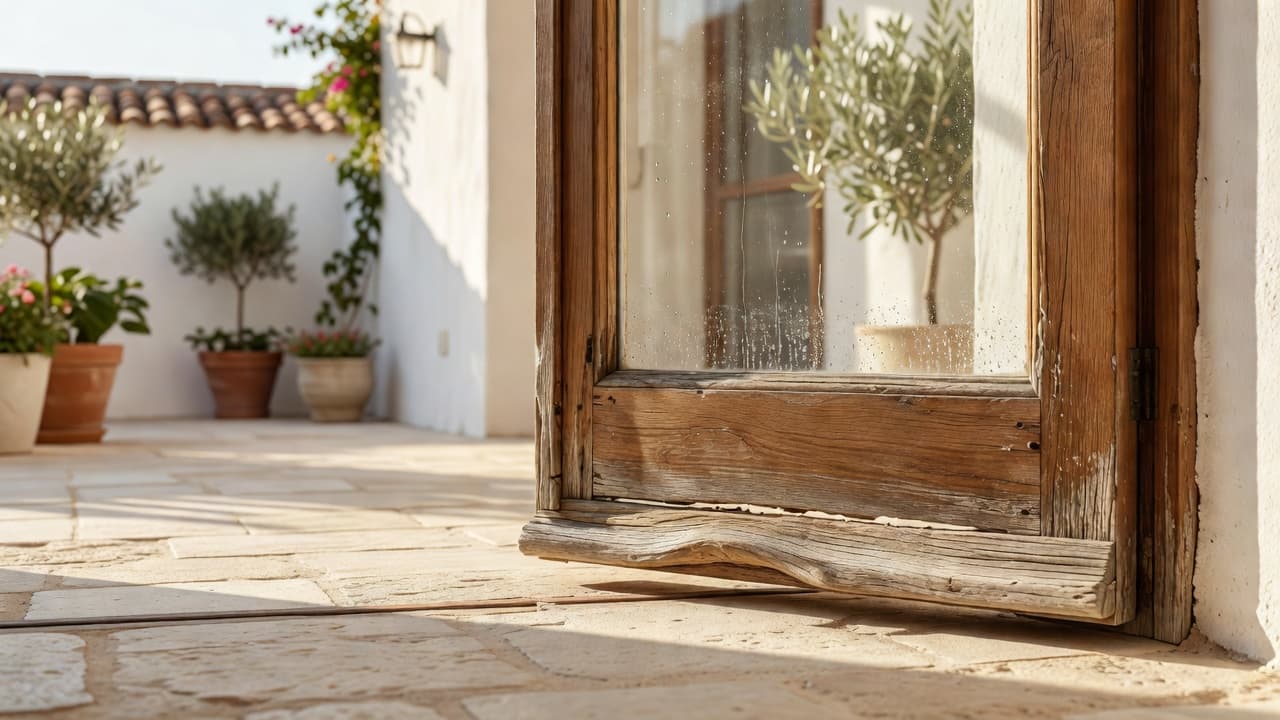
Wood is porous. It absorbs and releases moisture depending on the humidity of the surrounding air. When relative humidity is high—which it is year-round on Spain's Mediterranean coast, and especially after rain or near the sea—wood swells. When humidity drops, the wood shrinks.
A terrace door frame is exposed to this cycle continuously. The Mediterranean climate means:
- High year-round humidity, especially in the early morning and after rainfall.
- Salt air near the coast accelerates wood degradation and makes frames more susceptible to water ingress.
- Poor ventilation in many holiday homes and second homes, where terrace doors are closed for months at a time, trapping humid air.
- Cheap or untreated wooden frames that don't have adequate sealant or moisture barriers.
The door swells because the bottom rails and vertical stiles (the wooden structure of the frame) are absorbing moisture faster than they can dry. If this happens once and the wood dries quickly, no permanent damage occurs. But repeated cycles—swell, shrink, swell, shrink—cause the wood to lose its strength and elasticity. Eventually, the frame becomes permanently warped.
Option 1: Increase ventilation and reduce humidity (works if swelling is recent).
- Open the terrace door fully and prop it with a doorstop or wedge. Lean a fan against the interior wall to push air across the door edges.
- In the rest of the house, open windows to create a path for moist air to escape. Avoid creating a wind tunnel through the terrace door—gentle circulation is better.
- If you have air conditioning, use it. AC removes moisture as it cools.
- Run a dehumidifier in the main room for 4–8 hours daily until the door moves freely again. Empty the tank regularly.
- If the door is wooden and the swelling is mild, this approach often works within 24–48 hours.
Option 2: Mechanical adjustment (if the lock or hinges are binding, not the wood itself).
- Check the hinges on the door. If they're visible (usually 2–3 hinges on a standard terrace door), you may see a gap between the door and frame that varies from top to bottom. This suggests the hinges are loose or the door has settled.
- With a screwdriver, gently tighten the hinge screws—only the screws that attach the hinge to the frame, not the ones on the door edge. Tighten a quarter-turn at a time. Test the door. If it's still stuck, don't over-tighten; call a handyman instead.
- If the door is binding at the bottom, some hinges have an adjustment screw (usually a hex key fitting) that raises or lowers the door. Check your door model online, or take a photo of the hinge and send it to a handyman. Adjusting this incorrectly can make the problem worse, so be cautious.
Option 3: Temporary lubrication (a day-long workaround, not a fix).
- Do not use WD-40 or oil on wooden frames—it traps moisture and makes swelling worse.
- If the door is dragging because the frame is very swollen, you can apply a dry lubricant like talcum powder or a graphite-based dry lube to the edges of the door where it contacts the frame. This reduces friction temporarily, allowing the door to slide past the swollen wood.
- This buys you 1–2 days while humidity naturally decreases. It's not a cure.
Do not sand, plane, or cut the door yourself. Sanding wet or damp wood spreads moisture deeper into the wood and makes swelling worse. A handyman will check the wood's moisture content with a meter before making any irreversible changes.
Stop and call a handyman if:
- The door is locked and you can't open it at all. Forcing it risks breaking the lock or the door frame internally.
- The hinges are visibly bent or broken. Don't adjust screws that are already damaged.
- The door frame itself is warped—meaning the corners are no longer at right angles, or the frame is bent in the middle. You can see this by looking at the frame from outside. A warped frame needs professional straightening or replacement; you cannot fix it by drying.
- Water is seeping into the house around the door frame or beneath the threshold. This suggests the frame seal is broken or the building's external waterproofing is failing. This needs structural attention, not just door adjustment.
- The glass is cracked or the seal between the glass and frame is broken (you see condensation inside the double glazing). The door mechanism is secondary; the glass unit or the door will need to be replaced.
- The door is swollen but also feels soft or spongy to the touch. This indicates wood rot, which is beyond DIY repair.
- The door has been stuck for more than a week despite ventilation and dehumidification. At that point, the frame is likely permanently warped and needs professional diagnosis.
Safety note: Do not attempt to remove the door from its hinges unless you have removed the glazing first and have two people to support the weight. Terrace doors are heavy, and removing one alone risks dropping it on your feet or damaging the frame further.
A handyman will start by checking the door's moisture content using a portable moisture meter. This takes 30 seconds and tells them whether the swelling is recent (high moisture content) or old (the wood has already dried but remains warped).
If the wood is still wet, they'll advise on ventilation and may recommend a day or two of drying before making mechanical adjustments. If the wood is dry but the door still doesn't fit, the frame is warped and needs adjustment.
The handyman will then:
- Inspect the hinges and locks. Tightening hinges, adjusting hinge screws, or lubricating locks often solves the problem without touching the door or frame.
- Measure the gaps between the door and frame at the top, middle, and bottom. Uneven gaps indicate settlement or a warped frame.
- Plane or sand the door edges if necessary. If the frame is straight but the door has swollen permanently, they'll carefully remove a small amount of wood from the binding edges. This is done with the door removed from the hinges, in a dry condition, and usually takes 30–45 minutes.
- Check the threshold and weatherseal. If the external seal is broken, water will continue to enter and re-swell the door. Replacing or resealing the threshold often prevents the problem from recurring.
- Test the lock mechanism. Once the door moves freely, they'll ensure the lock engages fully and the door sits flush.
The entire job usually takes 1–2 hours and costs €100–250 for adjustment and minor sanding. If the frame is warped beyond adjustment, or if the door needs to be replaced, the cost rises to €400–900 depending on the door type and size.
The handyman will not use products like wood hardener or epoxy fillers on a Mediterranean terrace door unless rot is present (which is rare in a recently swollen frame). These are temporary fixes that create other problems.
Maintain a humidity balance. Aim for 40–50% relative humidity in rooms with terrace doors. This is low enough to prevent swelling but high enough to be comfortable. Use air conditioning in summer, and open windows regularly (even briefly) to cycle fresh air through.
Seal and protect the frame. Once the door is working, ask your handyman to check the external weatherseal (the rubber or foam strip around the frame). On the Mediterranean coast, this degrades faster due to salt and UV. Replacing a worn seal costs €30–80 and prevents water ingress.
Clear the threshold regularly. Leaves, dirt, and debris can block drainage and trap water against the door frame. A quick sweep twice a month prevents moisture accumulation.
Don't close the terrace door for weeks at a time. If the home will be unoccupied, leave the terrace door slightly ajar (secured from outside if it's a holiday home) or open a window in an adjacent room. Stagnant, humid air is the enemy.
Paint or varnish wooden frames every 3–4 years. A good exterior paint or varnish protects the wood from moisture ingress. Choose products rated for Mediterranean coastal exposure if you're near the sea.
If your terrace door is stuck due to swelling and you've tried ventilation without success, don't wait longer than a week. The longer the wood remains swollen, the more permanent the damage to the frame becomes. A handyman can assess the situation in less than an hour and usually fix it the same day.
Contact a handyman on the Mediterranean coast who understands humidity problems specific to coastal living. They'll bring a moisture meter, the right tools, and the knowledge to prevent the problem recurring.