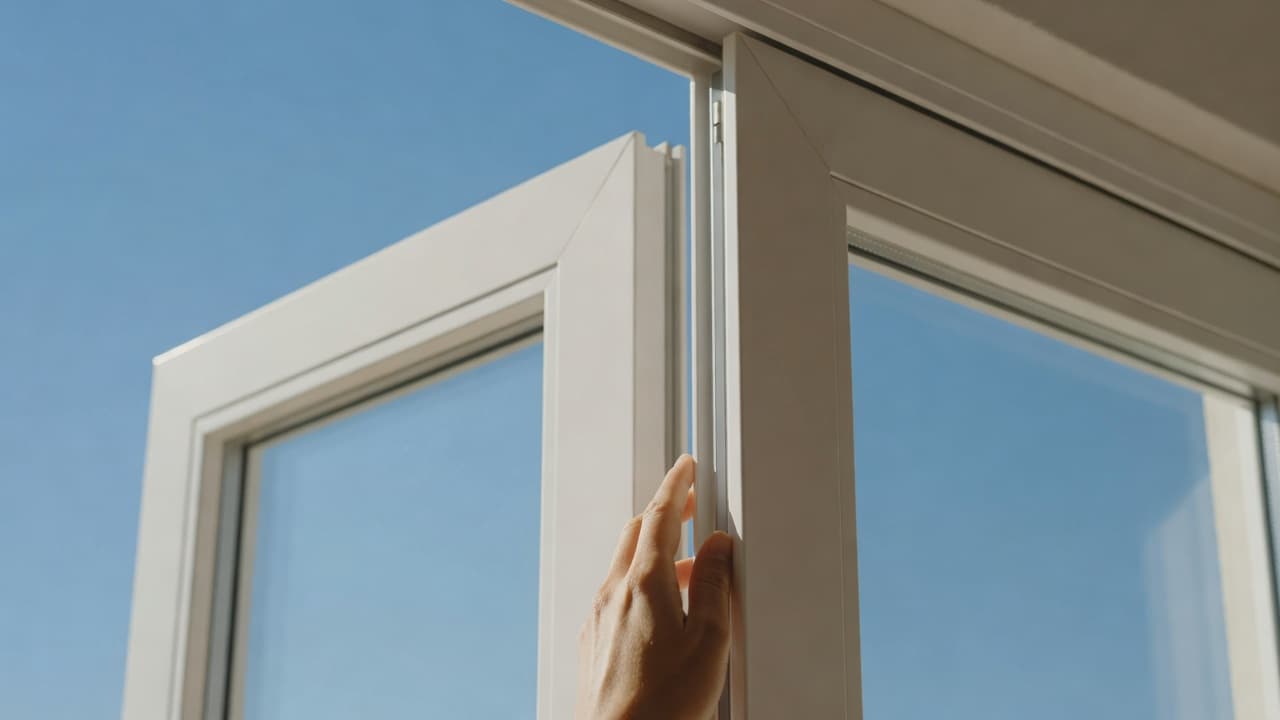
Debris in the track is the most common culprit. Dust, old sealant, insect remains, and fine sand accumulate, especially in coastal areas where salt spray dries and hardens in the grooves. The window slides partway, then the frame catches on the blockage.
The locking handle is in the wrong position. Many UPVC windows have a rotating handle (not just up and down). If you leave it halfway between locked and unlocked, the multi-point lock pins don't engage, and the window won't close fully or feels stuck when you try.
Heat-induced expansion. On the Mediterranean coast, UPVC frames can expand slightly during hot summers, particularly on south-facing windows. The frame swells just enough to misalign with the sash (the moving part), and the hinges bind. When the frame cools at night, it often returns to normal, but repeated cycles wear the hinges and seals.
Worn or bent hinges. If the window has been opened and closed thousands of times, the hinges weaken or the pivot pins wear down. The sash no longer sits square in the frame, so it jams part way.
Frame settlement or misalignment. In older properties or those near the coast, subsidence, humidity changes, or salt-air corrosion can shift the main frame slightly. The window no longer aligns with its frame, and closing becomes difficult.
Painted-over hinges or locks. Previous maintenance or refurbishment may have left paint or sealant on moving parts, restricting movement.
Clean the track thoroughly. Use a dry brush or soft cloth to remove dust. Then dampen a cloth with a little warm soapy water and run it along the entire track—top, bottom, and inside the frame channels. Dry it immediately with a clean cloth. This single step fixes the problem in about 40 per cent of cases.
Lubricate the track and hinges. Once the track is clean and dry, apply a small amount of silicone spray or a light machine oil to the track and hinge pivots. Avoid WD40—it leaves a thin, sticky residue that attracts more dust. Work the window open and closed a few times to distribute the lubricant. Wipe away any excess.
Ensure the handle is fully engaged. Turn the handle all the way to one end (usually clockwise). Close the window. If the handle feels stiff or you hear a click, the lock is engaged. This is correct. If the handle is loose or in the middle of its travel, it's in an intermediate position—the lock pins won't fully engage. Turn it further until it stops, then close the window.
Adjust the hinge if it's accessible. Some UPVC hinges have a small adjustment screw on the top hinge (visible when the window is fully open). Turning this screw clockwise slightly can lift or close the window sash tighter against the frame. Turn it very gently—a quarter turn at a time—and test after each adjustment. Stop if you feel resistance. Do not force screws.
Check for paint or caulk overlap. If you see old paint or sealant running over the hinge or lock mechanism, carefully scrape it away with a plastic scraper (not a metal one, which will gouge the UPVC). Be patient; this is not urgent.
None of these should take more than 20 minutes. If the window closes fully after cleaning and lubricating, you're done. Monitor it over the next week to see if the problem returns.
Stop and call a professional if:
- The frame is visibly bent, twisted, or out of square. This requires re-alignment or frame replacement.
- The window closes but feels like it's binding with grinding or cracking sounds. Something inside the mechanism is damaged.
- The hinges are loose, wobbly, or the pin has fallen out. This is a structural problem that affects the window's hang.
- The locking handle moves freely but no longer engages—there's no resistance or click. The internal lock mechanism is broken.
- You've cleaned the track and lubricated it, and the problem returns within a few days. This suggests frame warping or a mechanical issue that won't resolve with simple maintenance.
- The window is security glass or in a high-traffic area (kitchen, living room) where a failed repair could be hazardous.
- You're unsure whether you've adjusted something correctly. It's safer to have a professional confirm.
A stuck UPVC window is rarely dangerous in itself, but attempting to force it or disassemble mechanisms you're unsure of can damage the frame seal, making the window less weatherproof. Better to call.
The handyman will repeat the inspection steps you've already done—checking the track, hinges, and frame alignment—but with specialist tools and experience. If the track is blocked by old sealant or corrosion, they'll use a plastic scraper or a gentle wire brush to clear it without damaging the frame. They'll apply the appropriate lubricant and work the window several times to check the result.
If the hinges are worn or bent, they'll assess whether they can be adjusted or need replacement. Modern UPVC hinges are modular and can usually be swapped out without removing the entire window frame. They'll take measurements to order the correct replacement if needed, which typically takes a few days.
If the frame is slightly misaligned, they may use shims (small wedges) under the hinges to bring the sash back into square. This is a common fix in coastal properties where humidity and salt air cause minor shifts over time.
If the locking mechanism is faulty, they'll either repair the internal pins or replace the lock unit. They'll provide you with any documentation about the work and what parts were used. This is important for your insurance and if you sell the property later.
The visit typically lasts 30–60 minutes for a single-window diagnosis and simple repair. More complex work (hinge or lock replacement) may extend this.
Clean the frame tracks every three to four months. A quick dry brush and damp cloth take five minutes. On the coast, salt spray hardens in the grooves faster, so aim for monthly cleaning during summer.
Check the handle position before closing. Make it a habit: turn the handle fully to one end before pushing the window shut. This ensures all the lock points engage and wear is even across the mechanism.
Avoid slamming the window. Gentle, steady closure distributes load evenly on the hinges. Repeated hard slamming wears them prematurely.
Ensure air can circulate around the window. Blocked vents or restricted air flow around the frame can trap heat and humidity, causing slight swelling. Keep curtains and blinds from pressing directly against the frame.
Have hinges inspected annually if your window is south-facing. In coastal areas, an annual check by a professional keeps small problems from becoming expensive ones.
A stuck or slow-closing UPVC window usually starts with dust and ends with a 20-minute clean-up. Before you worry about repair costs, spend half an hour on the simple checks: clean the track, check the handle position, and lubricate the hinges. If that doesn't work, or if you spot visible damage to the frame or hinges, contact a handyman—they'll diagnose the real problem quickly and get your window working again without fuss.
If you need a recommendation for a local handyman on the Mediterranean coast, our network of local handymen are experienced with UPVC windows in coastal properties and can usually visit within a few days.