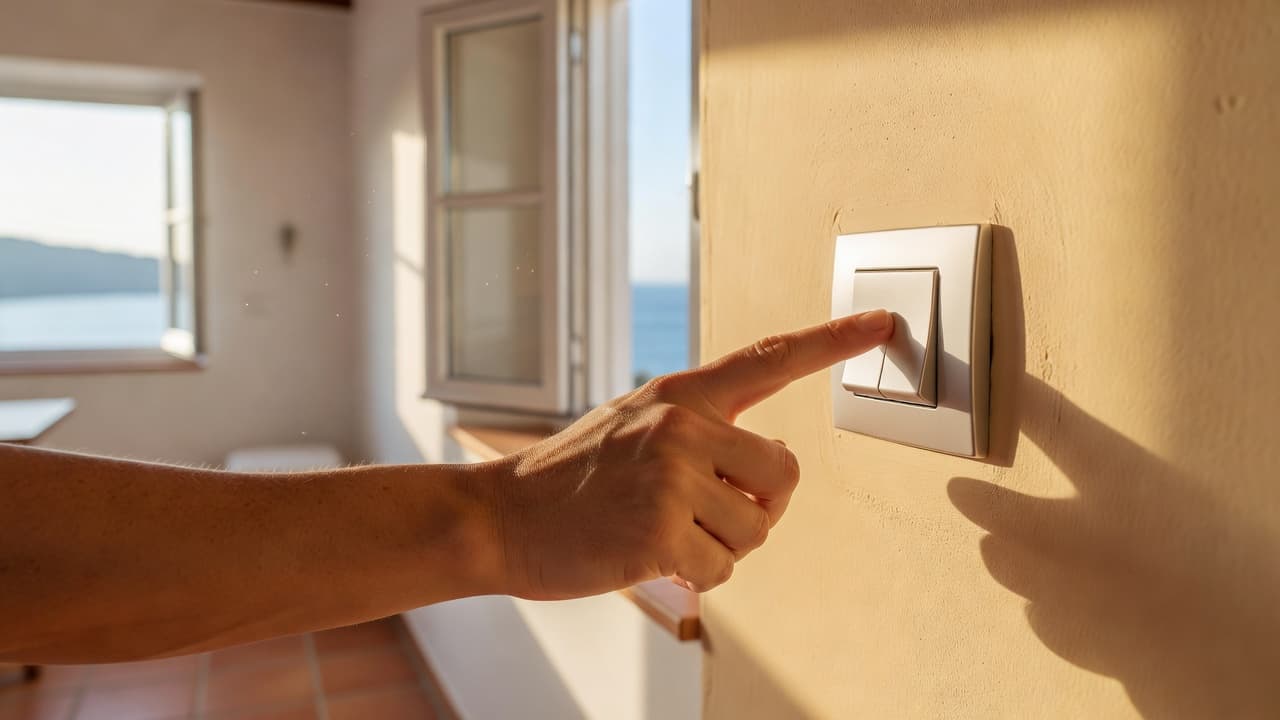
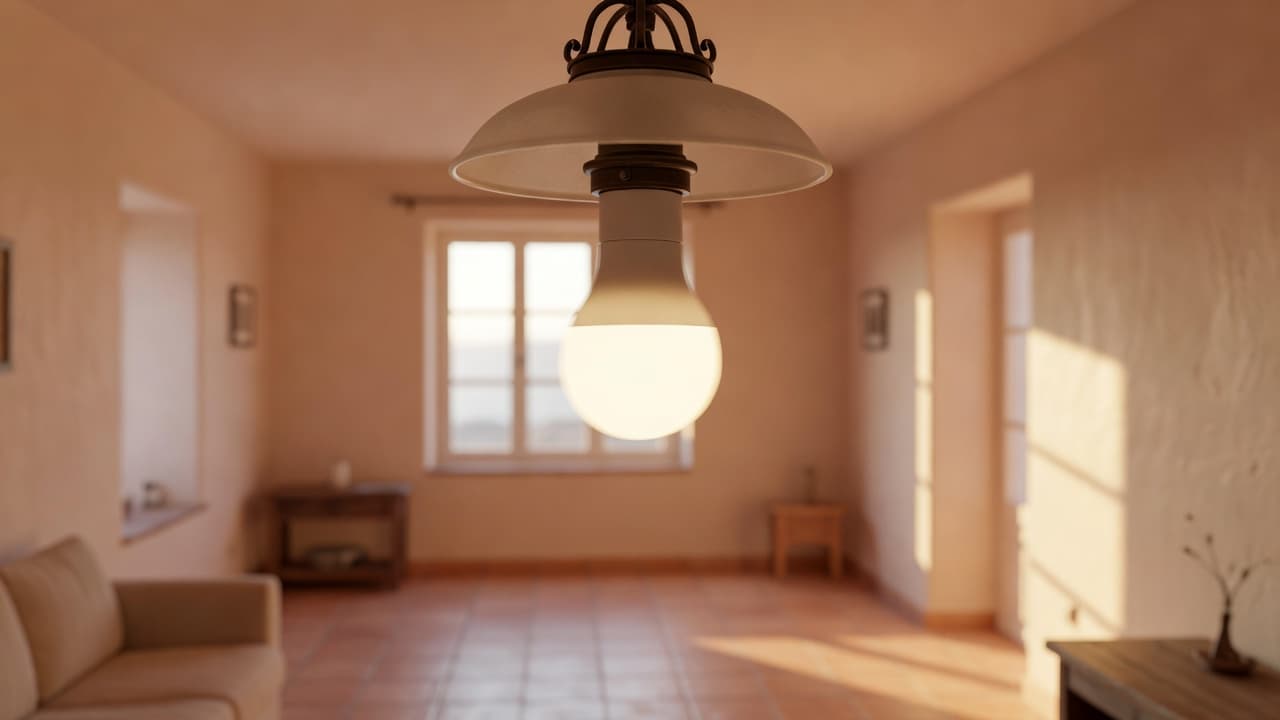
There are four main reasons why a switch clicks but the light stays off:
The bulb is blown. The filament inside has broken, usually because it reached the end of its life or failed suddenly due to a power surge (common during hot Mediterranean summers when air conditioning loads spike). A burnt-out bulb looks dark or has a visible broken wire inside.
The bulb is loose. If the connection between the bulb base and the socket is poor, current won't flow. A quarter-turn tighter often fixes it immediately.
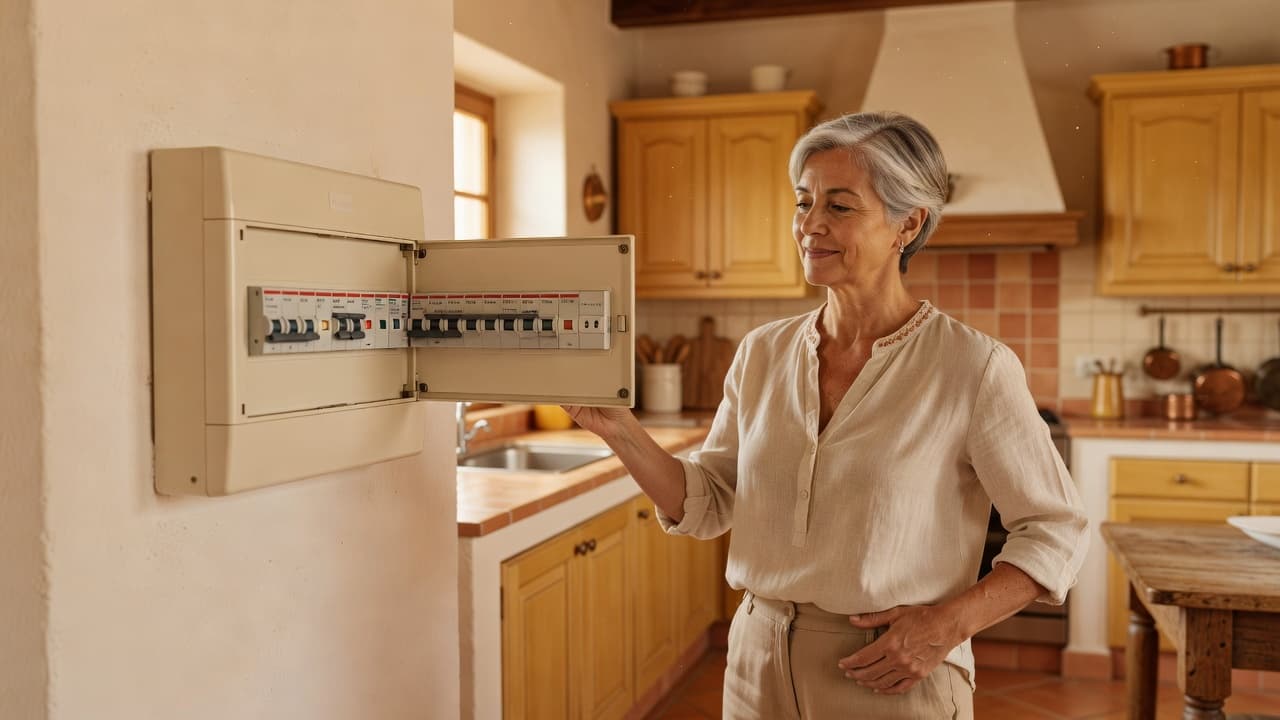
A circuit breaker has tripped. Your electrical consumer unit (called a cuadro eléctrico in Spain) contains a circuit breaker that cuts power to a group of lights if it detects a fault or overload. If the breaker for this light circuit is in the off position, the switch will click but nothing happens. This is a safety feature, not a disaster.
The switch or wiring is faulty. Less commonly, the switch itself is broken (the internal contacts are worn or corroded), or there's a loose wire at the switch, the bulb fitting, or in the wall. Salt air on the coast can corrode contacts faster than in mainland areas.
The light fitting itself is broken. The socket where the bulb sits may be damaged or the wiring inside the fitting may have failed.
Check and reset the circuit breaker.
- Locate your consumer unit. In most Spanish homes, it's under the kitchen sink, in a bathroom cupboard, in a utility room, or on a landing. It's a grey or white plastic box with around 6 to 12 switches inside (called interruptores automáticos) or sometimes a larger single lever (the ICP, which is the main isolator).
- Open the door and look for any switch that is in the off position (pointing downwards) or is in the middle (tripped). The switch controlling your lights may be labeled luces, iluminación, or circuito 1 / circuito 2.
- If one is off or tripped, switch it back on (upwards). If it clicks back off immediately, stop and call an electrician—there's a live fault on that circuit.
- If it stays on, go back to your light switch and test the light. If it works, the circuit breaker was the culprit.
If you have a faulty bulb, you can continue using the light by replacing the bulb with a new one of the same type. Keep spares in a cupboard. Always switch off at the wall and let the old bulb cool (a few minutes) before unscrewing it.
If the switch clicks but the bulb is new and the circuit breaker is on, the fault is in the switch or wiring, and you'll need a professional.
Stop and call an electrician immediately if:
- The switch feels hot or warm to the touch when you press it.
- You see scorch marks, burn marks, or discolouration on the switch plate or around the switch.
- You smell burning plastic or electrical odours coming from the switch or the light fitting.
- The circuit breaker trips repeatedly when you try to turn the light on (it goes back off by itself within a few seconds).
- The switch doesn't click at all—it's stuck or unresponsive. This suggests the switch itself has failed electrically or mechanically.
- Water or moisture is visible around the switch or light fitting (especially relevant in bathrooms or near the coast).
- The light fitting is damaged, cracked, or visibly corroded, particularly if it's metal and exposed to sea air.
In any of these cases, cut off the electricity at the circuit breaker and do not use the switch again until an electrician has inspected it.
When you call an electrician about a switch that clicks but produces no light, they'll arrive with a multimeter (a handheld electrical tester) and will carry out a simple diagnostic:
They'll confirm the circuit is live. Using the multimeter, they'll check that electricity is reaching the switch and the light fitting. This takes less than a minute and tells them whether the fault is in the power supply or the component itself.
They'll test the switch contacts. The internal contacts inside the switch may have corroded (especially in coastal properties where salt air accelerates oxidation) or worn out after years of use. The electrician will measure the resistance across the contacts. If the switch is faulty, they'll replace it—a job of 10–15 minutes.
They'll test the light fitting. If the switch and circuit are fine, the fault is in the socket or wiring inside the light fitting itself. The electrician will either repair the fitting (tightening a loose connection) or replace the fitting entirely.
They'll hand you documentation. If they replace any electrical component, they'll give you a receipt and may offer a boletín eléctrico (electrical safety certificate) if required by your community or insurer. Don't discard this—keep it with your home records.
The whole job usually takes under half an hour and costs between €60 and €120 depending on what's broken and whether a component needs replacing.
- Keep bulb spares on hand. Buy a pack of four identical bulbs and store them in a dry place. When one blows, you can replace it immediately without stress.
- Screw bulbs in firmly when you install them. A loose bulb is the most common reason for lights to flicker or fail intermittently.
- Avoid power surges. In summer, when air conditioning units draw heavy current, voltage spikes are more common. Consider a surge protector (a power strip with surge protection) for sensitive areas, though light circuits themselves rarely need one.
- If you're in a coastal home, ask your electrician to check for corrosion on switch contacts during annual maintenance. Salt air corrodes metal faster than fresh air inland.
- Check the circuit breaker annually. Flip the main switch off and back on to ensure it's responsive and not stuck. If it's stiff or won't move smoothly, mention it to your electrician.
A switch that clicks but produces no light is almost always a blown bulb or a tripped circuit breaker, both quick to fix. Start with a new bulb, check the consumer unit, and if neither solves it, you'll need an electrician to diagnose the switch or wiring. Don't ignore warning signs like heat, smell, or repeated tripping—call for help straight away if you see any of these.
If your light won't come on and you'd like a reliable electrician to inspect it, find a qualified electrician on the Mediterranean coast through MyCasa Spain. We connect you with vetted professionals who speak your language and can diagnose the fault in minutes.