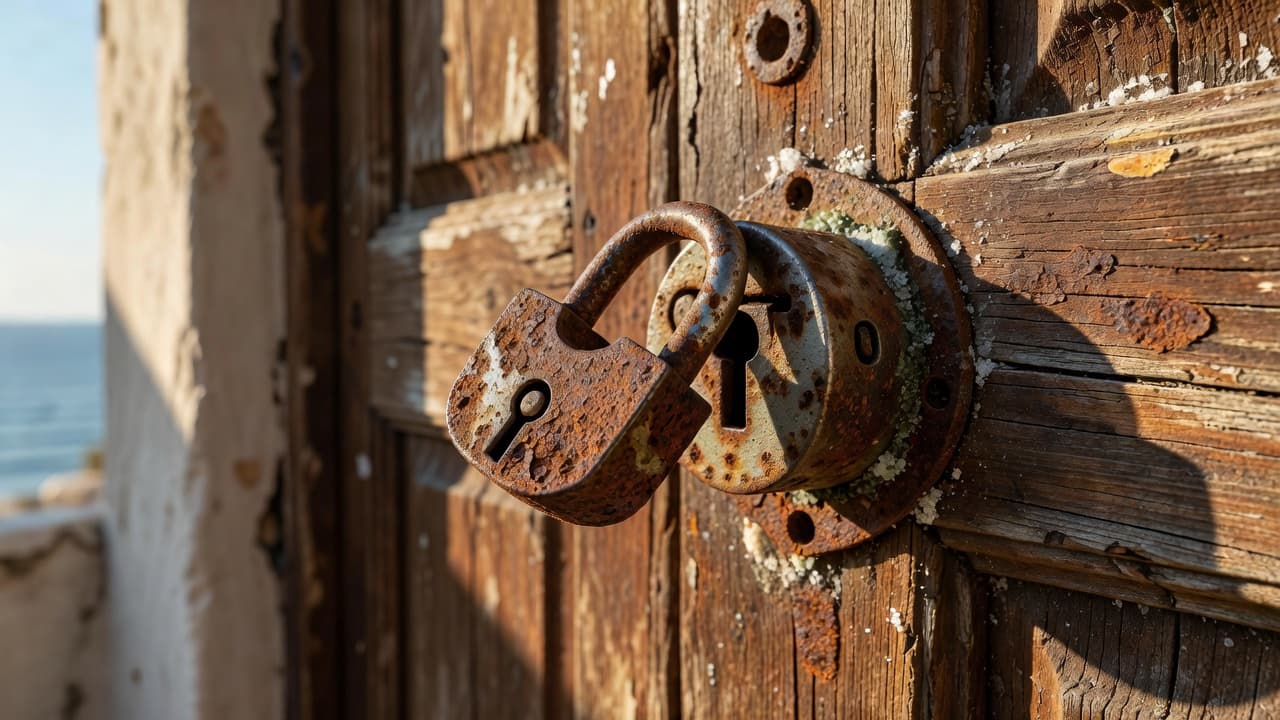
A lock left unused for months is a perfect storm for seizing:
Corrosion and rust. If your storeroom is on the Mediterranean coast or in a coastal urbanisation, salt air accelerates rust inside the lock cylinder. Even inland, moisture from humidity creeps into the mechanism, oxidising the metal parts. Over months, a thin rust layer can build up enough to prevent the key from turning.
Dried lubricant. Locks are manufactured with internal lubricant that keeps the mechanism smooth. After three to six months of disuse, especially in warm, dry conditions, this lubricant dries out and becomes sticky. Dust and debris settle into the cylinder and harden into a paste that blocks movement.
Dust and debris. A storeroom that isn't opened regularly accumulates dust inside the lock. Each time temperature or humidity changes, the lock expands and contracts slightly, working dust deeper into the mechanism.
Mechanical tolerance. Some locks — particularly cheaper or older ones — have tighter manufacturing tolerances. They seize faster when unused because there's less clearance for the key to find its path through internal pins.
If gentle lubrication and waiting haven't freed the lock, you can try one or two more approaches before giving up:
Stronger penetrating oil. If you only tried WD-40, a heavier-duty penetrating spray (like those designed specifically for locks, not just general rust) can be more effective on severe corrosion. Spray it into the keyhole, wait 10–15 minutes, and try again with slow, gentle pressure. If it still won't move, stop.
Gentle key wiggling while applying heat. Some people wrap a hot (not boiling) damp cloth around the lock to gently warm it, which can slightly expand the metal and release corrosion. Do this for 2–3 minutes, then try the key with gentle pressure and small wiggling motions. This is a last-ditch attempt only — don't apply heat if the lock is plastic or if you're in direct sun (heat won't help and could warp components).
Graphite powder (if you have it). A locksmith's trick is to use powdered graphite, which lubricates without attracting dust like oil does. If you have a graphite pencil, scrape a small amount of powder onto paper, fold it into a thin channel, and carefully blow the powder into the keyhole. Then try the key gently. This is optional and not critical.
Do not attempt to:
- Force the key by turning it hard.
- Tap the key with a hammer or mallet.
- Use a pliers to turn the key — this snaps keys.
- Use vinegar, water, or salt-based cleaners — these corrode further.
- Disassemble the lock yourself.
Stop immediately and call a locksmith if:
The key snaps or breaks inside the lock. Removing it requires extraction tools and risks damaging the cylinder beyond repair. Do not attempt to fish it out.
The key turns fully but the lock won't open (the bolt doesn't move). This signals internal corrosion in the bolt mechanism or latch, which requires professional intervention. Forcing it now could jam the bolt permanently.
You hear grinding, cracking, or unusual sounds when turning the key. These are signs of internal damage. Stop immediately.
The lock is a high-security or electronic type. Cylinders with anti-pick features or smart locks require specialist tools and knowledge.
The lock is part of the building's main entry or communal door (in an urbanisation). Many community rules require a locksmith registered with the community to work on shared locks. Check your community documents or ask the administrator first.
You've already applied lubrication twice and waited 10 minutes with no movement. Further attempts risk internal damage.
The door itself is warped or the frame is damaged. This can prevent the lock from functioning correctly even after it's freed. A locksmith will assess whether the door or frame needs repair.
When you call a locksmith for a seized lock, here's the typical process:
The locksmith will first ask how long the lock has been stuck and whether you've applied any lubricants. (This helps them choose the right approach and avoid mixing incompatible products.) They'll inspect the lock type and the condition of the key. If it's a simple corrosion or dust issue, they'll apply professional-grade penetrating oil or lubricant, wait a few minutes, and work the key gently with specialist hand pressure techniques. Many residential locks that seem stuck will free up within 10–15 minutes of professional treatment.
If the lock won't respond to lubrication, the locksmith will test the bolt mechanism separately. Sometimes the bolt is stuck but the key cylinder is fine, or vice versa. Depending on what they find, they'll either apply targeted lubrication to the stuck component or recommend replacement. If the lock is corroded beyond use (common on coastal properties after several years), replacement is the safest option. A new cylinder lock typically costs €80–150 fitted, depending on the lock quality and whether the door frame needs adjustment.
Once freed or replaced, the locksmith will hand you a receipt (or recibo if they're registered as self-employed) and often a brief note of what was done. Keep this for your records. If the storeroom is in a building with a community of owners (urbanisation), the locksmith may ask for community permission before replacing a door lock, depending on whether the storeroom is private or shared.
Lubricate regularly. If the storeroom is used infrequently, lubricate the lock once every 6–12 months, even if it opens smoothly. A light spray of locksmith-grade lubricant (or WD-40) into the keyhole takes 10 seconds and prevents months of corrosion building up.
Use the door. Locks that are used — even just opening and closing the door monthly — stay free naturally. If the storeroom sits completely unused for half a year or more, seizing is almost guaranteed in a humid or coastal climate.
Protect from the elements. If the storeroom door is exposed to rain, wind, or salt spray (common in coastal urbanisations), apply a light protective coating to the lock exterior. A thin layer of clear lacquer or wax can slow corrosion. Do not coat the keyhole itself — keep that clear.
Consider a weather-resistant lock if replacing. When a locksmith replaces the lock, ask about stainless steel or coated cylinder locks. These resist corrosion better than standard brass or steel locks, especially in coastal environments.
Keep the door sealed. Humidity and dust creep into locks through small gaps. If the storeroom door seals poorly (check the weatherstripping), have it improved. Less moisture inside = less corrosion.
If your storeroom lock is stuck and gentle lubrication hasn't freed it within 10 minutes, or if the key has snapped inside, contact a qualified locksmith in your area. Most locked-down situations respond to professional treatment within an hour, and you'll avoid the risk of permanent damage. MyCasa Spain connects you with professional locksmith services across the Mediterranean coast — many work in English, German, and Dutch, and can attend the same day.