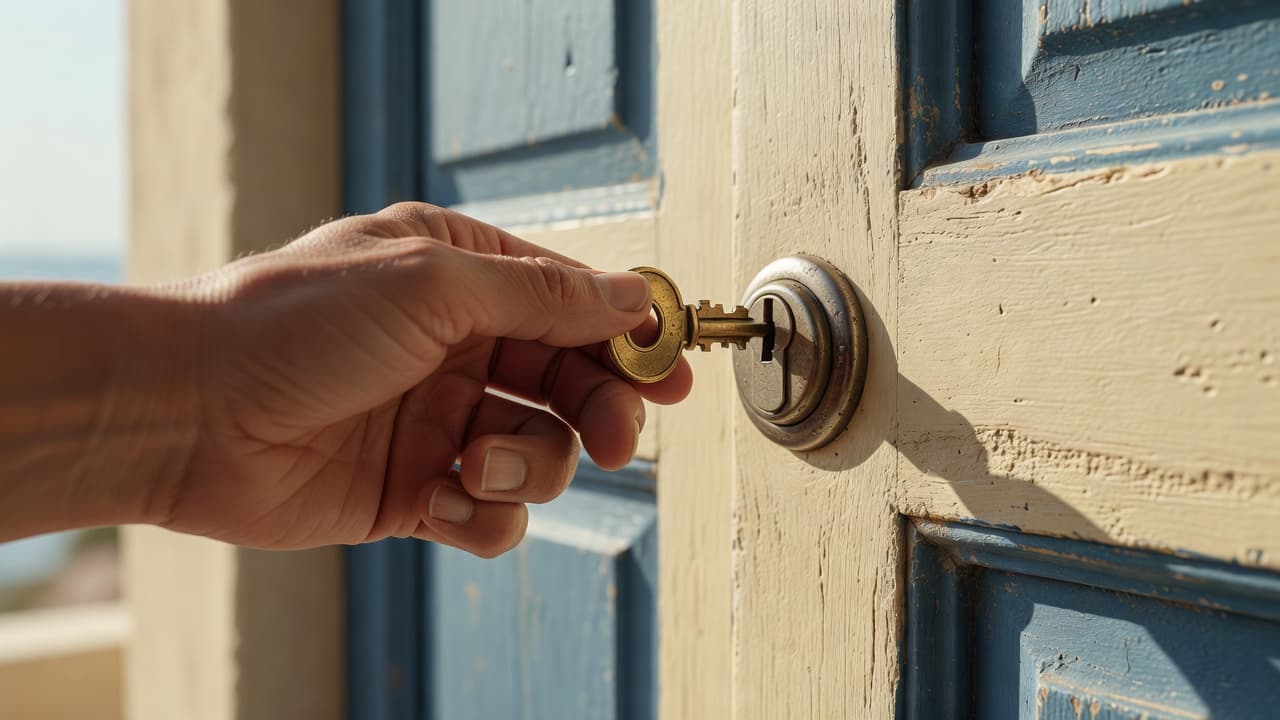
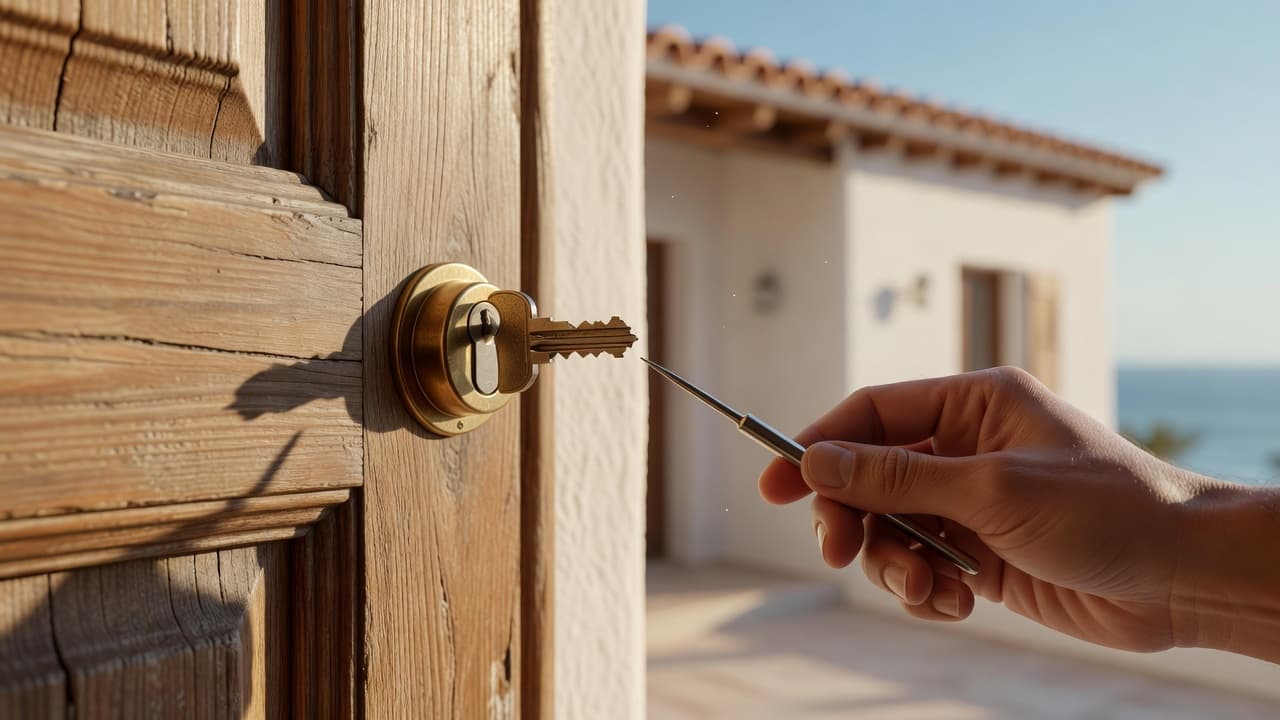
Your lock uses a European cylinder (bombín europeo)—standard in Spanish homes and all Mediterranean properties. It works with precisely aligned internal pins. When something disrupts that alignment or introduces friction, the key won't turn.
Bent or worn key. If the key has been dropped, sat on, or used heavily for years, its cuts may have rounded or bent slightly. Even 1–2 millimetres of deformation can stop the pins from aligning.
Dirt, sand or dust inside the cylinder. Mediterranean homes near the coast are vulnerable to salt spray and fine dust. Wind-blown particles settle in and around the lock. Once inside, they gum up the mechanism.
Corrosion inside the lock. The salt air and humidity on the Costa Blanca, Costa del Sol, and the islands accelerate rust and oxidation on the internal springs and pins. A lock that worked fine in winter may stick by summer.
Temperature and humidity changes. Rapid shifts in temperature or humidity cause metal parts to expand and contract. If the cylinder has even slight internal wear, this can cause temporary binding. A stuck lock in a cold morning may free up by noon.
Misaligned cylinder. If the lock has been forced in the past, or the door has warped slightly, the cylinder can shift out of true alignment. The key inserts but the internal pins don't line up correctly.
The wrong key. This sounds obvious, but it happens. A key from an identical-looking lock in a neighbouring villa can be very close to yours, but not quite right. Test with your spare to rule this out.
These methods are safe and won't worsen the problem.
Use a dry cloth or soft brush to wipe away visible dust from the key and around the lock opening. For the lock face itself, a dry toothbrush can gently brush away surface debris. Don't use water or oil yet.
Insert the key slowly and try applying gentle upward or downward pressure while turning—sometimes the internal pins bind only at one angle. Don't force it. Light, patient exploration can free a temporary jam.
Graphite is the safest lubricant for locks. Oil (including WD-40) attracts dust and will make the problem worse over time. If you have graphite powder, apply a small amount to the key teeth and insert and withdraw it gently several times. This deposits dry lubricant into the cylinder without trapping dirt.
Silicone spray is safer than general-purpose oils. Spray a very small amount into the lock opening (not into the keyway itself—aim for the gap around the cylinder). Work the key in and out gently. Silicone dries without attracting dirt.
Do not use this if you suspect the lock is corroded inside; proceed to the locksmith instead.
Sometimes sediment settles and causes temporary stiction. A very light tap (two or three gentle taps) on the side of the lock with a mallet or wooden block can dislodge it. Then try the key again with gentle pressure.
If none of these work within 5–10 minutes of patient attempts, stop and call a locksmith. Continuing will only risk breaking the key.
Stop and call a locksmith immediately if:
- The key won't insert fully, or feels seriously stuck. This suggests internal damage.
- The key breaks or bends noticeably as you try to turn it. Forcing further will snap it inside the cylinder.
- The lock is old, corroded, or clearly deteriorated. Forcing it can crack the cylinder housing.
- You're locked outside. Attempting DIY fixes wastes time. A locksmith will be faster and safer.
- The lock has been forced or broken in the past (visible cracks, loose cylinder, splintered frame). It may be compromised.
- The key turns but the bolt doesn't move. This means the internal mechanics are damaged, not just stuck.
In any of these cases, forcing the issue will only increase the cost and damage.
A locksmith arriving at your home will first diagnose the problem—usually by trying the key, examining it, and looking inside the lock opening.
If the key is bent or worn, they'll advise you to have a replacement cut. This takes minutes and costs far less than replacing the cylinder. They'll use your spare (if it works in the lock) as the template.
If the lock is stuck due to dirt or light corrosion, they'll clean or lubricate it and test the key. Often this solves the problem on the spot, especially for humidity-related stiction.
If the cylinder is damaged, severely corroded, or misaligned, they'll recommend replacement. They'll remove the old cylinder and fit a new European one. This takes 20–40 minutes. They'll give you new keys and test the lock thoroughly before leaving. If the property is in a community of owners (urbanisation), they may also ask about the master system used by your neighbours.
Most locksmiths on the Mediterranean coast are fluent in English, German, or Dutch, and will explain each step. They'll provide an invoice and, for significant work, a documented guarantee. Always ask for proof of the work (photos, invoice, keys handed over).
Protect the lock from salt spray and dust: If you live on the coast or in an exposed location, fit a small cover or shield over the lock opening when the door isn't in use. This is especially important for holiday homes left vacant for months.
Lubricate lightly once a year: Once the lock is working, apply graphite powder or silicone spray lightly during spring (before summer heat and humidity) and autumn. This prevents internal corrosion from building up.
Don't use the lock when it feels stiff: If the key starts to feel resistant, clean and lubricate it immediately—don't force it. Early intervention prevents total jamming.
Keep a spare key safe: Store a duplicate in a secure location (not in the same lock). If one key gets damaged, you have a backup and can diagnose the problem more easily.
Check locks on holiday homes annually: If you own a second home on the coast that sits empty for long periods, have the locks checked and lightly lubricated each spring. Salt air and humidity do their worst in winter months.
If your key won't turn, the safest approach is to try the gentle methods above—cleaning, light lubrication, and patient testing. But if the problem persists, don't keep forcing it. A locksmith on the Mediterranean coast will diagnose and fix it in under an hour, usually for a reasonable cost. It's far cheaper than extracting a broken key or replacing a damaged lock.
Contact a professional locksmith when you need peace of mind and a quick, safe solution.