Keys snap for three reasons: metal fatigue, force, or lock damage.
Metal fatigue is the most common culprit. Every time you use a key, the metal flexes slightly. After thousands of uses—especially if you carry your entire keyring on one key—tiny cracks form inside the metal. One day, normal turning pressure is enough to snap it.
Force is the second cause. If you've been forcing a stiff lock, or if someone else has jammed the key hard, the sudden pressure can exceed the metal's breaking point.
The third cause is a damaged lock cylinder. If the cylinder has internal wear, corrosion (common on the coast), or debris inside, the key gets stuck, you apply pressure to free it, and it snaps.
If the broken piece is clearly protruding (3mm or more) and the lock moves freely:
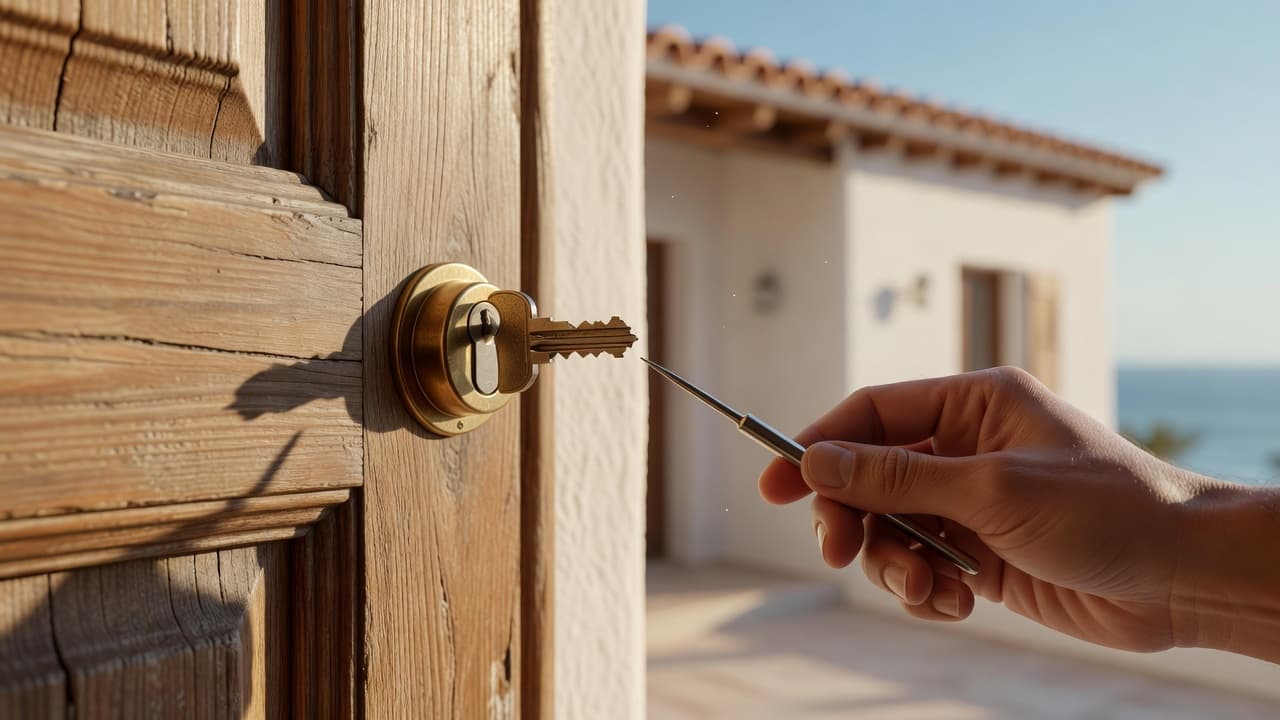
Use fine needle-nose pliers or tweezers to grip the protruding fragment as close to the break point as possible. Hold it firmly and pull straight out with a steady, gentle motion. Do not twist or wobble. If it comes free, stop and celebrate. If it doesn't move after one or two careful pulls, leave it and call a locksmith.
Alternatively, if the fragment is very close to the surface, you can try a small flathead screwdriver placed gently into the slot of the key fragment, then lever it out with slow pressure. Again, if nothing happens in 30 seconds, stop.
If you can still access the lock and the cylinder turns:
Lubricate around the broken fragment with graphite powder (dry lubricant) or WD-40 type penetrating spray. Let it soak for 2–3 minutes, then try very gently twisting the cylinder back and forth (small movements, not full turns) to see if the fragment has shifted. Sometimes this helps it come loose on its own.
Do not use:
- Oil-based lubricants (they trap debris and make it worse).
- Pliers or tools that grip too hard (they can break the fragment further).
- Hammers, chisels, or anything that might damage the lock face.
- Hot water or heat (it can warp the lock mechanism).
- Superglue or epoxy (it sets permanently and ruins the lock).
Stop immediately and call a locksmith if:
- The broken piece is flush with the lock mouth or invisible inside the cylinder. Digging will damage the internal pins.
- The lock will not turn at all with the key inside. The fragment has jammed the mechanism and force could snap it further.
- You've already tried extraction once and failed. Every attempt pushes the fragment deeper.
- The break is jagged or splintered. Fragments may already be inside the cylinder.
- The key is stuck deep inside and you can only see the very edge of it.
- You don't have proper fine tools (tweezers, not pliers; a proper key extractor hook is better).
- The lock shows signs of corrosion (white or green deposits common on coastal properties). Forcing it may crack the cylinder housing.
- The door is wooden and swollen (very common in Mediterranean humidity). The lock binding might snap a key on every turn.
In any of these cases, call a locksmith and describe what happened. They will come with the right tools and likely extract the fragment without damaging the lock cylinder.
A professional locksmith will first inspect the break, usually with a small torch or magnifying glass, to assess the depth and angle of the fragment.
If the piece is accessible and the cylinder is intact, they'll use a specialist key extractor tool—essentially a small hook or barbed rod designed to catch and pull out the fragment without pushing it deeper. This takes 5–15 minutes. Cost is typically €50–€100.
If the fragment is stuck deep or the cylinder is damaged, the locksmith will remove the entire lock mechanism (usually 2–3 screws on the inside of the door), extract the cylinder, and retrieve the broken key piece. They'll inspect the cylinder for internal damage. If it's intact and functional, they'll reinstall it and test it with a new key. If the cylinder is damaged beyond safe use, they'll fit a new one. Total time: 20–45 minutes. Total cost: €100–€180 depending on lock type.
They may offer to make you a new key from the unbroken half if you have the other piece, or cut one from your key code if you have your lock documentation. Keep that documentation in a safe place.
Have your lock serviced annually with a dry graphite lubricant. This removes debris and keeps the mechanism smooth, reducing wear on both lock and key.
Avoid forcing a stiff lock. If your key is hard to turn, the lock needs cleaning or lubrication, not more pressure. Call a locksmith for a service visit—it costs €40–€60 and prevents a snapped key later.
Carry your house key separately from other keys. A keyring laden with 10 keys puts stress on the house key every time you use it. A separate key, or a smaller keyring, extends its life.
Have a spare key made every few years. Keys wear, and metal fatigue is invisible until it snaps. A spare key used occasionally wears slower and is less likely to break when you need it most.
Keep the serial number or key code of your lock. Most locks have a number stamped on the cylinder or documented in your property papers. A locksmith can cut keys from this code if your original is lost or damaged.
On the Mediterranean coast, where salt air accelerates corrosion, ask your locksmith to use a slight dry lubricant treatment every 12 months—especially if your door faces the sea or a salty wind zone.
A broken key is frustrating but almost always fixable. If you've got half the key sticking out and you're calm, try gentle extraction with fine tools. If it's stuck flush or you're uncertain, stop and call a locksmith. They have you covered—it's a routine job and the cylinder is usually saveable.
Find a trusted locksmith on the Mediterranean coast who can extract the key or replace the cylinder the same day.