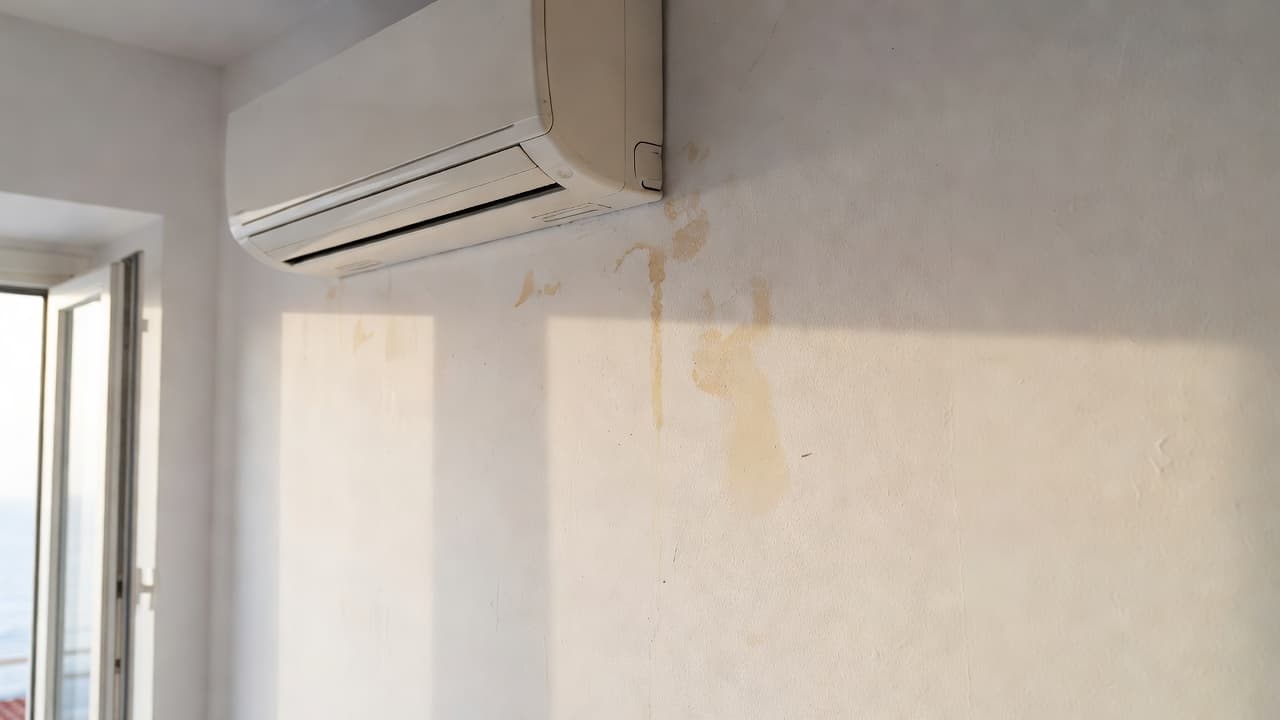
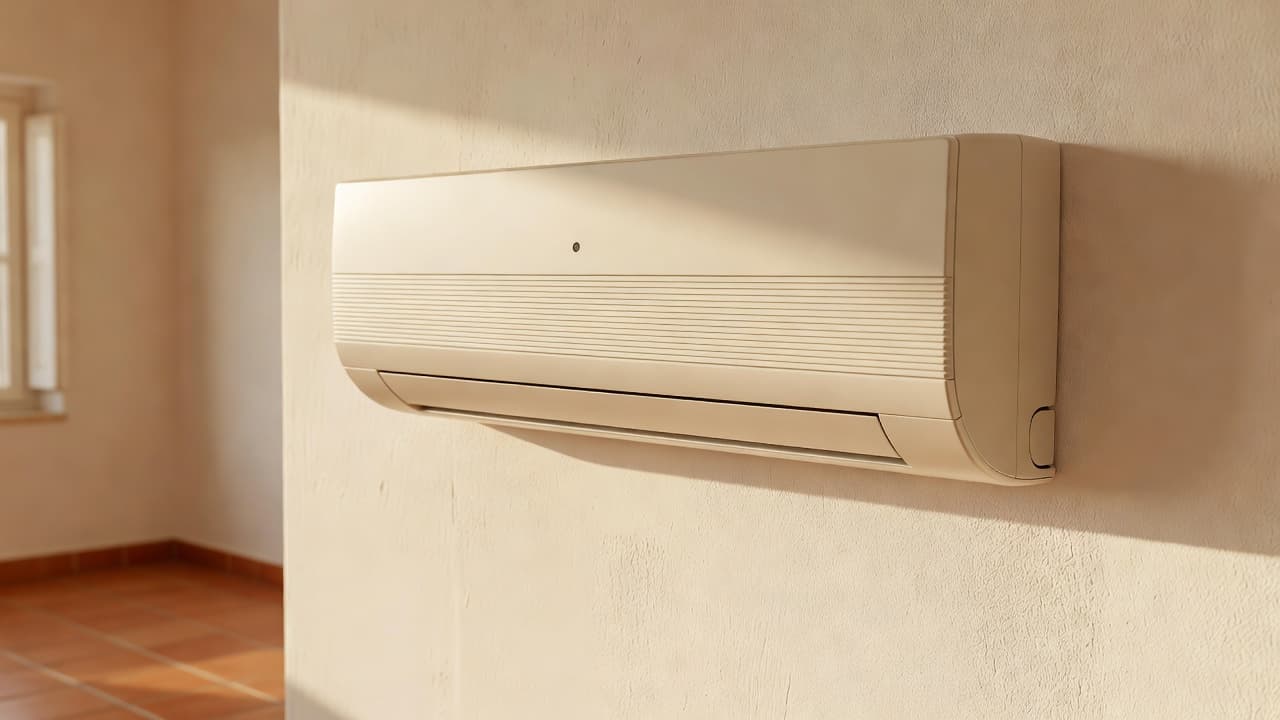
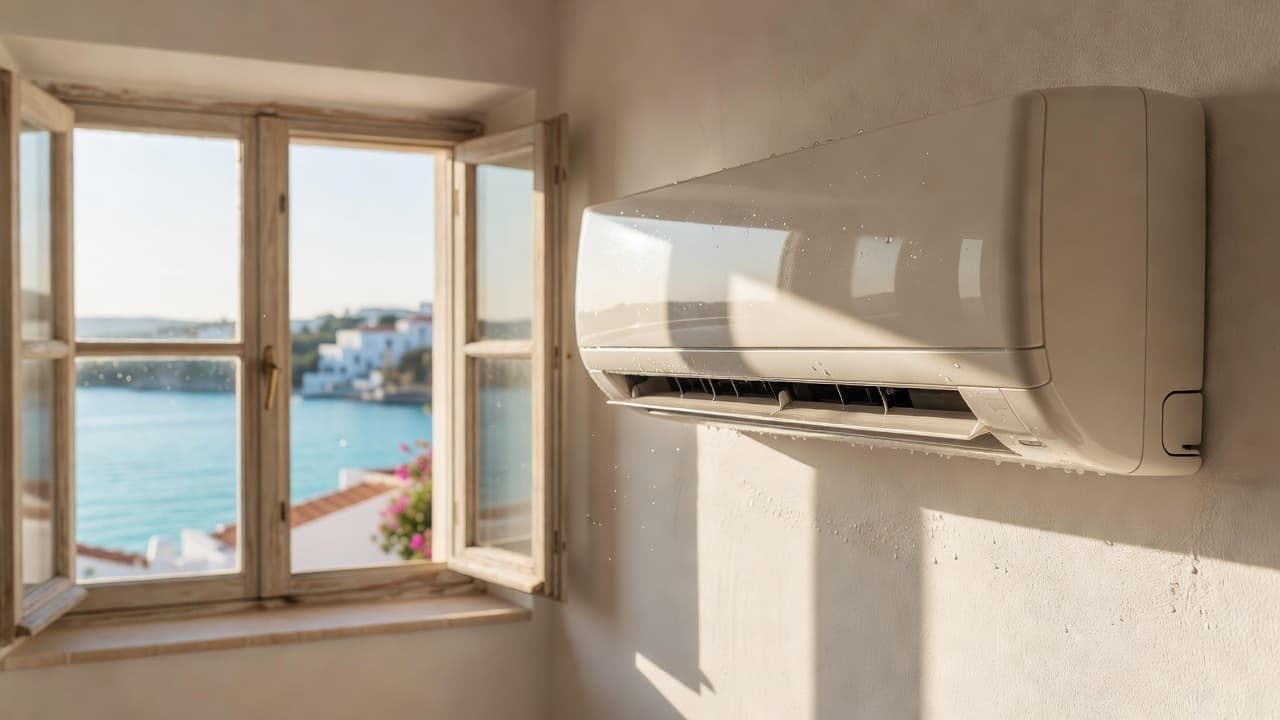
Air conditioning cools the air by passing it over a cold evaporator coil inside the indoor unit. As the air cools, the moisture in it condenses into water droplets — the same way a cold glass of water beads with droplets on a hot day. In humid climates like the Mediterranean coast, or when cooling a flat from 35°C to 20°C in July, the amount of condensation can be significant.
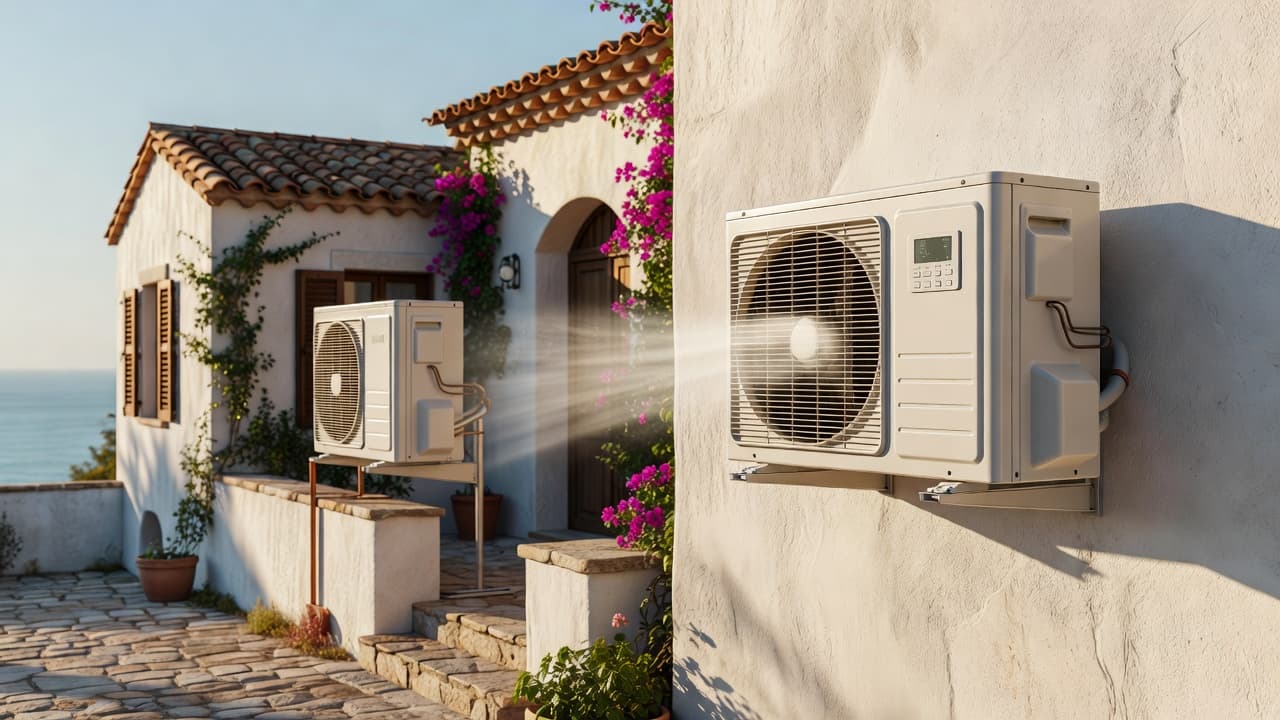
That water is meant to drip into a tray inside the split unit, then run down a small flexible pipe (the condensate drain) to the outside of your building or into a floor drain. If this pipe is clear, the stains you're seeing are incidental and harmless — the wall is just wet for a few minutes while the AC is running.
But if the pipe is blocked, kinked, or improperly routed, the water backs up. It overflows the tray inside the unit and seeps out around the edges of the indoor head, soaking into the plaster and insulation behind it. Over days or weeks, this moisture feeds mould growth and can weaken the wall structure. This is the scenario you want to avoid.
Common causes of blockage:
- Dust and fibres accumulating inside the drain pan and blocking the outlet.
- Algae or slime growth in the pipe itself, especially in warm, humid climates where pipes stay moist.
- Kinks or pinches in the plastic drainage tube, often from poor installation or accidental damage.
- The pipe hanging into a basin or tank without a siphon-breaker, trapping water.
- Debris from outside — leaves, insects, or sediment — clogging the outdoor drain outlet.
If the stains are small and the wall is not persistently wet, you can carry out a few simple checks without risk:
Inspect the visible condensate pipe. If you can safely access the outdoor drain outlet (typically on the side or rear of your building), look for obvious blockages. A small twig, dead insect, or ball of dust is sometimes the culprit. If you can see it, gently remove it by hand. Do not force anything or use high-pressure water.
Check the pipe isn't kinked. Follow the condensate pipe from the indoor unit to the outside. If it has tight bends or is compressed by something (a drainpipe, a shelf, a cable), straighten it gently. The water needs to flow downhill, not sit in dips.
Ensure the pipe drains freely. The outlet should discharge into a courtyard, drain, or rain gutter — not hang in mid-air or empty into a tank. If it's hanging loose, it may need rerouting by a technician, but you can temporarily direct it into a bucket or basin if you're home.
Reduce moisture input. In very humid weather, close windows and doors while the AC is running. This reduces the moisture the unit has to remove and lessens condensation. Ensure bathroom and kitchen extractor fans are working and vented outside.
Dry the wall gently. If the wall is visibly wet, wipe it dry with a clean cloth or towel. This prevents mould spores from settling. Once dry, leave the AC off for a few hours to allow the wall to dry completely before restarting.
Do not attempt to disassemble the indoor unit, pour chemicals down the drain pipe, or apply sealants to the wall. These actions risk damaging the unit or trapping moisture further.
Stop and call a professional immediately if:
- The stains are darkening or spreading visibly day by day. This is a sign of active water penetration, not simple surface condensation.
- You smell a musty, mouldy or sour odour under or around the unit, even faint. This indicates microbial growth and requires professional cleaning and proper drainage repair.
- The wall feels cold and clammy to the touch for hours after the AC is off. This suggests water is trapped in the insulation or behind the plaster, not just surface condensation.
- Water is visibly dripping inside the room from the edges of the indoor unit or seeping down the wall in the home. The unit's drainage has completely failed.
- You see cracks appearing in the wall, or the plaster is bulging or peeling away. Structural water damage has begun.
- The stains appear in multiple rooms or far from the AC unit. This may indicate rising damp or structural water penetration unrelated to the AC, which is a much larger problem.
In any of these cases, turn off the air conditioning unit immediately, open windows to ventilate, and contact an air conditioning technician. Do not attempt drainage repairs yourself if you suspect water is trapped behind the wall.
When you book an appointment with an air conditioning technician, they will:
Inspect the condensate drainage system. They'll trace the pipe from the indoor unit to the outdoor outlet, check for blockages, kinks and improper routing, and test the drainage by running the unit and observing water flow.
Clean the drain pan and pipe. If a blockage is found, they'll use appropriate tools (usually a thin flexible brush or compressed air) to clear it safely. They may flush the pipe with water to ensure it's fully clear.
Test the system. They'll run the AC and confirm that condensation is draining properly and no water is backing up inside the unit.
Assess wall damage. If the stains are recent and the wall is still damp, the technician will advise whether the damage is cosmetic or if a plasterer or surveyor is needed. In most cases of a few weeks' blockage, once the drain is cleared and the wall dries (which may take a week or two), the stains will fade.
Provide advice on future maintenance. They'll recommend annual servicing of your air conditioning unit, which includes drain cleaning and inspection. This is the best way to prevent the problem recurring.
If mould is present, the technician may recommend applying an antifungal treatment to the affected wall, but the priority is always stopping the water source first.
Service your air conditioning annually. Before summer, have a technician inspect and clean the entire system, including the condensate pan and drain. In very humid climates, consider servicing every six months.
Keep the unit clear of dust. Dust on the indoor coils and drain pan accelerates blockage. Vacuum the grille on the indoor unit monthly if you can do so safely, and wipe it with a soft cloth.
Ensure the condensate pipe outlet is accessible. If it's hidden by landscaping or packed against another surface, you won't spot a blockage until damage is done. Keep the outlet visible and clear.
Check the drain pipe visually every month during summer. A quick glance outside to confirm water is flowing is far cheaper than fixing damp.
Don't block ventilation into the room. Keeping your home well-ventilated reduces overall humidity and lessens the moisture load on the AC system.
If you've spotted stains under your split unit, don't panic — but don't ignore them either. A quick check of the condensate pipe now could prevent a much costlier problem. If you need a trained technician to inspect your system and clear any blockages, we can connect you with local air conditioning professionals who speak English, German or Dutch across the Mediterranean coast. Contact us for a quote and get the issue resolved before summer peaks.