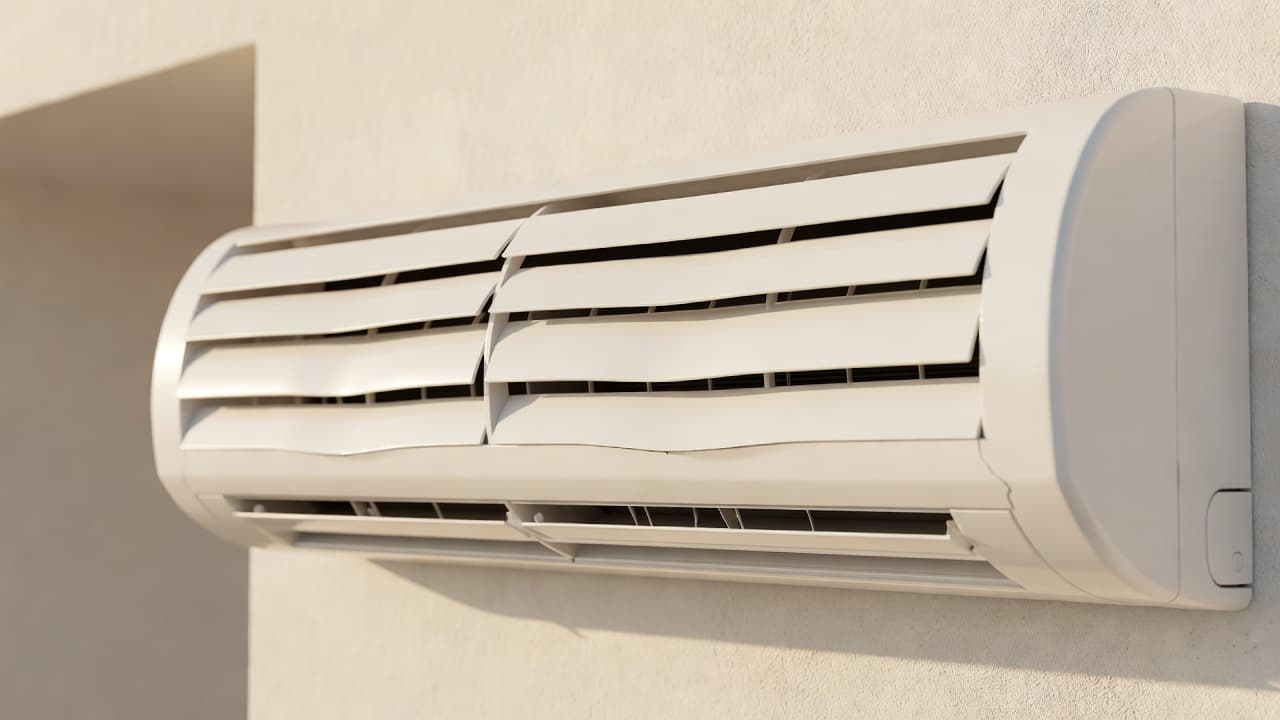
A swollen or loose front grille usually has one of three causes.
Moisture buildup. The most common reason, especially on the Mediterranean coast where humidity is high and salt air accelerates corrosion. Water can become trapped between the plastic casing and the internal mounting structure, causing the material to expand. In older units, the seals around the grille deteriorate, allowing moisture to seep in.
Thermal expansion. Split air conditioning units cycle between very hot and very cold. The plastic grille expands and contracts with these temperature swings. Over time—typically 5+ years—the mounting clips or screws loosen because the plastic shrinks and shifts slightly with each cycle. In summer heat on the coast, this happens faster.
Sun damage and age. The plastic front grille is exposed to Mediterranean sun for many hours a day. UV light makes plastic brittle and weakens the material. The mounting clips themselves can crack or corrode, especially if they're metal and uncoated. Salt air from proximity to the sea accelerates this deterioration significantly.
Less commonly, the grille becomes loose because someone has removed it before (for cleaning or repair) and not reassembled it correctly, or because the unit has been hit or knocked.
If the grille is loose but not swollen, and you can see the mounting points clearly, you can try these steps:
- Tighten visible screws. If there are small screws or bolts visible around the edge of the grille, use a screwdriver (usually Phillips or flat-head) to gently tighten them. Do not over-tighten—stop when you feel resistance. Forcing screws can strip the plastic thread.
- Check plastic clips. Some grilles clip on without screws. If clips are visible and have popped out, you can try to gently press the grille back into place to reseat them. If it doesn't click back smoothly, stop. Do not force it.
- Apply light pressure to reseat clips. If the grille is only slightly loose, press gently and evenly across the whole panel. You may hear or feel a small click as clips re-engage. Again: if there is resistance, stop.
Do not attempt these steps if the grille is visibly swollen. A swollen panel means internal pressure or moisture, and forcing it risks cracking the plastic or damaging the unit's internal components.
Stop and call a professional immediately if:
- The grille is cracked or broken. Attempting to reseat or tighten a damaged grille can make the break worse.
- The grille is noticeably swollen or bulging. This indicates internal moisture or pressure. Forcing it back will cause further damage.
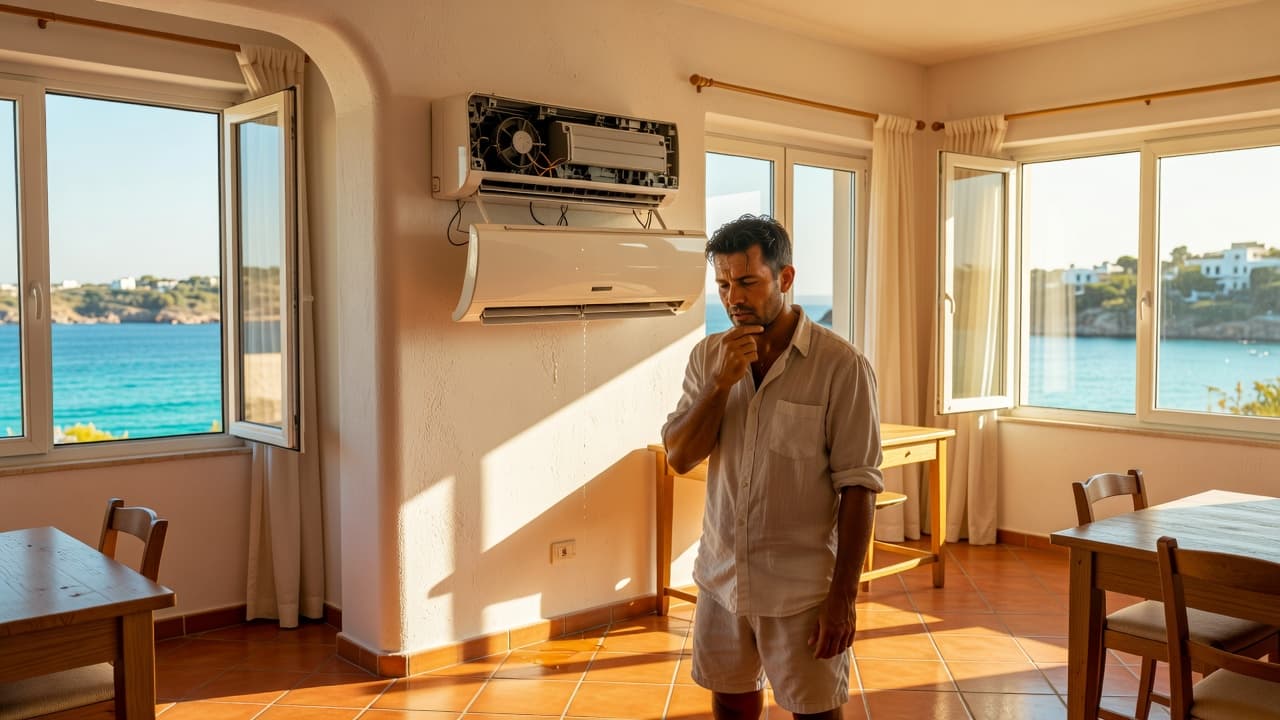
- You see water or moisture leaking from around the grille. This suggests a more serious issue inside the unit (blocked drainage, refrigerant leak, or internal corrosion). Do not use the unit and call a technician.
- The grille is missing screws or clips that you cannot replace. If fasteners are broken or lost, the grille needs professional reassembly.
- You cannot identify the mounting points. If the grille design is unfamiliar or if you're unsure how it's attached, do not force it. A technician can do this safely.
- The unit is still under warranty. Attempting repairs yourself may void your guarantee. Call the installer instead.
An air conditioning technician will first switch off the unit and remove the front grille (or disassemble any mounting hardware). They will inspect the internal casing, evaporator coils and drainage system for signs of moisture, mould or blockages.
If the grille itself is undamaged, they will clean and dry the mounting points and reinstall it with new screws or clips if needed. If the plastic is warped or cracked, they will replace the grille with a new one matching your unit's model. This typically takes 30–45 minutes.
They will also check the unit's drainage system. Split air conditioning units have a small drainage pipe that removes condensation from the evaporator coil. If this is blocked, water backs up and causes the problems you're seeing. The technician will flush this pipe and may apply a preventive treatment to stop algae or dust blocking it again.
Before they leave, they'll run the unit through a cooling cycle to confirm the grille sits properly and no water is leaking. They will give you a receipt with details of any parts replaced, and may provide a short maintenance card recommending how often you should have the unit serviced (typically once a year in coastal areas, twice a year if you use it heavily).
Have your split serviced once a year, preferably at the start of summer. A technician will clean the internal coils, flush the drainage system and check all fasteners. On the coast, consider a twice-yearly service if the unit runs more than 4–5 hours a day.
Keep the area around the outdoor unit clear. Debris, salt spray and excessive heat around the outdoor condenser unit make the whole system work harder and moisture more likely to accumulate. Rinse the outdoor unit gently with fresh water every 3–4 months if you're near the sea.
Avoid high humidity indoors when the AC is off. On cool days when you don't need air conditioning, open windows instead of relying on ventilation alone. This reduces the moisture level the AC has to manage.
Check the front grille every 2–3 months. A quick visual inspection takes 30 seconds and will catch a loose grille before it falls off or causes damage.
A swollen or loose front grille is a nuisance, not a crisis. Switching off the unit, checking the visible mounting points and booking a technician visit within a few days will prevent the problem from worsening and protect you and your home. If you're in a flat or urbanisation (community of owners property), check your community rules—some require you to notify the administration of any building defects, including air conditioning issues on shared-wall units.
If you need help, our air conditioning service professionals on the Mediterranean coast can diagnose the problem and fix it quickly. They can also advise on whether your unit needs servicing to prevent this happening again.