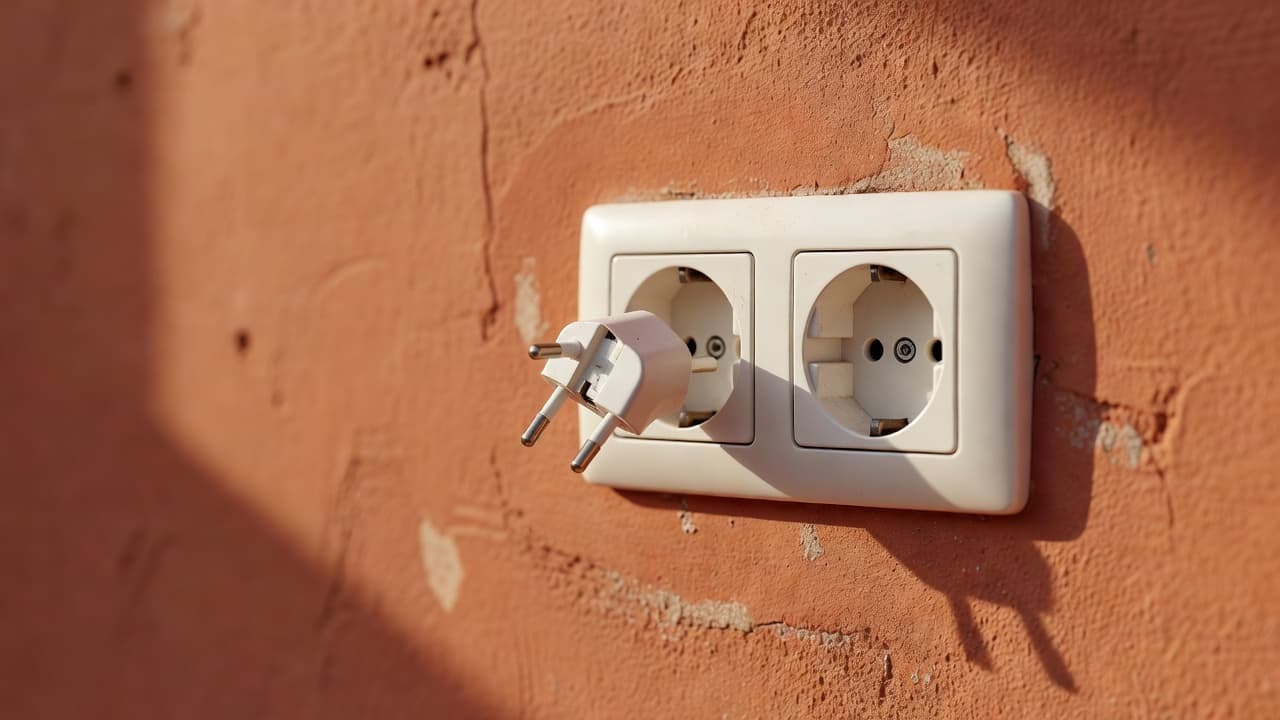
An intermittent socket almost always has one of three causes.
Loose or worn internal contacts. Over time and with repeated plugging and unplugging, the metal terminals inside the socket wear smooth or become slightly bent. The plug's pins no longer press firmly against them. Electric current flows unreliably, causing the socket to cut out or work only at certain angles. This friction generates heat.
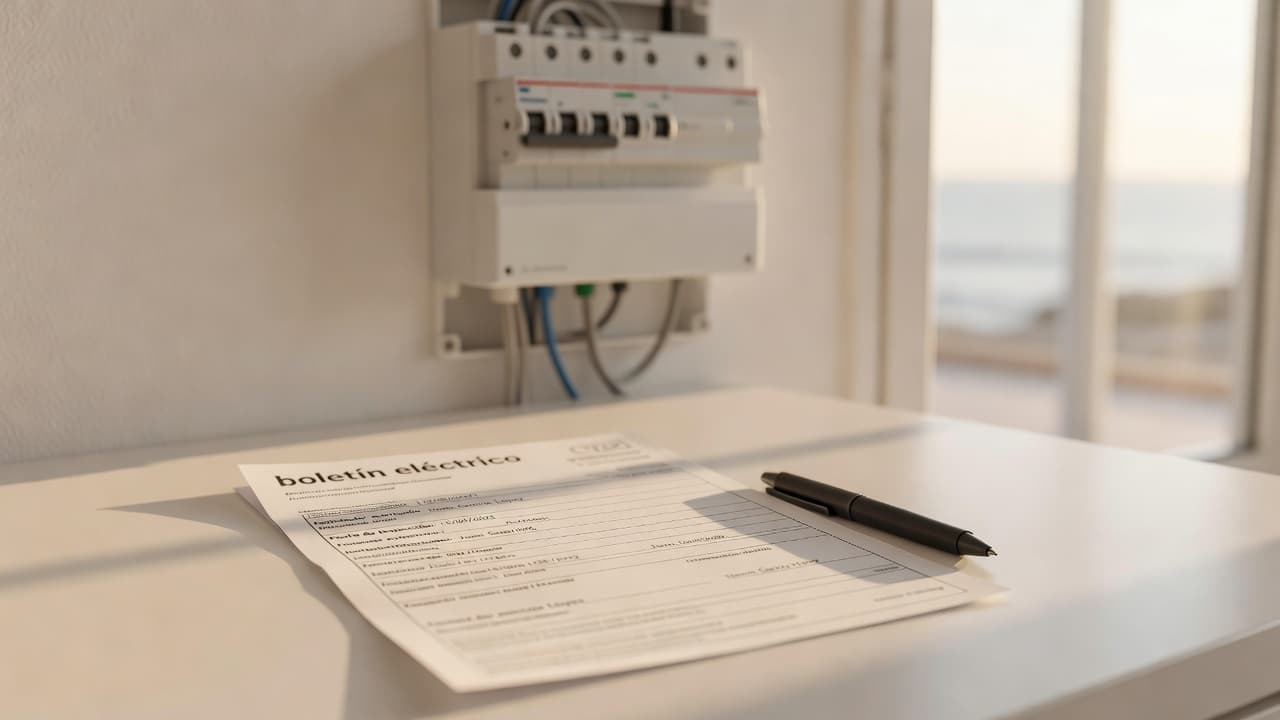
A failing RCD (residual current device). Spanish homes have an RCD—a protective switch on your consumer unit that cuts power instantly if it detects a fault. If the RCD for that socket's circuit is failing, it may trip randomly even when nothing is visibly wrong. You'll see this as the socket cutting power for no obvious reason, then coming back on. The RCD itself needs replacing, not the socket.
Moisture or corrosion inside the socket. Coastal homes and bathrooms are vulnerable. Salt air and humidity can corrode the internal terminals. Corrosion creates resistance to electrical flow, which causes intermittent contact and heat. This is more common in older properties and near the Mediterranean coast.
A faulty plug or device. Less likely, but possible. A plug with corroded pins or a device with an intermittent fault can behave exactly like a faulty socket. This is why testing with a different plug in step 3 matters.
There are no safe temporary fixes. Do not:
- Tape or wedge the plug at an angle to hold it in place.
- Use a multi-socket adapter to disguise the problem.
- Restrict use to "quick" plugging in and out.
- Leave something plugged in permanently because it works better that way.
All of these increase fire and electrocution risk. The only temporary fix is to stop using the socket. If you must have power in that location, use a socket on a different circuit, or wait for the electrician.
Stop immediately if:
- The socket is warm or hot to the touch when nothing is plugged in.
- You see brown, black, or yellow scorch marks around or inside the socket.
- The plug has to be at a precise angle or held in place to work.
- The socket sparks when you plug something in.
- The circuit breaker (or RCD switch) trips repeatedly for that socket.
- You smell burning or melting plastic near the socket.
- The socket is in a bathroom or kitchen, where moisture and water splash increase risk.
- The socket is installed in an older property with original wiring (common on the Spanish coast in pre-1990s homes) and you don't know when it was last inspected.
If any of these apply, turn off power to that circuit at the consumer unit and call an electrician today. Do not use the socket again until it has been checked.
A qualified electrician will first confirm which circuit the socket is on and inspect it visually for scorch marks, loose wiring, or corrosion. They will then test it with a specialist meter to check for loose contacts, earth faults, or RCD issues.
In most cases, the socket itself needs replacing. This is straightforward: they will turn off the circuit, unscrew the socket from the wall, disconnect the three internal wires (live, neutral, and earth), and install a new socket rated for European standards. The job takes 10–15 minutes per socket. They will then test it with a load (a kettle or heater) to confirm it works reliably.
If the problem is the RCD, they will test the circuit's protective switch. If it is faulty or out of calibration, it will be replaced at the consumer unit. This is more involved and requires them to have a valid electrical certification, but is still a standard job.
Once complete, they should hand you a signed report (many provide a small work certificate) and confirm the socket is safe to use normally.
- Avoid over-inserting plugs. Push plugs in firmly but not forcefully. Rough insertion damages the internal contacts.
- Use a power strip with an on/off switch if you plug and unplug frequently. This reduces wear on the socket itself.
- In damp areas, use sockets with built-in shutters (safety shutters that block the holes until a proper plug is inserted). These are standard in newer installations and reduce moisture entry.
- In coastal properties, have your electrical installation inspected every 10 years. Salt air corrodes wiring and contacts faster than inland. A professional inspection catches problems early.
- Do not overload circuits. If a socket is powering a kettle, toaster, heater, and phone charger simultaneously, the circuit is likely overloaded. Spread high-power devices across different sockets.
An intermittent socket is not something to live with or work around. The cost of having an electrician replace it is small; the cost of an electrical fire is not. If your socket only works sometimes, contact our electricians and get it fixed within days. We can arrange a visit at your convenience, with professionals who speak English, German, and Dutch.