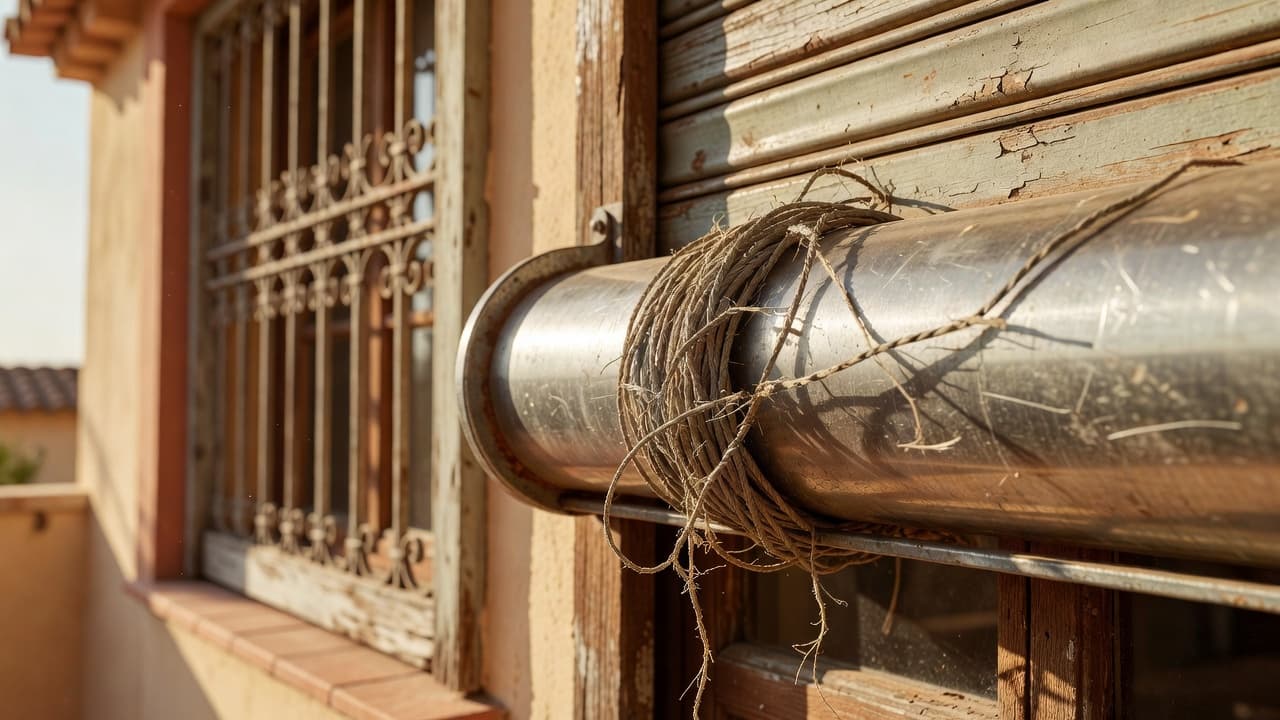
Shutter cords — also called belts on some models — fail for a few common reasons, especially on Mediterranean properties.
Age and wear: The most common cause. Shutter cords are made of twisted nylon or woven fabric, and they gradually fray and weaken over 8–12 years of daily use. Salt air on the coast speeds this up because humidity and salt corrode the metal parts of the drum, making friction worse. The cord bears more stress and eventually snaps.
Corrosion of the drum: If the metal drum that winds the cord has corroded (rusty or orange patches), the cord gets caught or frayed as it winds. This causes the cord to fail before its time. Coastal properties are at higher risk.
Single overload: Sometimes the shutter gets stuck partway (usually because of dirt or a slight mechanical jam), and someone pulls too hard on the cord to force it. The sudden strain snaps a weakened cord in one go.
Wrong size or material replacement: If the cord was replaced before with the wrong type (too thin, wrong material), it may fail prematurely.
Motorised shutters: Electric shutters don't use a pull cord, but they have a belt or chain drive. If that fails, symptoms are similar — the shutter won't move — but the repair requires electrical checks too.
There is no permanent temporary fix for a broken shutter cord. You cannot safely replace it yourself because:
- The cord must be the exact diameter and material for the drum.
- Incorrect rope will slip or fray in minutes.
- Over-tightening a makeshift cord can snap the drum mechanism.
- If the cord is wound under tension, releasing it incorrectly can cause the shutter to drop.
What you can do instead:
If the shutter is stuck open: Close and lock all doors and windows on that side of the property. If privacy or light is a concern during the day, use a curtain or temporary covering inside. At night, make sure doors are locked and windows are closed. This is safe for a few hours.
If the shutter is stuck closed: Ensure you have adequate ventilation from another window or door elsewhere in the property. If it's a bedroom, crack a side window for air. This is fine for one night; if it will take more than 24 hours to get a repair, consider temporarily staying in another room or opening a side window wider.
Do not attempt to:
- Manually wind the shutter using pliers, screwdrivers, or any tool on the drum.
- Tie a new rope to the broken cord and pull.
- Lubricate the drum and hope the cord re-meshes.
- Remove the shutter or the drum yourself.
Any of these risks jamming the mechanism, breaking the drum, or dropping the shutter, which is a genuine safety hazard and a much bigger repair bill.
Do not attempt a DIY repair if:
The shutter is motorised. You cannot safely work on the electrical circuit. If the motor is running but the shutter won't move, there may be an electrical fault. Leave it to a professional electrician or specialist.
The shutter is stuck halfway and you cannot see where the cord has broken. The drum or guide rails may be jammed, not just the cord. Forcing it will make things worse.
You smell burning or see scorch marks on the motor or electrical box. Switch off the main isolator to that circuit and call a specialist. This is a genuine fire risk.
The shutter is above a balcony, terrace, or other public area. If it drops, it could injure someone. Don't touch it. Call a professional immediately.
You are not comfortable working at height. Shutter drums are often above window level. If you cannot safely reach it from a stable, secure position, don't try. Call a locksmith.
Default action if in doubt: leave it alone and call a professional.
A locksmith who handles shutters will start by inspecting the cord and the drum mechanism. They'll check:
- Whether the cord has cleanly snapped or unraveled.
- Whether the drum is corroded or jammed.
- Whether the guide rails are bent or damaged.
- Whether the shutter itself is bent or dented from being stuck.
The repair process typically takes 30 minutes to an hour. The locksmith will:
- Safely release tension on the shutter mechanism (if the old cord is still wound).
- Remove the old, broken cord.
- Clean and inspect the drum. If it's heavily corroded, they may recommend replacement. On coastal properties, this is common after 10+ years.
- Fit a new cord of the correct diameter and material (usually nylon or woven polyester for manual shutters).
- Wind the cord onto the drum and test the shutter by pulling — smoothly up and down several times.
- Adjust the tension and make sure the cord sits correctly in the drum grooves.
After the repair, the locksmith will give you the shutter a final test and leave. They should provide a receipt and confirmation of the work. If the drum was also replaced, ask for a copy of the drum specification — useful if you need another repair later.
For motorised shutters, the locksmith or a specialist electrician will also:
- Check the electrical circuit and motor.
- Verify that the limit switches (which tell the motor when to stop at top and bottom) are working.
- Test the remote control or wall switch.
Shutter cords fail less often if you:
- Use them gently. Don't jerk or pull hard. A smooth, steady motion is easier on the cord and drum.
- Open and close regularly. Shutters that sit in one position for months can seize. If you have a holiday home, operate the shutters every week, even if no one is there.
- Rinse with fresh water after windy or salty weather. On coastal properties, salt spray settles on the shutter box and the drum. A quick rinse with a garden hose removes salt crystals before they corrode the mechanism.
- Don't leave them stuck halfway. If a shutter gets jammed, call a professional to free it. Repeated strain on a jammed shutter accelerates cord failure.
- Replace the cord before it breaks. If your shutter is 10+ years old and you live on the coast, ask a locksmith for a preventative inspection. A new cord costs less than an emergency repair.
A broken shutter cord is frustrating, but it's not dangerous and not urgent. Don't try to force or repair it yourself — you risk damaging the drum and facing a bill three times as large. Instead, secure the shutter as best you can, take a photo, and contact a locksmith on the Mediterranean coast who handles shutters. They'll have you back to normal operation within a day or two, and the cost is reasonable.