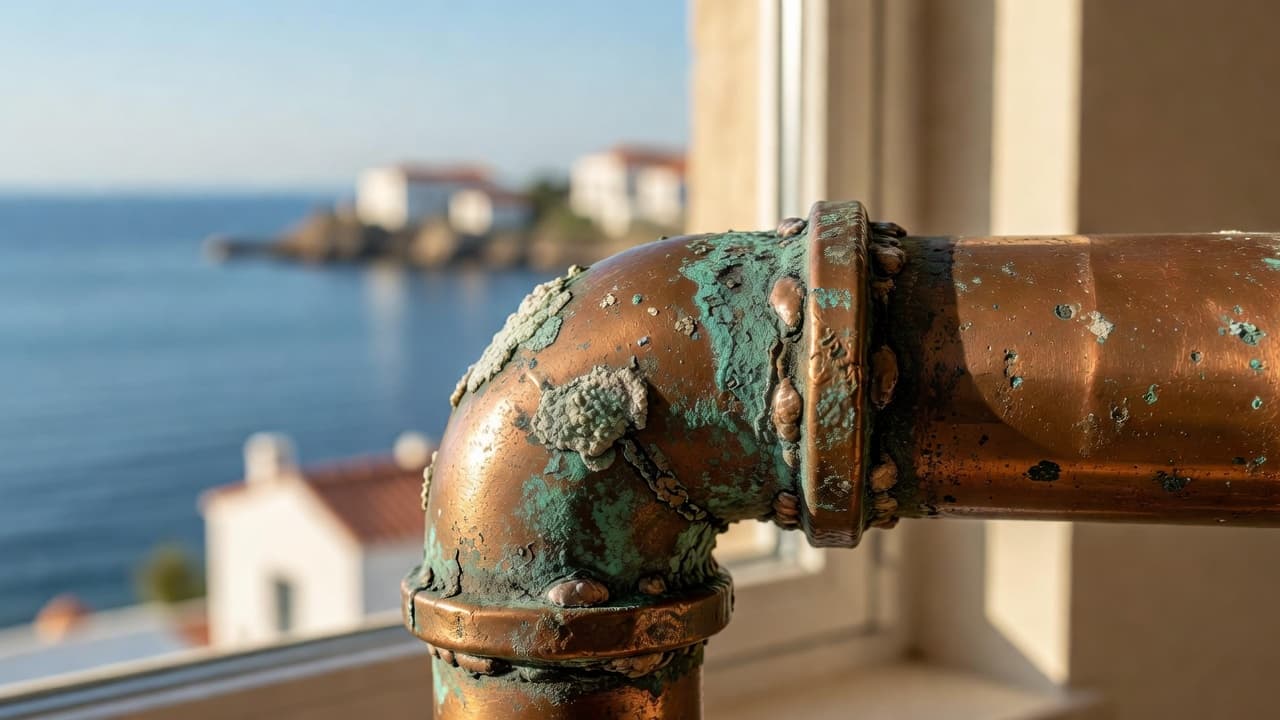
Copper — the most common material in Spanish coastal plumbing — is prized because it's durable and carries water safely. But copper reacts with salt chloride (from sea spray) and oxygen to form copper oxide and copper carbonate. This chemical corrosion weakens the pipe wall from the outside inward.
Galvanised steel (zinc-coated steel pipe, common in older Spanish homes) is even more vulnerable. The zinc coating protects the underlying steel, but salt corrodes the zinc quickly. Once breached, the bare steel underneath rusts with no further protection.
What makes coastal corrosion especially rapid is the combination of three factors: high salt concentration in the air, humidity (which keeps salt on the pipe surface), and temperature fluctuations that cause expansion and contraction. The microclimate near your window, your terrace, or the sea-facing side of your property is particularly harsh. Pipes exposed there age 20–30 years' worth of corrosion in 5 years.
White or blue-green deposits on the pipe surface. These mineral salts are crystallising on the outer pipe wall as corrosion progresses. They're harmless to touch, but they're a visible alarm bell.
Small pinhole leaks that appear overnight. Salt corrosion often creates tiny weak points that suddenly rupture under normal water pressure. These are usually in external pipes or near the roof.
Water that tastes or smells metallic or slightly bitter. This is dissolved copper and mineral salts in your drinking water — proof that internal corrosion is active.
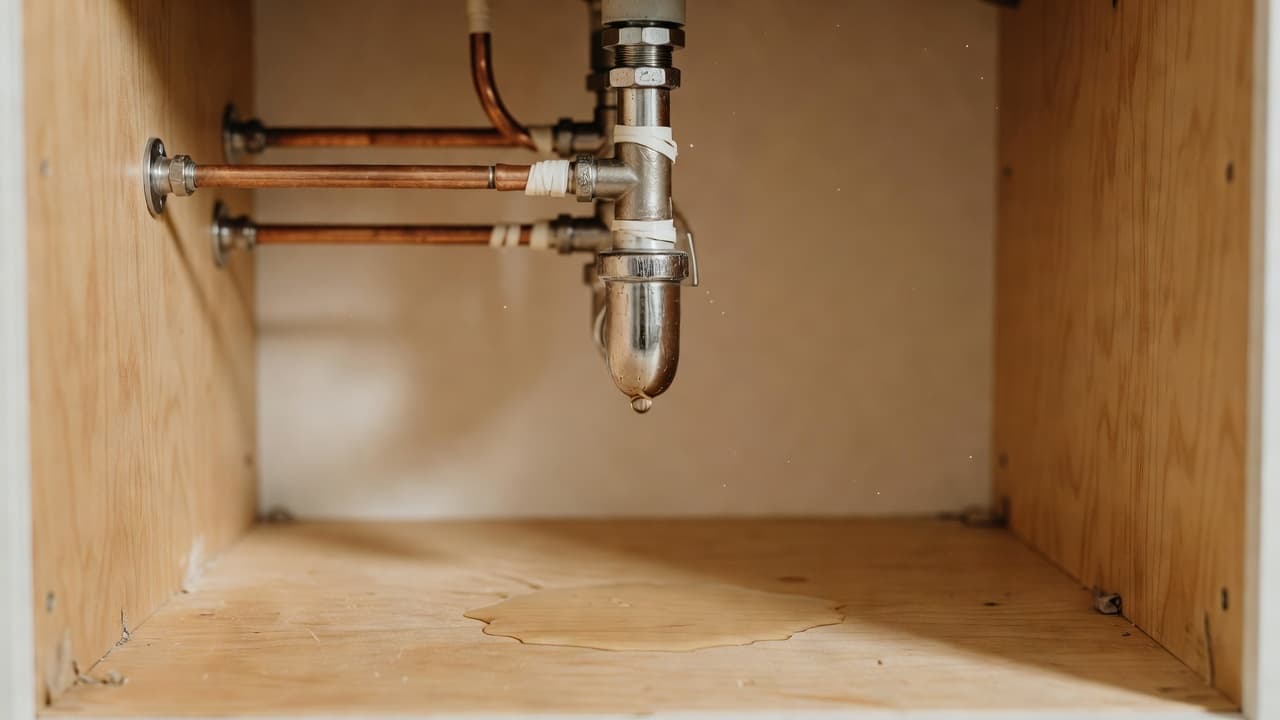
Staining on ceilings or walls below pipes. Water seeping through corroded pipe joints leaves brown, green, or white marks as it dries. The pipe may not be visibly dripping, but it's leaking.
A sudden drop in water pressure in just one room or tap. This often means a corroded section of pipe is nearly blocked by deposits.
Discolouration at pipe joints. Corrosion often concentrates around solder joints or fittings, where different metals meet and accelerate the process (galvanic corrosion).
For a small active leak from a pipe body (not a joint):
A plumbing epoxy putty or self-fusing silicone tape can seal it temporarily for 3–7 days. Dry the pipe completely with a cloth, apply the putty or wrap the tape tightly around the leak for 2–3 inches on either side, and smooth it firmly. This is a stopgap only. It will not hold under high pressure and will fail if the corrosion spreads.
For a leaking joint or fitting:
Do not try to tighten it with a wrench — you'll likely make it worse. Instead, place a bucket underneath and call a plumber. A leaking joint means the seal has failed, and tightening won't restore it without professional re-fitting.
To slow corrosion of exposed pipes:
If you have external pipes (on your terrace, balcony, or roof), wrap them in UV-resistant pipe foam insulation. This won't stop corrosion, but it reduces salt-air contact and buys time. It also prevents freezing in winter and heat loss in summer.
If you smell a strong metallic or chemical odour near corroded pipes, or if water from a tap smells like rust or metal, run the cold water for 2–3 minutes. This flushes loose corrosion products from the pipe. If the smell persists, you have significant internal corrosion and need professional inspection urgently.
Stop immediately and call a plumber if:
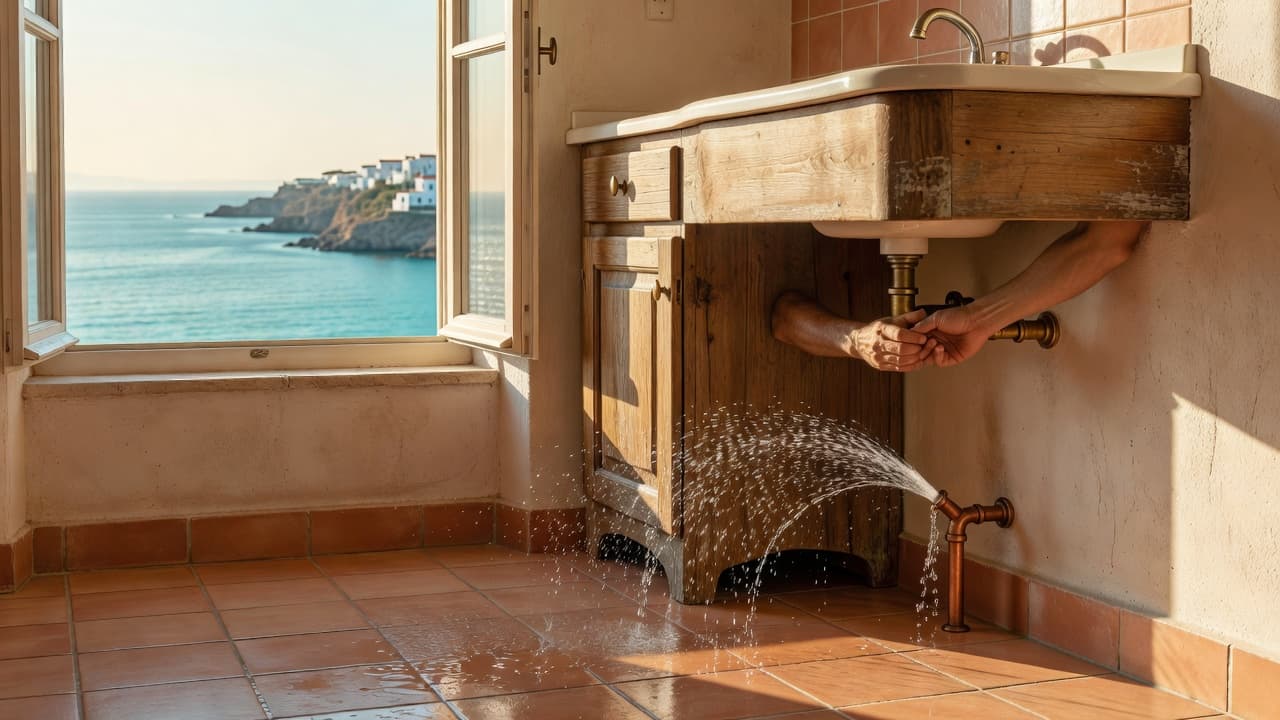
- Water is actively spraying from a pipe joint or a rupture. Close the main stopcock (turn clockwise), isolate the affected section if possible, and call a plumber the same day.
- You see salt crystallisation spreading rapidly along a pipe week to week. This is fast corrosion, and rupture may be days or weeks away.
- Your water pressure has dropped below a trickle. Internal corrosion may be nearly blocking the entire section. Forcing more pressure could rupture a weakened section.
- You notice water pooling inside your home or staining on ceilings that weren't there yesterday. Hidden pipe corrosion may be about to fail catastrophically.
- You have corroded galvanised steel pipes in an old property and no recent plumbing work has been done. Galvanised pipe can fail suddenly without warning. Professional inspection is essential.
- Any pipe section is visibly pitted, has multiple pinhole leaks, or is soft to the touch (indicating deep corrosion). This pipe is not safe and will rupture soon.
In all these cases, your first action is to close the main stopcock to prevent flooding, then call a plumber immediately. Do not attempt repairs yourself. A temporary patch will fail under pressure, and a ruptured pipe can cause thousands of euros in water damage, mould, and structural damage in hours.
A plumber's first step is usually a visual inspection of all visible pipes — under sinks, behind appliances, in the plant room (if you have one), and on external walls. They're looking for active corrosion, leaks, discolouration, and weak joints.
For a deeper diagnosis, they may use a small camera (an endoscope) to inspect the inside of your pipes without breaking them open. This reveals blockages, internal corrosion, and scale buildup that aren't visible from the outside. If you have significant corrosion, the camera will show you exactly where the risk is highest.
Once they've assessed the damage, they'll explain which sections need replacing and which can wait. In most coastal properties, the priority is usually:
- External pipes (most corroded by salt spray).
- Pipes in plant rooms or near the sea-facing wall (highest salt concentration).
- Old galvanised steel sections (fail first).
- Main supply pipes (most critical if they rupture).
Depending on the extent of corrosion, replacement might be partial (just the worst sections) or a full system re-pipe. Modern copper pipes with protective coatings, or increasingly, plastic composite pipes (PEX, PVC, or multilayer pipes) resist salt corrosion far better. A plumber can advise which material suits your property and budget.
Once work is complete, ask the plumber for a written report and photographs. Keep this for your insurance and future reference. If your property is old and you've just had plumbing replaced, take note of the date — you now know you have a 20–30 year window before corrosion becomes a problem again (or longer, if protective measures are in place).
Apply protective coatings to external pipes. Epoxy or polyurethane pipe coatings are not DIY jobs — you need a professional — but they dramatically extend pipe life in coastal areas. A coating creates a chemical barrier between salt air and the copper or steel underneath.
Insulate exposed pipes. Even basic foam pipe wrap reduces salt-air contact and temperature stress, which accelerates corrosion. Replace it every 3–5 years as UV breaks it down.
Flush your system regularly. If you notice discolouration in your water, run cold water for 3–5 minutes each morning. This helps shift loose corrosion products before they settle in the pipes.
Have pipes inspected every 2–3 years if your property is directly coastal. A plumber spending 1 hour on inspection now is far cheaper than emergency repair after a rupture. Many plumbers offer annual checks for a modest fee.
Improve ventilation and reduce humidity indoors. Lower humidity slows corrosion (salt needs moisture to corrode). Use extractor fans in kitchens and bathrooms, and ensure good air circulation.
If you're renovating, upgrade to modern materials. Multilayer pipes (composite with aluminium) and high-quality PEX pipes are corrosion-resistant and often cost less than copper over their lifespan.
Check your water softener if you have one. Hard water (high mineral content) can accelerate corrosion in some scenarios. A water test by a professional will tell you if softening makes sense.
If you've spotted any warning signs — white deposits, metallic water, slow pressure, or stains on walls — don't wait for a rupture. An experienced plumber on the Mediterranean coast knows salt corrosion inside out and can advise you on priorities and costs. Contact a local experienced plumber in your area for an inspection within the next week. The earlier you catch it, the smaller the bill and the fewer surprises ahead.