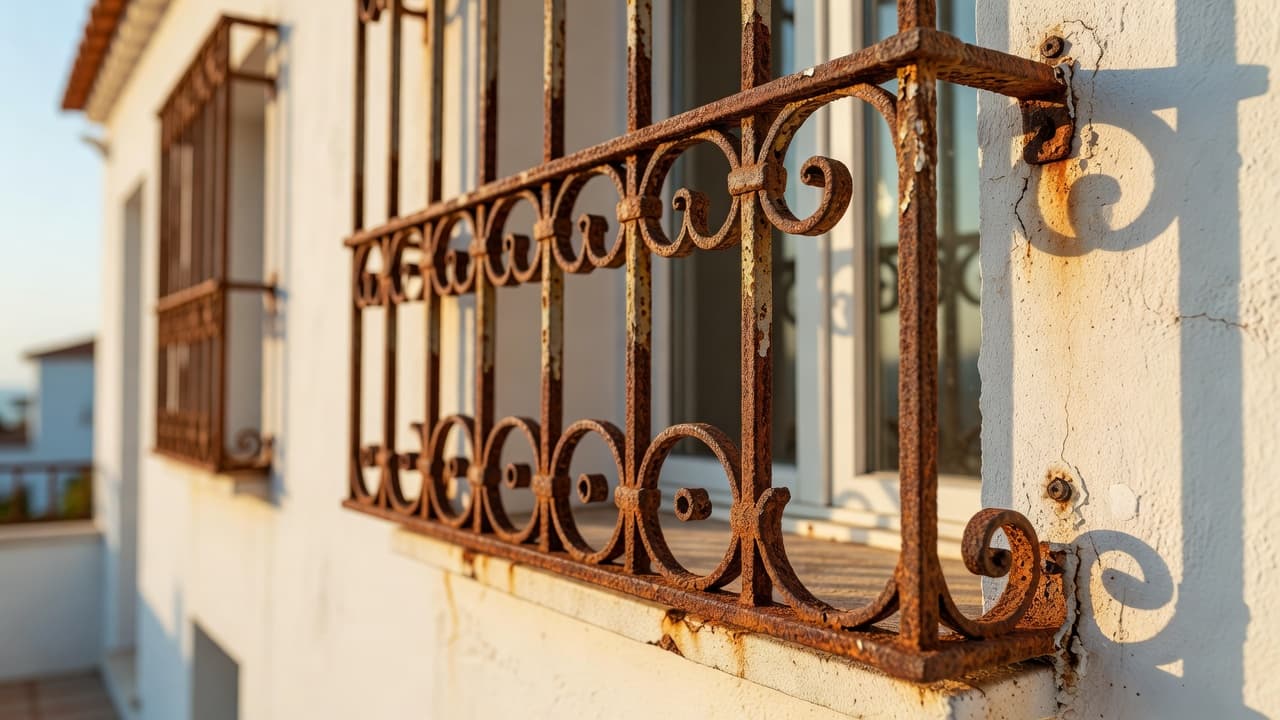
Rust on window bars is almost always a combination of three factors: moisture, salt air (if you're near the coast), and time.
In coastal areas from the Costa Blanca to the Balearics, salt particles carried on the wind settle on metal surfaces. They're microscopic, but they speed up corrosion dramatically. A bar that might last 20 years inland will show significant rust in 8–10 years on the coast.
Moisture gets trapped where the bar meets the wall or frame. If the original installation didn't include proper sealant (very common in older Spanish properties), water seeps behind the bar, corrodes the fixings, and causes the bar to loosen. The looser it gets, the more it moves, the more moisture works its way in.
Iron or mild steel bars corrode faster than stainless steel or galvanised bars. Many Spanish properties, especially older villas and second homes, have uncoated mild steel bars. These were cheaper when installed, but they pay a price in the long term.
Tightening bolts (if they're surface-mounted and accessible):
If the bars are bolted to the window frame or exterior wall with visible bolt heads, and you can reach them safely, a gentle tightening may buy you time.
- Use an adjustable spanner or the correct socket to gently turn each bolt clockwise.
- Tighten only until snug—do not over-tighten, as this can strip threads on rusty fixings or crack the frame.
- Check after one week. If it's loose again, the fixing is deteriorating and needs professional attention.
Applying a temporary rust inhibitor:
You can spray a light coat of penetrating oil (WD-40 or equivalent) on exposed rust to slow its spread for a few weeks. This is not a fix; it's a stopgap.
- Clean off loose rust flakes with a soft brush.
- Apply the oil thinly and evenly.
- Wipe any excess after 15 minutes to avoid staining the wall.
Sealing gaps around the bars:
If you can see daylight or gaps between the bar and the wall, water is definitely getting in. You can apply flexible silicone sealant around the bar to slow moisture infiltration.
- Clean the area with a damp cloth and let it dry completely.
- Use a silicone sealant gun to apply a bead around the bar edges.
- Smooth it with a wet finger or tool.
- Leave 24 hours to cure.
This is cosmetic and temporary. Professional repair will involve removing the bar to seal it properly from inside.
Stop and call a professional if:
- The bar moves visibly (more than a millimetre) when you push it, or you cannot tighten it with hand tools.
- The rust has caused pitting (deep holes) in the metal surface. This means the bar's structural strength is compromised.
- Bolts are seized or rusty to the point you cannot budge them without risk of breaking them.
- The bar is recessed into the masonry (common in older properties). You cannot safely access or seal these without opening the wall.
- Water is visibly leaking inside along the bar or seeping into the window frame.
- The bars are galvanised (shiny grey coating) or stainless and are still rusting heavily. This suggests a deeper problem (incorrect installation, incompatible materials, or damage to the protective coating).
- The frame itself is soft, splintered, or rotting around the bar fixings.
In any of these cases, the job requires a professional locksmith or specialist in security ironwork. Attempting a DIY fix risks either making the rust worse or creating a security vulnerability.
A locksmith experienced in coastal properties will typically follow this approach:
Inspection and diagnosis. They'll assess the extent of rust, test the looseness of each bar, and check both sides of the installation. They'll look at the fixings—are they corroded bolts, rusted screws, or anchors that have deteriorated? They'll also examine whether the original installation included sealant and what condition the wall or frame is in around the bars.
Treatment options. Depending on severity, they might:
- Remove and replace corroded bolts or screws with stainless steel or galvanised equivalents, sealed properly.
- Grind or brush off surface rust, apply a rust converter (a chemical that stabilises rust and prevents further spread), and repaint with rust-protective primer and topcoat.
- Remove the bar entirely, professionally clean and treat it (or replace it if structural damage is severe), and reinstall it with modern sealant and corrosion-resistant fixings.
- For recessed installations, they may need to open the interior wall slightly to access and re-seal the fixings properly.
Documentation. A reputable locksmith will provide a receipt and a brief summary of what was done, the materials used, and whether any structural damage was found. This is useful if you're selling the property or need to reference it later.
The cost and timeline depend on the extent of the problem. Surface rust treatment and re-fastening might take 30 minutes per bar and cost €30–80 per bar. Full bar replacement or deep structural corrosion can take several hours and cost €150–400 per bar.
Annual inspection. In spring or early summer, visually check all external security bars. Look for orange-brown discolouration, loose fixings, or gaps. Address minor issues before they escalate.
Coastal properties need extra attention. If you're within 2 kilometres of the sea, consider professional inspection every 18 months rather than annually. Salt air accelerates corrosion significantly.
Ensure proper drainage and sealant. Water should not sit around the bar fixings. If you notice poor drainage or sealant cracking, have it re-sealed promptly.
Paint or protective coating. If your bars are uncoated mild steel, a coat of rust-inhibiting paint every 3–5 years adds years to their life. Your locksmith can recommend suitable products.
Use stainless steel or galvanised fixings during any repair. This adds cost upfront but eliminates future rust problems in those specific bolts or screws.
Rusty, rattling window bars are a sign that corrosion and looseness have begun. On Spain's Mediterranean coast, this happens faster than inland due to salt air exposure. The good news is that early intervention—whether a simple tightening or a professional re-fastening—stops the problem from becoming urgent or expensive.
If you've noticed rust or movement, check the bars yourself using the steps above, take photographs, and contact a professional locksmith if the bars are loose or if rust is progressing. Don't wait until a bar fails or a security risk develops. A small repair now prevents a large one later.