A smooth lock allows the key to turn with gentle, even pressure. If you feel grinding, grinding resistance, or the key stops midway, the internal pins are worn or corroded. This is the most common first sign of a failing lock.
Why it matters: Stiffness means the lock is working harder than it should. Each turn damages it further. Continuing to force a stiff lock will break the key or snap the internal mechanism.
Press the key into the lock and waggle it side to side. In a new lock, it should be snug, barely moving. A loose key indicates the cylinder interior has enlarged from wear—the pins no longer grip properly.
Why it matters: A loose fit makes the lock trivially easy to pick. A thief doesn't even need the correct key; a bump key or tension wrench will work in seconds.
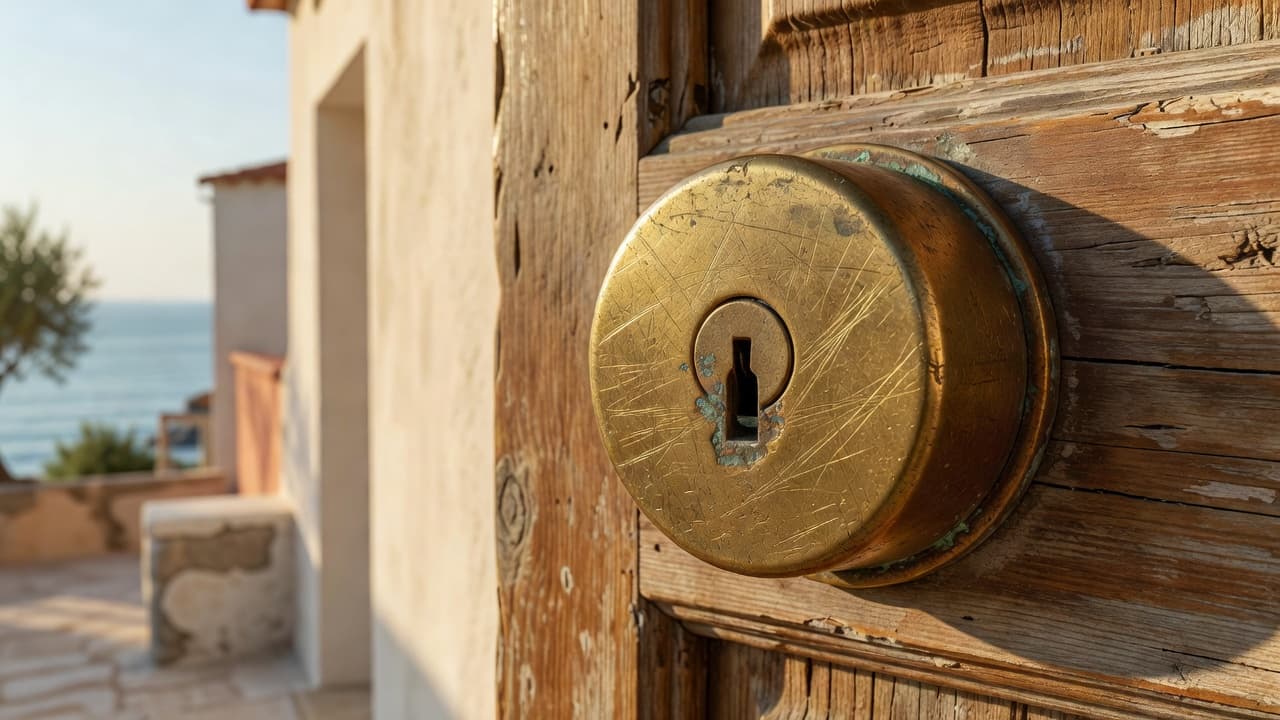
Shine a torch into the keyhole and look carefully. You might see scratches running vertically (from the key), white powder (from corrosion, common in coastal areas), or rough, pitted surfaces. These aren't just cosmetic.
Why it matters: On Spain's Mediterranean coast, salt air accelerates corrosion. Rust and pitting weaken the pins and springs inside. They're no longer reliable.
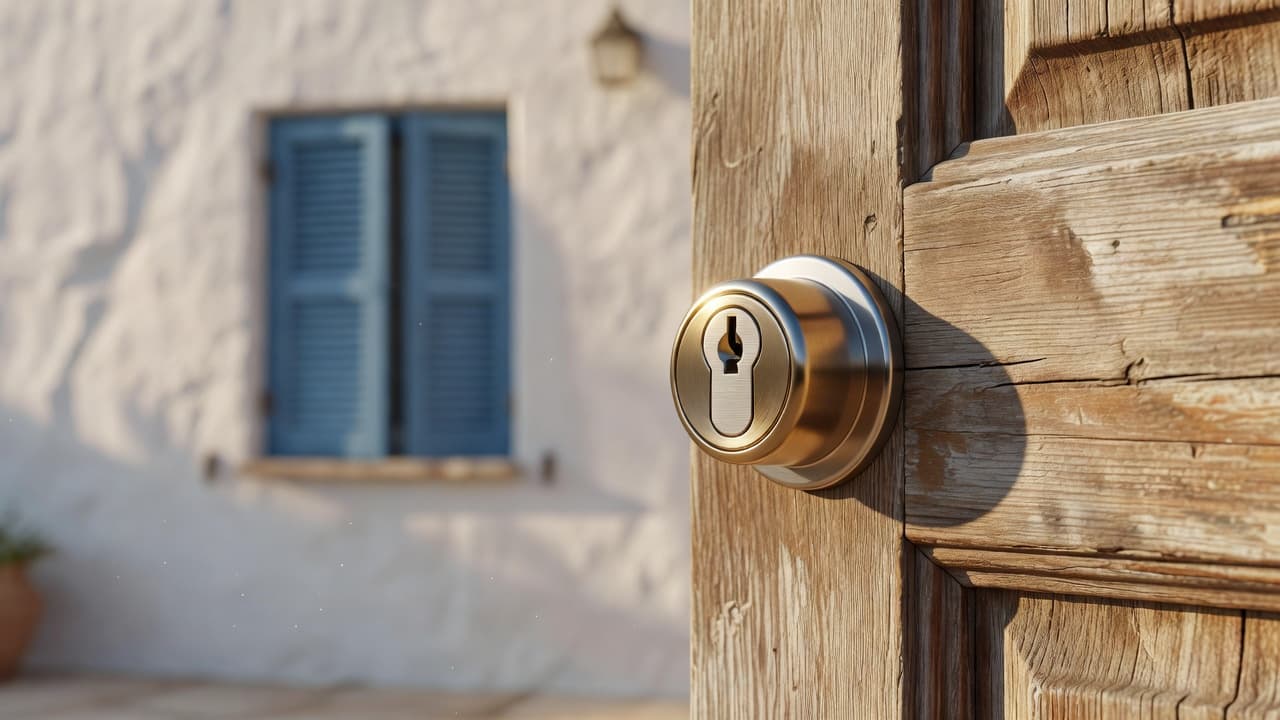
From outside, the cylinder should be flush with (or slightly recessed into) the door frame. Grab it gently and try to move it. If it shifts, clicks, or sits protruding, the retaining mechanism has failed.
Why it matters: A loose cylinder can be pulled out entirely by a thief, exposing the lock body and allowing forced entry. A wobbly lock also won't hold the bolt securely.
If you don't know the lock's age (common in holiday homes or newly bought properties), ask the previous owner or a locksmith. A lock that's been in daily use for 15 years is almost certainly nearing the end of its reliable life, even if it seems to work.
Why it matters: Locks are mechanical devices. Parts wear out. A 15-year-old lock on a busy door may look fine but have microscopical damage inside that makes it vulnerable.
Every time you insert the key, the pins inside the cylinder wear down microscopically. After thousands of cycles, they become loose, rust, or snap. This is inevitable.
Coastal properties face constant salt spray. The metal inside the lock corrodes, creating rough surfaces that jam the mechanism and weaken the pins. You'll often see white or green powder around the keyhole.
Poor maintenance
A lock that's never been cleaned or lubricated collects dust, debris, and moisture. The internal springs stiffen and can snap.
Not all locks are built equally. A budget lock may fail in 5–7 years. A well-made one lasts 15–20. If the original lock was inexpensive, it's more likely to show wear early.
If the door has shifted (common in older homes or properties that settle), the cylinder misaligns inside its housing. This puts constant pressure on one side of the mechanism.
Graphite powder is the safest lock lubricant and won't accumulate dust like oil. Spray a small amount into the keyhole, insert the key, and work it in and out ten times. This can temporarily free a stiff lock.
How: Buy graphite powder from a hardware shop. Insert the thin nozzle into the keyhole and spray 2–3 short bursts. Turn the key gently back and forth to distribute. Do not force.
Important: If the stiffness doesn't improve, stop. You may be pushing damaged internal parts together and making the problem worse.
Silicone spray is safe for locks (unlike WD-40 or similar oils, which attract dust). A light spray inside the keyhole, followed by ten gentle key turns, sometimes restores smooth operation temporarily.
How: Use a lock-specific silicone spray (hardware shops stock them). Follow the same method as graphite powder. Less than one second of spray is enough.
If dust or debris is blocking the keyhole, a can of compressed air (electronics duster) can clear it. Blow short bursts into the hole, away from your face.
Important: Don't poke anything into the keyhole. Compressed air only.
Stop immediately and call a locksmith if:
- The key is hard to turn and doesn't respond to lubrication. Forcing a stiff lock breaks the key inside or snaps the cylinder.
- The key has broken off inside the lock. Do not try to extract it yourself—you'll damage the mechanism further.
- The cylinder is wobbly or feels like it might come out. A loose cylinder is a serious security risk and requires professional removal and replacement.
- The lock has been damaged, picked, or forced. Even if it still works, the internal mechanism is compromised and needs replacing.
- You feel grinding, grinding sounds, or resistance that feels metallic and harsh. These indicate broken internal parts.
- The lock hasn't responded to lubrication after two attempts, and stiffness persists. The damage is internal and irreversible.
- You've locked yourself out and the key is missing. A professional can open it without damage.
In all these cases, do not force the lock. Contact a locksmith. Attempting repairs yourself risks making the problem worse and can leave your home insecure.
A professional locksmith on Spain's coast will follow a straightforward assessment process.
First, they'll inspect the lock. They'll test the key, check the cylinder alignment, look for corrosion or visible damage, and often remove the cylinder to examine the internal pins and springs under good light. They'll ask how long you've owned the lock and whether you've noticed problems increasing. This takes 10–15 minutes.
Next, they'll give you options. If the lock is salvageable (usually only if it's just stiff and needs cleaning), they'll service it on the spot—a thorough cleaning, professional lubrication, and testing. If the cylinder is worn or damaged, they'll recommend replacement. If the entire lock body is faulty, they'll suggest a full lock swap. They'll explain the cost and security level of each option.
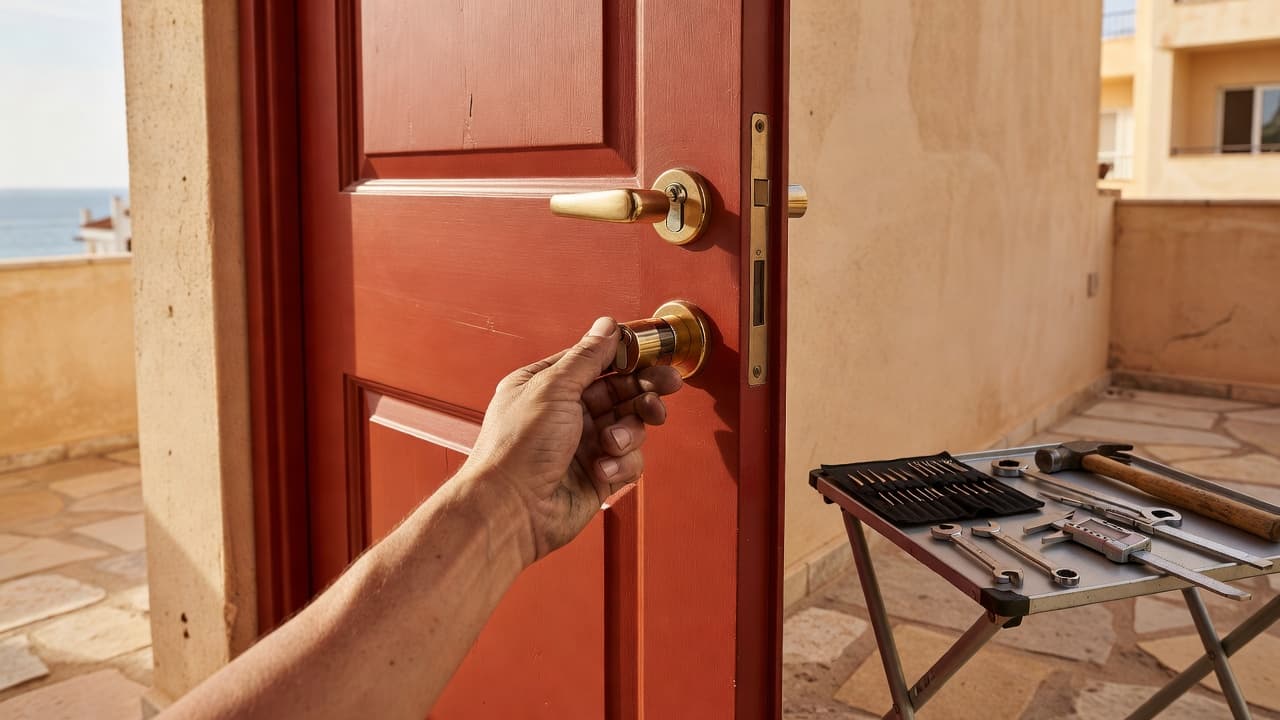
Then they'll replace or repair. If you approve, a cylinder replacement usually takes 20–30 minutes. A full lock replacement takes 45 minutes to an hour. They'll ensure the new mechanism aligns perfectly, test it multiple times, and hand you new keys. You'll also receive a receipt and, if the property is part of a community of owners (urbanisation or apartment block), they may provide documentation for the community records if needed.
Finally, they'll advise on security. A good locksmith will tell you whether your lock grade matches your home's security needs, suggest upgrades if you're in a high-theft area, and advise on maintenance to extend the new lock's life.
Once a month, insert your key and turn it slowly. If resistance increases gradually, have the lock serviced before it fails completely.
Blow compressed air into the keyhole to remove dust and debris. In coastal areas, wipe the cylinder exterior with a dry cloth to prevent salt accumulation.
Use graphite powder once a year, especially before winter. This keeps the internal mechanism smooth and protects against moisture.
If your door faces the sea, apply a thin coat of car wax or clear lacquer to the external lock parts. This slows corrosion. Reapply every 12 months.
If you feel resistance, stop. Turn the key back and try again gently. Forcing a stiff lock is the fastest way to break it.
If your lock is 12+ years old and showing minor signs of wear, budget for a replacement within the next year or two. A planned replacement is far cheaper than an emergency call-out.
If your lock is showing any of these warning signs, don't wait for it to fail completely. A worn lock is a security gap in your home, and replacing it now is far simpler than dealing with a break-in or being locked out. Contact a local locksmith today for a quick assessment. Most can visit within 24 hours and complete the work the same day.