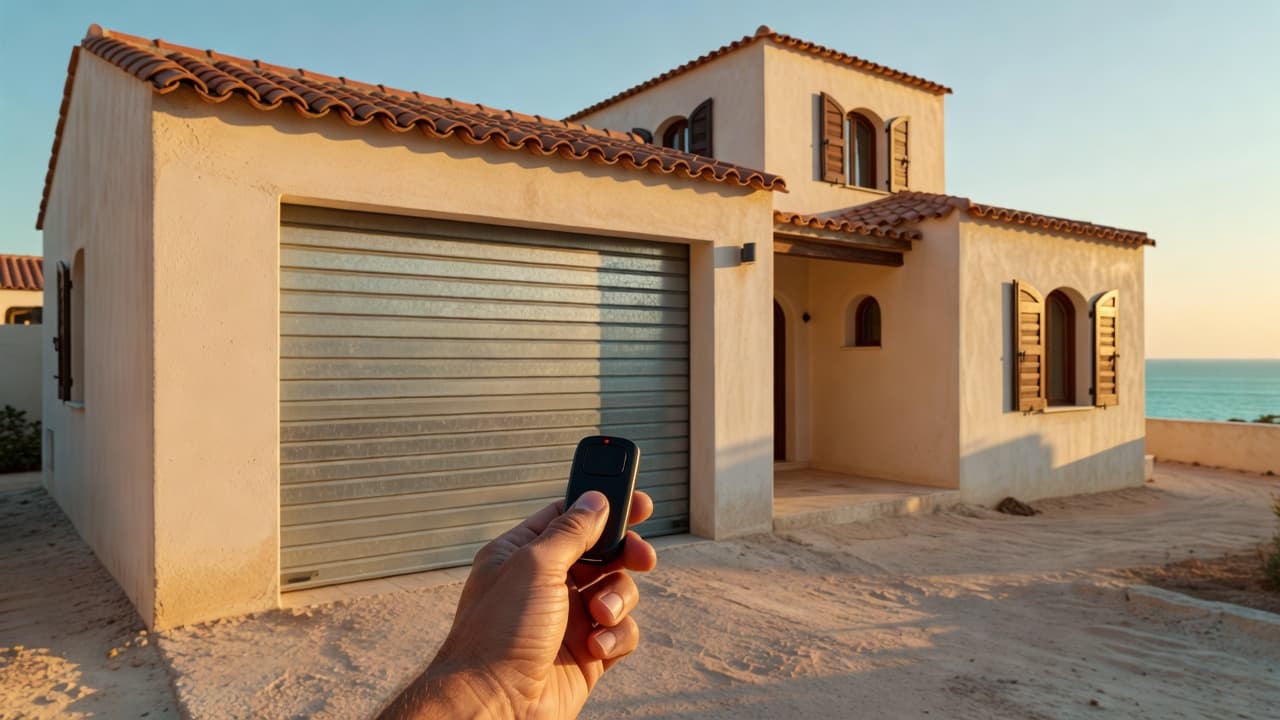
Your remote sends a radio signal to a receiver unit mounted near the garage door motor. When the signal is received, the motor is triggered to open or close the door. The failure can happen at any point in this chain.
Battery failure is the most common cause. Batteries lose charge gradually, especially in warm climates like the Mediterranean coast, where heat accelerates battery drain. You might notice the remote works from very close up but not from a distance—a sign of weak battery power.
The photo-eye sensor (a small beam at the base of the door frame) prevents the door closing if something is in the way. If this sensor is misaligned, blocked by dust, or damaged, the door may not respond at all.
Motor or electrical faults occur when the door opener unit itself loses power or malfunctions. This is less common but more serious.
Radio frequency interference can occasionally jam your remote if you live near a busy road, near a radio transmitter, or in a densely built urbanisation. This is rare and usually temporary.
A broken spring or mechanical jam in the door mechanism will prevent it from opening, regardless of whether the remote signal gets through. The motor will try to operate but the door won't move.
If you've checked the batteries and the door still won't open, here's what you can do safely until a technician arrives.
Use the manual release. Locate the red cord or handle near the motor unit inside the garage. Pull it to disconnect the electric opener. You can then lift the door by hand. Keep it in the manual position until the remote is fixed (this means you'll have to open and close it manually each time, but it's safe).
Secure the door at night. If the door is stuck open or you can't secure it with the electric system, you can use a padlock and chain or a sturdy bolt on the inside to lock it manually. Check with your insurer first if this is a secondary property.
Keep the manual release accessible. Once you've found it, remember where it is. Mark it with a bright sticker if it's hard to spot. If you ever get locked out, you'll need to access it from inside the garage via another entrance.
Don't force the door if it's heavy or stuck. A jammed or broken spring makes the door very heavy. Forcing it can cause injury or further damage. If the manual lift feels wrong—too heavy, jerking, or grinding sounds—stop and wait for a professional.
Stop and call a professional locksmith or garage door technician immediately if:
The door is stuck halfway open or closed and you can't move it by hand even after pulling the manual release. This usually means a broken spring (under dangerous tension) or motor malfunction.
You hear grinding, scraping, or clanking sounds from the motor or door mechanism. This indicates a mechanical problem that will worsen with use.
The door is very difficult to lift manually, even with the motor disconnected. A spring failure makes the door extremely heavy. Attempting to force it can cause serious injury.
The motor unit sparks, smells of burning, or makes unusual electrical noises. This is a fire hazard. Disconnect the power at the consumer unit (the electrical box in your home) if safe to do so, and call immediately.
The photo-eye sensors won't align or stay clean. If you've wiped them and the problem persists, or if the beam is visibly damaged, a technician will need to realign or replace them.
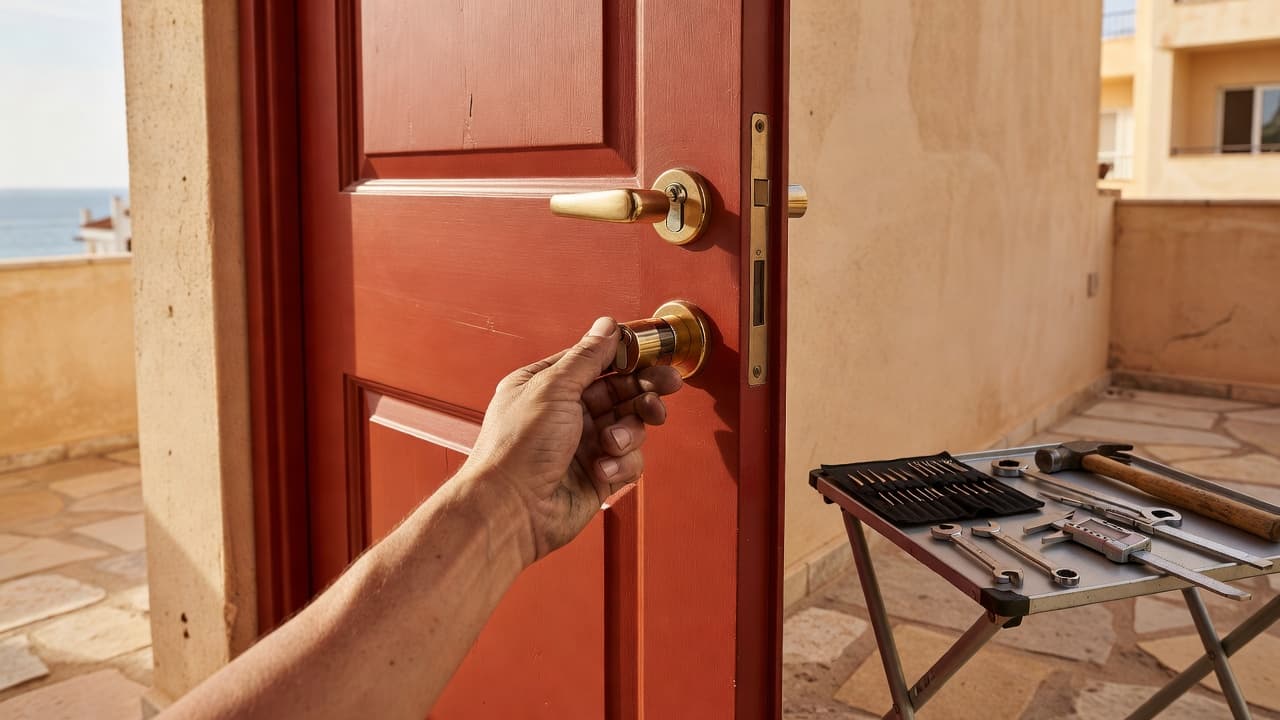
You cannot access the manual release because the door is locked from outside or you're locked out of the garage. Contact a locksmith who can help you gain entry safely.
When you call a locksmith or garage door technician (many regions have specialists in garage door automation rather than traditional locksmiths), they'll diagnose the problem systematically.
They'll start by testing the remote signal with a diagnostic tool to confirm whether the transmitter is working. They'll check the receiver unit's power supply and reset it if needed. They'll inspect the photo-eye sensors, clean them if necessary, and realign them. If the problem is purely electronic, this usually takes 30–60 minutes and costs €80–€150 for a call-out and labour.
If the fault is mechanical—a broken spring, a jammed track, or motor failure—the technician will need to order parts or replace the entire motor unit. Broken springs are particularly common on the Mediterranean coast due to salt-air corrosion and temperature swings. A spring replacement costs €150–€300 depending on the door size. A full motor unit replacement runs €200–€400, plus labour.
The technician will provide you with a new remote if yours is faulty, or they'll reprogram your existing remote if it's just a pairing issue. They'll test the door multiple times before leaving and usually provide a small warranty (typically 12 months) on parts and labour.
Replace batteries annually or when the remote starts to feel "sluggish". Don't wait until it fails completely. Mark your calendar for once a year.
Keep the photo-eye sensors clean. Wipe them gently with a dry cloth every few months, especially if you live on the coast where salt spray and dust accumulate.
Avoid exposing the remote to extreme heat or moisture. Don't leave it in a hot car for hours, and don't drop it in water. If you live near the sea, the salt air corrodes electronics faster—consider keeping a spare remote indoors and rotating use.
Test your garage door's manual release twice a year. Know where it is and ensure it works smoothly. If it's stiff, a light spray of silicone lubricant will help (not oil, which attracts dust).
Have the door serviced every two years. A quick check of springs, hinges, and the motor unit catches small problems before they become expensive failures.
If your garage remote stopped working and you've tried new batteries and basic troubleshooting without success, or if you're concerned about the door mechanism itself, it's time to call in a professional. A locksmith or garage door technician on the Mediterranean coast can usually attend within 24 hours and diagnose the problem quickly.
[Contact a locksmith today](link to /locksmiths/) to book an assessment and get your garage door working again.