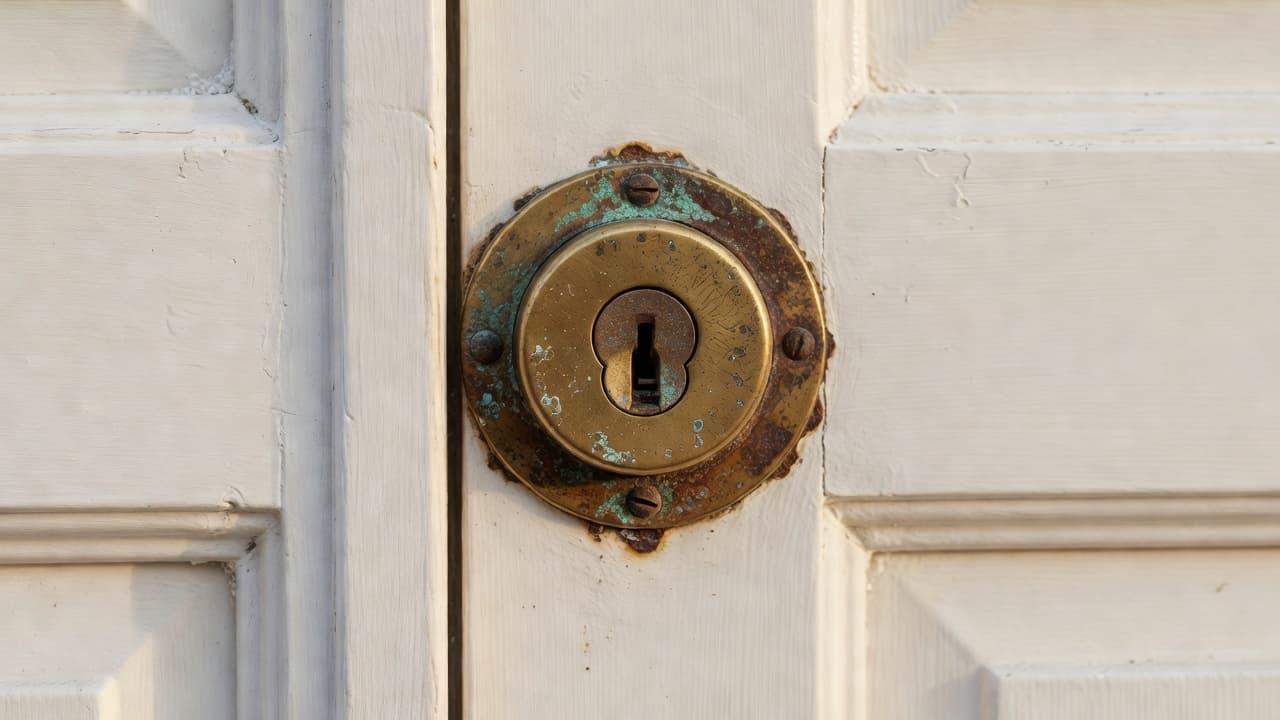
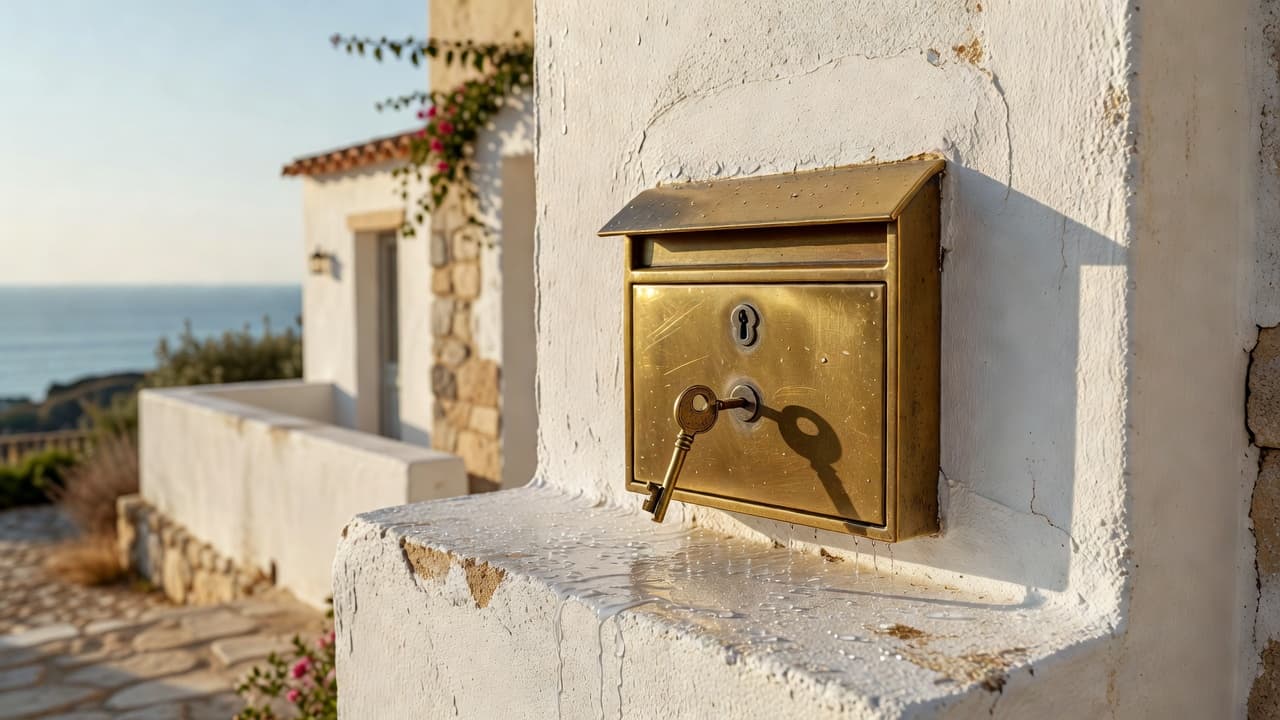
Salt air contains sodium chloride particles (the same chemical in table salt). These particles are so fine they travel kilometres inland and settle on anything metal—your locks, hinges, railings, car parts.
When salt meets metal, two things happen:
Oxidation. The chloride breaks down the protective oxide layer that normally sits on steel, exposing raw metal underneath. Rust forms within days in summer heat and humidity.
Galvanic corrosion. If your lock contains different metals (which most do—a steel shaft with brass plating), moisture creates a tiny electrical circuit that eats the weaker metal first. This is why locks near the sea fail faster than identical locks inland.
Iron and uncoated steel locks corrode in months. Brass and copper locks resist longer but still discolour and pit. Even stainless steel locks develop surface staining and pitting in extreme coastal zones.
Most European locks have some brass or copper component, which buys you time—but not much, and not forever.
These steps slow corrosion without risk and work while you decide whether to replace the lock:
Apply a protective coating. After cleaning and lubricating, spray the lock with a thin coat of light machine oil (not WD-40). This seals the surface from moisture for 4–6 weeks. Repeat every month. Cost: €2–5 per bottle.
Fit a rain shield or lock cover. A simple plastic or stainless steel cover that sits above the keyhole deflects rainwater and reduces direct salt spray contact. These cost €5–15 and are available online or in Spanish hardware shops (look for "protector de cerradura" or "tapa de cerradura"). They look neat and are effective.
Increase ventilation around the lock. If the lock is recessed into a stone or tile surround, salt moisture pools there. Ensure water can drain away—clear any debris from under the lock, and if water pools, consider repositioning a downpipe or gutter.
Dry the lock after rain or sea spray. If you're by the beach or after a storm, wipe the lock dry within a few hours. This simple habit cuts corrosion by 30–40%.
These fixes are not permanent, but they buy time and may extend lock life by 2–3 years if applied consistently.
Stop and call a local locksmith if you notice any of these:
- The key is sticking or jamming halfway. The mechanism is corroded inside. Forcing the key risks breaking it off inside the lock.
- The lock requires excessive force to turn. The cylinder is seized. Spray will not penetrate, and forcing it damages the internal pins.
- Visible deep pitting or cavities in the metal. The corrosion has eaten into the structure. The lock is near failure.
- The lock face is swollen or deformed. Rust has expanded the metal unevenly. It will jam soon.
- You hear grinding or scraping sounds. Internal parts are corroding and catching. Professional cleaning or replacement is needed.
- Water is visible inside the lock or keyhole. The seal is compromised. Moisture is trapped inside, and the mechanism will fail quickly.
In any of these cases, attempting to save the lock is false economy. A professional locksmith can assess whether cleaning and repair are possible (sometimes they are, for €40–80), or whether replacement is the only safe option. Trying to force a seized lock yourself risks injury and usually makes the problem worse, requiring more expensive repairs.
If you're unsure, take a photo of the lock and message a local locksmith for advice. Most will give you a quick assessment for free.
A locksmith arriving to assess rust damage will usually follow this process:
Visual inspection and testing. They'll examine the lock face for pitting and corrosion depth, try the key, and listen for grinding sounds. This takes 2–3 minutes and tells them whether cleaning is worth attempting or replacement is necessary.
Deep cleaning. If the lock is salvageable, they'll use specialist degreaser and lubricant (not household products) to dissolve salt deposits and rust. They'll work the key gently to distribute the cleaner. This can take 15–20 minutes.
Mechanism repair or replacement. If cleaning doesn't restore smooth operation, they may replace the internal cylinder (the part the key turns, called a "bombín" in Spain). This costs less than replacing the entire lock. If the whole lock is beyond repair, they'll remove it and fit a new one, adjusting the door frame if needed.
Protective measures. A good locksmith will apply a corrosion-inhibitor spray and recommend a rain shield or cover. They may advise on maintenance intervals based on your location's salt exposure.
The whole job usually takes 30–60 minutes for an assessment and cleaning, or 45–90 minutes if replacement is needed. Cost ranges from €40–80 for cleaning and lubrication, to €150–300 for a full lock replacement including labour.
Once the lock is restored or replaced, these simple habits prevent the cycle from repeating:
Monthly maintenance. Set a calendar reminder. Spray silicone lubricant and wipe dry. This is the single most effective step.
Fit a rain shield. If the locksmith hasn't already, buy one. It reduces direct weather exposure by 70%.
Dry the lock after rain or if you smell salt spray. A quick wipe with a cloth takes 30 seconds and prevents moisture pooling.
Use stainless steel hardware. If you're replacing locks, hinges, or handles, choose stainless steel versions. They cost 20–30% more but last 3–4 times longer in coastal zones.
Clean the keyhole of debris. Leaves, dust, and salt crystals block drainage. A soft brush or compressed air once a month keeps it clear.
Consider annual professional cleaning if your home is within 1 kilometre of the sea or in a high-humidity inland area. This costs €25–50 and prevents small problems becoming expensive ones.
Maintenance is cheaper than replacement, and replacement is cheaper than lock-outs or security breaches from a non-functional lock.
Ready to stop rust in its tracks? Our locksmiths across the Mediterranean coast are experienced with salt-air corrosion and can advise you on cleaning, repair, or replacement. Contact us for a free assessment or book a visit.