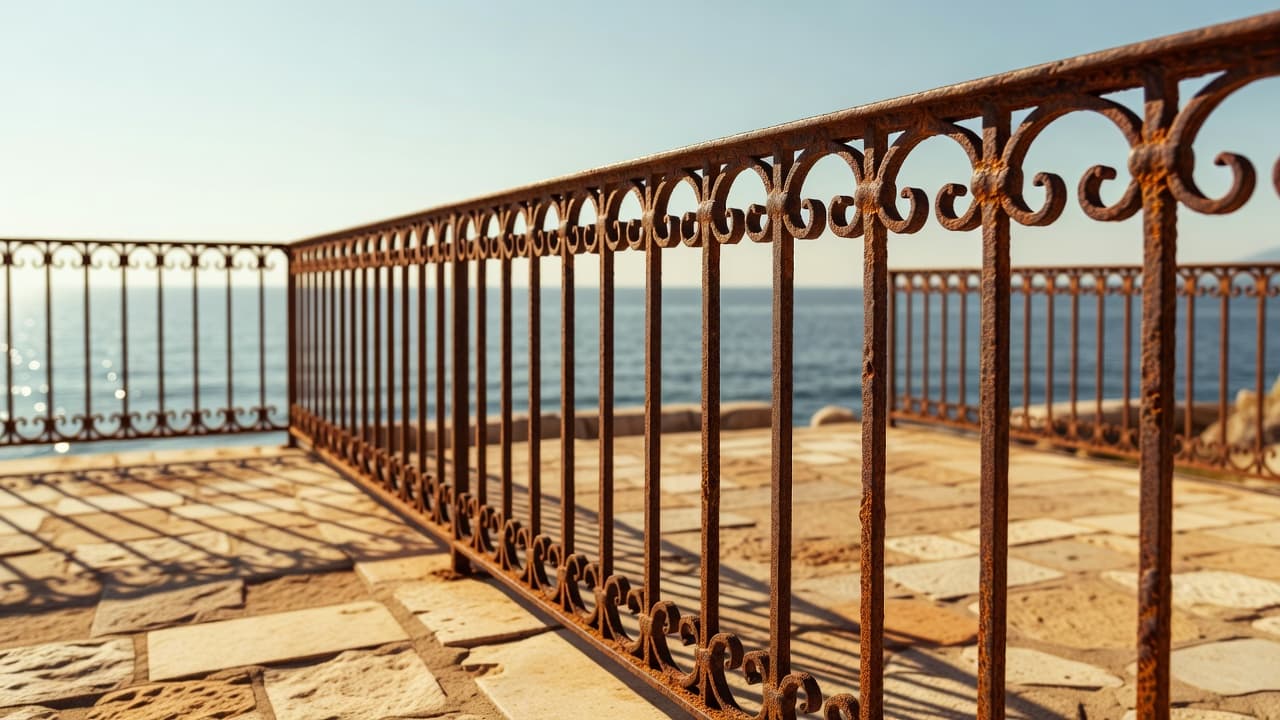
Metal railings corrode when iron oxidises—a chemical reaction between the metal, oxygen and moisture. On the coast, salt water and salt-laden air speed this up dramatically. Salt breaks down protective coatings (paint, galvanising or powder coat) and draws moisture to the metal surface, accelerating rust formation.
Most railings in Spanish seaside homes are either:
- Mild steel (painted or powder-coated): common and affordable but requires regular maintenance in salt environments.
- Galvanised steel: dipped in a zinc coating for protection. Even this corrodes on the coast, though more slowly.
- Stainless steel: expensive but resists rust much better, though even stainless can corrode in extreme salt exposure.
If your railing is painted steel and you see rust, the coating has failed. Moisture has penetrated underneath, and the rust will continue spreading unless the bare metal is treated and re-coated.
Rust converter product: Available as spray or liquid from DIY shops (brands like Jenolite or equivalent). This converts rust chemically into a stable dark coating. It's water-based, non-toxic, and safe to use without special equipment. Follow instructions for application and drying time. This typically costs €8–15 and can extend life by months.
Wire brush cleaning: A stiff wire brush or cheap wire wheel attachment on a cordless drill removes loose rust and prep the surface. Don't over-do it—you're not trying to make it shiny, just removing what's loose. Wear eye protection from flying rust particles.
Temporary sealant: Once cleaned and dried, a thin coat of car wax, furniture polish or even a light machine oil (like 3-in-1 oil) creates a temporary water-repellent layer. It won't stop rust permanently but buys time by keeping moisture away. Reapply monthly or after rain.
Cloth wrap: For small corroded sections, wrapping in a cloth soaked in light oil and securing with waterproof tape isolates the area from fresh salt spray for a few weeks.
None of these are permanent solutions. They slow the problem while you arrange for professional treatment or replacement.
Stop immediately and call a professional if:
- The railing moves, bends or feels structurally weak when you press it. This indicates deep corrosion and a fall risk.
- You see rust with holes or through-corrosion (you can see light through the metal). The structural integrity is compromised.
- The railing is part of a building's safety system (required by regulations). Only a qualified professional should assess whether it's still safe.
- The rust covers more than half the railing length or all visible surfaces. This suggests internal corrosion and the whole piece may need replacing.
- You're unsure about the original material (you don't know if it's galvanised, stainless or mild steel). Different metals need different treatments.
Chemical safety: Don't mix rust treatment products with other cleaners or acids. Don't apply products to railings that children or pets might chew or lick. Work in ventilation if using sprays. Follow all product instructions.
Height and falls: Don't lean far out over a corroded railing to treat the outer face. If the railing isn't stable, work from a step ladder or lean a safe distance away.
A qualified handyman or specialist will assess the extent of corrosion and recommend one of these approaches:
Cleaning and recoating: If corrosion is surface-level only, they'll use a wire brush or light abrasive wheel to remove rust and old paint, apply a rust-inhibiting primer, and finish with exterior paint or powder coat. This is the cheapest option and can extend life by 3–5 years on a seafront railing.
Rust conversion and industrial-grade coating: For moderate rust, they'll apply a professional rust converter, sand the surface, apply epoxy primer, and finish with multi-coat protective paint. This is more durable (5–8 years) and typical cost is €300–600 for a standard terrace section.
Section replacement: If rust has weakened the metal structurally (visible pitting, holes, or movement when tested), they'll remove and replace that section. Cost depends on the railing type and length, typically €600–1,500 per metre for labour and materials.
Full railing replacement: If the entire railing is compromised, replacement with new stainless steel or powder-coated steel is the permanent fix. Costlier upfront (€1,500–4,000 for a typical terrace) but eliminates the problem for 15–20 years.
The professional will inspect adjacent sections and test the railing for safety before proposing a fix. Ask for a written quote and clarification of whether the work includes warranty against rust recurrence.
After repair or replacement, maintain the railing to avoid a repeat:
Annual inspection: Every spring, check for new rust spots or paint damage. Catch problems early before they spread.
Regular cleaning: Twice yearly, wipe down the railing with a damp cloth to remove salt deposits. Salt sitting on the metal accelerates corrosion.
Touch up paint quickly: If you spot chipped or worn paint, clean and repaint that spot within a few weeks. Bare metal exposed to salt air rusts rapidly.
Choose the right material for replacement: If replacing, stainless steel or hot-dip galvanised steel last much longer in salt air, even if the upfront cost is higher. Powder-coated mild steel is cheaper but needs maintenance every 2–3 years.
Improve drainage: If water pools on horizontal railing sections or joints, rust accelerates. Ensure good drainage and don't let debris sit on the railing.
Consider protective barriers: In extremely exposed locations (very close to the sea), a clear protective coating applied every 2–3 years can extend the life of any railing significantly.
Rust on seafront railings is frustrating, but it's manageable if you act early. Your immediate job is to stop moisture and salt air from accelerating the problem—brush away loose rust, dry thoroughly and apply temporary protection. Then contact a qualified handyman to assess whether recoating or replacement is needed.
Find a handyman near you to inspect and treat your railing properly. Most offer free quotes and can advise on the best long-term solution for your seafront home.