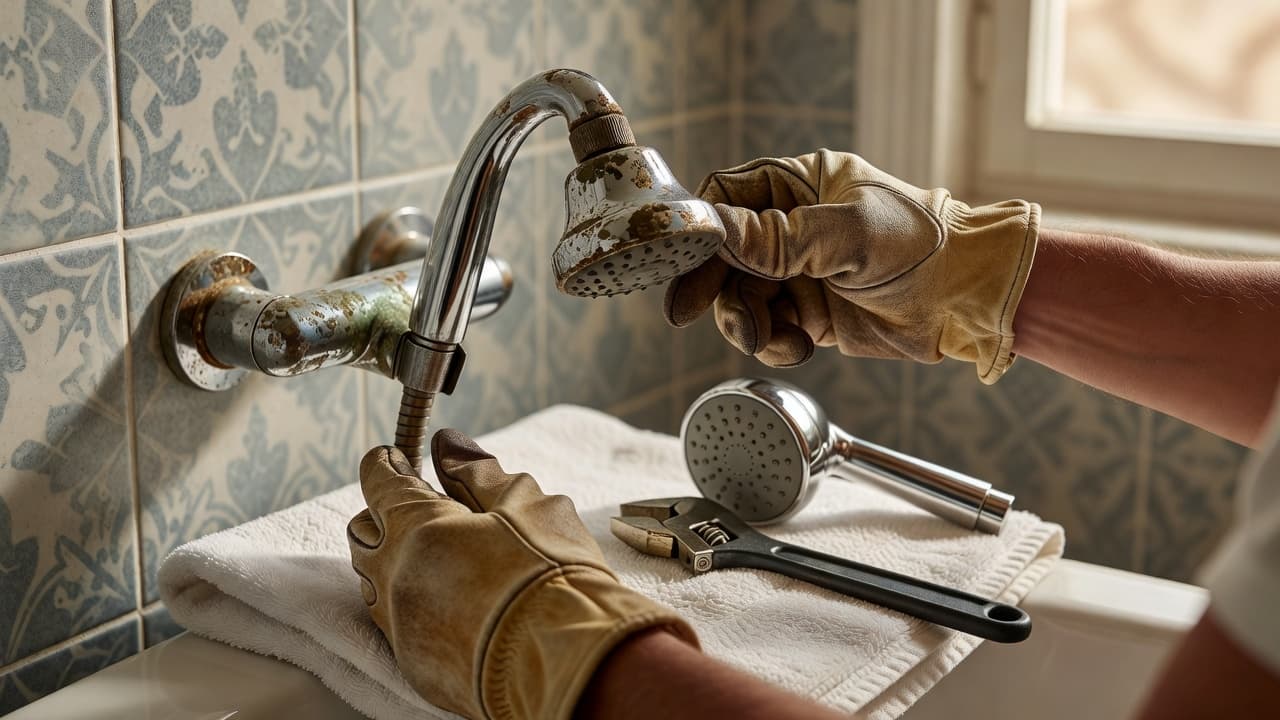
Rust and corrosion on a shower head stem from three causes.
Salt air and humidity. Homes on the Costa Blanca, Costa del Sol, and the Balearic islands are exposed to salt spray and persistent humidity. These attack the chrome plating and the underlying metal, especially if the plating is thin or has been scratched.
Hard water deposits. Limescale and mineral buildup don't cause rust directly, but they trap moisture against the metal and accelerate corrosion. In drier climates inland, this is less severe.
Poor initial quality. Cheap shower heads have thin or uneven chrome plating. Within a few years in a coastal bathroom, the plating flakes off and the base metal oxidises rapidly.
Once rust takes hold, the shower head weakens internally, the spray pattern becomes blocked or erratic, and replacement is the only practical solution.
While waiting for a replacement, you can improve water flow without risk.
Soak the existing head in white vinegar overnight in a bucket. Vinegar dissolves some limescale and may partially restore flow, especially if blockage is the main problem rather than structural rust.
Unscrew the head and rinse the internal filter screen (if it has one) under running water or soak it in vinegar to clear debris.
If you need to shower before the new head arrives, tilt the head upwards to focus the water where you need it, or run the water from the bath spout temporarily by switching the diverter.
These are holding measures only. A corroded head will continue to deteriorate and will not be hygienic or reliable long-term.
Shower head replacement is safe for anyone, but stop and call a handyman if:
- The arm is leaking water from where it meets the wall. This indicates a problem with the internal connection, not just the head. Forcing the head may worsen the leak.
- The arm itself is corroded or pitted and looks unstable. The metal may be compromised, and unscrewing the head could damage the fitting.
- You cannot unscrew the head after soaking and moderate wrench pressure (15–30 seconds of steady turning). Applying force risks cracking the valve behind the wall.
- Water sprays from the connection when you unscrew the head. This suggests a pressurised line, though unusual for a shower system. Stop immediately and isolate the supply at the main stopcock (usually under the kitchen sink or in an external box near the property entrance).
In any of these cases, a professional will assess the arm and internal connections safely.
If you decide to hire help, the process is simple and quick.
The handyman will assess whether the arm is sound and the connection is watertight. They'll protect the arm with a cloth to prevent wrench damage, then unscrew the corroded head carefully. If it's seized, they'll apply penetrating oil and allow time rather than forcing it.
Once the old head is off, they'll inspect the thread and the arm for cracks or leaks. They'll clean the thread, wrap it with plumber's tape (PTFE tape, a white thread-seal tape) if needed, and screw on the new head evenly, tightening by hand and then a quarter-turn with a wrench to secure it without over-tightening.
They'll then test the spray pattern, adjust the water pressure if necessary, and check for leaks at the connection. A quality replacement head should last 5–7 years in a coastal environment, or longer inland.
Most handymen carry a stock of standard shower heads and can complete the job in under 20 minutes. The cost is modest—usually the labour only, since the head itself is inexpensive.
Buy a quality replacement. Choose a head with solid brass or stainless steel construction and thick chrome plating, or opt for brushed stainless steel, which is more corrosion-resistant than chrome. Check reviews for coastal durability.
Check the thread size before you buy. Most European shower heads use M24 or M26 metric threads. Hold the arm in the shop and test-fit the new head if the retailer allows.
Wipe down the head after heavy use. In a coastal bathroom, moisture lingers. A quick dry with a towel after showering reduces the time water sits on the chrome.
Replace sooner if you see discolouration. Don't wait until the head is visibly rusty. Rust spreads quickly in humid conditions. At the first sign of orange spots or pitting, budget for a replacement.
Consider a water softener if your area has very hard water. Softeners reduce limescale buildup, which traps moisture and accelerates corrosion. Consult a local plumber about feasibility.
Replacing a rusty shower head is a straightforward task that takes minutes and requires minimal tools. It's one of the few home repairs that genuinely doesn't need professional help—unless the arm itself is compromised, in which case you'll want to call a professional handyman to investigate and assess the internal connections safely.