A railing only moves if one or more of these is failing:
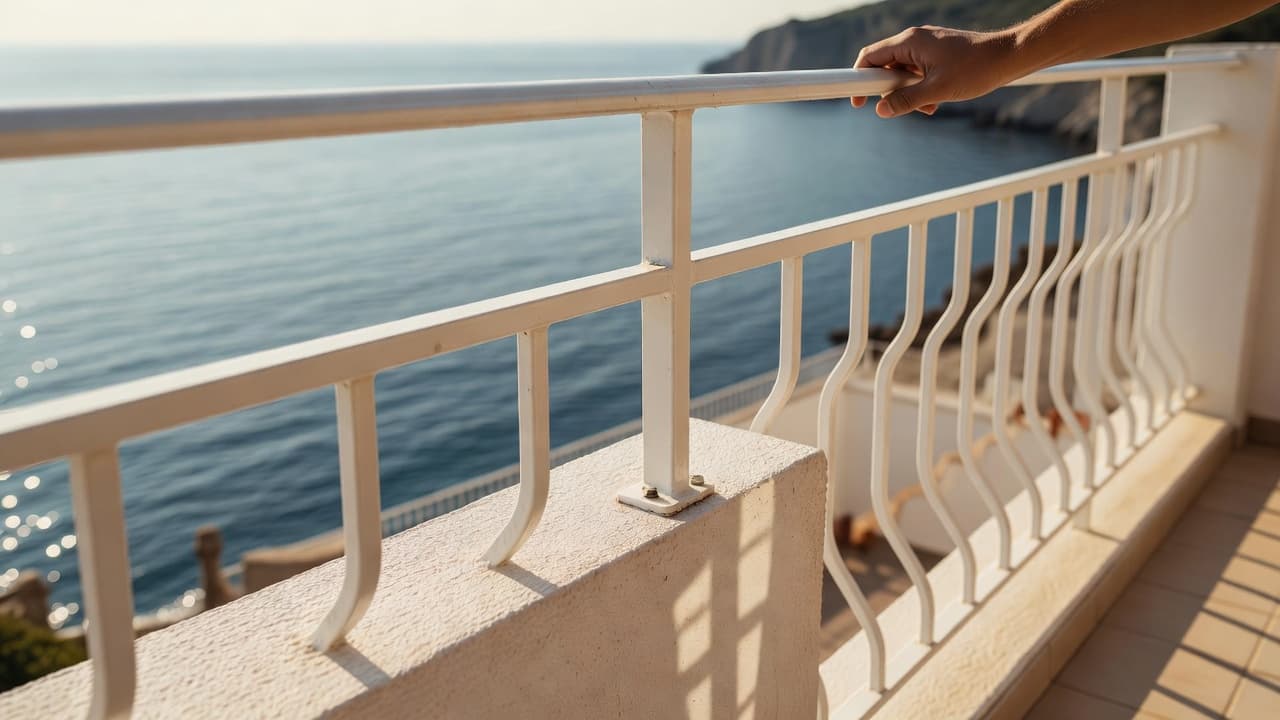
Corroded or missing bolts. This is the most common cause on the Spanish coast. The bolts that fix the railing to the wall or post expand and contract with temperature changes and are exposed to salt air, which accelerates rust. Over time, the bolt threads weaken, the washers corrode, or the bolt itself fractures. If a bolt is missing entirely, the remaining bolts bear the full load and fail faster.
Movement in the structural fixing point. If the wall or post to which the railing is bolted has shifted—due to settlement, water damage, or structural movement—the bolts lose their grip. This is more serious because the problem is not just the railing but the structure it's attached to. A surveyor will need to assess this.
Fatigue from repeated use. Staircases and balconies see constant use. Every time someone leans on the railing, there's a small stress on the bolts. Over years or decades, this cumulative stress weakens the metal connection. This is why older properties often develop loose railings.
Age and weather exposure. Mediterranean homes face constant humidity, salt spray (especially on the coast), sun exposure, and temperature swings. These conditions age metal faster than in colder, drier climates. A railing that's been in place for 15+ years is at higher risk of failure.
Improper initial installation. Occasionally, a railing was not bolted with sufficient depth, the right bolt size, or adequate washers. This is rare in modern building, but not unknown in older Spanish properties or informal repairs.
These measures will reduce the risk of accidental use of the railing while you wait for the professional. They are not permanent solutions and must be followed by proper repair.
Option 1: Tighten visible bolts (if you have basic DIY confidence). Locate the bolts connecting the railing to its fixing point. Using the correct wrench or Allen key (usually 6mm, 8mm, 10mm, or 12mm depending on the bolt), attempt to tighten each bolt a quarter-turn clockwise. Do this gently—do not over-tighten, as this can strip the threads or crack the washer. If the bolt will not tighten (it spins freely), or if the railing still moves after tightening, stop immediately and do not attempt further tightening. The bolt is likely damaged and needs replacement. Mark it with a piece of tape and note the location for the professional.
Option 2: Install a visual warning. If the railing is on a balcony or terrace, place a clear warning sign or ribbon (or even bright tape) at eye level where the railing meets the wall or post. Something simple like "Railing unsafe—do not lean" in English and Spanish will make guests aware. For stairs, place a small "Out of order" sign or tape on the newel post or wall.
Option 3: Reduce access. If the railing is on a guest balcony or rarely-used terrace, close the door to that area or arrange furniture to discourage leaning on it. For staircase railings (less common to have loose ones, but it happens), stay on the other side of the stairs when possible.
Option 4: Apply temporary metal straps or cable ties (last resort). If you have metal mending plates (L-shaped metal brackets) or heavy-duty cable ties, you can create a very temporary binding around the connection point to reduce movement slightly. This is a containment measure only. Wrap cable ties snugly around the railing and the post or bolt area, or bolt a metal strap across the joint if you have the tools. This is not safe and must be replaced within 48 hours. It is mentioned only because some readers may find themselves in a situation where a professional cannot arrive quickly and they need to reduce movement minimally. It does not satisfy building regulations and will likely fail under sudden pressure.
Do not use glues, silicone, or epoxy resin. These will not hold and may make professional repair harder.
Do not:
- Attempt to weld or grind the railing or bolts yourself.
- Apply excessive force when tightening bolts (this can snap the bolt or tear the fixing threads).
- Ignore movement in the supporting post or wall (if the post tilts or the wall around the fixing is cracked, this is structural and requires a surveyor).
- Use the railing for support while you attempt repairs.
- Leave a severely loose railing unattended. If you are away from the property, arrange a neighbour's check-in or inform the property management (in an urbanisation) that the railing is unsafe.
- Treat a railing that moves in multiple directions as a simple bolt-tightening job. If it moves sideways and up-and-down, or if it's attached to a post that itself moves, call a surveyor immediately—this may be a structural issue.
When to stop and call immediately:
- The railing moves more than 1 cm when pushed firmly.
- The bolts will not tighten, or tightening does not reduce movement.
- There is visible cracking in the wall or post around the fixing.
- The fixing is in a safety-critical location (like the top of a staircase) and the movement is significant.
- You are uncomfortable working at height or with tools.
A handyman or qualified railing repair specialist will arrive with basic tools—wrench set, bolt cutters, possibly a drill, and replacement hardware.
Inspection. They will apply pressure to the railing in multiple directions, test each bolt, and visually check for corrosion, missing parts, or damage to the wall or post. If there's structural damage, they will recommend a surveyor. Most of the time, the fix is straightforward: bolts are loose or corroded.
Bolt replacement. If the bolts are corroded or damaged, they will remove them (sometimes drilling them out if they are stuck), and replace them with new stainless steel or galvanised bolts of the correct size and thread. Stainless steel is preferred on the coast because it resists salt corrosion far better than mild steel. They will ensure each bolt has a washer and is tightened to the correct tension—firm but not over-tightened.
Wall or post repair. If the fixing point has shifted or is damaged, they may need to drill new fixing holes, use expansion bolts (tacos) of a larger size, or install additional bracing. This is still usually a handyman job unless the structural integrity of the wall itself is compromised.
Testing. Before they leave, they will apply firm pressure to the railing to confirm there is minimal movement. They may document this with a photo.
Documentation. A professional should provide you with:
- An invoice listing the work and parts used.
- Details of the bolts or materials installed (e.g., "M10 stainless steel bolt, ISO 4014").
- If the railing is in a community property (urbanisation or flat block), they may provide a certificate or report for your records or the community of owners. This can be valuable if the railing is later involved in an accident.
The repair usually takes 30 minutes to an hour and costs between €80 and €200 depending on the extent of replacement and local rates.
Annual visual check. Once a year, run your hand along the railing connection points and apply gentle pressure. If movement reappears, address it immediately—bolts loosen faster once they've failed once.
Use stainless steel fixings on the coast. When the handyman replaces bolts, request stainless steel (A2 or A4 grade) rather than galvanised mild steel. The upfront cost is slightly higher but the lifespan is far longer in salty air.
Clean the connection area. If salt spray or dirt accumulates around the railing bolts, remove it gently with a soft brush and fresh water (not abrasive cleaning, which can damage the finish). Dry thoroughly.
Do not lean unnecessarily. Railings are safety barriers, not handholds. Use them to catch a fall, not for balance or support during normal movement. Reduce unnecessary stress on the fixings.
Monitor for water ingress. If water pools around the base of a railing post or runs down the wall around the fixing, this accelerates corrosion. Ensure gutters and drainage around the property are clear.
A loose railing is not a problem to manage around—it's a problem to fix. Get it checked and repaired within 24–48 hours. Until then, warn people not to lean on it, and cordon off the area if necessary. A qualified handyman can resolve most railing wobbles by replacing corroded bolts or tightening existing ones, and the repair is usually straightforward and affordable.
If you're in a hurry and need a handyman urgently, find a qualified railing repair specialist near you.