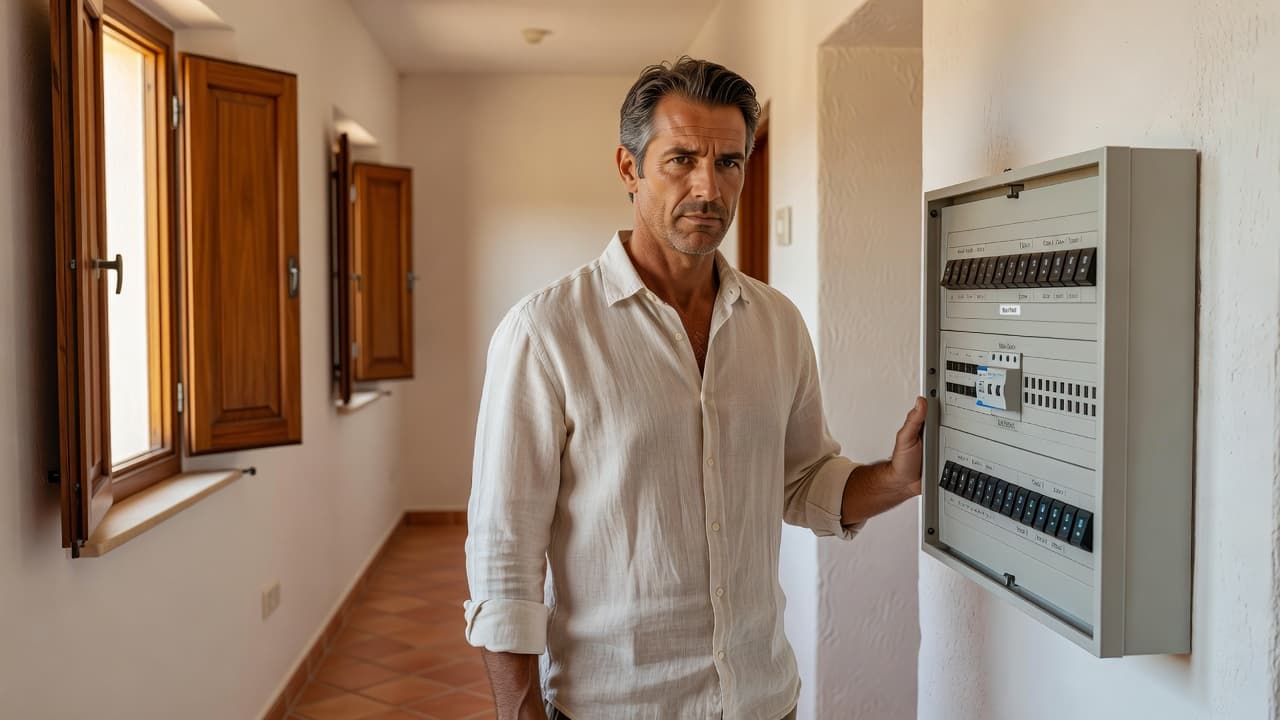
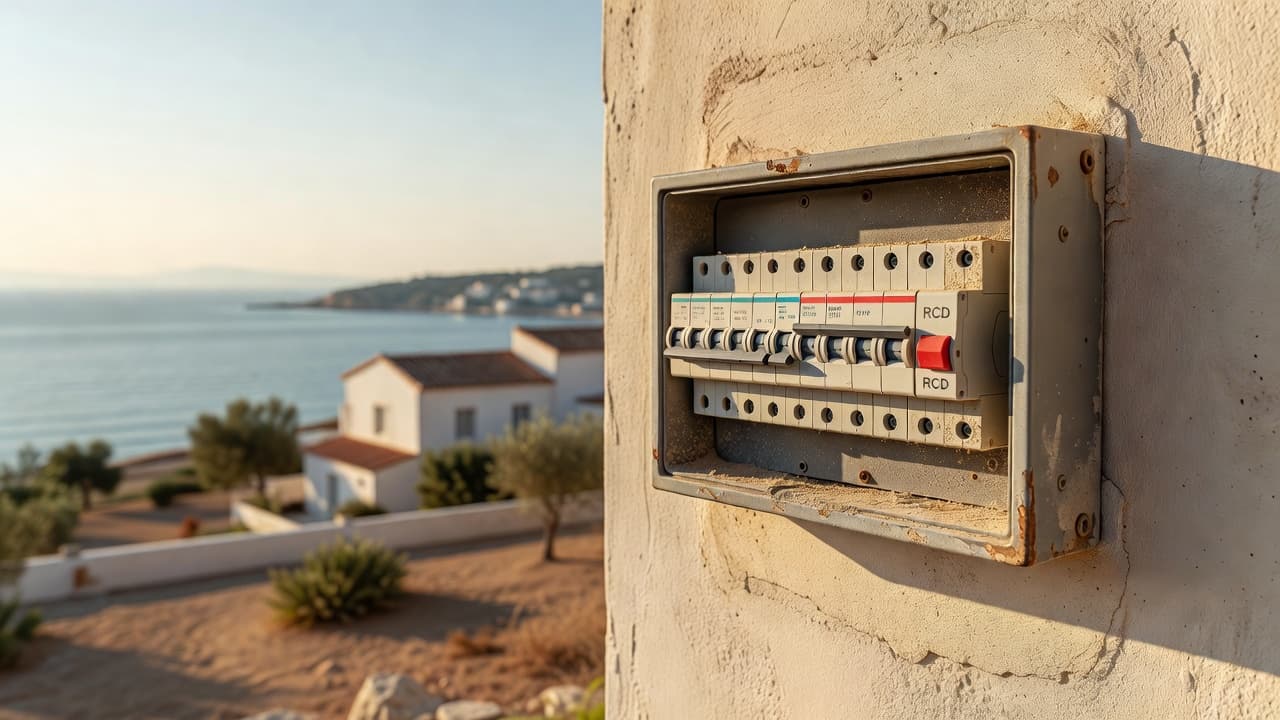
Your consumer unit (also called a fusebox or cuadro eléctrico in Spanish) is usually found in a utility cupboard, under the kitchen sink, in a bathroom cabinet, or on a landing. It's a grey or white metal box with a row of switches inside.
Look for the RCD switch—it's the larger switch, usually at the top or bottom of the row, and it's wider than the individual circuit breakers. It may be labelled "RCD", "Diferencial", "Main Switch", or simply have a test button next to it.
Is the RCD switch in the off position (pointing down)? If yes, you've found the problem. Go to step 3.
If the RCD switch is already in the on position and all other switches look normal, go to step 4.
Flip the RCD switch back to the on position (upwards). The lights should come back on.
Does the power stay on? Leave it for a few minutes. If it stays on, the trip may have been a one-off surge or a temporary overload. Monitor it and note the time.
Did the RCD trip again immediately? If the switch flipped back down as soon as you turned it on, or within a few seconds, there's a fault somewhere in your home's wiring or a faulty appliance is causing it. Do not keep resetting it. Go to step 5 instead.
If the RCD switch was already on and the lights are still off, check all the smaller switches in the consumer unit. One of them may have tripped (pointing downwards) while the RCD stayed on.
Look along the row. If any switch is pointing down while the others point up, flip it back to the on position. If the circuit is faulty, it may trip again immediately. If it stays on, note which circuit it was (many units label them: "Kitchen", "Bedrooms", "Bathrooms", etc.) and monitor it.
Are all the switches now on and pointing upwards? If yes, the power should be back. If no, move to step 5.
If resetting the switches didn't work, the problem may be an appliance causing an overload or a short circuit. Your air conditioning unit, electric water heater (termo), oven, dishwasher, or washing machine are common culprits, especially if you're running several at once during hot Mediterranean summers.
What to do:
- Switch off or unplug any non-essential high-power appliance you were using when the power went out (air con, washing machine, dishwasher, oven).
- Go back to the consumer unit and flip the RCD switch on again.
- If the power stays on, you've identified the problem appliance. Do not use it again until you've had an electrician check it.
- If the power doesn't stay on, switch off or unplug other appliances and try again.
If the power still won't come back after unplugging everything non-essential, there's a fault in your home's fixed wiring or consumer unit itself. Stop trying and move to the next section.
Overload: Most common. You've run too many high-power devices at once—especially in summer when air conditioning and water heating both run simultaneously. The RCD has done its job and cut the power to protect you from electrical fire or shock.
Faulty appliance: A fault inside an appliance causes it to draw too much current or create a short circuit. The appliance itself is unsafe to use until repaired or replaced.
Damaged wiring: Water damage, rodent damage, or age-related deterioration in the cables inside your walls or under the floor can cause a short circuit. This requires a professional to trace and repair.
Fault in the consumer unit: Rare, but the RCD or circuit breakers can fail over time, especially in older installations or in coastal areas where salt spray corrodes components.
Overloaded circuit: One individual circuit (say, the kitchen circuit) is overloaded because too many appliances are plugged into sockets on that circuit. Unlikely to trip the whole house, but possible.
Once you've done the steps above, here's how to manage safely while you wait:
- Leave the RCD switched off if it won't stay on. You're protecting your home from potential electrical fire.
- Don't keep resetting it. Each reset when there's an underlying fault risks damaging the consumer unit or wiring further.
- Unplug the appliance you suspect. If you identified a likely culprit (the washing machine, the air con), keep it unplugged.
- Use a torch or battery-powered lamp to move around safely. Candles are a fire risk.
- Turn off unnecessary appliances at their wall switches to reduce the electrical load when power does return.
- Warn other household members not to flip switches or touch the consumer unit.
Stop immediately and call an electrician if:
- The RCD switch won't stay on even after unplugging all appliances.
- You see scorch marks, burn smell, or discolouration around the consumer unit or any socket.
- You smell burning plastic or electrical smell anywhere in the house.
- Water is present near the consumer unit or any circuit breaker.
- You see sparks, arcing, or hear crackling from the consumer unit.
- A socket or light fitting is visibly damaged, cracked, or singed.
- The same circuit trips repeatedly even when nothing is plugged into it.
- You have no consumer unit (very old house) and the entire installation looks corroded or dangerous.
In any of these cases, do not attempt further resets. Call a qualified electrician immediately. If you smell burning or see sparks, leave the house and call the emergency services.
A professional electrician will start by doing what you've already done—checking the RCD, looking at the circuit breakers, and testing each circuit. But they'll have a multimeter and a fault-finding tool, so they can trace the problem more accurately.
If it's an overloaded circuit, they'll advise you on redistributing appliances or installing additional circuits (which takes a few hours and costs more, but solves the problem).
If they suspect a faulty appliance, they'll use their meter to identify which one and advise whether it's repairable or needs replacing.
If they find damaged wiring, they'll locate the fault (using a circuit tracer if necessary), cut out the damaged section, and rewire it. Depending on where the damage is—inside a wall, under floorboards, or outside—this could take 1–3 hours.
If the consumer unit itself is faulty, they'll replace it. This is more involved (1–2 hours) and they'll issue you with a new electrical installation certificate (boletín eléctrico) for your records. This is important if you ever sell or let the property.
- Spread the load. Don't run the air conditioning, the electric water heater, and the oven all at the same time on a hot summer day. Stagger them.
- Know your circuits. Ask the electrician which sockets and appliances are on which circuit. Some circuits are "protected" (lighter load) and some are "power" (heavier appliances). Don't overload a single circuit with too many devices.
- Check appliances before using them. If you've inherited an old fridge, cooker, or heating system with the property, have an electrician inspect it. Faulty old appliances are a common cause of trips.
- Keep the consumer unit accessible. Don't store boxes, tools, or cleaning supplies in front of it. You need to reach it quickly in an emergency.
- Have an electrician inspect every 5–10 years if you're in an older property. Coastal properties especially benefit from periodic checks due to salt corrosion of contacts.
If you've worked through the five steps and the power hasn't come back, or if you've identified a fault you're not confident about, it's time to call. A qualified electrician on the Mediterranean coast will diagnose the problem quickly and get your home safe again. Use the button below to find electricians vetted for English-speaking customers in your area.