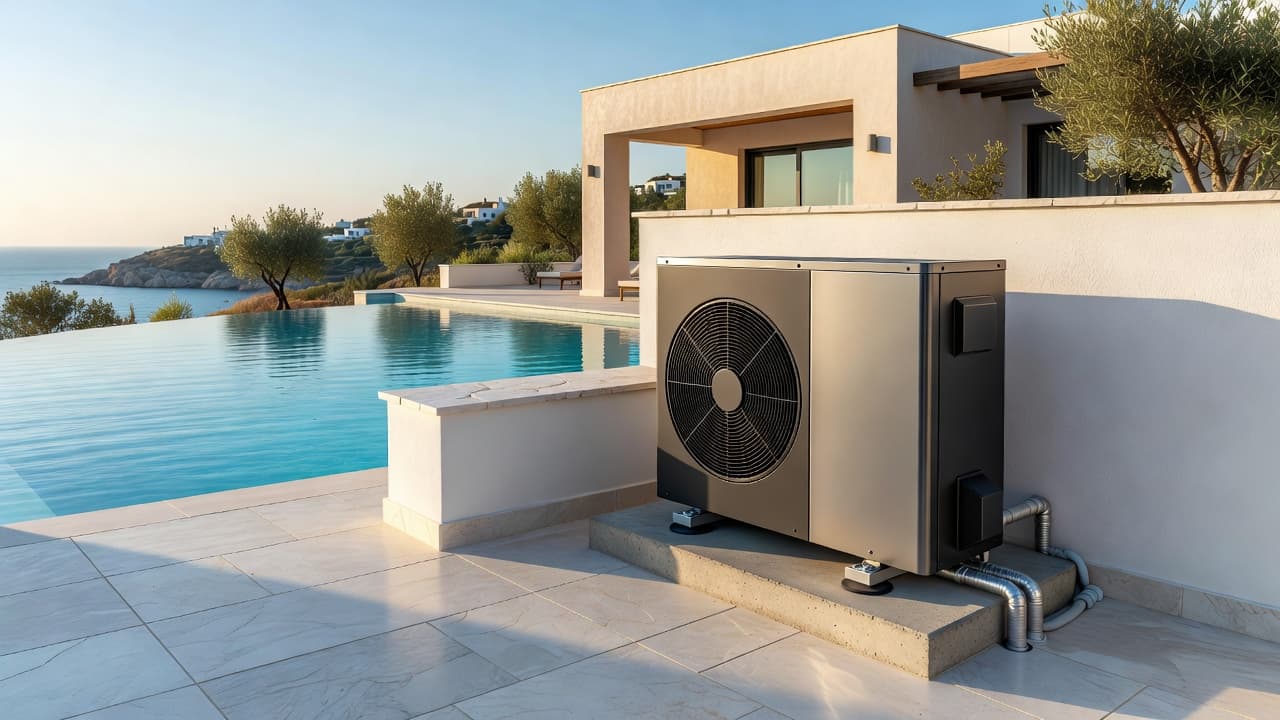
Air temperature matters more than most people realise. Pool heat pumps work by extracting warmth from the air and transferring it to the water. When the air temperature drops below 10°C, most air-source heat pumps become inefficient and may shut down automatically. If you're in winter and the ambient temperature is very low, this could be the reason. Check your heat pump's manual for its minimum operating temperature.
Refrigerant loss is the most common mechanical fault. If your heat pump has developed a small leak, refrigerant escapes gradually and the system can't produce heat, even though it's running. You might notice frost or ice forming on the outdoor unit, or hear a faint hissing sound. This is not something you can fix, but it's important to spot early because running the pump without refrigerant will damage the compressor.
A clogged filter starves the system of water. The filter is designed to trap debris, but over time it accumulates dirt and algae. When pressure is too high, water flow slows to a trickle. The heat pump has nothing to heat, so the outlet temperature doesn't rise. Backwashing the filter (as described above) is often all that's needed.
Thermostat confusion is surprisingly common. Some pools have a thermostat on the heat pump and a separate controller in the house or on a wall-mounted panel. If the controller is set to a lower temperature than your desired pool temperature, it can prevent the heat pump from cycling. Similarly, if there's a timer set to turn the system off during the day, you might think it's broken when really it's just scheduled to be off.
Low water level reduces circulation. Without enough water in the pool, the pump can't draw water through the heat exchanger. The system runs but heats almost nothing. This is especially common after summer evaporation or if you've lost water through a small leak.
Stop using the pump if it's not heating after 30 minutes of running. Running a heat pump that isn't producing heat will damage the compressor over time. Switch it off and call a technician.
If it's winter and below 10°C, consider waiting for a warmer day. Many heat pumps can't work effectively in cold weather. If you can wait until the air temperature climbs above 12°C, the pump may start working again without any service call.
Clean the filter even if the pressure gauge isn't in the red zone. A filter that looks clean on the outside can still reduce flow. Backwashing every 3–5 days during the heating season keeps water moving freely.
Top up the pool to the correct water level. This costs nothing and is often overlooked. Evaporation and small leaks lower the water level gradually, and you may not notice until heating stops.
Check that no leaves or debris are blocking the intake grille on the heat pump. Fallen leaves or twigs covering the air inlet will reduce efficiency. Clear any blockage from around the unit's air vents.
If you suspect a refrigerant leak, do not attempt to add refrigerant yourself. Refrigerant handling requires specialised equipment and certification. Attempting to "top up" your own system is dangerous and illegal in most countries, including Spain.
Stop immediately and call a technician if:
- You hear a loud grinding or compressor noise from the heat pump. This suggests internal mechanical damage.
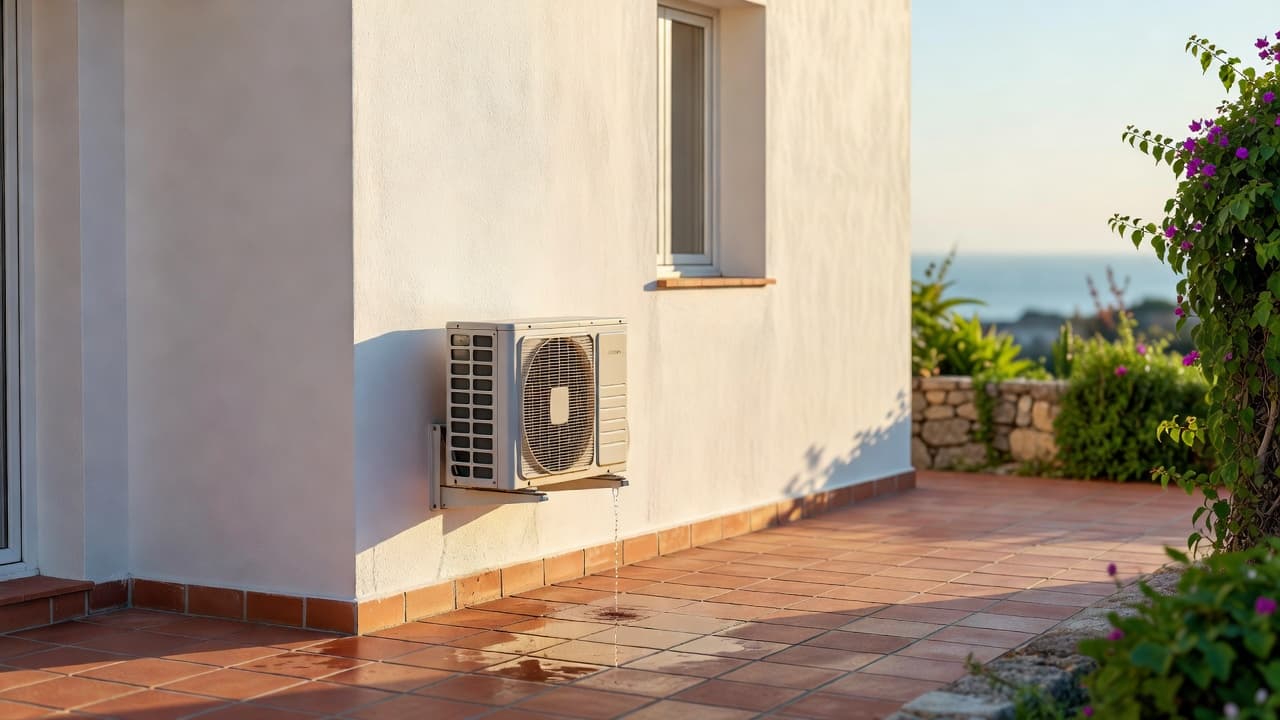
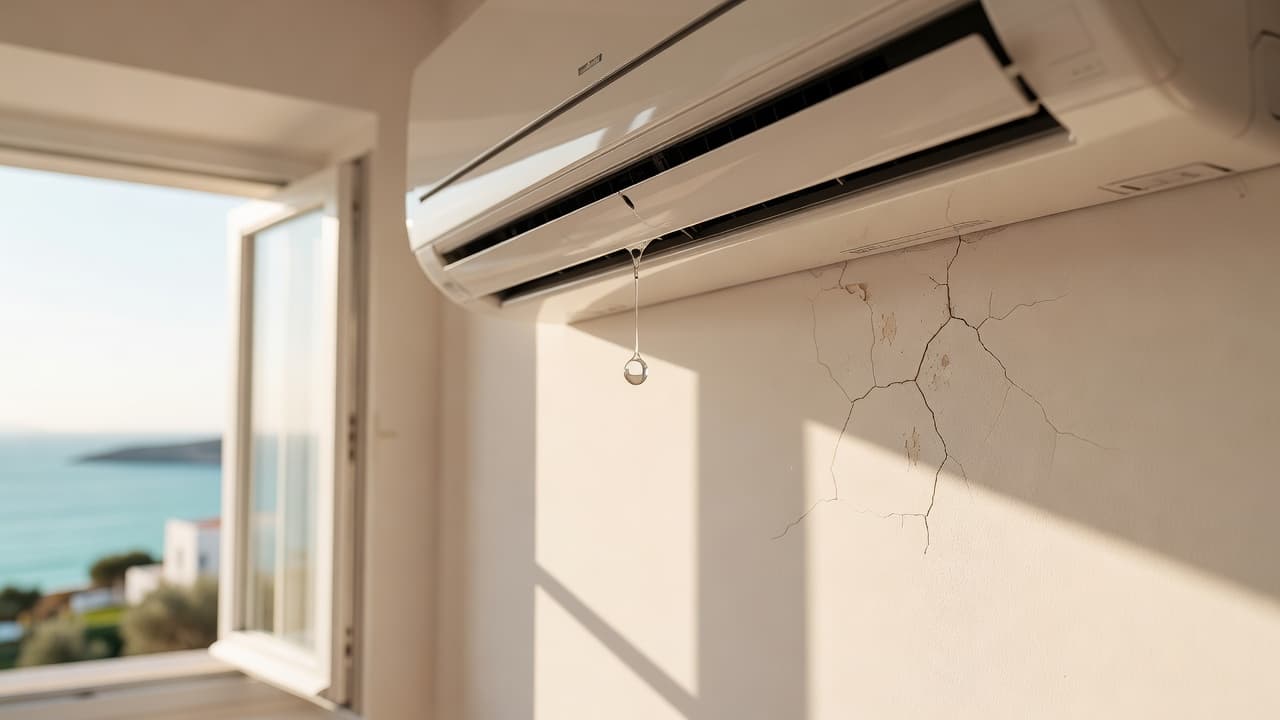
- The heat pump is leaking water or refrigerant (oily stain around the unit).
- You see frost or ice on the outdoor pipes or coil even in mild weather. This indicates a refrigerant problem.
- The circuit breaker for the pool pump keeps tripping. This suggests an electrical fault—do not keep resetting it yourself.
- The pipes are extremely hot to touch (above 50°C). The system may be in a fault state.
- The heat pump is making a repetitive clicking sound and then stopping. This often indicates a failed compressor.
- You've checked all the settings, the filter is clean, the water level is correct, and the pump has been running for 2 hours with no temperature rise. There is likely an internal fault requiring professional diagnosis.
Do not attempt to open the heat pump unit or access internal components. These systems contain high-pressure refrigerant and electrical hazards. Leave internal repairs to a qualified technician.
When you call an air-conditioning or pool heating specialist, they will arrive with diagnostic equipment and start by verifying what you've already checked. They'll test refrigerant pressures using gauges, check the compressor for operation, inspect electrical connections, and measure the temperature difference between inlet and outlet pipes. If there's a refrigerant leak, they'll locate it, repair it, and recharge the system. If the compressor has failed, they may recommend replacement.
The technician will also review your pool controller settings and thermostat to ensure they're configured correctly. Sometimes a simple recalibration or firmware update solves the problem. They'll test the unit through a full heating cycle and document the work in a receipt or service report (in Spanish, informe técnico). Keep this document for warranty purposes and future reference.
If your heat pump is still under manufacturer warranty, ensure the technician uses genuine parts and provides you with a certificate of work. This protects your warranty coverage.
Clean or backwash the filter every 3–5 days during the heating season. A clogged filter is the leading cause of heating failure. Mark it on your calendar.
Check the pool water level weekly. Top up after rain or during summer evaporation. Maintaining the correct level keeps the system running efficiently.
In winter, cover the heat pump with a weatherproof cover if temperatures drop below 5°C regularly. This protects it from frost and ice build-up, though it won't make it heat in very cold conditions—just prepare for reduced performance.
Have the heat pump serviced annually by a qualified technician before the heating season. They'll check refrigerant levels, clean the coils, and inspect electrical connections. A small maintenance cost now prevents a large repair bill later.
Read your heat pump's manual to understand its minimum operating temperature and any seasonal limitations. Different models have different thresholds.
Is your pool heat pump not heating and you've worked through these checks? Our network of qualified air-conditioning and pool specialists across the Mediterranean coast are ready to diagnose and repair the problem. Get a quote from a vetted technician today.