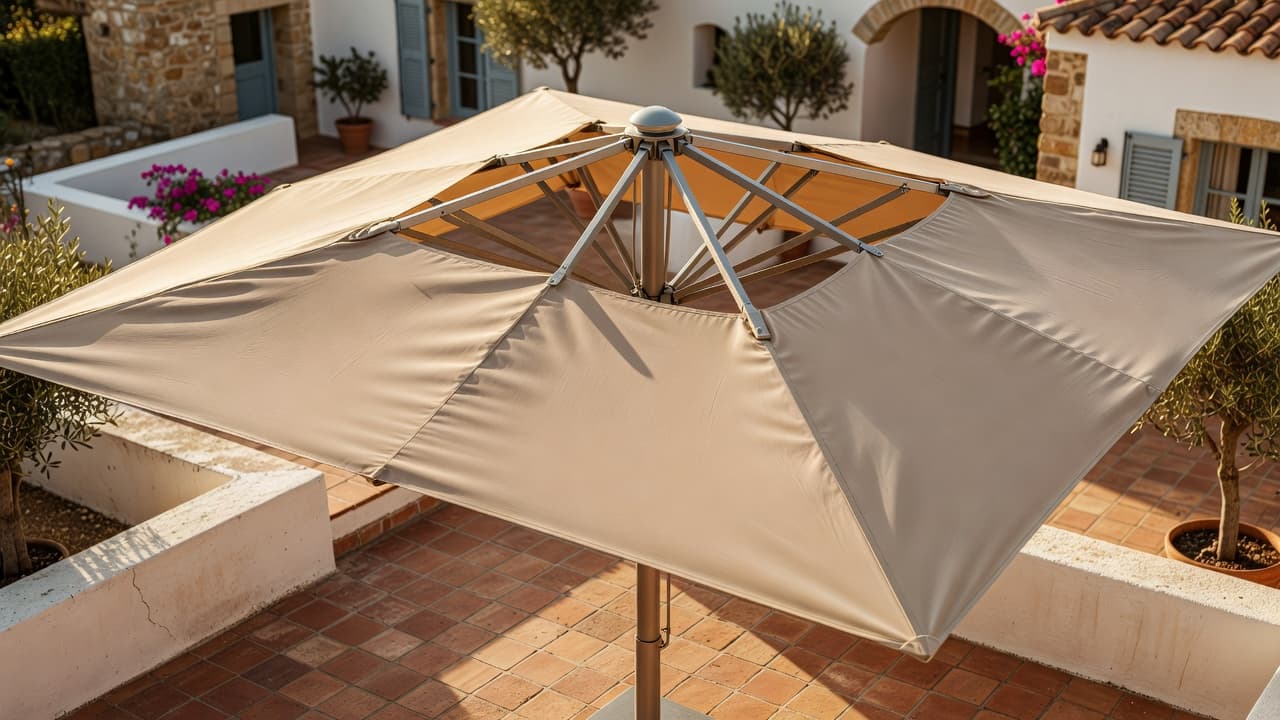
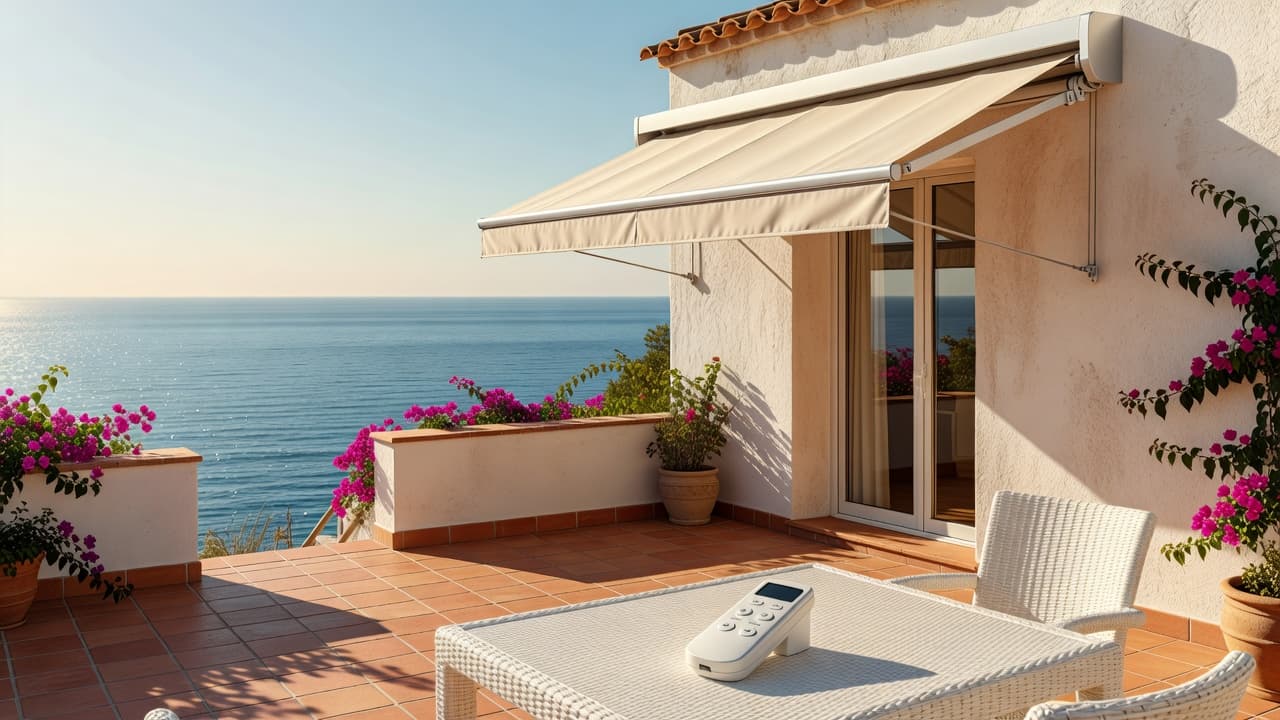
Understanding the cause helps you avoid it next time.
Salt air and corrosion. On the Mediterranean coast, salt spray corrodes metal parasol mechanisms faster than anywhere else. The crank, joints, and hinges oxidise, creating friction that locks the mechanism solid. If your parasol lives permanently on a terrace within half a kilometre of the sea — or even a few kilometres inland in a coastal town — this is almost certainly the culprit.
Sand and grit trapped in the mechanism. Coastal wind blows sand and fine grit into every crevice. When the parasol folds and unfolds, sand works into the joints and crank housing. Over time, enough accumulates to jam the works.
Fabric bunching or misalignment. On manually operated parasols, if the fabric hasn't been stored properly or the canopy has shifted slightly off its frame, it can catch on the folding mechanism, making the crank immovable.
Lack of lubrication. Parasol mechanisms are metal on metal. Without occasional light oiling, friction builds until movement stops.
Rust on the central column. The main vertical pole can rust from the inside if water gets trapped in the base. As rust flakes off, it jams the internal mechanism.
If you've tried the gentle release steps and the parasol is still stuck, here's how to keep it safe and stable until a handyman can visit.
Secure it against wind. If the parasol is partially folded or at an odd angle, it's vulnerable to catching a gust. Use soft rope or cable ties to lash the frame loosely to your terrace railings, a heavy plant pot, or a fixed garden furniture piece. Don't pull tight — just enough to stop it swaying or toppling if the wind picks up.
Cover exposed fabric. If the parasol is open and you're expecting rain or extended sun, drape a clear plastic sheet loosely over the canopy. Don't seal it completely; allow air to circulate underneath. This protects the fabric until it's repaired.
Note the weather. If high wind is forecast, mention this to the handyman when you call. They may deprioritise the visit slightly less than you'd like, but a blown-over parasol is a hazard.
Stop and call a handyman immediately if:
- The crank or handle is completely immovable after one gentle attempt. Any further effort risks breaking the mechanism entirely.
- The parasol frame is bent or twisted. This isn't a lubrication problem; it's structural damage that needs professional assessment.
- The canopy fabric is torn or severely bunched. Forcing the mechanism closed will make the tear worse.
- The central column or frame has visible rust, cracks, or corrosion damage. These are safety issues. The structure may not support its own weight safely.
- The parasol is tilted or leaning. This means the base, column, or pivot joint is damaged. Using it risks the whole structure toppling.
- You can't access the mechanism safely. If the parasol is mounted on a tall wall bracket or accessed by climbing a ladder, wait for a professional. Parasol repair is not worth the fall risk.
A handyman experienced with terrace parasols will typically follow this process.
They'll start by carefully assessing the stuck point without force. They'll listen to the mechanism, look for visible debris or corrosion, and identify whether the jam is mechanical (sand, rust) or structural (bent frame, torn fabric). This takes just a few minutes.
Next, they'll apply penetrating oil — a stronger grade than household oil — and let it soak for 5–10 minutes. This breaks the corrosion or loosens trapped grit. Then they'll try gentle release movements again, working the stuck point millimetre by millimetre rather than in big movements.
If the mechanism frees up, they'll work the parasol open and closed several times to clear any remaining grit, then apply a protective light oil to prevent rapid re-corrosion. They'll check that the canopy and frame are properly aligned and that all moving parts operate smoothly.
If the mechanism won't release or if they find structural damage (a bent crank, a cracked column, torn fabric), they'll advise you on repair costs. For older parasols, sometimes replacement is more cost-effective than repair. They'll also recommend preventive measures, like regular rinsing with fresh water if you live near the sea, or seasonal storage of the parasol indoors during the winter months.
You should receive a brief explanation of what caused the problem and what you can do to avoid it. Ask for this — it's part of a professional visit.
Rinse the mechanism monthly. If you live on or very near the Mediterranean coast, use fresh water from a hose to rinse the parasol's frame and central column monthly, especially around the crank and joints. Salt deposits wash away before they harden into corrosion.
Oil it lightly twice a year. Apply light machine oil to the crank handle, the pivot points where the canopy arms attach, and around the base of the central column. Once in spring and once before winter is enough. Wipe away excess oil with a cloth to prevent dust buildup.
Store it indoors during winter. If you live in an area with strong winter winds or heavy rain, disassemble your parasol (if it's portable) and store it indoors or under a breathable cover. Don't leave it deployed all season.
Check the fabric and frame quarterly. Look for tears, rust spots, or bent sections. Small tears can be sealed with fabric sealant before they worsen. Light surface rust can be sanded and treated. Catching these early prevents them from locking the mechanism.
Use a parasol base weight if yours is portable. A light, portable parasol on a terrace stand is more prone to tipping and shifting, which can misalign the folding mechanism. Use a properly weighted base (usually a heavy sand-filled cylinder or a weighted ring).
A stuck parasol is frustrating, but it's almost never a reason to replace it. Most jamming responds to gentle, patient release. If your attempts don't work, a handyman visit will have it moving freely again for a modest cost. Get in touch with a professional on the Mediterranean coast — they've freed thousands of stuck parasols.