A storm introduces a sudden, violent spike in electrical voltage. This surge travels through your home's wiring. Your consumer unit has a protective device called an RCD (residual current device) or circuit breaker that is designed to cut power instantly if it detects a dangerous surge or fault. When a storm hits, it trips.
The surge can also physically damage the light fitting itself. The internal components—the bulb holder, the wiring inside, or the electronic components if it's a modern LED fitting—can burn out. Salt-spray corrosion, which is common on the Mediterranean coast, weakens electrical connections over months and years, making them more vulnerable to surges when they finally arrive.
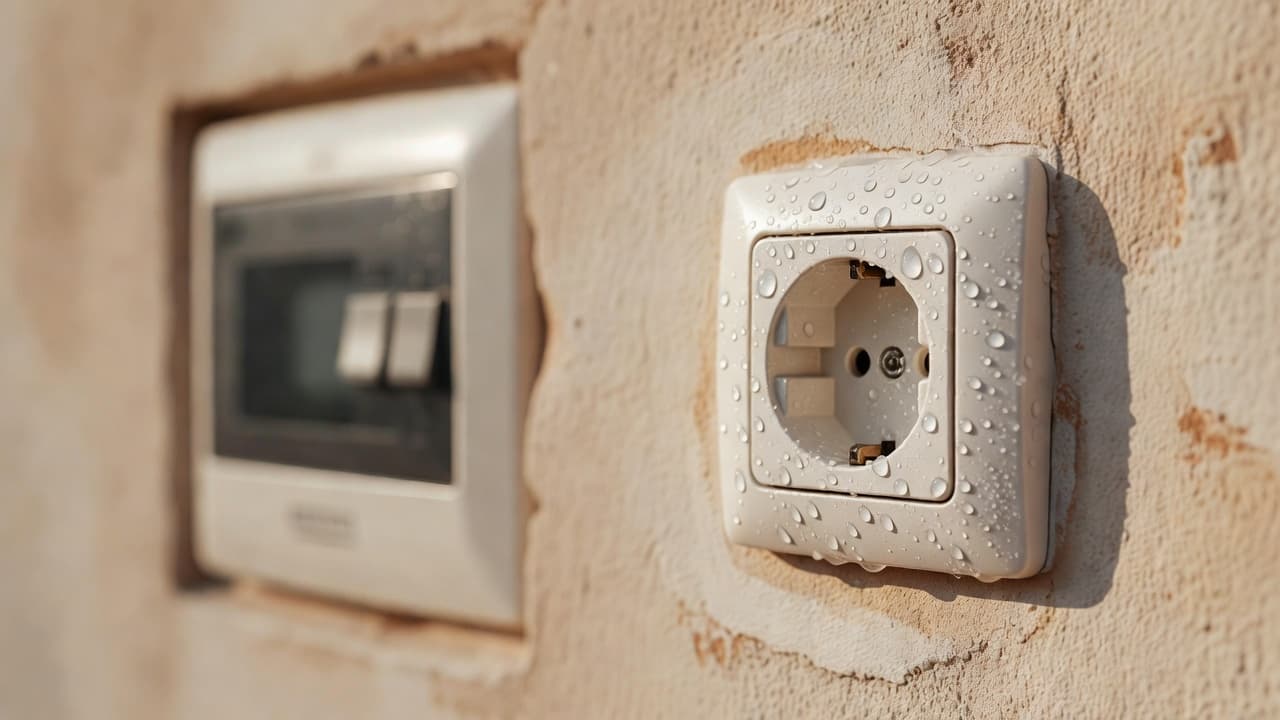
Water ingress is another problem. A storm can force rain or spray into the fitting, especially if the rubber seal around the base has perished. Water inside the fitting will cause an immediate short circuit, which trips the breaker and can damage the components permanently.
If the breaker reset and the lights came back on:
Nothing is needed. Monitor them for the next 24 hours. If they fail again, turn the breaker off and note the time.
If the lights are still off after resetting the breaker:
This is not a temporary fix situation. The lights have suffered damage and cannot be safely used until repaired. Leave the breaker off. Cover the light fittings with a plastic bag if rain is forecast, so water doesn't continue to seep in while you're waiting for an electrician.
Do not attempt to remove or replace the light bulb yourself, even though it might seem like a simple job. If the fitting has been damaged by a surge or water, the internal wiring may be compromised, and touching it could be dangerous.
Stop and call an electrician immediately if you observe any of these:
- The circuit breaker will not stay on, or trips again within a few minutes of being reset.
- You can see scorch marks, burn damage, or blackening on the light fitting or the wall around it.
- There is visible water inside the light lens or plastic diffuser.
- The fitting smells of burning plastic or scorched metal.
- There is a crack in the fitting or the glass lens is damaged.
- You notice any sparks, flickering, or unusual noises from the light or the wall behind it.
- Your other lights or appliances are behaving strangely (dimming, flickering, or turning off intermittently), which suggests a wider electrical fault.
Any of these signs means the wiring or fitting has been damaged and requires professional assessment and repair. Do not attempt a DIY fix.
A qualified electrician will first check your consumer unit to confirm that the circuit breaker is functioning correctly and has not been internally damaged by the surge. They will use a specialist testing device (a multimeter) to check the voltage and continuity in the wiring running to your outdoor lights.
Next, they will inspect the light fitting itself. They will look inside for water, corrosion, burnt components, and damaged wiring. Depending on what they find, they may be able to replace just the bulb or internal components, or the entire fitting may need to come out and be replaced.
If the wiring is damaged—for example, if the cable running from the wall to the light has been compromised—they will replace the affected section. This is why labour time and cost can vary. A simple bulb replacement takes 20 minutes. A full fitting replacement with new wiring can take an hour or more.
The electrician will also check whether your home has any surge protection installed (a device that sits in the consumer unit and absorbs voltage spikes before they reach your appliances). Many older coastal properties don't have this. If your lights are frequently damaged by storms, installing surge protection is a worthwhile investment and costs around 100–200 euros.
Once the work is complete, they will test the lights and provide you with a receipt or certificate of work.
Install surge protection at your consumer unit. This device absorbs voltage spikes before they travel through your home's wiring. It is not a complete shield against lightning strikes directly on your property, but it dramatically reduces damage from storms and electrical grid fluctuations. Ask your electrician about it.
Check the rubber seals around your outdoor light fittings every spring. If they have become dry, cracked, or hardened (common in Mediterranean coastal areas due to UV and salt spray), they should be replaced. This prevents water seeping in during heavy rain.
Consider LED light fittings with built-in surge protection. Modern outdoor LED lights often include internal protection circuits designed to resist voltage spikes. They cost more upfront but may save you money in the long term if you're in an area prone to storms.
Don't leave outdoor lights on during a storm. If a storm is forecast and you know you'll be away, turn the breaker off before you leave. This ensures that if lightning or a surge hits, there's no live circuit for it to damage.
If your outdoor lights have stopped working after a storm and you've confirmed the breaker is the issue, don't attempt to repair or replace the fitting yourself. Get in touch with a professional electrician on the Mediterranean coast who can safely diagnose the damage and restore your lights. Most local electricians can visit within 24–48 hours of a storm.