The main signs your AC unit is past repair
A 1990s air conditioning unit that still runs is a minor miracle. If it's also breaking down every summer, or losing refrigerant every 12–18 months, the end is near.
Each time the compressor (the outdoor unit's main motor) cycles on and off, the internal parts wear down a fraction more. By year 15, the wear is cumulative. Parts that are still technically available become harder to source. Labour costs to diagnose increasingly obscure faults start to outweigh the cost of a replacement.
Real scenario: A homeowner in a Costa Blanca urbanisation paid €700 to fix a 1997 AC unit in June. In August, it failed again. The second repair was €650. By the time the third repair was quoted at €600 in October, they'd spent €1,950 on a unit that was always going to fail again. A new installation would have cost €2,200 and come with a 5-year parts warranty.
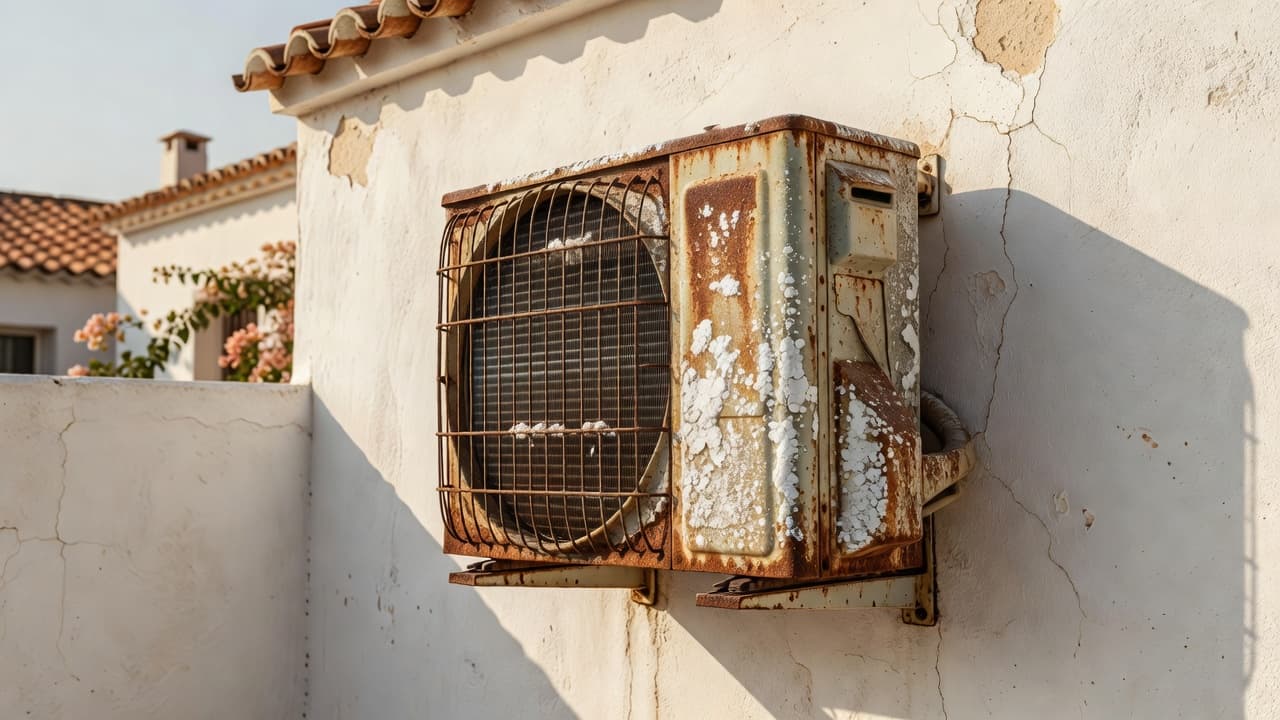
Salt air on Spain's Mediterranean coast is ruthless to metal. If your outdoor unit is visibly corroded—rust streaks, white powder (salt crystallisation), or paint peeling away—the structural integrity is already compromised.
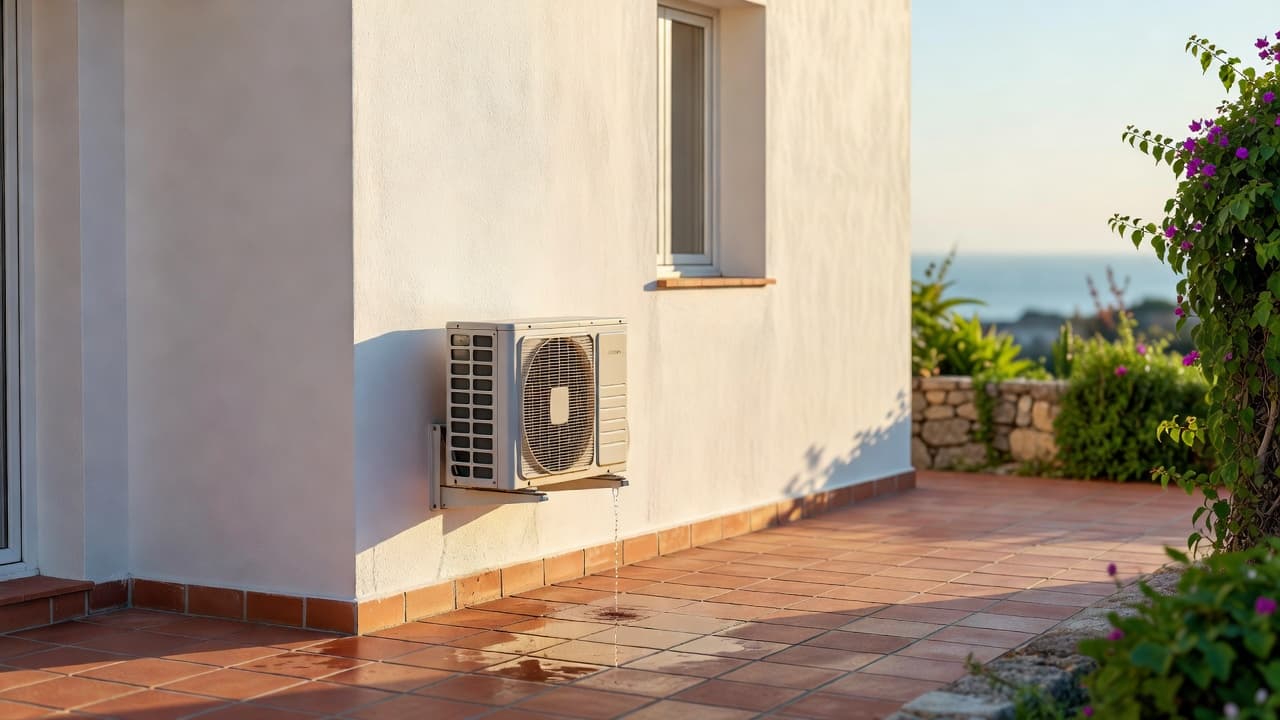
A leak from the outdoor unit (copper piping visibly sweating or a puddle beneath it during operation) usually means:
- A refrigerant leak (expensive to locate and repair, and the refrigerant itself is costly).
- A water drainage problem from condensation (less serious, but a sign of age).
If the unit is corroded and leaking, you're not just paying for the repair; you're paying to slow the inevitable decline. The unit will continue to deteriorate, and the next failure could leave you without cooling in the middle of summer.
This is the economic threshold. If a repair costs €1,000 and a new installation is €2,000–€2,500, you're at the tipping point.
Ask the engineer: "If I don't do this repair, how much longer will this unit last?" If the answer is "maybe one more summer, maybe not", you're essentially gambling. You'll repair it, it will fail again in six months, and you'll have wasted the original repair cost plus will still need a replacement.
New AC units are also dramatically more efficient. A 1990s model might consume 30–40% more energy than a modern equivalent. Over 10 years, the energy savings alone often justify the replacement cost.
Many air conditioning units installed in the 1990s use R22 refrigerant, also known as CFC or freon. This refrigerant is being phased out across Europe because it damages the ozone layer.
As of 2020, CFC refrigerants are increasingly restricted. Refilling an R22 system costs significantly more than it did five years ago (€150–€300 per refill, compared to €50–€100 for modern refrigerants). By 2030, the supply will be nearly impossible to obtain, and prices will spike further.
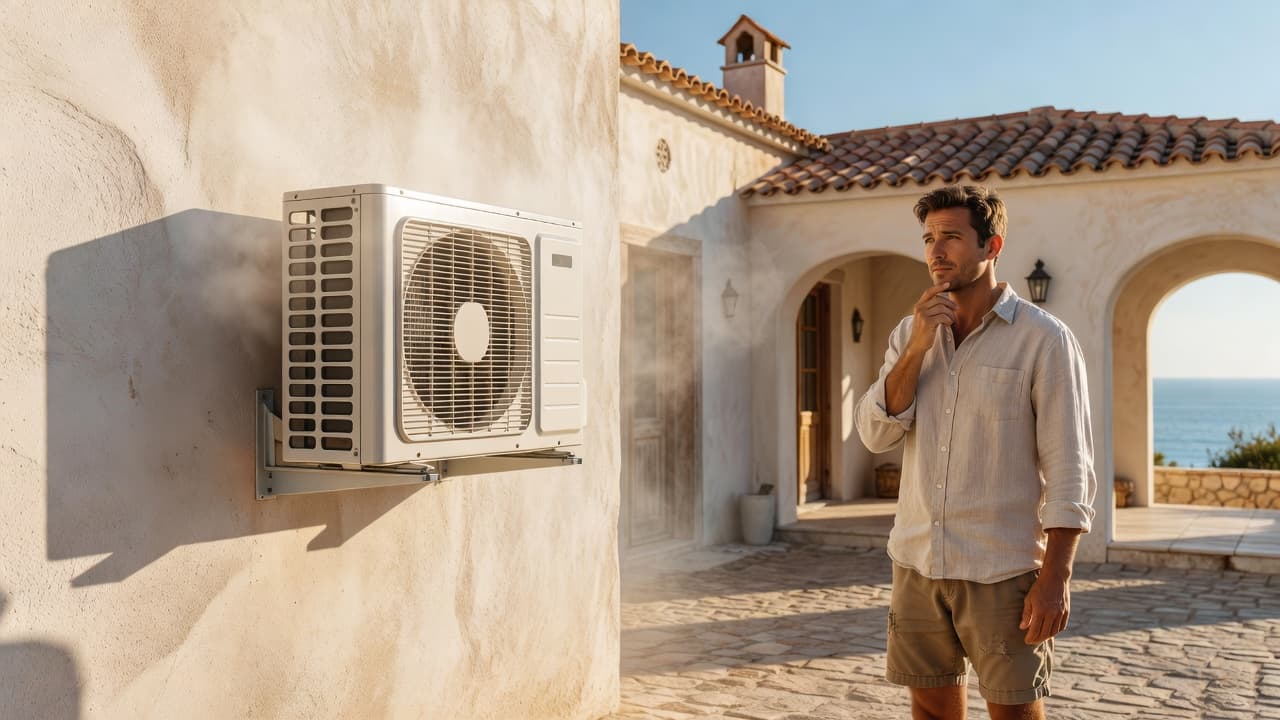
If your AC engineer tells you your unit uses R22 and needs a refill, ask: "What are the long-term costs of continuing with this refrigerant?" Often, the answer is that a replacement with an R410A or R32 system is the only practical path forward.
The compressor is the outdoor unit's motor. If it won't start at all, or if it starts briefly then shuts down (thermal cutout), the compressor is failing internally.
This is expensive to repair or replace. In some cases, the repair cost is so close to the cost of a whole new unit that replacement becomes the sensible choice. In other cases, it's genuinely cheaper to replace the compressor—but that work should only be done if the unit is less than 10 years old and otherwise in good condition. On a 1990s unit, it's a false economy.
A 1990s AC unit that's grinding, whining, or making loud rattling noises is telling you its bearings or internal components are worn. Modern units are far quieter. This kind of noise often signals compressor wear.
Vibration from the outdoor unit can also indicate mounting bracket fatigue or internal imbalance. Again, on an old unit, this is a sign that the end is near.
If you live within 5 km of the coast, or even in an inland urbanisation near the sea, salt air is your AC unit's worst enemy. It corrodes the copper piping, the aluminium fins on the condenser coil, and the steel outer casing. This accelerates wear and increases the risk of leaks.
A unit installed in 1995 on the Costa del Sol has experienced 28 years of salt exposure. Even if it was well-maintained, the cumulative damage is severe.
Lack of regular maintenance
Many 1990s units were installed in a time when air conditioning was still a luxury. Owners didn't always know to service them regularly. A unit that's never had its condenser coil cleaned, or its refrigerant checked properly, will fail earlier than one that's been maintained.
If your unit has never been serviced in the five or ten years you've owned it, you're starting from a deficit. Repairs will be more frequent and more expensive.
Some 1990s installations were done to lower standards than today's regulations require. The outdoor unit might be undersized for the space it's meant to cool. The refrigerant piping might be the wrong diameter or too long. The electrical wiring might be corroded.
These design flaws don't improve with age. They compound.
If your AC isn't working and you're waiting for a repair quote or deciding on replacement, here are safe ways to manage temporarily:
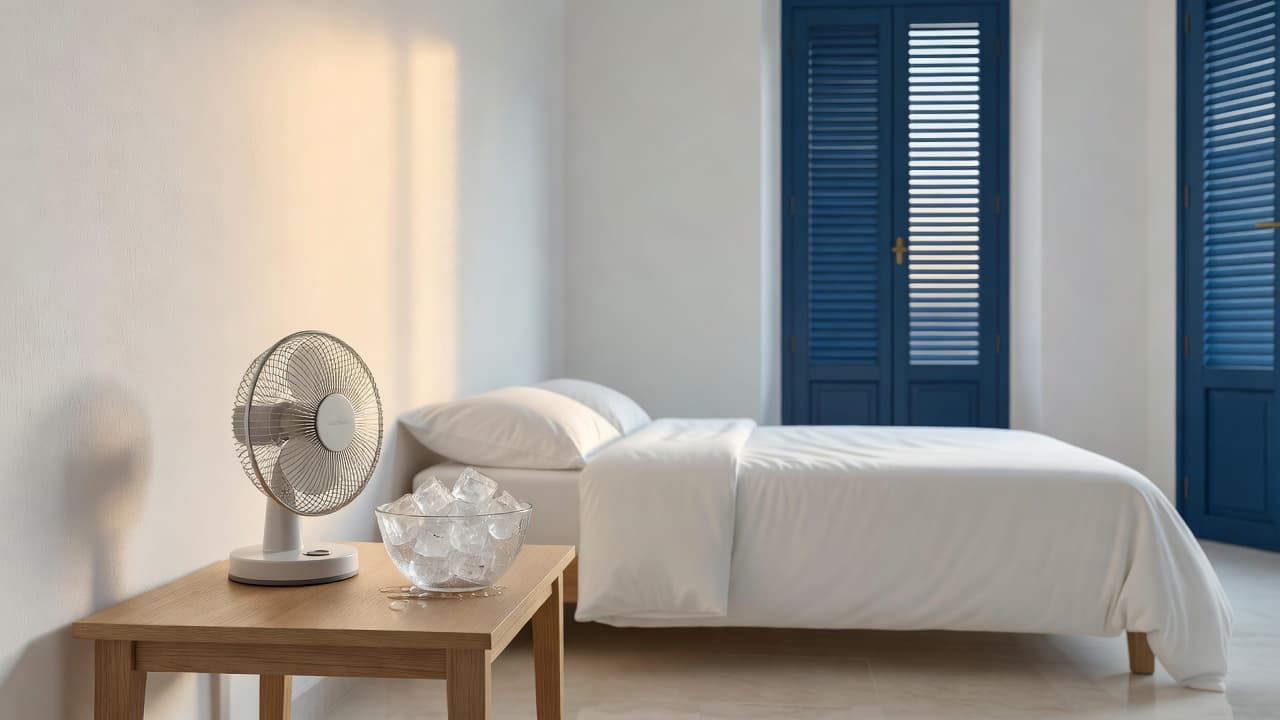
- Open windows early morning and late evening (when outside temperatures drop below indoor temperature). Close them during the hottest part of the day.
- Close your shutters (persianas) or blinds during the day to block direct sunlight. This can reduce indoor temperature by 3–5 degrees.
- Use a portable electric fan in the rooms you spend most time in. Position it to circulate air.
- Keep the outdoor unit clear. If leaves, dust, or debris are blocking the condenser grilles, gently brush them away. This won't fix the AC, but it might help it run slightly more efficiently if it's still operating.
- If you have a window AC unit or portable air conditioning, deploy it as a short-term solution.
Do not attempt to refill the refrigerant yourself, open the unit's sealed components, or bypass any safety controls. If the unit requires refrigerant, only a licensed engineer should handle it.
Stop the repair and call a professional immediately if:
- The compressor won't start and the thermal overload keeps shutting it down.
- There's an active refrigerant leak (visible oil or moisture on the copper pipes or ground beneath the unit).
- The electrical control panel is corroded or the wiring is visibly damaged.
- The unit is emitting a burning smell or making a grinding noise.
- The repair quote exceeds 40–50% of a new unit's cost.
- The engineer tells you the unit uses R22 refrigerant and will need refilling soon.
- The system was last serviced more than three years ago.
In any of these cases, the conversation should shift from "how do I repair this?" to "when should I replace this?" The money you'd spend on the repair will almost certainly be followed by another repair six months later.
Understanding the replacement process builds confidence in the decision and helps you prepare.
An engineer will visit your home and assess your cooling needs. They'll measure the square footage of the space, check the insulation, ask about your typical usage patterns, and inspect any existing ducting or connections. Modern AC systems are sized precisely—oversizing wastes energy; undersizing leaves you hot.
On a Mediterranean coast property, they'll also consider the salt-air environment and may recommend a more corrosion-resistant outdoor unit (usually stainless steel or with special coating). This costs slightly more but lasts longer.
Modern AC units come in several types:
- Split systems (one outdoor unit, one or multiple indoor units): the most common choice for villas and flats. Quiet, efficient, and flexible.
- Cassette systems (rectangular indoor unit recessed into the ceiling): good for large open-plan spaces.
- Duct systems (concealed ducting, no visible indoor unit): the most discreet but requires structural work and space in the roof or walls.
Your engineer will recommend which type suits your home. For most 1990s properties, a modern split system is the practical choice.
The old outdoor unit is removed. The new outdoor unit is installed on the same mounting bracket (or a new one if the old is unsafe). The new indoor unit is mounted on a wall or in a ceiling location. New copper piping connects the two (old piping is often reused if it's in good condition, but modern best practice is to use new).
The installation usually takes 4–8 hours. You'll need to vacate the area during drilling or cutting if it's a wall-mounted indoor unit. Water drainage must be routed correctly—usually to an external drain or a small tube leading outside.
The new system is wired to a dedicated circuit (usually 16 or 20 amps, depending on the unit's capacity). A licensed electrician must do this. All wiring must comply with Spanish electrical regulations (REBT). The engineer will provide a certificate of installation (boletín eléctrico) once complete.
Once installed, the system is tested to ensure both units communicate, refrigerant is correctly charged, and all safety controls work. The engineer should run the system through a full cooling cycle and check the indoor temperature drop and noise levels.
You'll receive:
- A guarantee on parts (usually 5 years for the compressor, 2–3 years for other components).
- An installation certificate.
- An operating manual and remote control programming guide.
- Advice on annual maintenance (cleaning the filter, cleaning the condenser coil).
If you live in an urbanisation (urbanización), the community of owners (comunidad de vecinos) must approve the installation of a new outdoor unit, especially if it's visible from a communal area. Some communities have strict rules about unit placement, size, or colour.
Check your community bylaws or ask the administrator (administrador) before commissioning work. Approval usually takes 1–3 weeks. If your neighbours' properties will be affected by drainage or noise, expect a formal vote.
Once your new AC unit is installed:
- Have it serviced once a year, ideally before the cooling season (April or May). The service includes cleaning the filters, checking the refrigerant level, and inspecting the electrical connections.
- Clean or replace the indoor filter every 30–60 days if you use the system frequently. A clogged filter forces the unit to work harder and reduces efficiency.
- Keep the outdoor unit clear of leaves, dust, and debris. In coastal areas, inspect it every three months for salt deposits and rinse them off with fresh water (do not use a pressure washer directly on the fins).
- Don't run the system at extremely low temperatures. Setting the thermostat to 16°C doesn't cool faster; it just overworks the compressor. Aim for 22–24°C for comfort and efficiency.
- Close doors to rooms you're not using. Cooling only the spaces you occupy reduces energy consumption.
A new AC unit, properly maintained, will easily reach 15 years. On the Mediterranean coast, it may last 12–14 years before showing signs of age. By that time, you'll have recovered your investment through energy savings.