Common causes of sudden AC failure in Mediterranean homes:
- Overload during extreme heat. The system runs continuously and the compressor overheats, triggering an automatic shut-down to prevent damage. This is a built-in safety feature.
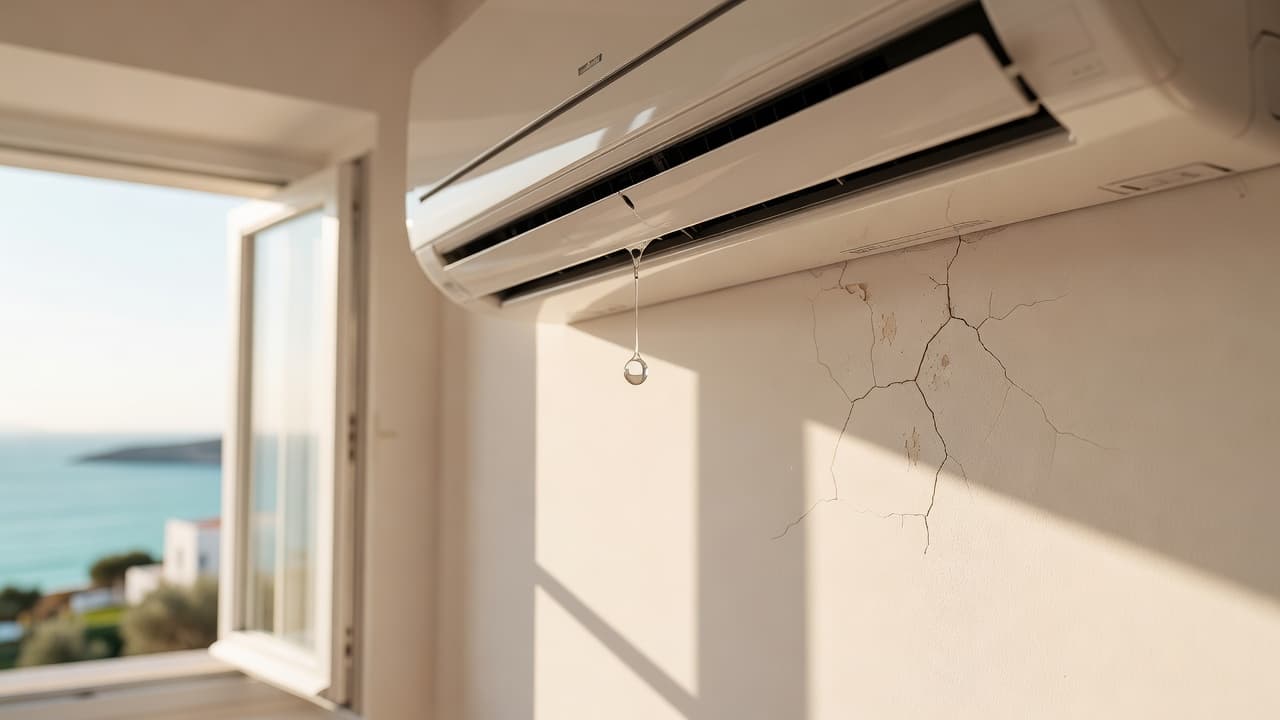
- Refrigerant leak. The system gradually loses cooling power over weeks, then stops working entirely when levels fall below the threshold. This requires professional recharging.
- Dirty filter or blocked condenser. Salt air and dust near the coast clog filters faster. A blocked system loses efficiency and may cut out.
- Electrical fault. A tripped circuit breaker, a blown fuse in the consumer unit (cuadro eléctrico), or a fault in the thermostat.
- Faulty compressor or motor. Internal breakdown. This requires replacement, not a quick fix.
None of these can be safely repaired by you. Your job is to keep the person comfortable and safe while waiting.
Close direct sunlight. Draw curtains or close shutters (persianas) on windows facing south and west. Leave north-facing windows open or partially open to allow cooler air in.
Create a cross-breeze. Open a window on the shady side of the house and another on a different wall. Air flows from cool to warm. In urbanisations near the coast, early morning and evening sea breezes are usually stronger; take advantage of them.
Use a portable fan. Place it to push hot air out of the room or to circulate cooler air from a hallway. Never point it directly at a sleeping baby's face; the risk of rapid cooling and dehydration is real. For an elderly person, a gentle fan in the room is safe and helpful.
Dampen lightweight sheets or clothing. Soak a cotton sheet in cool (not cold) water, wring it out, and drape it over a chair near the person. As it evaporates, it cools the surrounding air. Or, for a baby, a lightly dampened cotton vest worn over the nappy works.
Cool the cot or bed frame. Place damp towels under the mattress (not directly under the baby, where they can overheat). For an elderly person, a cool cotton sheet directly under their body helps.
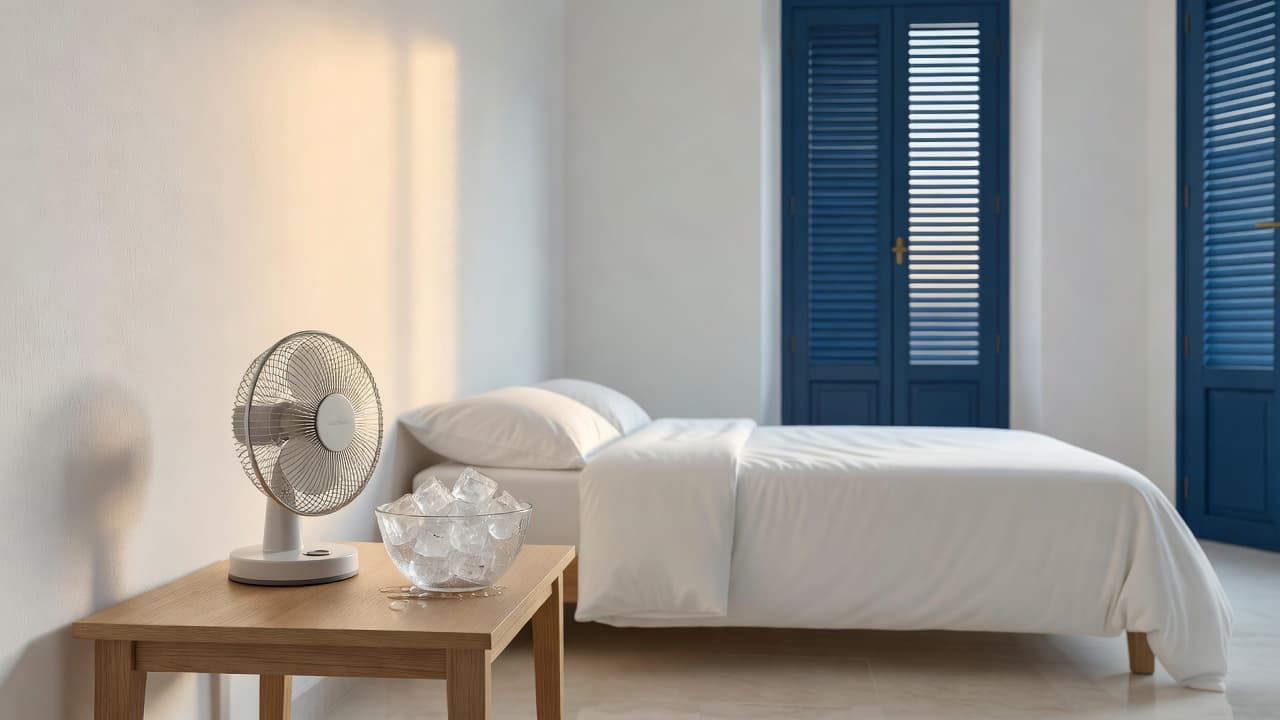
Make a passive cooler. Fill a wide, shallow bowl or bucket with ice (or very cold water from the fridge), place it near (but safely out of reach of a baby) in the room, and position a portable fan to blow gently across it. The fan pushes cooler air into the room. Replace the ice every 2–3 hours as it melts.
Hydration and body temperature
Offer water or milk frequently. Babies 6 months and older can have small sips of cooled (not cold) water in a bottle or cup. Breastfed or formula-fed babies under 6 months get hydration from feeds; offer more frequent feeds.
Cool the body gently. Dampen a soft cloth with cool water and gently wipe the baby's forehead, neck, and wrists. Do the same for an elderly person. Avoid cold water, which can shock the system.
Check for sweat. Sweating is normal in heat, but excessive sweating followed by dry skin and no sweat is a warning sign of heat exhaustion. See below.
Sleep in the coolest room. Move the cot into a living room or hallway if it's cooler. Ensure it's a safe sleep space (firm mattress, no pillows or bumpers for babies under 12 months).
Use cotton sleep clothing only. A thin cotton sleep suit or nappy alone. No duvet, no layers.
Keep a damp cloth and water nearby. You'll need to cool the person several times during the night.
Do not:
- Attempt to refill refrigerant yourself. It requires certification, special equipment, and poses health and safety risks. Touching refrigerant lines can cause severe cold burns.
- Open the consumer unit (cuadro eléctrico) to reset a breaker yourself if you're unsure. High voltage can be fatal. If the AC stopped after a power cut, check if the main breaker or the RCD (residual current device) has tripped. If so, flip it back on. If it trips again immediately, do not retry — call an electrician.
- Clean the outdoor condenser unit yourself if it requires climbing or working at height. Wait for the technician.
Call emergency services or relocate immediately if:
- The person's temperature rises above 39°C (take an armpit reading for a baby).
- They show signs of heat exhaustion: confusion, extreme lethargy, refusal to drink, rapid breathing, or no sweating despite heat.
- A baby's skin becomes blotchy or unusually pale.
- An elderly person becomes unresponsive or collapses.
- The room temperature rises above 32°C and won't drop despite all measures.
In these cases, move to a cooler location (a neighbour's home, a public building with AC, a hospital) and call your local health service or 112.
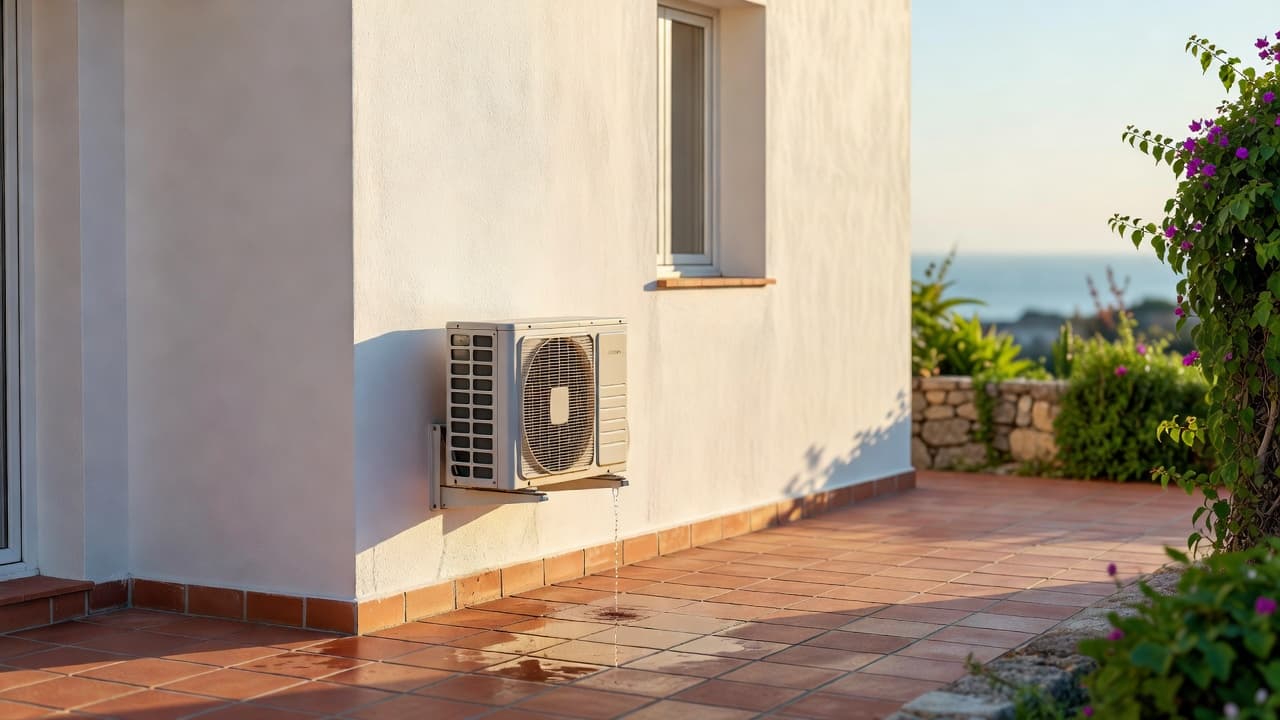
When the engineer arrives, they'll inspect the outdoor unit (usually mounted on a wall outside your home or in a communal area of an urbanisation), check the indoor unit and controls, and test the system.
If it's a refrigerant leak, they'll locate it, repair it, and recharge the system. This takes 1–3 hours and costs between €300 and €600 depending on the leak size.
If it's a blockage or dirty filter, they'll clean it (€80–150) and test the system.
If the compressor is faulty, replacement is necessary (€800–1,500 for a standard residential unit). The technician will advise whether repair or replacement is more cost-effective.
Once repaired, the system should restore cooling within 30 minutes to 2 hours, depending on how hot the room has become.
The technician will hand you a receipt and, if they've topped up refrigerant or replaced a major part, a summary of the work done. Keep this for your records and for any future insurance or warranty claims.
- Service your air conditioning yearly, ideally before summer (May or June). A technician checks the refrigerant level, cleans the filters, and inspects electrical connections. Costs €100–200 and prevents most breakdowns.
- Clean or replace filters monthly during the cooling season (June–September). A clogged filter forces the system to work harder and overheat. On the Mediterranean coast, salt and dust require more frequent cleaning.
- Don't set the thermostat below 22–24°C. Extreme temperature differences stress the system and the compressor. Aim for a 5–7°C difference between indoors and outdoors.
- Ensure the outdoor unit has airflow. If it's mounted on a wall, keep the area in front of it clear of debris, pots, or furniture that block ventilation.
- Have a qualified electrician inspect the wiring and connections if the system has aged beyond 10 years. Corrosion and loose connections become common near the coast.
Air conditioning failure in peak heat is stressful, especially with a baby or elderly person depending on you. The measures above buy you time and keep the person safe until a technician can restore proper cooling. Most repairs are straightforward and take a few hours. Stay calm, keep them hydrated, and use the cooler parts of your home. If you notice any signs of heat-related illness, don't wait — seek help immediately.
Your air conditioning isn't working, and a vulnerable person needs cooling now. Contact an air conditioning technician on the Mediterranean coast. Most engineers respond the same day to priority calls. Describe the occupant's age and health status — it helps them prioritise your repair.