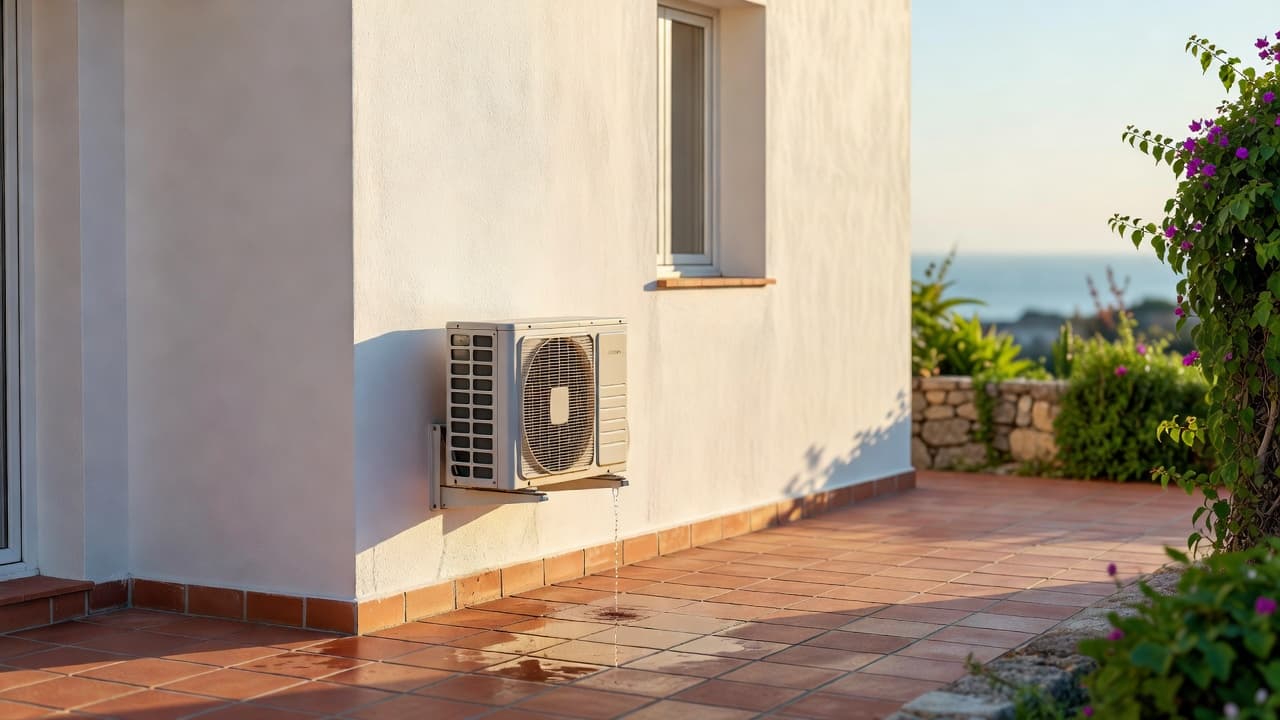
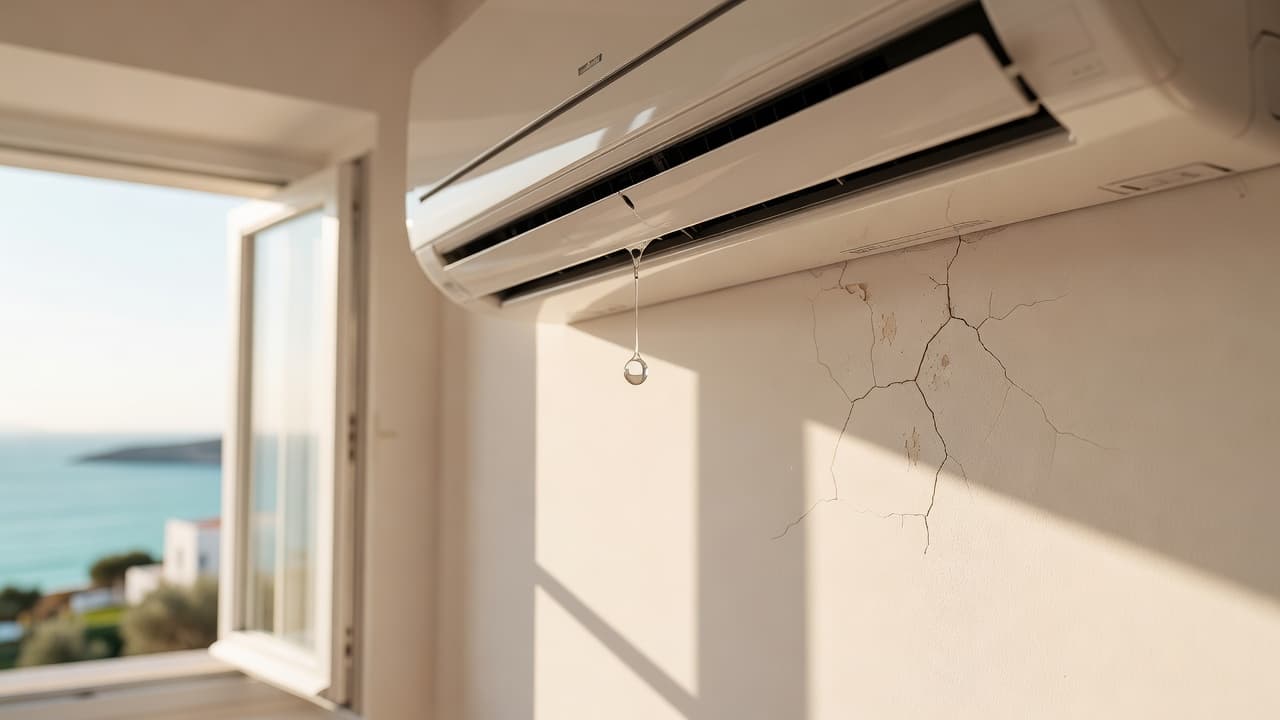
Your air conditioning unit produces condensation—water that is extracted from the humid indoor air as the system cools your home. This water has to go somewhere. In a properly installed unit, it drains through a dedicated pipe or channel away from the building, typically to a drain point in a garden area, or into a community drainage system if you live in a flat or urbanisation.
When water ends up on your neighbour's patio instead, one of these is happening:
Drainage pipe is blocked. Dust, algae, or debris has accumulated inside the condensation drain line, preventing water from flowing through. This is the most common cause and happens gradually.
Drain outlet is misaligned or damaged. The pipe may have come loose, cracked, or been installed pointing in the wrong direction. Over time, vibration from the unit or settling of the mounting brackets can shift it.
Internal drainage component is failing. Inside the outdoor unit, there's a small drain pan and internal drainage path. If the pan is cracked, the internal channel is blocked, or the drain valve is stuck, water will pool inside and leak from unexpected points.
Installation was never correct. Some units are installed without proper drainage planning, especially in older properties or holiday homes where the original setup was rushed.
If your home is in a coastal area (Costa Blanca, Costa del Sol, or the islands), salt air can accelerate corrosion of metal drain pipes and promote algae growth inside plastic ones, worsening blockages.
Until the professional arrives, here's what you can safely do to minimise damage to your neighbour's property:
If the drain outlet is partially blocked and visible: Use a damp cloth or a soft brush to carefully clear away surface debris. Then run a gentle stream of lukewarm water (from a watering can or hose on low pressure) down the outlet to test whether it flows freely. Do this for 10–15 seconds only. If water flows, the blockage may be minor.
Place a temporary collection point. If water is still dripping onto your neighbour's patio, place a bucket or a wide, shallow container directly under the outlet on your own side of the boundary to catch drips. This is not a solution, but it prevents further water reaching their property while you wait for repair.
Inspect the mounting and alignment. Look at the outdoor unit's position. If the base seems tilted or the drainage area looks uneven, the outlet may simply be pointing the wrong way. Do not attempt to physically move or unbolt the unit yourself—this requires a professional and can damage refrigeration lines.
Keep the area around the unit clear. Remove leaves, dirt, and plant growth from around the outdoor unit and its drainage area. Better airflow around the unit and clearer drainage channels reduce the risk of blockages getting worse.
Do not attempt to:
- Open the outdoor unit's casing.
- Disconnect or remove any pipes or components.
- Use a high-pressure jet or compressed air to blast the drain.
- Pour chemicals or solvents down the drain outlet.
Any of these actions can damage the internal refrigeration system, electrical components, or the unit's structure, and will void your warranty.
Stop and call a professional immediately if:
Water is coming from anywhere other than the intended drain outlet. If water is leaking from the sides of the unit, the bottom, or from refrigeration lines, there's an internal failure that needs expert diagnosis.
The outdoor unit is mounted high up or on a difficult-to-access surface. If it's on a flat roof, a tall wall, or above your neighbour's roof, you cannot safely inspect or clear it yourself. Working at height without proper equipment is dangerous.
The blockage is clearly inside the unit. If you can see the drain outlet is clear but water is still accumulating inside and leaking out in unexpected places, only a technician with proper tools and knowledge can open and clean the interior safely.
Your neighbour's property is already showing damage. If their patio is staining, their exterior walls are damp, or they report water inside their home, this has moved beyond a minor drainage issue. A professional needs to assess what's happened and how to prevent further damage.
The unit is still under warranty. Opening it or attempting repairs yourself will void the manufacturer's protection and could cost you far more in replacement parts later.
You're uncomfortable working around electrical connections. AC units have electrical components, and water + electricity is dangerous. If you're unsure, leave it.
A qualified air conditioning technician will arrive with tools to diagnose and clear the drainage system safely. Here's what to expect:
Inspection and diagnosis. They'll examine the outdoor unit's drainage outlet, trace the drainage path visually, and check for obvious blockages or misalignment. They may ask questions about when the problem started, how often your AC runs, and whether you've noticed any other issues with the unit.
Clearing the drainage line. Using specialised equipment—such as a flexible drain snake, a vacuum, or a small pump—they'll clear blockages from inside the drainage pipe without dismantling the unit. This is the most common fix and usually takes 20–40 minutes.
Testing the flow. Once cleared, they'll run water or compressed air through the line to confirm water flows freely away from your property and your neighbour's.
Checking alignment and brackets. They'll inspect the mounting to ensure the unit is level and the outlet is pointing to the correct drainage area. If brackets are loose or corroded (common near the sea), they'll tighten or replace them.
If the problem is internal. If the blockage is inside the unit or a component is failing, they may need to open the casing, which requires more time and care. They'll explain what they've found and give you an estimate for the work before proceeding.
Documentation. Once the work is done, they'll provide you with a receipt and a brief explanation of what was wrong and how it was fixed. Keep this for your records—it may be relevant if your neighbour disputes liability later.
The cost depends on the severity. A simple drain clearing usually costs between €80 and €150. If internal components need replacement or the unit needs repositioning, expect €150–€350. A professional quote will be specific.
Once the immediate problem is fixed:
Keep the area around the outdoor unit clear. Trim back any climbing plants, remove leaves and debris regularly, and avoid stacking objects near the unit. Good airflow around the drainage area prevents blockages.
Have the unit serviced annually. A routine check before summer starts (April or May on the Mediterranean coast) includes cleaning the filters, checking the drainage system, and inspecting for corrosion. Annual servicing costs around €100–€150 and prevents most problems.
If you live near the sea, use a protective cover. Salt air corrodes metal components and promotes algae growth. A breathable cover over the outdoor unit when it's not running (off-season) reduces salt exposure.
Monitor the drainage during hot spells. In summer, when your AC runs hard for hours, the condensation volume increases. A quick visual check every few weeks—is water flowing freely from the outlet, or is it pooling?—catches problems early.
Document your maintenance. Keep receipts and notes of any servicing or repairs. If there's ever a dispute with your neighbour about damage, you can prove you took reasonable care of the unit.
If your air conditioning unit is draining water onto your neighbour's patio, this needs fixing this week, not next month. The longer you wait, the greater the risk of damage—and the greater your liability. Contact an air conditioning service professional today to diagnose and clear the drainage. A simple blockage can usually be resolved in under an hour, and a technician will make sure the water flows safely away from both your home and your neighbour's.