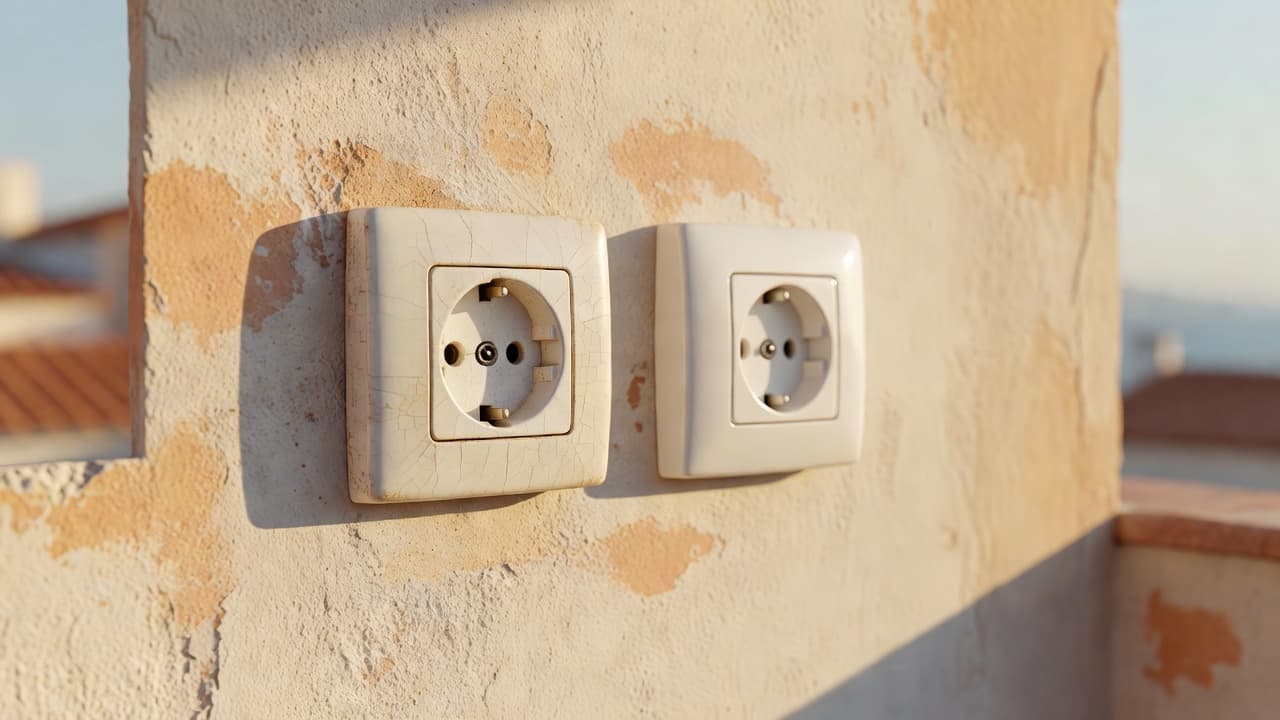
Two-pin sockets without earthing were standard in Spain (and much of Europe) until the 1970s and 1980s. Older homes, especially holiday villas and rural properties that haven't been fully renovated, still have them. At the time they were installed, they were considered adequate for the lower power appliances people used.
The problem: modern appliances draw more power and include more electronics. If a fault develops inside an appliance — a damaged wire touching the metal casing, for example — the casing becomes live (electrically charged). With no earth wire to safely drain that fault current to ground, the current will instead flow through anyone who touches it. That's how electric shocks happen.
Earthing (grounding) works by providing a dedicated return path for fault currents. The third pin in a modern three-pin socket connects through your home's electrical installation to the ground (usually via a copper rod driven into the earth, or via the water pipes). If a fault occurs, the current flows down the earth wire to ground instead of through your body.
Spanish homes installed in the last 30–40 years typically have proper earthing already. But if your home is older, or if it's been only partially upgraded, sections may still have two-pin sockets.
You cannot safely repair a two-pin socket to add earthing yourself. This requires opening the main electrical installation, running new earth conductors, and connecting them to the main earth. It's not a weekend job.
However, you can manage your risk while waiting for a professional visit:
Unplug modern appliances from two-pin sockets. If you must use one temporarily (e.g. a bedside lamp), keep the time as short as possible and make sure your hands are dry.
Use a portable RCD (Residual Current Device) adapter. These are plug-in devices that fit into a two-pin socket and create a safety disconnect if fault current is detected. They're not a permanent solution, but they add a layer of protection while you arrange for the socket to be upgraded. Ask your electrician whether your area uses these — they're more common in some regions than others.
Relocate to modern sockets. If your home has a mix of old and new sockets, use the newer three-pin ones for anything with a motor, heating element, or electronics.
Avoid extension leads from old sockets. If you must extend from an old socket, use a heavy-duty cable with a modern RCD-protected adaptor, and keep the extension as short as possible.
Keep water away. Never use a two-pin socket near a bathroom sink, kettle, or washing machine, even temporarily.
Stop and call an electrician immediately if:
- You notice crackling, sparking, or a burning smell from any socket.
- A socket feels hot to the touch or the area around it is discoloured.
- You've had a shock (even a mild tingle) from an appliance, regardless of which socket it was plugged into.
- You've seen exposed wires, loose connections, or water damage near the sockets.
- Your home lacks a main earth connection entirely (the electrician will check this).
Do not attempt to:
- Open a socket or modify its internal wiring.
- Run new earth wires yourself from sockets to pipes or other makeshift earth points.
- Use any adapter that claims to "ground" a two-pin socket without professional installation.
- Ignore signs of electrical faults and hope they'll go away.
Do not delay if:
- You're using a portable heater, air conditioning unit, or kettle regularly from a two-pin socket (these draw high current and increase fault risk).
- You have children or elderly people in the home who might touch appliances while wet.
- Your home is on the coast (salt air increases corrosion and fault risk in older electrical systems).
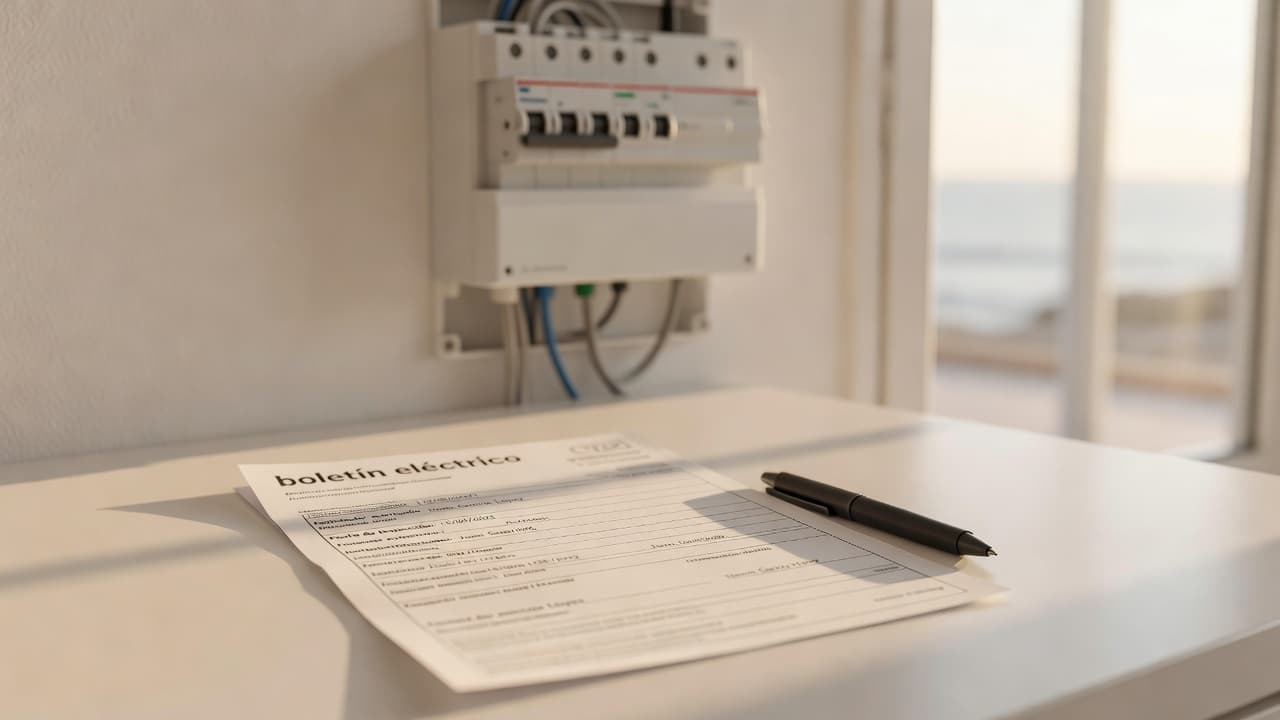
A qualified electrician will first assess your entire installation. They'll examine the main electrical board (cuadro eléctrico — a metal box usually found on the landing or in a utility room), check whether the building has a main earth connection, and then evaluate which sockets are priorities for upgrade.
For each socket they upgrade, they'll:
- Turn off the circuit at the main board to isolate the socket safely.
- Remove the old socket faceplate.
- Run a new earth (green and yellow) wire alongside the existing supply wires back to the main board.
- Install a new three-pin socket with proper earth connection.
- Test the socket to confirm earthing is working correctly using a socket tester.
Once complete, they should provide you with:
- A photo of the work or a simple list of which sockets were upgraded.
- An updated electrical certificate (boletín eléctrico) if the scope of work justifies one, or at least confirmation that the work meets current standards.
The cost for a single socket upgrade is typically €80–€150. If you upgrade multiple sockets on the same visit, the price per socket drops — a full bathroom or kitchen (3–4 sockets) might cost €250–€400 total.
Plan a phased upgrade. You don't need to replace every socket overnight, but prioritise water-risk areas (kitchen, bathroom, utility room) and anywhere you use high-power appliances.
When buying old homes, factor in electrical upgrades. If you're buying a holiday villa or a property older than 40 years, expect to budget for electrical work. It's a safety investment, not a luxury.
Ask about earthing when renting. If you're renting a short-term holiday home, ask the owner whether all sockets have proper earthing. If not, avoid using old sockets for anything other than low-power devices like lamps.
Have a full electrical inspection every 10–15 years. An electrician can check your installation for age, corrosion, and safety risks — especially important in coastal properties where salt air accelerates deterioration.
If you're worried about the safety of your home's electrical installation, don't wait. A qualified electrician on the Mediterranean coast can assess the problem in under an hour and give you a clear plan. Contact one today to arrange a visit.