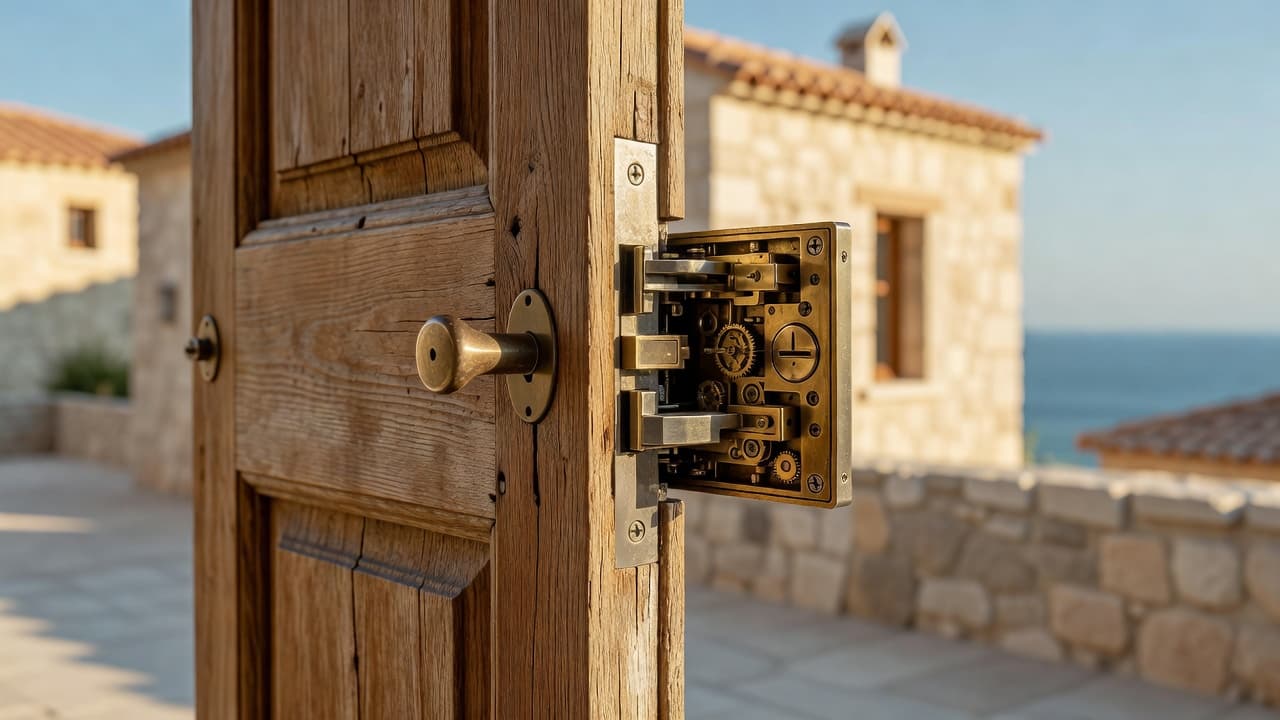
An old lock — common in Spanish properties built before the 1980s, especially villas and older apartment buildings — is a mortise lock. The entire mechanism is built into a metal case that's recessed into the door itself. You can see it when the door is open: a large brass or iron rectangular box with bolts, springs, and levers all working together.
Why the name "old"? These locks aren't standardised. Each one is slightly different depending on the manufacturer and the year it was installed. Some work smoothly for decades. Others become stiff, difficult to turn, or prone to jamming. The cylinders wear out, keys get stuck, and when something breaks, you often can't replace just the cylinder — you have to replace the entire lock, which means new holes, new screws, and sometimes repainting or refinishing the door.
These locks are still perfectly legal and secure in Spain. Many older homes and listed properties still use them. But they're less convenient if you lose a key or need emergency access.
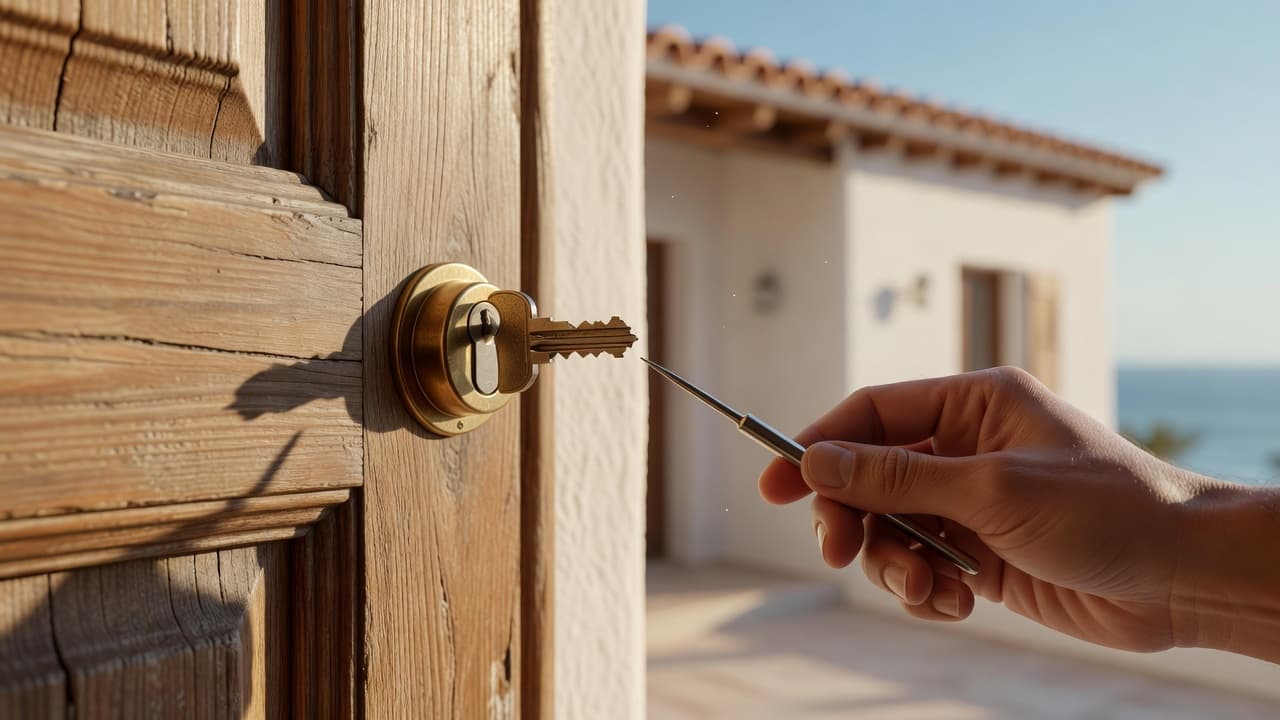
A European cylinder lock — the standard across Europe since the 1980s — is much simpler. The removable cylinder (the round part you see from outside) sits inside a mortise, usually a square metal box. When you insert the key, it turns the cylinder, which activates the bolts inside the mortise.
The big advantage: if your cylinder wears out or you lose the key, a locksmith can remove it in minutes and fit a new one. No dismantling, no replastering, no fuss. The cylinder has a standardised size — usually 30mm or 35mm — so any matching replacement will work.
In Spanish homes on the Mediterranean coast, European cylinders became standard from the 1990s onwards. Most modern flats, new-build villas, and holiday lets use them.
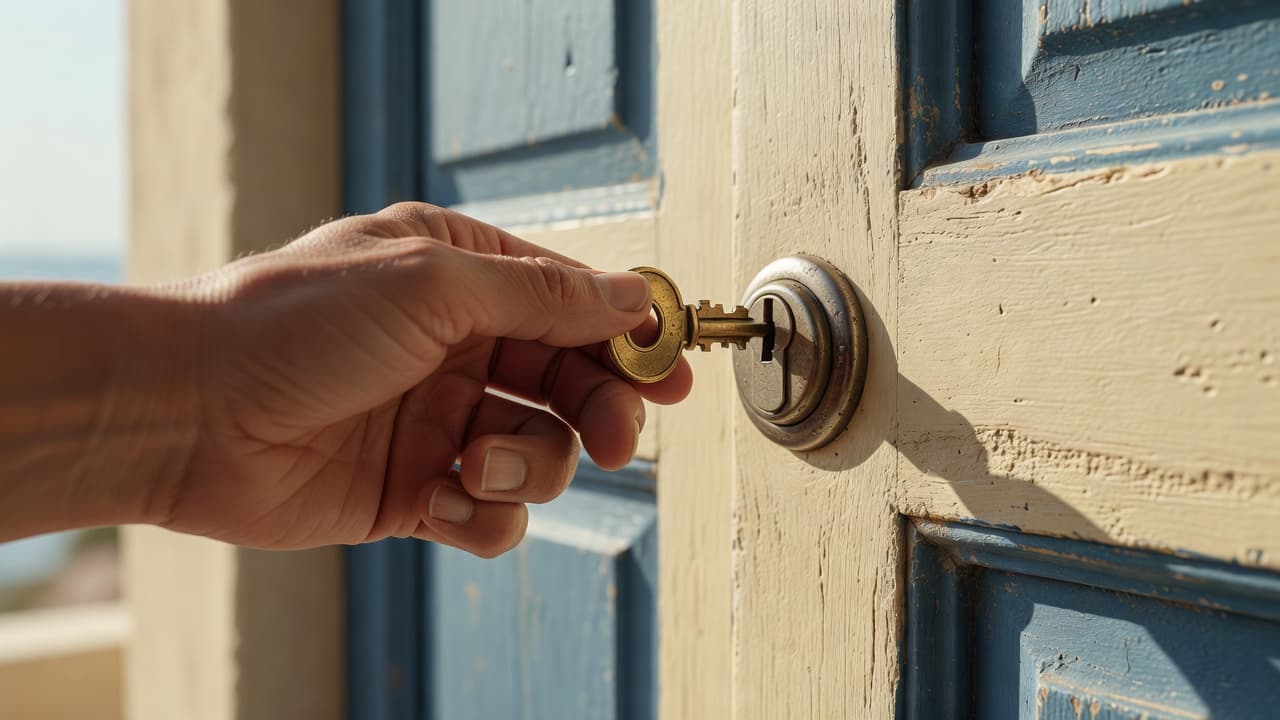
Look at the keyhole shape. Old locks have large, often decorative keyholes — sometimes a round or oval opening with ornate brass trim. European cylinders have a small, round hole (usually about 5mm diameter) because the key is much simpler.
Examine the outside face of the lock. Old locks sit flush with or slightly proud of the door surface, and you see a large metal escutcheon (decorative plate). European cylinders protrude slightly — you'll see a small round metal tube sticking out from the door.
Check from inside the door. If you can open the door:
- Old lock: you'll see a complex metal case with visible springs, levers, and bolts.
- European cylinder: you'll see a simpler mechanism, often a small metal box with the cylinder protruding through it.
Try the key. Old lock keys are usually large, ornate, and chunky. European cylinder keys are slim, modern-looking, and often have plastic heads. If you've lost the original key, you can usually get a copy of a European cylinder key from a hardware shop in ten minutes. An old lock key requires a locksmith.
If you need to replace the lock: An old lock might cost €150–300 to replace, plus €50–100 labour. A European cylinder upgrade (if compatible) costs €40–80 for the cylinder plus €30–80 labour. But if your door frame isn't prepared for a European cylinder, you'd need a full mortise replacement, which is more expensive.
If you lose a key: Old lock = locksmith visit, €80–150. European cylinder = you might get a copy at a hardware shop, €5–15.
If you own a holiday home: European cylinders are more secure against opportunistic break-ins because the mechanism is harder to manipulate. Old locks, especially worn ones, are easier to force.
If you rent: Insurance companies sometimes prefer European cylinders for security certification purposes.
If the lock is stuck:
- Try a silicone-based spray lubricant (WD-40 or similar) in the keyhole. Don't use oil — it attracts dust and makes it worse.
- Wait 10 minutes, then gently try the key. Don't force it.
- If it still won't move, stop. Call a locksmith.
If the lock is broken but still works:
- Mark the keys with a permanent marker so you don't lose them.
- Avoid turning the key forcefully — use steady, gentle pressure.
- If you're renting or in a holiday home, notify the owner immediately.
If you're locked out:
- Don't try to pick an old lock yourself — the mechanism is too complex and you risk damaging the door.
- A locksmith can usually open both types within 30 minutes.
- Do not attempt to pick the lock if it's an old mechanism. You'll likely damage the internal springs and levers, making it impossible to open without destroying the lock entirely.
- Do not force a stuck key. Applying excessive pressure can break the key inside the lock or bend the cylinder.
- Do not disassemble the lock unless you're an experienced locksmith. Old locks contain small springs and pins that are easy to lose and difficult to replace.
- Do not try to replace an old lock yourself if you're renting. Contact the owner first.
- If the lock shows signs of tampering (scratches around the keyhole, forcing marks, the cylinder is loose), don't try to use it. Call a locksmith and notify the police if you think there's been a break-in attempt.
When you call a locksmith and describe your lock type, they'll usually ask:
- Is the key stuck, broken, or lost?
- Can you describe the lock from the inside?
- Is the door frame wooden or metal?
- Do you want to upgrade, repair, or just access?
For an old lock:
The locksmith will examine the mortise, assess the damage, and either repair it (if the mechanism is intact but just needs cleaning and lubrication) or recommend a full replacement. If you want to upgrade to a European cylinder, they'll check whether your mortise can be adapted or if you need a new mortise entirely. Repair typically takes 20–40 minutes. Replacement takes 60–90 minutes and involves removing the old lock, filling holes if necessary, fitting the new mortise, and testing.
For a European cylinder:
They'll identify the exact size and profile (usually DIN standard), remove the old cylinder, and fit a new one, all in under 20 minutes. They'll also check the mortise for wear and damage. If needed, they can upgrade the cylinder to a higher security grade (anti-bump, anti-drill) at the same time.
Both will provide a receipt and, if they've fitted a new lock, they'll give you spare keys. Ask them to explain how to maintain it.
For old locks:
- Have a spare key cut and keep it somewhere safe (not on the same keyring). If you're renting, give one to the owner.
- Every 12 months, apply a small amount of silicone spray lubricant in the keyhole and work the key gently. Don't use WD-40 as a regular maintenance product — use proper lock lubricant.
- Avoid forcing the key if it's stiff. A stiff lock is a warning that it needs servicing.
For European cylinders:
- Get spare keys cut immediately and store one safely.
- Keep the cylinder clean — dust and salt air on the Mediterranean coast can cause corrosion. Wipe the keyhole area with a dry cloth monthly.
- If you live near the sea or in a high-humidity area, ask your locksmith for a corrosion-resistant cylinder upgrade.
- If you're renting out a holiday property, have the lock serviced annually and replace the cylinder every 3–5 years for security and wear prevention.
For both:
- Don't leave the key in the lock overnight, even inside the house. It strains the mechanism.
- If you move to a new property, have the locks changed (or cylinders replaced) for security and peace of mind.
If you're uncertain about your lock type or you need help identifying it, take a photo and contact a professional locksmith. They can diagnose the problem from an image alone and give you an accurate repair or upgrade quote without a site visit. On the Mediterranean coast, many locksmiths work in English, German, and Dutch, so language won't be a barrier.