Why this is happening: the difference between local and main blockages
Your home's drainage works like a tree. The branches are the individual pipes from each sink, toilet and shower (these are called "traps" or "drains"). All these branches converge into a main trunk—the main sewer line—that carries all waste water away from your property to the municipal sewer or septic tank.
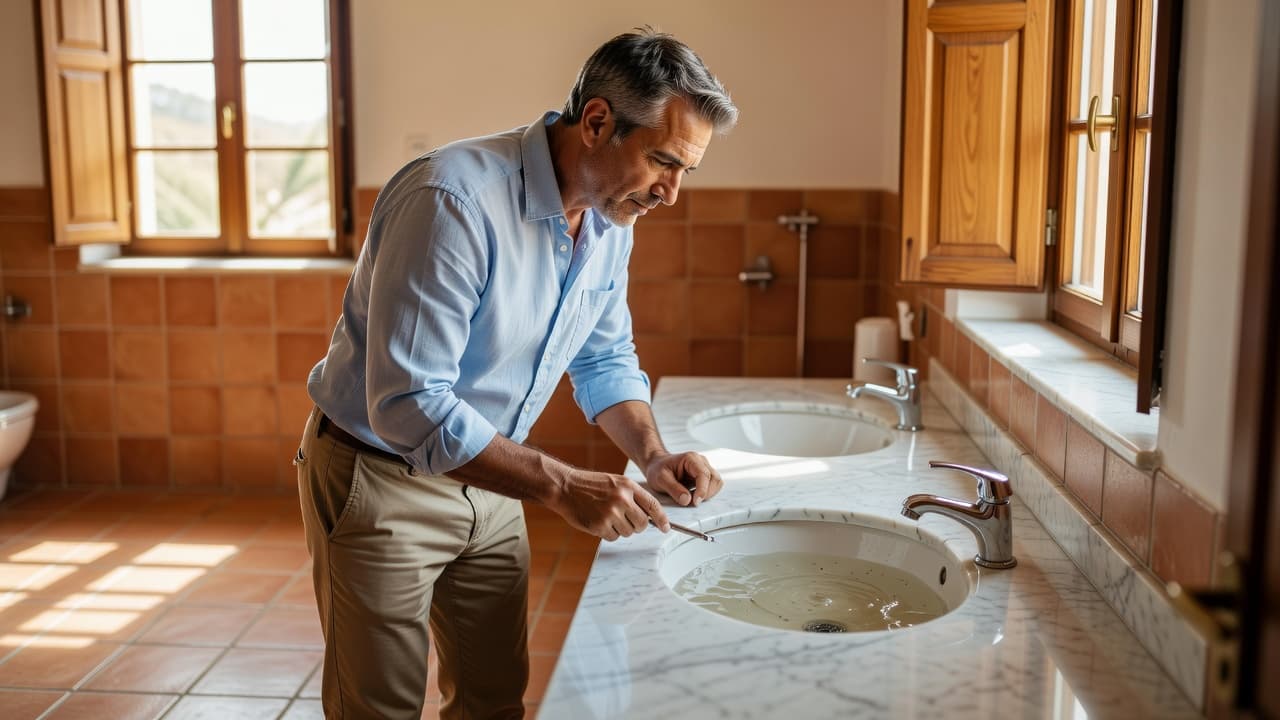
When only one sink is blocked, the problem is in that branch. The water can still flow from everywhere else.
When multiple drains block at the same time, the problem is in the trunk. Water from all the branches is backing up because it cannot exit the house. This is a structural problem with the main drainage system, not a clog in an individual trap.
In a flat, this could be your building's internal main drain (shared with neighbors above and below). In a villa or detached house, it's the single main line running from your property to the street. In an urbanisation, the blockage might be further out—in the shared drainage system that serves multiple properties.
Common causes of main sewer line blockages
Tree roots are the most common cause in Mediterranean properties. As trees age, fine roots exploit tiny cracks in drainage pipes to access the nutrient-rich water inside. Over months, roots grow thicker and block the pipe entirely. If you have old clay or concrete pipes (common in Spanish homes built before the 1990s), they're more vulnerable.
Accumulated fat and wipes create a mass inside the pipe. Even "flushable" wipes don't dissolve and combine with cooking fat, hair and toilet paper to form a solid blockage. This is especially common in summer homes where sewage sits in pipes without regular flow.
Collapsed or broken pipes from age, ground movement, or poor installation can partially or completely block drainage. Clay pipes are particularly prone to this.
Foreign objects occasionally cause blockages—toys flushed by children, sanitary items, nappies, or debris from street work.
Debris from the street or neighbouring properties entering a cracked or damaged main line.
Do not use chemical drain cleaners. They won't reach a main line blockage, they're toxic, they corrode old pipes, and they make it harder for the plumber to work safely.
Do not attempt to use a plunger on multiple drains. You'll force contaminated water around the blockage, potentially into your walls or floors.
Do not flush the toilet. Every flush pushes more water into a blocked system.
Do keep the affected area ventilated. Open windows near blocked drains or bathrooms to manage odours.
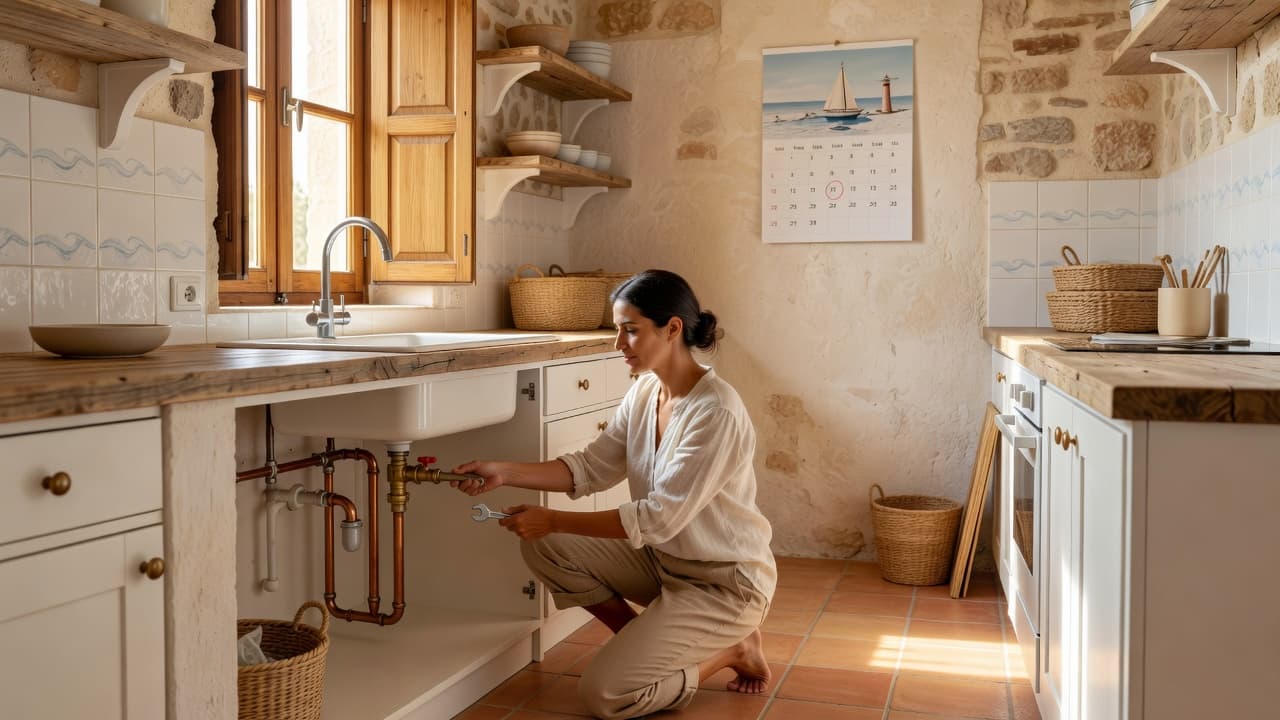
Do locate your main stopcock (the master water shut-off valve, called "llave de paso general" in Spanish). In a flat, it's usually under the kitchen sink or in a bathroom cupboard. In a house, look on the landing near the front door, under the kitchen sink, or in the garage. If you're uncomfortable with water seeping into the property, you can isolate the main stopcock to stop new water entering the system. However, do not do this unless water is actively leaking into your home—the plumber needs to diagnose the problem with the system full.
Do check your lease or property deeds if you rent or live in an urbanisation. The cost of clearing a blockage may be split between you and the landlord, or be the responsibility of the community of owners, depending on where the blockage is located.
Stop and call a professional immediately if:
- Water is backing up into your home from drains (toilet, shower or sink).
- You see sewage or murky water pooling in your garden, basement or lower rooms.
- Multiple drains are blocked and you smell foul odours from drains or garden.
- You hear gurgling sounds from drains even when you're not using water.
- The blockage persists after one drain clears naturally.
- You see visible structural damage to underground pipes (cracking, subsidence near the property).
Do not open inspection covers or attempt to clear drains yourself if:
- You don't know where the main stopcock or inspection cover is.
- The backup involves raw sewage (contamination risk).
- You're not confident with physical tools or plumbing systems.
Main sewer blockages always require professional diagnosis with a camera or rod. There are no safe shortcuts.
The plumber will likely start by locating your main inspection cover (or "cámara de inspección")—a small hatch, usually in your front garden, driveway or on the property boundary. This gives access to the main drain. They'll open it and check whether the blockage is on your side or beyond.
If the blockage is on your side, they'll use a drain rod or high-pressure water jet to clear it. If tree roots are involved, they may use a cutting tool attached to the rod. The whole process usually takes 1–3 hours depending on severity.
If the blockage is beyond your property (in the shared section of a building or urbanisation), the responsibility may shift to the community of owners or the municipal water company. The plumber will advise you on this.
Once cleared, the plumber may recommend a CCTV camera inspection of the entire main line to check for ongoing damage (cracks, root intrusion, weakened sections). This costs extra but prevents a rapid re-blockage. If the pipes are severely damaged, you may need a quotation for replacement, which is expensive but necessary.
The plumber will give you a written report showing where the blockage was, what caused it, and what was done. Keep this for your records and insurance.
Never flush wipes, even if the package says they're flushable. Paper towels, nappies, cotton buds and sanitary items don't belong in the toilet.
Dispose of cooking fat properly. Let it cool and solidify, then place it in a bin. Never pour hot fat down the sink.
Install a grease trap or strainer in your kitchen sink if you regularly cook with oils. These are inexpensive and catch debris before it enters the drain.
Trim tree roots near your property if you have old drainage pipes. Ask a tree surgeon to assess any large trees within a few metres of your main drain run.
Have your drains inspected every 5–10 years if your property is over 30 years old. A professional camera survey costs €150–€300 and can identify problems before they block completely.
Know where your main stopcock is and label it clearly. If you ever need to isolate water quickly, you'll need to find it in seconds.
Keep a record of where your inspection cover is and have it cleared of vegetation or paving so the plumber can access it quickly if needed.
When multiple drains block at once, your home's drainage system is telling you something is seriously wrong. Don't ignore it hoping it will clear itself. Contact an experienced plumber today to diagnose the cause and restore your home to normal. The longer you wait, the greater the risk of sewage entering your property, which is costly to clean and a genuine health hazard.
A professional can usually locate and clear a main line blockage within a few hours. The cost is far less than dealing with water damage or health problems from backed-up sewage.