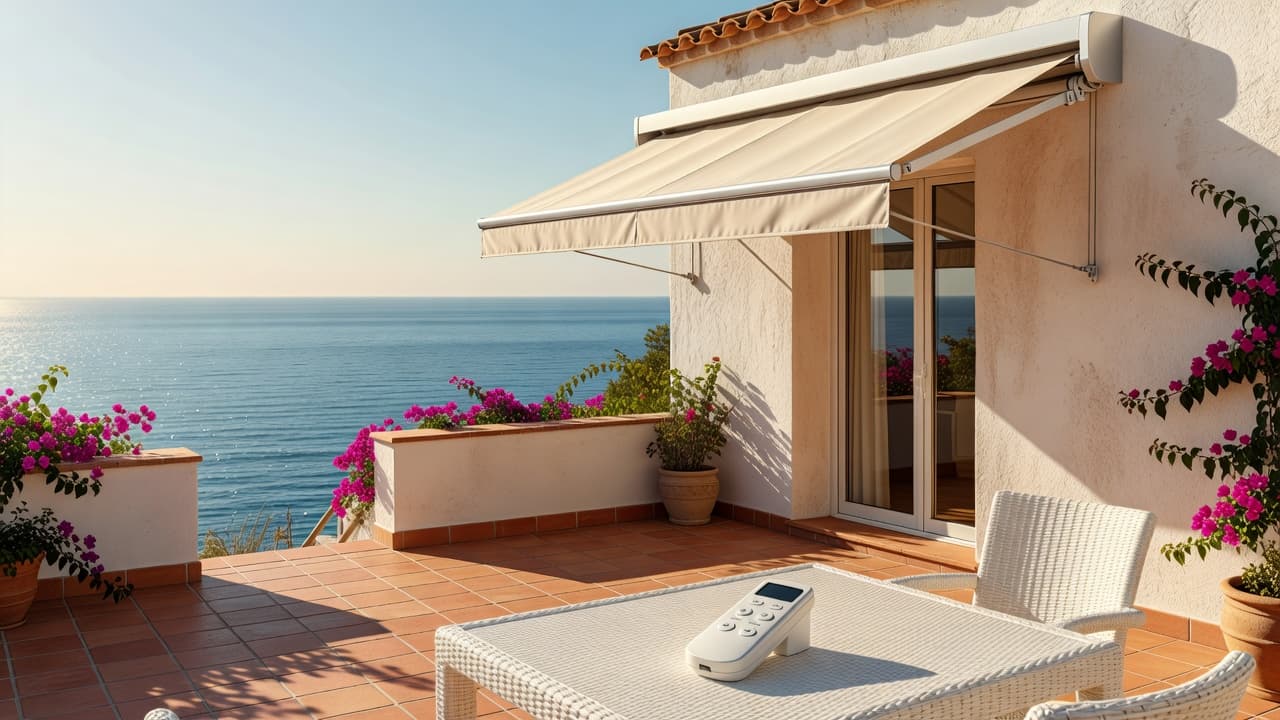
A motorised awning that won't respond to the remote usually fails for one of these reasons:
Dead or weak batteries in the remote. This is responsible for roughly half of all "remote not working" calls. The batteries often fail gradually—the remote will work intermittently or only from very close range before it stops completely.
Loose electrical connection at the motor. If your awning is hardwired into your home electrics or uses an external power lead, that connection can work loose from vibration, heat, or weather exposure. The motor itself is fine; it's just not receiving power.
Broken remote buttons. The rubber buttons inside the remote wear out, especially if the remote is used dozens of times a day or has been exposed to salt spray. The button may be physically damaged, or the electrical contact inside may have corroded.
Failed receiver unit in the motor. The small wireless receiver that listens for the remote signal can fail, particularly in coastal properties where salt-laden air corrodes electronics. The motor is functional, but it can't hear the command.
Motor overheating or safety shutdown. On very hot days, or if the awning is extended and retracted repeatedly without pause, the motor may cut out as a protective measure. This is intentional—it resets once the motor cools down.
Mechanical jam in the awning roller. Sand, debris, or a bent component inside the roller mechanism can jam the motor. The motor tries to move but can't, so it stops. This is rare but serious.
Use the manual override. If you've located it, this is your safest option. It requires no electrical knowledge and lets you control the awning while you arrange a repair. Manual operation is slower, but it works and it's completely safe.
If the awning is extended and you need it retracted (or vice versa), and there's no manual override visible, do not force it. Forcing damages the gearbox and voids the warranty. Instead, leave it as it is and call a handyman to assess it.
Protect the fabric from excessive sun if the awning is stuck extended. If it's going to be extended for more than a few hours whilst you wait for help, position it to minimise direct UV exposure, or drape a light sheet over it if possible. This prevents fading.
If there's rain forecast and the awning is stuck extended, you're in a more urgent situation. Call a handyman or electrician the same day. Water pooling on an extended awning can strain the motor further or damage the fabric. A professional can usually attend within a few hours in a summer emergency.
Switch off the power supply at the control box or wall socket. This prevents the motor from drawing power unnecessarily and reduces the risk of further damage if there's an electrical fault.
Stop and call a handyman immediately if:
- The awning makes a loud grinding or squealing noise when you try the remote or manual override. This indicates mechanical damage inside the roller or gearbox.
- The motor housing is visibly cracked, burnt, or smells of burning plastic. This is an electrical fault that can worsen or cause a fire. Switch off the power and don't touch it.
- You can't locate the manual override and the awning is stuck extended in bad weather. Attempting to force it or climbing to reach the motor creates a risk of injury and damage. A handyman has the right tools and insurance.
- The awning is hardwired into your home electrics and you're not confident opening a wall-mounted control box. You could be working near live wires. Leave it to a professional.
- The remote battery compartment is corroded or leaking. This means moisture has entered the remote. It may be repairable, or the remote may need replacing.
- The awning has been stuck for more than 24 hours and the weather is worsening. The longer it's static, the more risk of water pooling (if extended) or mechanical sticking. Escalate to urgent service.
A professional will start by repeating the checks you've already done—batteries, manual override, power connections—to confirm the diagnosis. This takes 5–10 minutes and often finds the fault at no cost.
If the remote isn't the problem, they'll test the receiver unit with a diagnostic tool to see if it's receiving the signal. A faulty receiver can often be replaced for €80–€150, and it's a straightforward job.
If the power supply is loose, they'll reseat the connection or replace a corroded plug and lead. This usually costs nothing if the connection itself is fine, or €30–€80 if a lead needs replacing.
If the motor has overheated, they'll reset it, check for obstructions in the roller mechanism, and confirm it's safe to use again. If there's a jam or the motor sounds damaged, they'll inspect the internal gears. A new motor typically costs €250–€400 plus labour, depending on the awning model.
Once the repair is done, a professional will test the awning through several open-and-close cycles to confirm it's working properly, and will hand you back the manual with a note of what was fixed. Good handymen will also check the manual override mechanism to make sure you know how to use it in future.
Replace remote batteries once a year, or as soon as the remote becomes unresponsive. Keep spare batteries on hand for summertime. Don't wait until the remote stops working to change them.
Keep the receiver lens on the motor housing clean. A light brush every few months removes dust and spider webs that can degrade the signal.
Avoid repeatedly opening and closing the awning in rapid succession on very hot days. Let the motor cool between uses.
If your awning is hardwired, check the connection annually. Look for loose terminals, corrosion, or dampness around the control box. Tighten any loose terminals gently with a screwdriver.
If your awning is battery-powered, test the battery every spring. Remove and reseat it to ensure good contact, and replace it if it's more than 3–4 years old.
In coastal areas, consider a silicone spray seal on exposed electrical contacts to reduce salt corrosion. Ask your handyman about this during maintenance.
A motorised awning that won't respond to the remote is often a simple fix—dead batteries, a loose connection, or a receiver that needs resetting. Start with the checks above, and if you're still stuck, hire a local handyman to diagnose and repair it. Most jobs are resolved in under an hour, and you'll have your awning back to automatic control the same day.